Nicole Guenther Discenza - Böcker
Visar alla böcker från författaren Nicole Guenther Discenza. Handla med fri frakt och snabb leverans.
4 produkter
4 produkter
989 kr
Skickas inom 7-10 vardagar
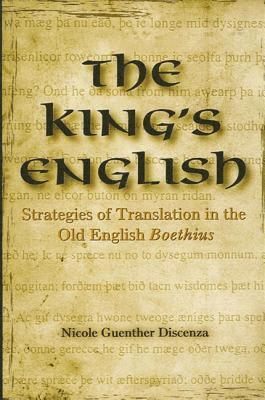
Shows how Alfred the Great's translations of Latin works exposed Anglo-Saxon elites to classical learning and Christian thought while bringing prestige to the king and his West Saxon dialect.In the late ninth century, while England was fighting off Viking incursions, Alfred the Great devoted time and resources not only to military campaigns but also to a campaign of translation and education unprecedented in early medieval Europe. The King's English explores how Alfred's translation of Boethius's Consolation of Philosophy from Latin into Old English exposed Anglo-Saxon elites to classical literature, history, science, and Christian thought. More radically, the Boethius, as it became known, told its audiences how a leader should think and what he should be, providing models for leadership and wisdom that live on in England to this day. It also brought prestige to its kingly translator and enshrined his dialect, West Saxon, as the literary language of the English people.Nicole Guenther Discenza looks at the sources Alfred used in his translation and demonstrates his selectivity in choosing what to retain, what to borrow, and how to represent it to his Anglo-Saxon audience. Alfred's appeals to Latin prestige, spiritual authority, Old English poetry, and everyday experience in England combine to make the Old English Boethius a powerful text and a rich source for our understanding of Anglo-Saxon literature, culture, and society.
392 kr
Tillfälligt slut
Shows how Alfred the Great's translations of Latin works exposed Anglo-Saxon elites to classical learning and Christian thought while bringing prestige to the king and his West Saxon dialect.In the late ninth century, while England was fighting off Viking incursions, Alfred the Great devoted time and resources not only to military campaigns but also to a campaign of translation and education unprecedented in early medieval Europe. The King's English explores how Alfred's translation of Boethius's Consolation of Philosophy from Latin into Old English exposed Anglo-Saxon elites to classical literature, history, science, and Christian thought. More radically, the Boethius, as it became known, told its audiences how a leader should think and what he should be, providing models for leadership and wisdom that live on in England to this day. It also brought prestige to its kingly translator and enshrined his dialect, West Saxon, as the literary language of the English people.Nicole Guenther Discenza looks at the sources Alfred used in his translation and demonstrates his selectivity in choosing what to retain, what to borrow, and how to represent it to his Anglo-Saxon audience. Alfred's appeals to Latin prestige, spiritual authority, Old English poetry, and everyday experience in England combine to make the Old English Boethius a powerful text and a rich source for our understanding of Anglo-Saxon literature, culture, and society.
753 kr
Skickas inom 7-10 vardagar
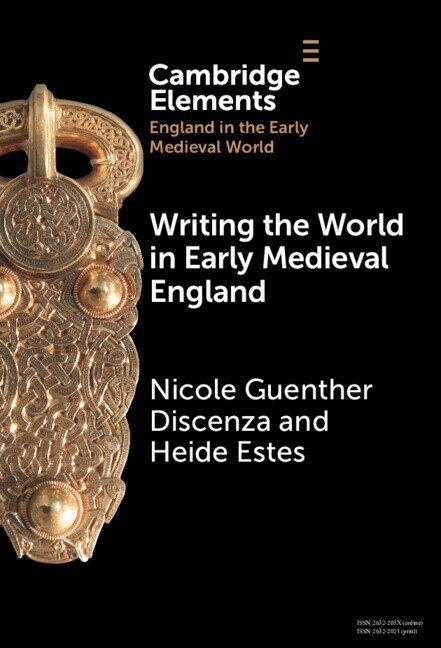
The early medieval English were far more diverse and better connected to a broader world. Their writings reveal substantial interest in Europe, Asia, and Africa while they situated themselves firmly within Christian Europe. They drew many ideas from textual sources and filled out their conceptions from their own travels and interactions with visitors. Chronicles, histories, poetry, homilies, saints' lives, and occasionally maps tell of peoples and lands from the British Isles to their near neighbors in Scandinavia to such distant places as Jerusalem, North Africa, and India. They also imagined geographies that veered into the fantastic and vividly depicted hell, purgatory, and heaven. This Element provides insights about early medieval English who were engaged deeply in a variety of modes with other parts of their world. Both the connections and the divisions they constructed still have impact today.
234 kr
Skickas inom 7-10 vardagar
The early medieval English were far more diverse and better connected to a broader world. Their writings reveal substantial interest in Europe, Asia, and Africa while they situated themselves firmly within Christian Europe. They drew many ideas from textual sources and filled out their conceptions from their own travels and interactions with visitors. Chronicles, histories, poetry, homilies, saints' lives, and occasionally maps tell of peoples and lands from the British Isles to their near neighbors in Scandinavia to such distant places as Jerusalem, North Africa, and India. They also imagined geographies that veered into the fantastic and vividly depicted hell, purgatory, and heaven. This Element provides insights about early medieval English who were engaged deeply in a variety of modes with other parts of their world. Both the connections and the divisions they constructed still have impact today.