Nicole Watson – författare
Visar alla böcker från författaren Nicole Watson. Handla med fri frakt och snabb leverans.
9 produkter
9 produkter
Häftad, Engelska, 2021
704 kr
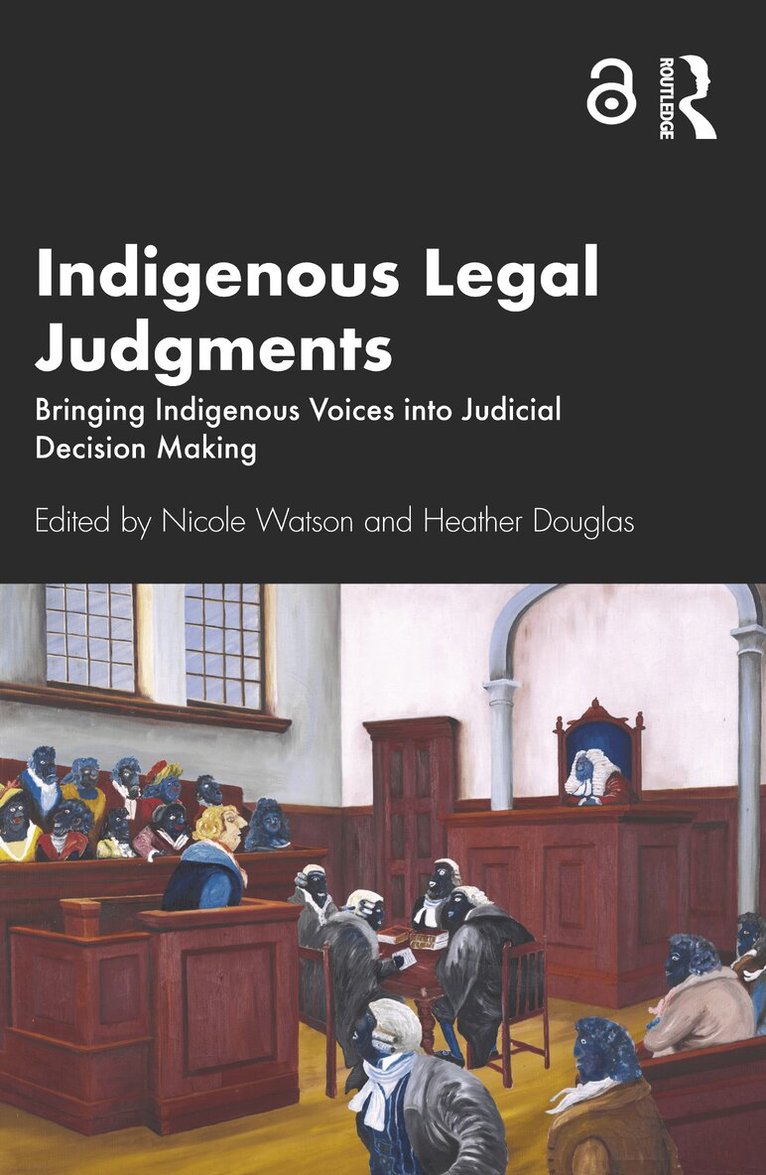
This book is a collection of key legal decisions affecting Indigenous Australians, which have been re-imagined so as to be inclusive of Indigenous people’s stories, historical experience, perspectives and worldviews.In this groundbreaking work, Indigenous and non-Indigenous scholars have collaborated to rewrite 16 key decisions. Spanning from 1889 to 2017, the judgments reflect the trajectory of Indigenous people’s engagements with Australian law. The collection includes decisions that laid the foundation for the wrongful application of terra nullius and the long disavowal of native title. Contributors have also challenged narrow judicial interpretations of native title, which have denied recognition to Indigenous people who suffered the prolonged impacts of dispossession. Exciting new voices have reclaimed Australian law to deliver justice to the Stolen Generations and to families who have experienced institutional and police racism. Contributors have shown how judicial officers can use their power to challenge systemic racism and tell the stories of Indigenous people who have been dehumanised by the criminal justice system.The new judgments are characterised by intersectional perspectives which draw on postcolonial, critical race and whiteness theories. Several scholars have chosen to operate within the parameters of legal doctrine. Some have imagined new truth-telling forums, highlighting the strength and creative resistance of Indigenous people to oppression and exclusion. Others have rejected the possibility that the legal system, which has been integral to settler-colonialism, can ever deliver meaningful justice to Indigenous people.The Open Access version of this book, available at http://www.taylorfrancis.com, has been made available under a Creative Commons Attribution-Non Commercial-No Derivatives (CC-BY-NC-ND) 4.0 license.
Häftad, Engelska, 2017
264 kr
Skickas inom 3-6 vardagar
Häftad, Engelska, 2026
198 kr
Skickas inom 5-8 vardagar
Inbunden, Engelska, 2021
2 506 kr
Skickas inom 10-15 vardagar
This book is a collection of key legal decisions affecting Indigenous Australians, which have been re-imagined so as to be inclusive of Indigenous people’s stories, historical experience, perspectives and worldviews.In this groundbreaking work, Indigenous and non-Indigenous scholars have collaborated to rewrite 16 key decisions. Spanning from 1889 to 2017, the judgments reflect the trajectory of Indigenous people’s engagements with Australian law. The collection includes decisions that laid the foundation for the wrongful application of terra nullius and the long disavowal of native title. Contributors have also challenged narrow judicial interpretations of native title, which have denied recognition to Indigenous people who suffered the prolonged impacts of dispossession. Exciting new voices have reclaimed Australian law to deliver justice to the Stolen Generations and to families who have experienced institutional and police racism. Contributors have shown how judicial officers can use their power to challenge systemic racism and tell the stories of Indigenous people who have been dehumanised by the criminal justice system.The new judgments are characterised by intersectional perspectives which draw on postcolonial, critical race and whiteness theories. Several scholars have chosen to operate within the parameters of legal doctrine. Some have imagined new truth-telling forums, highlighting the strength and creative resistance of Indigenous people to oppression and exclusion. Others have rejected the possibility that the legal system, which has been integral to settler-colonialism, can ever deliver meaningful justice to Indigenous people.The Open Access version of this book, available at http://www.taylorfrancis.com, has been made available under a Creative Commons Attribution-Non Commercial-No Derivatives (CC-BY-NC-ND) 4.0 license.
Häftad, Engelska, 2024
538 kr
Skickas inom 10-15 vardagar
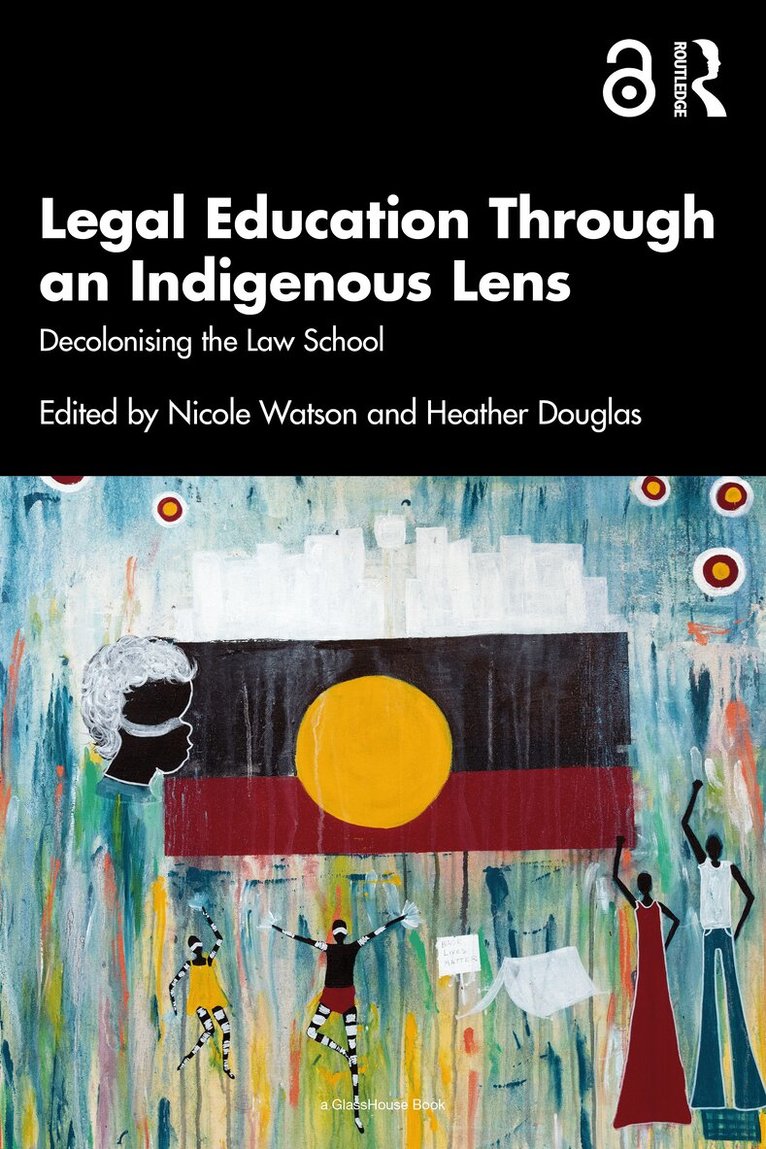
This book provides a comprehensive resource for accommodating and pursuing Indigenous perspectives in legal education.The book is divided into three sections. The first section highlights the continuing issues that Indigenous people face in law schools and universities, including the ongoing impacts of colonisation and intergenerational trauma, institutional racism and exclusion. This section also includes chapters that explore arguments for the recognition of Indigenous legal knowledge and of the impact of settler law, and the incorporation of Indigenous concepts, laws and ways of thinking about settler law across the curriculum. The second section explores how Indigenous ways of reading and thinking about settler law make a difference to how settler law is understood and interpreted. Contributors consider the power of storytelling and address the prospect of law’s decolonisation. The third section of the book grapples with how traditional law school subjects can be taught through an Indigenous lens, including torts, public law, criminal law and sentencing, clinical legal education, and native title. Throughout, the book demonstrates the importance of, and offers practical advice for, teaching law in a way that includes critical Indigenous perspectives.This book will be of enormous value to teachers, researchers, students in law, legal studies and Indigenous studies, and others with an interest in decolonising legal education.The Open Access version of this book, available at www.taylorfrancis.com, has been made available under a Creative Commons Attribution-Non Commercial-No Derivatives (CC-BY-NC-ND) 4.0 license.
Inbunden, Engelska, 2024
2 238 kr
Skickas inom 10-15 vardagar
This book provides a comprehensive resource for accommodating and pursuing Indigenous perspectives in legal education.The book is divided into three sections. The first section highlights the continuing issues that Indigenous people face in law schools and universities, including the ongoing impacts of colonisation and intergenerational trauma, institutional racism and exclusion. This section also includes chapters that explore arguments for the recognition of Indigenous legal knowledge and of the impact of settler law, and the incorporation of Indigenous concepts, laws and ways of thinking about settler law across the curriculum. The second section explores how Indigenous ways of reading and thinking about settler law make a difference to how settler law is understood and interpreted. Contributors consider the power of storytelling and address the prospect of law’s decolonisation. The third section of the book grapples with how traditional law school subjects can be taught through an Indigenous lens, including torts, public law, criminal law and sentencing, clinical legal education, and native title. Throughout, the book demonstrates the importance of, and offers practical advice for, teaching law in a way that includes critical Indigenous perspectives.This book will be of enormous value to teachers, researchers, students in law, legal studies and Indigenous studies, and others with an interest in decolonising legal education.The Open Access version of this book, available at www.taylorfrancis.com, has been made available under a Creative Commons Attribution-Non Commercial-No Derivatives (CC-BY-NC-ND) 4.0 license.
Inbunden, Engelska, 2021
704 kr
Skickas inom 10-15 vardagar
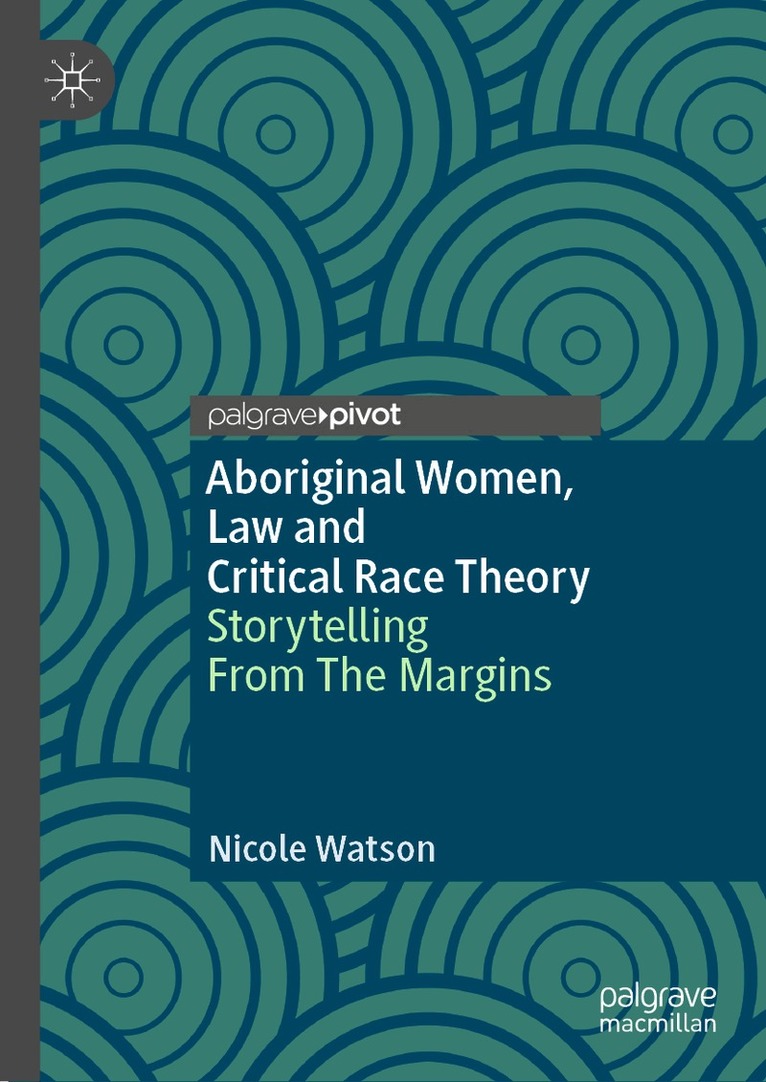
This book explores storytelling as an innovative means of improving understanding of Indigenous people and their histories and struggles including with the law. It uses the Critical Race Theory (‘CRT’) tool of ‘outsider’ or ‘counter’ storytelling to illuminate the practices that have been used by generations of Aboriginal women to create an outlaw culture and to resist their invisibility to law. Legal scholars are yet to use storytelling to bring the experiential knowledge of Aboriginal women to the centre of legal scholarship and yet this book demonstrates how this can be done by way of a new methodology that combines elements of CRT with speculative biography. In one chapter, the author tells the imagined story of Eliza Woree who featured prominently in the backdrop to the decision of the Supreme Court of Queensland in Dempsey v Rigg (1914) but whose voice was erased from the judgements. This accessible book adds a new and innovative dimension to the useof CRT to examine the nexus between race and settler colonialism. It speaks to those interested in Indigenous peoples and the law, Indigenous studies, Indigenous policy, Aboriginal and Torres Strait Islander history, feminist studies, race and the law, and cultural studies.
E-bok
Engelska, 2021916 kr
Läs direkt efter köp
This book explores storytelling as an innovative means of improving understanding of Indigenous people and their histories and struggles including with the law. It uses the Critical Race Theory (‘CRT’) tool of ‘outsider’ or ‘counter’ storytelling to illuminate the practices that have been used by generations of Aboriginal women to create an outlaw culture and to resist their invisibility to law. Legal scholars are yet to use storytelling to bring the experiential knowledge of Aboriginal women to the centre of legal scholarship and yet this book demonstrates how this can be done by way of a new methodology that combines elements of CRT with speculative biography. In one chapter, the author tells the imagined story of Eliza Woree who featured prominently in the backdrop to the decision of the Supreme Court of Queensland in Dempsey v Rigg (1914) but whose voice was erased from the judgements. This accessible book adds a new and innovative dimension to the useof CRT to examine the nexus between race and settler colonialism. It speaks to those interested in Indigenous peoples and the law, Indigenous studies, Indigenous policy, Aboriginal and Torres Strait Islander history, feminist studies, race and the law, and cultural studies.
Häftad, Engelska, 2022
190 kr
Skickas inom 5-8 vardagar