Niels Niessen - Böcker
Visar alla böcker från författaren Niels Niessen. Handla med fri frakt och snabb leverans.
4 produkter
4 produkter
296 kr
Skickas inom 7-10 vardagar
How does Google Maps reorient our city travels? How do matching algorithms affect how we seek love? And how does artificial “intelligence” prompt how we think? Engaging these and similar questions, this open access book critiques Big Tech’s colonization of everyday life. Although #MeToo and Black Lives Matter would not have happened the way they did without so-called “social” media, these platforms are not designed for emancipation but to maximize data extraction. Inspired by the feminist rallying cry that “the personal is political,” Resisting Big Tech calls for a collective consciousness of how Big Tech’s increasingly personalized streams colonize our associations (how we wander in our bodyminds and how we cohere as groups). Articulating a degrowth perspective on Big Tech, the book argues the need to be much more vigilant for how the transhumanist ideology that drives corporations like Google, Meta, and OpenAI accelerates life, burning out people and the planet. Focusing on four domains of life—home, city, learning, love— Niels Niessen advocates for the de-Googling of life and the need to foster truly communal spaces, online but especially offline.The ebook editions of this book are available open access under a CC BY-NC-ND 4.0 licence on bloomsburycollections.com. Open access was funded by the European Research Council.
862 kr
Skickas inom 7-10 vardagar
How does Google Maps reorient our city travels? How do matching algorithms affect how we seek love? And how does artificial “intelligence” prompt how we think? Engaging these and similar questions, this open access book critiques Big Tech’s colonization of everyday life. Although #MeToo and Black Lives Matter would not have happened the way they did without so-called “social” media, these platforms are not designed for emancipation but to maximize data extraction. Inspired by the feminist rallying cry that “the personal is political,” Resisting Big Tech calls for a collective consciousness of how Big Tech’s increasingly personalized streams colonize our associations (how we wander in our bodyminds and how we cohere as groups). Articulating a degrowth perspective on Big Tech, the book argues the need to be much more vigilant for how the transhumanist ideology that drives corporations like Google, Meta, and OpenAI accelerates life, burning out people and the planet. Focusing on four domains of life—home, city, learning, love— Niels Niessen advocates for the de-Googling of life and the need to foster truly communal spaces, online but especially offline.The ebook editions of this book are available open access under a CC BY-NC-ND 4.0 licence on bloomsburycollections.com. Open access was funded by the European Research Council.
1 499 kr
Skickas inom 3-6 vardagar
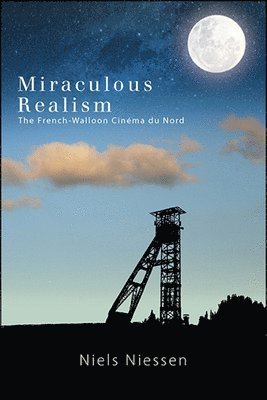
An authoritative study of this postsecular film movement from the French-Belgian border region that rose to prominence at the turn of the twenty-first century.At the 1999 Cannes Film Festival, two movies from northern-Francophone Europe swept almost all the main awards. Rosetta by the Walloon directors Jean-Pierre and Luc Dardenne won the Golden Palm, and L'humanité by the French director Bruno Dumont won the Grand Prize; both won acting awards as well. Taking this "miracle" of Cannes as the point of departure, Niels Niessen identifies a transregional film movement in the French-Belgian border region-the Cinéma du Nord or "cinema of the North." He examines this movement within the contexts of French and Belgian national cinemas from the silent era to the digital age, as well as that of the new realist tendency in world cinema of the last three decades. In addition, he traces, from a northern perspective, a secular-religious tradition in Francophone-European film and philosophy from Bresson and Pialat, via Bazin, Deleuze, and Godard, to the Dardennes and Dumont, while critiquing this tradition for its frequent use of a humanist vocabulary of grace for a secular world. Once a cradle of the Industrial Revolution, the Franco-Belgian Nord faced economic crisis for most of the twentieth century. Miraculous Realism demonstrates that the Cinéma du Nord's rise to prominence resulted from the region's endeavor to reinvent itself economically and culturally at the crossroads of Europe after decades of recession.
611 kr
Skickas inom 3-6 vardagar
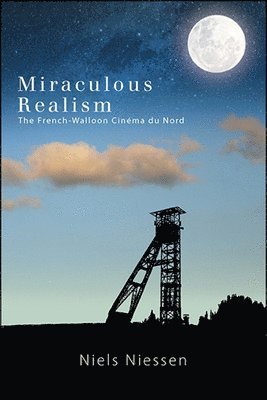
An authoritative study of this postsecular film movement from the French-Belgian border region that rose to prominence at the turn of the twenty-first century.At the 1999 Cannes Film Festival, two movies from northern-Francophone Europe swept almost all the main awards. Rosetta by the Walloon directors Jean-Pierre and Luc Dardenne won the Golden Palm, and L'humanité by the French director Bruno Dumont won the Grand Prize; both won acting awards as well. Taking this "miracle" of Cannes as the point of departure, Niels Niessen identifies a transregional film movement in the French-Belgian border region-the Cinéma du Nord or "cinema of the North." He examines this movement within the contexts of French and Belgian national cinemas from the silent era to the digital age, as well as that of the new realist tendency in world cinema of the last three decades. In addition, he traces, from a northern perspective, a secular-religious tradition in Francophone-European film and philosophy from Bresson and Pialat, via Bazin, Deleuze, and Godard, to the Dardennes and Dumont, while critiquing this tradition for its frequent use of a humanist vocabulary of grace for a secular world. Once a cradle of the Industrial Revolution, the Franco-Belgian Nord faced economic crisis for most of the twentieth century. Miraculous Realism demonstrates that the Cinéma du Nord's rise to prominence resulted from the region's endeavor to reinvent itself economically and culturally at the crossroads of Europe after decades of recession.