Niklas Salmose - Böcker
Visar alla böcker från författaren Niklas Salmose. Handla med fri frakt och snabb leverans.
6 produkter
6 produkter
441 kr
Skickas
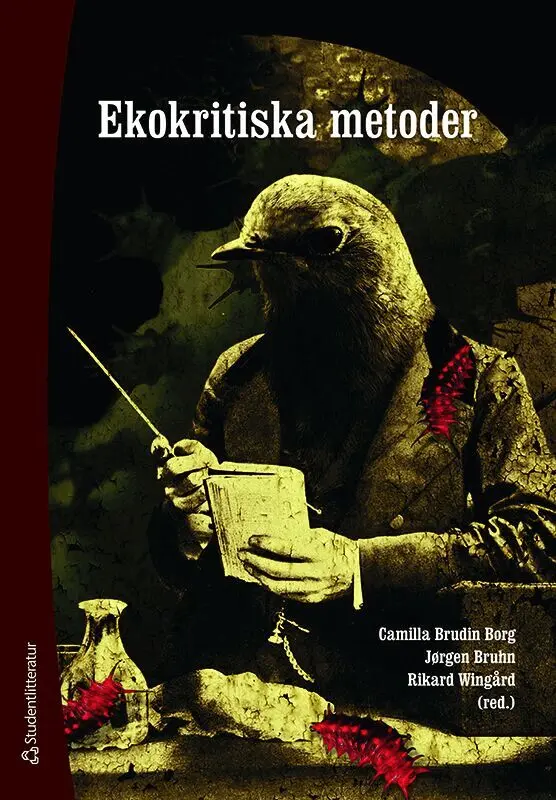
Under de senaste åren har ekokritiken vuxit mycket snabbt och många teoretiska positioner har omprövats. Utifrån olika perspektiv både anammar och kritiserar ekokritiken traditionella vetenskapliga modeller vilket har lett till en nyskapande metodologisk mångfald. I vissa fall utforskar ekokritiken mer naturvetenskapligt betonade metoder, i andra fall tänjs gränserna för vad som inom humaniora brukar betraktas som vetenskap. Ekokritiska metoder introducerar denna metodologiska flora och är en praktisk ingång till ekokritiken. Den har skrivits av forskare från olika forskningsmiljöer och innehåller en rik uppsättning av olika perspektiv och analysverktyg.Boken lämpar sig väl som grundbok på kurser i litteraturstudier, ekokritik eller kurser där metodologi står i fokus. Boken kan också vara av intresse för dem som vill fördjupa sig i metodfrågor, skaffa sig underlag för diskussion eller hitta inspiration till egen forskning.
2 166 kr
Skickas inom 10-15 vardagar
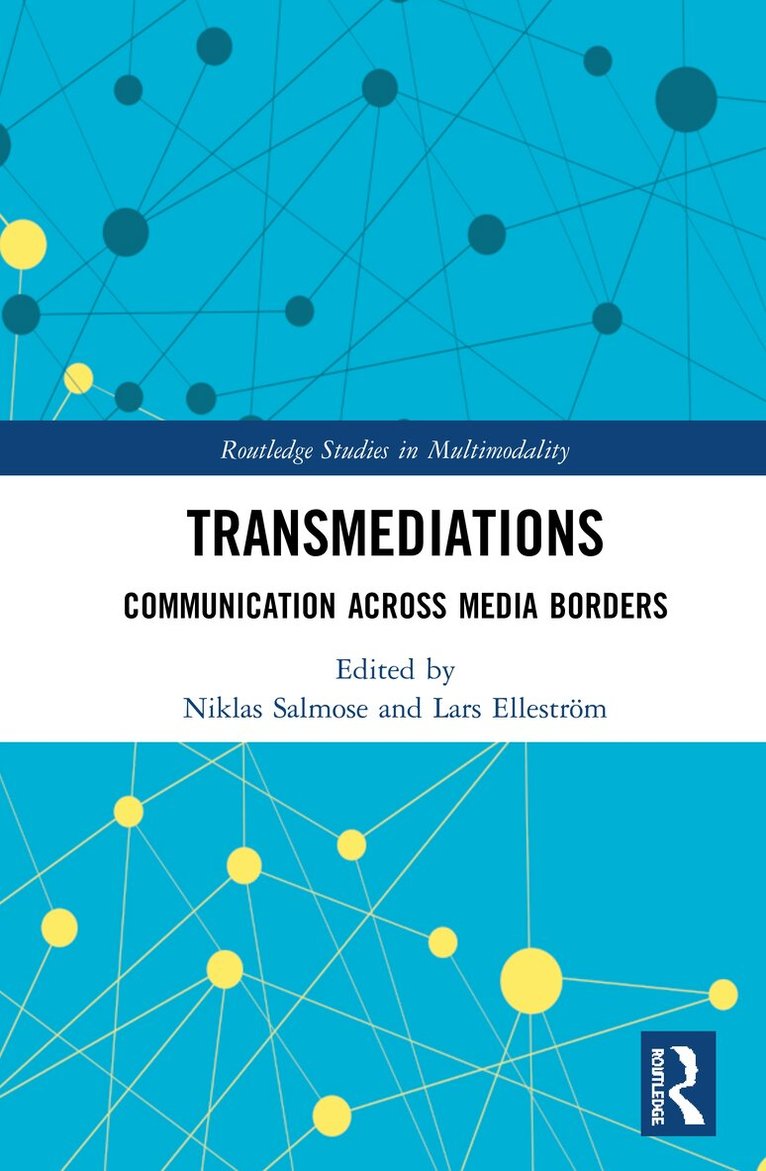
This collection offers a multi-faceted exploration of transmediations, the processes of transfer and transformation that occur when communicative acts in one medium are mediated again through another. While previous research has explored these processes from a broader perspective, Salmose and Elleström argue that a better understanding is needed of the extent to which the outcomes of communicative acts are modified when transferred across multimodal media in order to foster a better understanding of communication more generally. Using this imperative as a point of departure, the book details a variety of transmediations, viewed through four different lenses. The first part of the volume looks at narrative transmediations, building on existing work done by Marie-Laure Ryan on transmedia storytelling. The second section focuses on the spatial dynamics involved in media transformation as well as the role of the human body as a perceptive agent and a medium in its own right. The third part investigates new, radical boundaries and media types in transmediality and hence shows its versatility as a method of analyzing complex and contemporary communicative discourses. The fourth and final part explores the challenges involved in transmediating scientific data into the narrative format in the context of environmental issues. Taken together, these sections highlight a range of case studies of transmediations and, in turn, the complexity and variety of the process, informed by the methodologies of the different disciplines to which they belong. This innovative volume will be of particular interest to students and scholars in multimodality, communication, intermediality, semiotics, and adaptation studies.
654 kr
Skickas inom 10-15 vardagar
This collection offers a multi-faceted exploration of transmediations, the processes of transfer and transformation that occur when communicative acts in one medium are mediated again through another. While previous research has explored these processes from a broader perspective, Salmose and Elleström argue that a better understanding is needed of the extent to which the outcomes of communicative acts are modified when transferred across multimodal media in order to foster a better understanding of communication more generally. Using this imperative as a point of departure, the book details a variety of transmediations, viewed through four different lenses. The first part of the volume looks at narrative transmediations, building on existing work done by Marie-Laure Ryan on transmedia storytelling. The second section focuses on the spatial dynamics involved in media transformation as well as the role of the human body as a perceptive agent and a medium in its own right. The third part investigates new, radical boundaries and media types in transmediality and hence shows its versatility as a method of analyzing complex and contemporary communicative discourses. The fourth and final part explores the challenges involved in transmediating scientific data into the narrative format in the context of environmental issues. Taken together, these sections highlight a range of case studies of transmediations and, in turn, the complexity and variety of the process, informed by the methodologies of the different disciplines to which they belong. This innovative volume will be of particular interest to students and scholars in multimodality, communication, intermediality, semiotics, and adaptation studies.
342 kr
Skickas inom 7-10 vardagar
A comprehensive study of the life of F. Scott Fitzgerald, related in two-year chapters by twenty-three leading writers on the Jazz Age author “There never was a good biography of a novelist,” F. Scott Fitzgerald wrote in The Crack-Up. “There couldn’t be. He is too many people, if he’s any good.” Fitzgerald, a good novelist by any measure, has tested this challenge to the biographer’s art. A new star illuminating the literary scene; a chronicler of the Jazz Age in all its brilliance and tarnish; a romantic symbol of the American century; an acute observer of society’s best and worst, and of his own star-crossed career; a midlife burnout at forty-four, leaving an unfinished masterpiece in his wake-he was a man of many aspects, a writer whose complexity and multitudes this composite biography finally aptly portrays. Bringing together twenty-three leading writers and scholars on Fitzgerald, each focusing on two years of his life, this volume takes its cue from Henry James’s remark, cited by preeminent Fitzgerald biographer Scott Donaldson: “The whole of anything is never told; you can only take what groups together.” F. Scott Fitzgerald: A Composite Biography presents a new way of “grouping together” biographical material and perspectives, considering from various angles the author's best-known works as well as understudied writings, including neglected stories and forays into autobiography such as “What I Think and Feel at 25” and “How to Live on $36,000 a Year.” The glamor and fame that made F. Scott and Zelda mythic figures of their time appear here alongside the personal experiences that he occasionally included in his writing: the beginnings as well as the poignant end; the literary relationships that informed and framed his work, set against solitary effort, fame, and failures. This remarkable study of F. Scott Fitzgerald reflects the multifaceted whole of a “life in many parts” in new and revelatory ways. Contributors: Jade Broughton Adams; Ronald Berman; William Blazek, Liverpool Hope U; Elisabeth Bouzonviller, Jean Monnet U; Jackson Bryer, U of Maryland; Kirk Curnutt, Troy U; Catherine Delesalle-Nancey, U Jean Moulin Lyon 3; Scott Donaldson; Kayla Forrest; Marie-AgnÈs Gay, U Jean Moulin Lyon 3; Joel Kabot, U of Maryland, Baltimore; Sara Kosiba; Arne Lunde, U of California, Los Angeles; Bryant Mangum, Virginia Commonwealth U; Martina Mastandrea; Philip McGowan, Queen’s U Belfast; David Page; Walter Raubicheck, Pace U; Ross Tangedal, U of Wisconsin–Stevens Point; Helen Turner, Linnaeus U; James L. W. West III, Pennsylvania State U.
1 160 kr
Skickas inom 10-15 vardagar
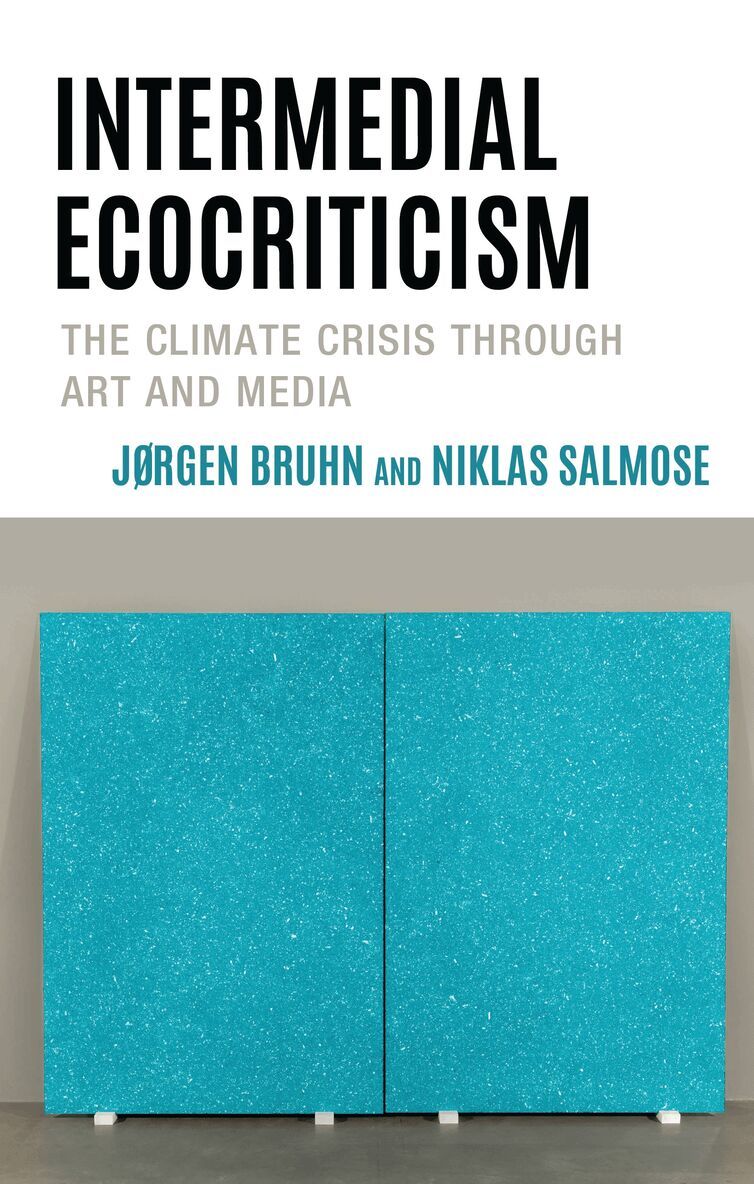
Intermedial Ecocriticism: The Climate Crisis Through Art and Media provides an extensive understanding of the climate crisis as it is represented in a number of medial forms, including scientific reports, popular science, graphic novels, documentaries, websites, feature films, and advertising. Theoretically, this is the first open access book that combines two important theories from the humanities: ecocriticism and intermedial studies. The book carefully develops Intermedial Ecocriticism as a method of investigating how climate crisis is represented and communicated through diverse media types. The chapters each include a comparative analysis of two or three specific media products and how they mediate the climate crisis.The ebook editions of this book are available open access under a CC BY-NC-ND 4.0 licence on bloomsburycollections.com. Open access was funded by Linnaeus University; University of Gothenburg.
400 kr
Skickas
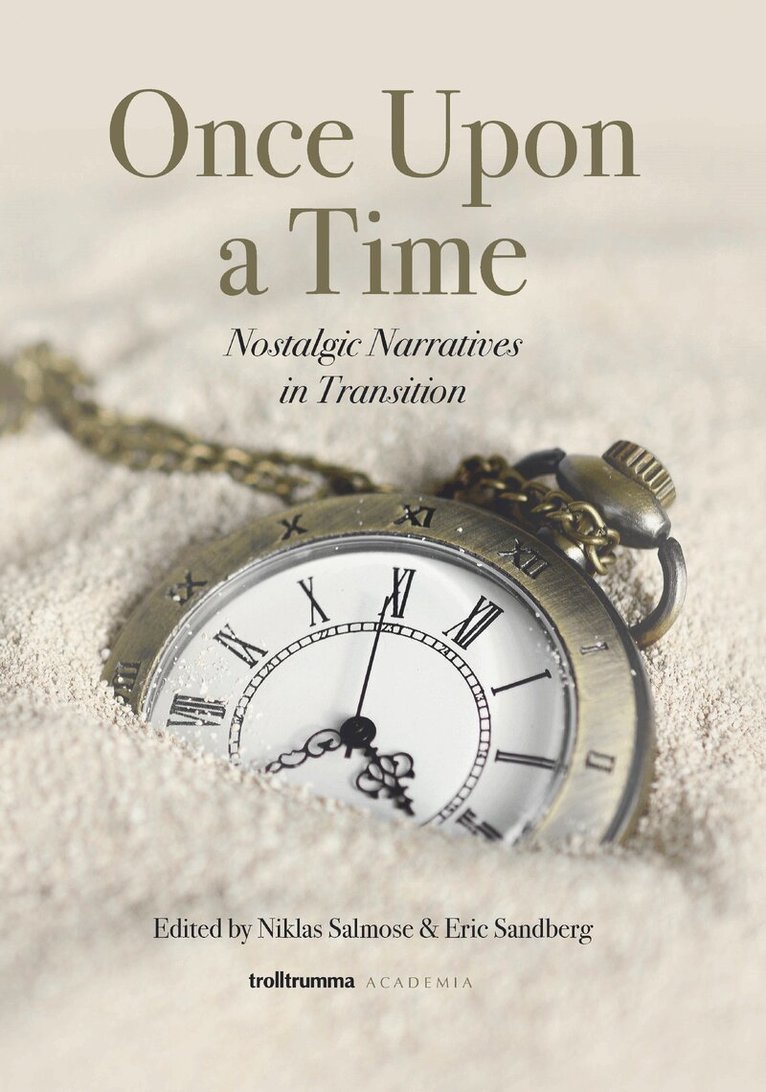
“Nostalgia is increasingly recognised as a key symptom -- and consequence -- of modernity's accelerated lifestyles and temporalities. Once upon a Time adds extensively to understanding of its literary manifestations, through essays which are wide-ranging in the contexts they address and impressively incisive in the analyses they offer.” Randall Stevenson, Professor of Twentieth-Century Literature, University of Edinburgh The past has never seemed further away. The many tomorrows inherent in every new technology, product, and digitally mediated event drive us further away from our collective and individual histories. Yet our present seems nonetheless stubbornly rooted in the past, a past that has been dying very slowly for a very long time. Nostalgia, then, appears increasingly to be a modality with major potential for understanding how our now is shaped by our then, both individually and collectively. The past may be a foreign country but it is also inescapably our homeland, the place from which we attempt to emigrate but return to again and again is a series of personal and cultural nostalgic voyages which shape the line and weight of our own times and places. From the cinema to the TV screen, from the pages of the latest best-selling novel to the lines of the obscure academic poet, the powerful emotional and intellectual impact of the set of emotions, ideas, and associations linked to nostalgia are critical compositional devices. To ignore this element of our aesthetic culture, or to condemn it outright as politically naïve and intellectually regressive, would be to miss, and thus misread, substantial portions of contemporary culture. Nostalgia and the nostalgic analysis of cultural products have enormous potential to help us understand the present. This anthology explores narratives in the spirit of a nostalgic methodology, thus revealing unexpected and unfamiliar aesthetic and political dimensions of our present moment’s diverse transient textual communications. The collection includes nostalgic analyses of the life writing of Vladimir Nabokov and Orhan Pamuk, transnational and transracial adoption narratives, the poetry of Tony Harrison and Lars Gustafsson, nostalgic representations of Europe by American artists such as Mary Maxwell and Woody Allen, contemporary nostalgic commemorations of The First World War, Fred Boot’s musical Soldier of Orange, Karl Ove Knausgård’s My Struggle, the Harry Potter series, and two seminal nostalgic films from the 1970s, American Graffiti and The Last Picture Show. Editors: Niklas Salmose is Senior Lecturer in English Literature at Linnaeus University, Sweden. He is an active member of the Linnaeus University Center for Intermedial and Multimodal Studies (IMS). His recent publications include work on F. Scott Fitzgerald, animal horror, translation, nostalgia and modernism, Nordic Noir, Alfred Hitchcock, and the Anthropocene. He is presently guest editing a special issue on contemporary nostalgia for the journal Humanities. Eric Sandberg is an Assistant Professor at City University of Hong Kong and a Docent at the University of Oulu, Finland. His research interests range from modernism to the twenty-first century novel. His monograph Virginia Woolf: Experiments in Character was published in 2014, he co-edited Adaptation, Awards Culture, and the Value of Prestige (Palgrave, 2017), and edited 100 Greatest Literary Detectives (Rowman & Littlefield, 2018).