Nilgun Bayraktar - Böcker
Visar alla böcker från författaren Nilgun Bayraktar. Handla med fri frakt och snabb leverans.
4 produkter
4 produkter
724 kr
Skickas inom 10-15 vardagar
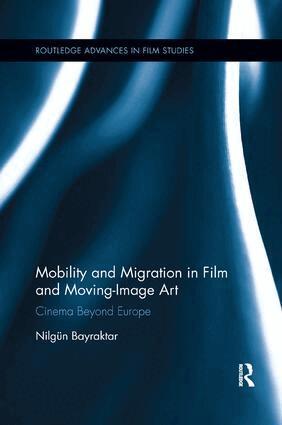
Mobility and Migration in Film and Moving Image Art explores cinematic and artistic representations of migration and mobility in Europe since the 1990s. Drawing on theories of migrant and diasporic cinema, moving-image art, and mobility studies, Bayraktar provides historically situated close readings of films, videos, and cinematic installations that concern migratory networks and infrastructures across Europe, the Middle East, and Africa. Probing the notion of Europe as a coherent entity and a borderless space, this interdisciplinary study underscores the ways European ideals of mobility and fluidity are deeply enmeshed with immobility, forced migration, illegalization, and xenophobia. With a specific focus on diverse forms of mobility such as labor migration, postcolonial migration, refugee mobilities, and tourism, Bayraktar studies the new counter-hegemonic imaginations invoked by the work of filmmakers such as Ayşe Polat, Fatih Akin, Michael Haneke, and Tony Gatlif as well as video essays and installations of artists such as Kutluğ Ataman, Ursula Biemann, Maria Iorio and Raphaël Cuomo, and Ergin Çavuşoğlu. Challenging aesthetic boundaries as well as national, cultural, and political ones, the works central to this book envision Europe as a diverse, inclusive, and unfixed continent that is reimagined from many elsewheres well beyond its borders.
2 240 kr
Skickas inom 10-15 vardagar
Mobility and Migration in Film and Moving Image Art explores cinematic and artistic representations of migration and mobility in Europe from the 1990s to today. Drawing on theories of migrant and diasporic cinema, moving-image art, and mobility studies, Bayraktar provides historically situated close readings of films, videos, and cinematic installations that concern migratory networks and infrastructures across Europe, the Middle East, and Africa. Probing the notion of Europe as a coherent entity and a borderless space, this interdisciplinary study investigates the ways in which European ideals of mobility and fluidity are deeply enmeshed with forced migration, illegalization, and xenophobia. With a specific focus on distinct forms of mobility such as labor migration, postcolonial migration, tourism, and refugee mobilities, Bayraktar studies the new counter-hegemonic imaginations invoked by the work of filmmakers such as Ayşe Polat, Fatih Akin, Michael Haneke, and Tony Gatlif as well as video essays and installations of artists such as Kutluğ Ataman, Ursula Biemann, Ergin Çavuşoğlu, Maria Iorio and Raphaël Cuomo. Challenging aesthetic as well as national, cultural, and political boundaries, the works central to this book envision Europe as a diverse, inclusive, and unfixed continent that is reimagined from many elsewheres well beyond its borders.
1 856 kr
Skickas inom 10-15 vardagar
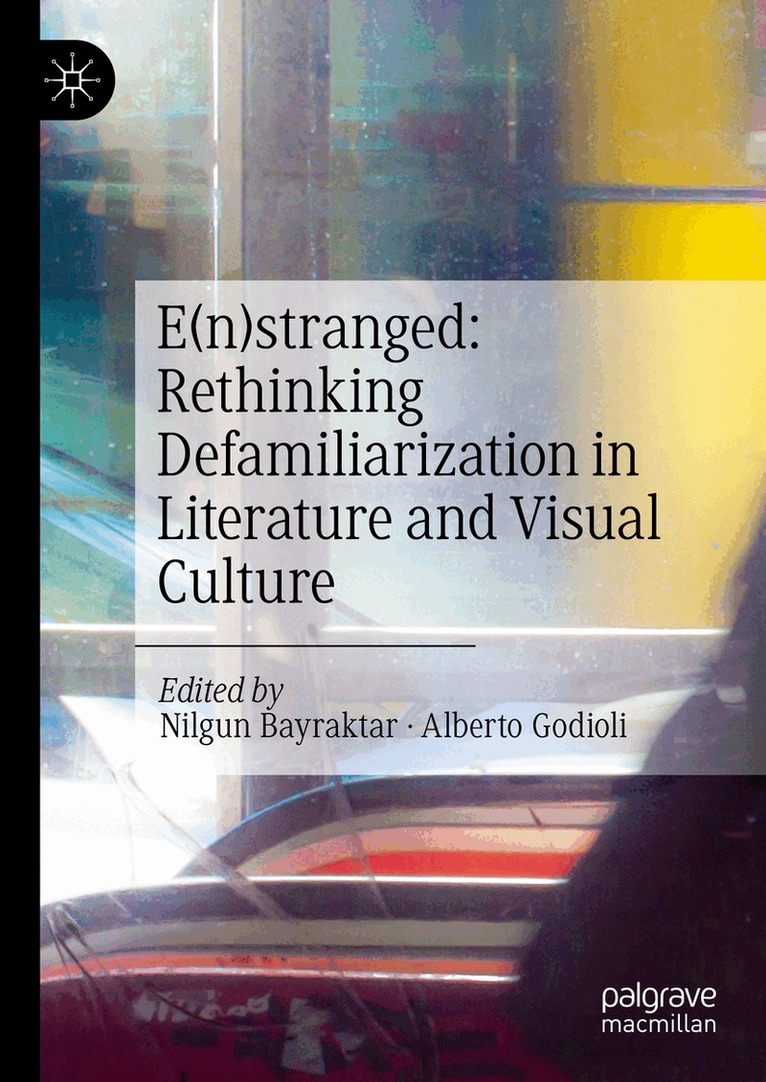
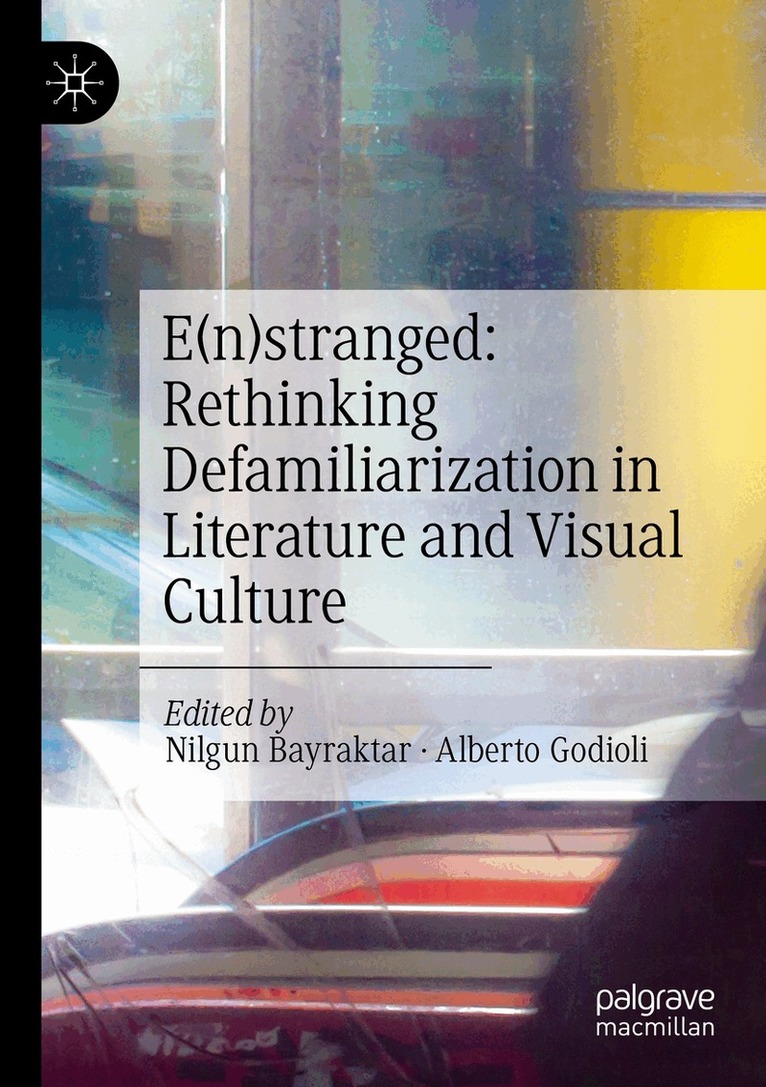
Variously translated as “estrangement,” “enstrangement” or “defamiliarization,” Viktor Shklovsky’s concept of ostranenie is more relevant than ever. This collection offers new insights into the theories and practices of ostranenie across various languages and cultures, with a particular focus on the 20th and 21st centuries. Our current era is marked by a dramatic redefinition of the normal and the strange, the familiar and the weird. The rise of far-right populism has increasingly normalized xenophobic and nativist stances previously confined to the fringes of the political spectrum. Additionally, the climate crisis has led to the ongoing renegotiation of the concepts of normalcy and emergency amid widespread efforts to adapt to the “new (ab)normal.” Exploring defamiliarization provides a unique perspective to comprehend and question these processes and their profound cultural implications.Focusing on ostranenie also offers valuable insights into how aesthetic forms serve a political function. Defamiliarization can take on various forms, including retro-futuristic dystopias, stylized films, and darkly humorous cartoons and memes. It can be an effective tool for political activation that relies on formal innovation rather than superficial emotional engagement.This collection brings together the work of a group of scholars examining defamiliarization across different media. It explores questions such as: How can we differentiate between various forms of defamiliarization and analyze their effects on the reader/viewer? How is defamiliarization connected to the weird, the eerie, or the uncanny? As a result, the collection offers an updated theoretical framework for understanding the wide range of emergent artistic and literary practices of e(n)strangement in the current era and their significant political affordances. Chapter 6 is available open access under a Creative Commons Attribution 4.0 International License via link.springer.com
1 509 kr
Skickas inom 10-15 vardagar
Variously translated as “estrangement,” “enstrangement” or “defamiliarization,” Viktor Shklovsky’s concept of ostranenie is more relevant than ever. This collection offers new insights into the theories and practices of ostranenie across various languages and cultures, with a particular focus on the 20th and 21st centuries. Our current era is marked by a dramatic redefinition of the normal and the strange, the familiar and the weird. The rise of far-right populism has increasingly normalized xenophobic and nativist stances previously confined to the fringes of the political spectrum. Additionally, the climate crisis has led to the ongoing renegotiation of the concepts of normalcy and emergency amid widespread efforts to adapt to the “new (ab)normal.” Exploring defamiliarization provides a unique perspective to comprehend and question these processes and their profound cultural implications.Focusing on ostranenie also offers valuable insights into how aesthetic forms serve a political function. Defamiliarization can take on various forms, including retro-futuristic dystopias, stylized films, and darkly humorous cartoons and memes. It can be an effective tool for political activation that relies on formal innovation rather than superficial emotional engagement.This collection brings together the work of a group of scholars examining defamiliarization across different media. It explores questions such as: How can we differentiate between various forms of defamiliarization and analyze their effects on the reader/viewer? How is defamiliarization connected to the weird, the eerie, or the uncanny? As a result, the collection offers an updated theoretical framework for understanding the wide range of emergent artistic and literary practices of e(n)strangement in the current era and their significant political affordances. Chapter 6 is available open access under a Creative Commons Attribution 4.0 International License via link.springer.com