Nils Bubandt - Böcker
Visar alla böcker från författaren Nils Bubandt. Handla med fri frakt och snabb leverans.
11 produkter
11 produkter
287 kr
Skickas inom 7-10 vardagar
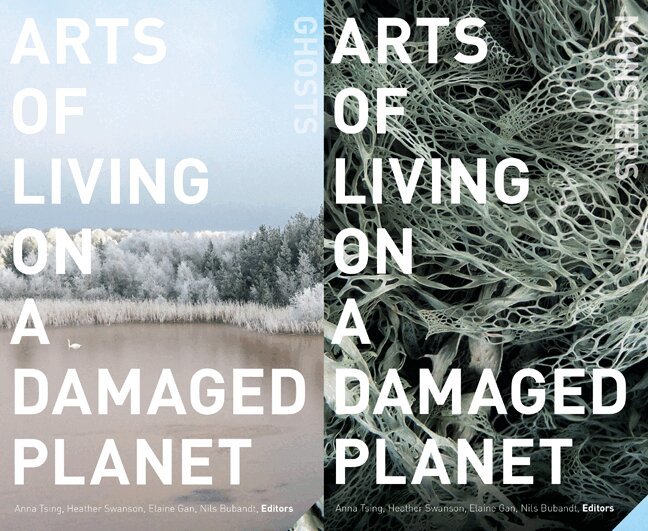
Living on a damaged planet challenges who we are and where we live. This timely anthology calls on twenty eminent humanists and scientists to revitalize curiosity, observation, and transdisciplinary conversation about life on earth. As human-induced environmental change threatens multispecies livability, Arts of Living on a Damaged Planet puts forward a bold proposal: entangled histories, situated narratives, and thick descriptions offer urgent arts of living.Included are essays by scholars in anthropology, ecology, science studies, art, literature, and bioinformatics who posit critical and creative tools for collaborative survival in a more-than-human Anthropocene. The essays are organized around two key figures that also serve as the publications two openings: Ghosts, or landscapes haunted by the violences of modernity; and Monsters, or interspecies and intraspecies sociality. Ghosts and Monsters are tentacular, windy, and arboreal arts that invite readers to encounter ants, lichen, rocks, electrons, flying foxes, salmon, chestnut trees, mud volcanoes, border zones, graves, radioactive waste-in short, the wonders and terrors of an unintended epoch. Contributors: Karen Barad, U of California, Santa Cruz; Kate Brown, U of Maryland, Baltimore; Carla Freccero, U of California, Santa Cruz; Peter Funch, Aarhus U; Scott F. Gilbert, Swarthmore College; Deborah M. Gordon, Stanford U; Donna J. Haraway, U of California, Santa Cruz; Andreas Hejnol, U of Bergen, Norway; Ursula K. Le Guin; Marianne Elisabeth Lien, U of Oslo; Andrew Mathews, U of California, Santa Cruz; Margaret McFall-Ngai, U of Hawaii, Manoa; Ingrid M. Parker, U of California, Santa Cruz; Mary Louise Pratt, NYU; Anne Pringle, U of Wisconsin, Madison; Deborah Bird Rose, U of New South Wales, Sydney; Dorion Sagan; Lesley Stern, U of California, San Diego; Jens-Christian Svenning, Aarhus U.
2 165 kr
Skickas inom 10-15 vardagar
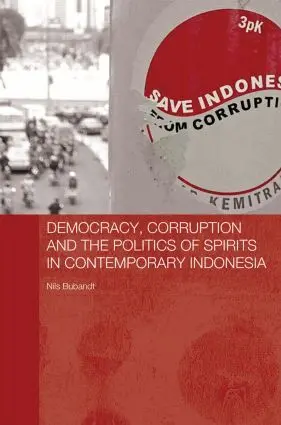
Indonesia has been an electoral democracy for more than a decade, and yet the political landscape of the world’s third-largest democracy is as complex and enigmatic as ever. The country has achieved a successful transition to democracy and yet Indonesian democracy continues to be flawed, illiberal, and predatory.This book suggests that this and other paradoxes of democracy in Indonesia often assume occult forms in the Indonesian political imagination, and that the spirit-like character of democracy and corruption traverses into the national media and the political elite. Through a series of biographical accounts of political entrepreneurs, all of whom employ spirits in various, but always highly contested, ways, the book seeks to provide a portrait of Indonesia’s contradictory democracy, contending that the contradictions that haunt democracy in Indonesia also infect democracy globally. Exploring the intimate ways in which the world of politics and the world of spirits are entangled, it argues that Indonesia’s seemingly peculiar problems with democracy and spirits in fact reflect a set of contradictions within democracy itself.Engaging with recent attempts to look at contemporary politics through the lens of the occult, Democracy, Corruption and the Politics of Spirits in Contemporary Indonesia will be of interest to academics in the fields of Asian Studies, Anthropology and Political Science and relevant for the study of Indonesian politics and for debates about democracy in Asia and beyond.
1 525 kr
Skickas inom 10-15 vardagar
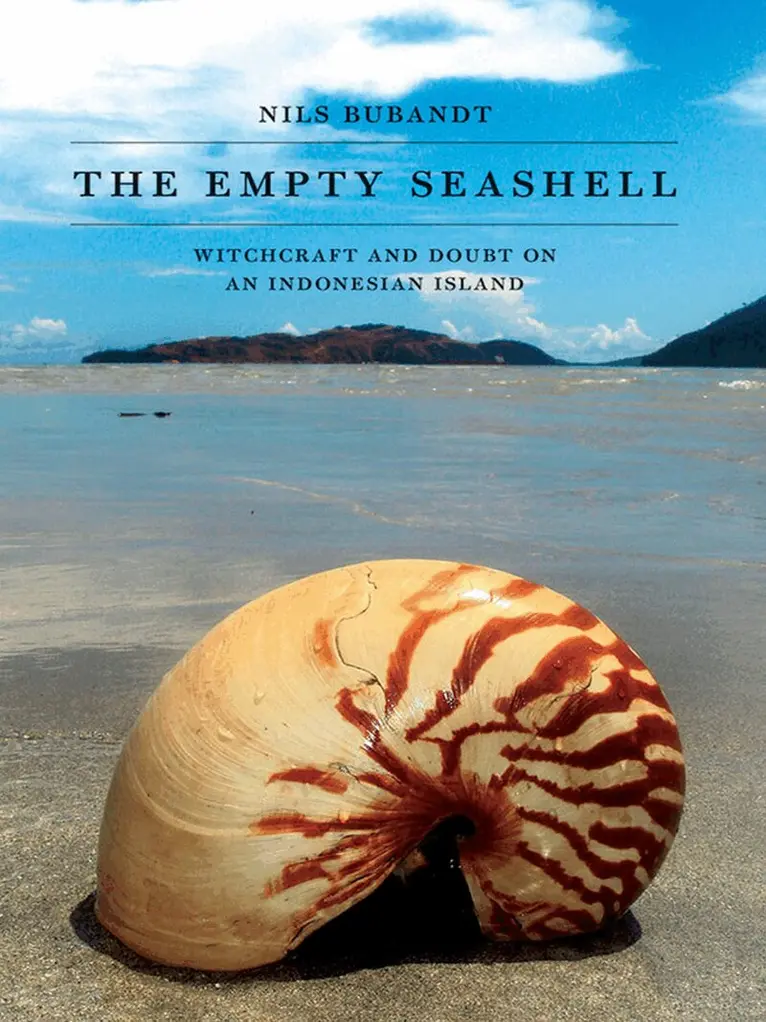
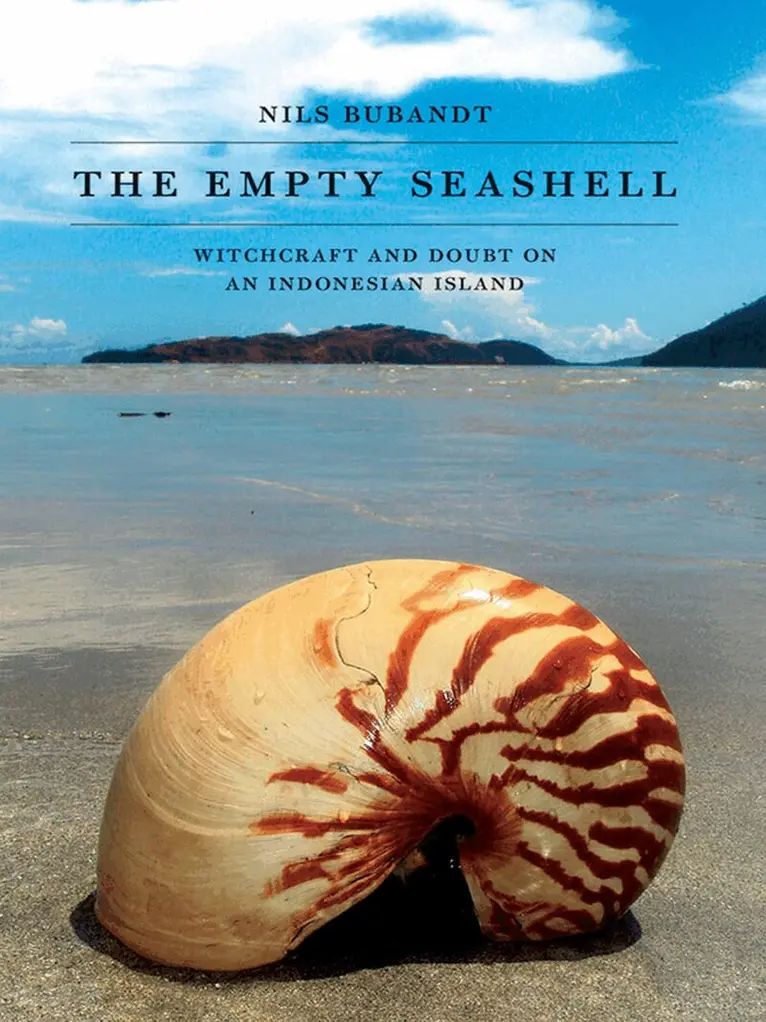
The Empty Seashell explores what it is like to live in a world where cannibal witches are undeniably real, yet too ephemeral and contradictory to be an object of belief. In a book based on more than three years of fieldwork between 1991 and 2011, Nils Bubandt argues that cannibal witches for people in the coastal, and predominantly Christian, community of Buli in the Indonesian province of North Maluku are both corporeally real and fundamentally unknowable. Witches (known as gua in the Buli language or as suanggi in regional Malay) appear to be ordinary humans but sometimes, especially at night, they take other forms and attack people in order to kill them and eat their livers. They are seemingly everywhere and nowhere at the same time. The reality of gua, therefore, can never be pinned down. The title of the book comes from the empty nautilus shells that regularly drift ashore around Buli village. Convention has it that if you find a live nautilus, you are a gua. Like the empty shells, witchcraft always seems to recede from experience.Bubandt begins the book by recounting his own confusion and frustration in coming to terms with the contradictory and inaccessible nature of witchcraft realities in Buli. A detailed ethnography of the encompassing inaccessibility of Buli witchcraft leads him to the conclusion that much of the anthropological literature, which views witchcraft as a system of beliefs with genuine explanatory power, is off the mark. Witchcraft for the Buli people doesn't explain anything. In fact, it does the opposite: it confuses, obfuscates, and frustrates. Drawing upon Jacques Derrida's concept of aporia—an interminable experience that remains continuously in doubt—Bubandt suggests the need to take seriously people's experiential and epistemological doubts about witchcraft, and outlines, by extension, a novel way of thinking about witchcraft and its relation to modernity.
423 kr
Skickas inom 10-15 vardagar
The Empty Seashell explores what it is like to live in a world where cannibal witches are undeniably real, yet too ephemeral and contradictory to be an object of belief. In a book based on more than three years of fieldwork between 1991 and 2011, Nils Bubandt argues that cannibal witches for people in the coastal, and predominantly Christian, community of Buli in the Indonesian province of North Maluku are both corporeally real and fundamentally unknowable. Witches (known as gua in the Buli language or as suanggi in regional Malay) appear to be ordinary humans but sometimes, especially at night, they take other forms and attack people in order to kill them and eat their livers. They are seemingly everywhere and nowhere at the same time. The reality of gua, therefore, can never be pinned down. The title of the book comes from the empty nautilus shells that regularly drift ashore around Buli village. Convention has it that if you find a live nautilus, you are a gua. Like the empty shells, witchcraft always seems to recede from experience.Bubandt begins the book by recounting his own confusion and frustration in coming to terms with the contradictory and inaccessible nature of witchcraft realities in Buli. A detailed ethnography of the encompassing inaccessibility of Buli witchcraft leads him to the conclusion that much of the anthropological literature, which views witchcraft as a system of beliefs with genuine explanatory power, is off the mark. Witchcraft for the Buli people doesn't explain anything. In fact, it does the opposite: it confuses, obfuscates, and frustrates. Drawing upon Jacques Derrida's concept of aporia—an interminable experience that remains continuously in doubt—Bubandt suggests the need to take seriously people's experiential and epistemological doubts about witchcraft, and outlines, by extension, a novel way of thinking about witchcraft and its relation to modernity.
694 kr
Skickas inom 10-15 vardagar
Indonesia has been an electoral democracy for more than a decade, and yet the political landscape of the world’s third-largest democracy is as complex and enigmatic as ever. The country has achieved a successful transition to democracy and yet Indonesian democracy continues to be flawed, illiberal, and predatory.This book suggests that this and other paradoxes of democracy in Indonesia often assume occult forms in the Indonesian political imagination, and that the spirit-like character of democracy and corruption traverses into the national media and the political elite. Through a series of biographical accounts of political entrepreneurs, all of whom employ spirits in various, but always highly contested, ways, the book seeks to provide a portrait of Indonesia’s contradictory democracy, contending that the contradictions that haunt democracy in Indonesia also infect democracy globally. Exploring the intimate ways in which the world of politics and the world of spirits are entangled, it argues that Indonesia’s seemingly peculiar problems with democracy and spirits in fact reflect a set of contradictions within democracy itself.Engaging with recent attempts to look at contemporary politics through the lens of the occult, Democracy, Corruption and the Politics of Spirits in Contemporary Indonesia will be of interest to academics in the fields of Asian Studies, Anthropology and Political Science and relevant for the study of Indonesian politics and for debates about democracy in Asia and beyond.
552 kr
Skickas inom 10-15 vardagar
How do we teach analysis in anthropology and other field-based sciences? How can we engage analytically and interrogatively with philosophical ideas and concepts in our fieldwork? And how can students learn to engage critical ideas from philosophy to better understand the worlds they study?Philosophy on Fieldwork provides "show-don’t-tell" answers to these questions. In twenty-six "master class" chapters, philosophy meets anthropological critique as leading anthropologists introduce the thinking of one foundational philosopher – from a variety of Western traditions and beyond – and apply this critically to an ethnographic case. Nils Bubandt, Thomas Schwarz Wentzer and the contributors to this volume reveal how the encounter between philosophy and fieldwork is fertile ground for analytical insight to emerge. Equally, the philosophical concepts employed are critically explored for their potential to be thought "otherwise" through their frictional encounter with the worlds in the field, allowing non-Western and non-elite life experience and ontologies to "speak back" to both anthropology and philosophy.This is a unique and concrete guidebook to social analysis. It answers the critical need for a "how-to" textbook in fieldwork-based analysis as each chapter demonstrates how the ideas of a specific philosopher can be interrogatively applied to a concrete analytical case study. The straightforward pedagogy of Philosophy on Fieldwork makes this an accessible volume and a must-read for both students and seasoned fieldworkers interested in exploring the contentious middle ground between philosophy and anthropology.
2 098 kr
Skickas inom 10-15 vardagar
How do we teach analysis in anthropology and other field-based sciences? How can we engage analytically and interrogatively with philosophical ideas and concepts in our fieldwork? And how can students learn to engage critical ideas from philosophy to better understand the worlds they study?Philosophy on Fieldwork provides "show-don’t-tell" answers to these questions. In twenty-six "master class" chapters, philosophy meets anthropological critique as leading anthropologists introduce the thinking of one foundational philosopher – from a variety of Western traditions and beyond – and apply this critically to an ethnographic case. Nils Bubandt, Thomas Schwarz Wentzer and the contributors to this volume reveal how the encounter between philosophy and fieldwork is fertile ground for analytical insight to emerge. Equally, the philosophical concepts employed are critically explored for their potential to be thought "otherwise" through their frictional encounter with the worlds in the field, allowing non-Western and non-elite life experience and ontologies to "speak back" to both anthropology and philosophy.This is a unique and concrete guidebook to social analysis. It answers the critical need for a "how-to" textbook in fieldwork-based analysis as each chapter demonstrates how the ideas of a specific philosopher can be interrogatively applied to a concrete analytical case study. The straightforward pedagogy of Philosophy on Fieldwork makes this an accessible volume and a must-read for both students and seasoned fieldworkers interested in exploring the contentious middle ground between philosophy and anthropology.
1 367 kr
Skickas inom 7-10 vardagar
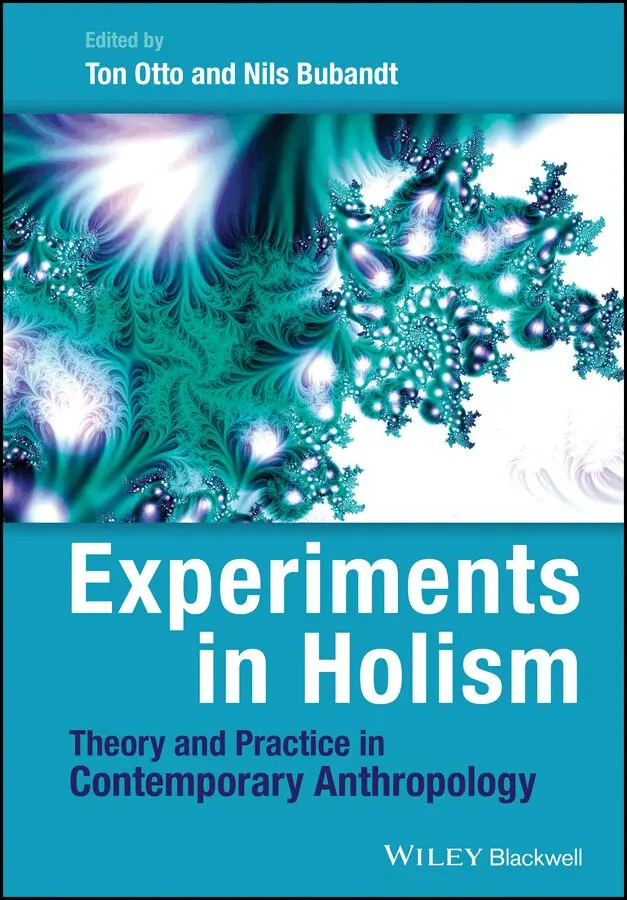
Experiments in Holism Experiments in Holism: Theory and Practice in Contemporary Anthropology presents a series of essays that critically examine the ongoing relevance of holism and its theoretical and methodological potential in today’s world. Contributions from a diverse collection of leading anthropologists reveal how recent critiques of the holistic approach have not led to its wholesale rejection, but rather to a panoply of experiments that critically reassess and reemploy holism. The essays focus on aspects of holism including its utilization in current ethnographic research, holistic considerations in cultural anthropology, the French structuralist tradition, the predominantly English tradition of social anthropology, and many others. Collectively, the essays show how holism is simultaneously central to, and problematically a part of, the theory and practice of anthropology. Experiments in Holism reveals how contemporary attempts to rescale and retool anthropology entail new ways of coming to terms with anthropology’s heritage of holism, seeking to obviate its current excesses while recapturing its critical potential to meet the challenges of our contemporary world.
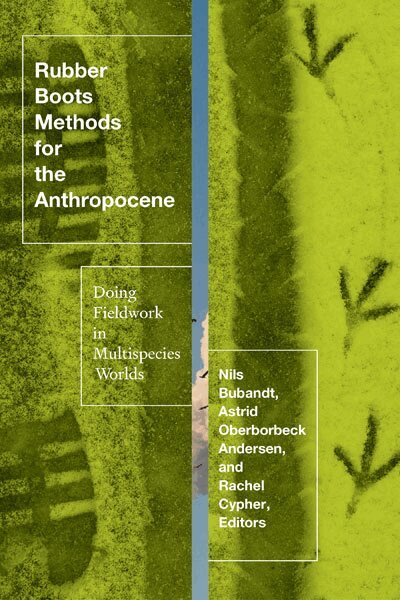
Rubber Boots Methods for the Anthropocene
Doing Fieldwork in Multispecies Worlds
Inbunden, Engelska, 2023
1 473 kr
Skickas inom 7-10 vardagar
A methodological follow-up to Arts of Living on a Damaged Planet The environmental and climatic crises of our time are fundamentally multispecies crises. And the Anthropocene, a time of “human-made” disruptions on a planetary scale, is a disruption of the fabric of life as a whole. The contributors to Rubber Boots Methods for the Anthropocene argue that understanding the multispecies nature of these disruptions requires multispecies methods.Answering methodological challenges posed by the Anthropocene, Rubber Boots Methods for the Anthropocene retools the empirical study of the socioecological chaos of the contemporary moment across the arts, human science, and natural science. Based on critical landscape history, multispecies curiosity, and collaboration across disciplines and knowledge systems, the volume presents thirteen transdisciplinary accounts of practical methodological experimentation, highlighting diverse settings ranging from the High Arctic to the deserts of southern Africa and from the pampas of Argentina to the coral reefs of the Western Pacific, always insisting on the importance of firsthand, “rubber boots” immersion in the field.The methodological companion to Arts of Living on a Damaged Planet: Ghosts and Monsters of the Anthropocene (Minnesota, 2017), this collection puts forth empirical studies of the multispecies messiness of contemporary life that investigate some of the critical questions of our time.Contributors: Filippo Bertoni, Museum fÜr Naturkunde, Berlin; Harshavardhan Bhat, U of Westminster; Nathalia Brichet, U of Copenhagen; Janne Flora, Aarhus U, Denmark; Natalie Forssman, U of British Columbia; Peter Funch, Aarhus U; Kirsten Hastrup, U of Copenhagen; Colin Hoag, Smith College; Joseph Klein, U of California, Santa Cruz; Andrew S. Mathews, U of California, Santa Cruz; Daniel MÜnster, U of Oslo; Ursula MÜnster, U of Oslo; Jon Rasmus Nyquist, U of Oslo; Katy Overstreet, U of Copenhagen; Pierre du Plessis, U of Oslo; Meredith Root-Bernstein; Heather Anne Swanson, Aarhus U; Anna Lowenhaupt Tsing, U of California,Santa Cruz; Stine Vestbo.
Rubber Boots Methods for the Anthropocene
Doing Fieldwork in Multispecies Worlds
Häftad, Engelska, 2023
364 kr
Skickas inom 7-10 vardagar
A methodological follow-up to Arts of Living on a Damaged Planet The environmental and climatic crises of our time are fundamentally multispecies crises. And the Anthropocene, a time of “human-made” disruptions on a planetary scale, is a disruption of the fabric of life as a whole. The contributors to Rubber Boots Methods for the Anthropocene argue that understanding the multispecies nature of these disruptions requires multispecies methods.Answering methodological challenges posed by the Anthropocene, Rubber Boots Methods for the Anthropocene retools the empirical study of the socioecological chaos of the contemporary moment across the arts, human science, and natural science. Based on critical landscape history, multispecies curiosity, and collaboration across disciplines and knowledge systems, the volume presents thirteen transdisciplinary accounts of practical methodological experimentation, highlighting diverse settings ranging from the High Arctic to the deserts of southern Africa and from the pampas of Argentina to the coral reefs of the Western Pacific, always insisting on the importance of firsthand, “rubber boots” immersion in the field.The methodological companion to Arts of Living on a Damaged Planet: Ghosts and Monsters of the Anthropocene (Minnesota, 2017), this collection puts forth empirical studies of the multispecies messiness of contemporary life that investigate some of the critical questions of our time.Contributors: Filippo Bertoni, Museum fÜr Naturkunde, Berlin; Harshavardhan Bhat, U of Westminster; Nathalia Brichet, U of Copenhagen; Janne Flora, Aarhus U, Denmark; Natalie Forssman, U of British Columbia; Peter Funch, Aarhus U; Kirsten Hastrup, U of Copenhagen; Colin Hoag, Smith College; Joseph Klein, U of California, Santa Cruz; Andrew S. Mathews, U of California, Santa Cruz; Daniel MÜnster, U of Oslo; Ursula MÜnster, U of Oslo; Jon Rasmus Nyquist, U of Oslo; Katy Overstreet, U of Copenhagen; Pierre du Plessis, U of Oslo; Meredith Root-Bernstein; Heather Anne Swanson, Aarhus U; Anna Lowenhaupt Tsing, U of California,Santa Cruz; Stine Vestbo.
150 kr
Skickas inom 5-8 vardagar
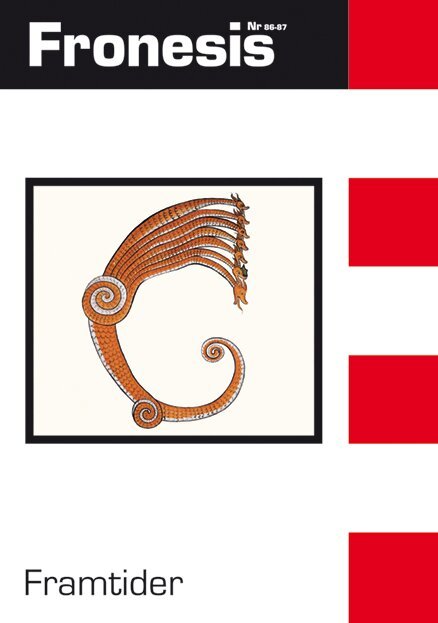
Välkommen till framtiden! Men vilken framtid? Framtiden som begrepp är både mångtydigt och politiskt laddat. Å ena sidan framställs den som en naturlig förlängning av det förflutna och som något som kan planeras, styras och förutses. Å andra sidan öppnar begreppet framtider i plural för en kamp mellan olika visioner och en omförhandling av de historieskrivningar som legitimerar vissa framtider framför andra. I den bemärkelsen handlar framtiden inte bara om tiden som ligger framför oss, utan också om att omskriva förfluten tid för att göra vissa framtider tänkbara och andra otänkbara. I nummer 86–87 av Fronesis utforskas framtidsbegreppet i en tid då grundvillkoren för politiskt arbete drastiskt förändrats. Vi står inför det som kallas en metakris: klimatförändringar, växande auktoritära krafter och skenande ojämlikhet som alla är förbundna med varandra. Numret problematiserar den västerländska modernitetens linjära framstegstanke och granskar hur »smarta framtider« och accelerationspolitik riskerar att fördjupa samtidens kriser. Men här erbjuds också alternativ genom perspektiv som betonar långsamhet framför acceleration och kollektiv omsorg framför individuell överlevnad. I numret publiceras en intervju med den belgiska filosofen Isabelle Stengers om snabb och långsam vetenskap, en klassisk text av den brittiske marxisten Raymond Williams om hur överlevnadskalkyler ersatt framtidstro och den tysk-nigerianske psykologen Báyò Akómoláfés reflektion över aktivism och aktörskap. Här finns också texter av bland andra aktivisten adrienne maree brown, kollektivet Gesturing Towards Decolonial Futures (GTDF), författaren Ursula K. Le Guin, forskaren i miljöhumaniora Kati Lindström och teologen Jayne Svenungsson.