Nina Caspersen - Böcker
Visar alla böcker från författaren Nina Caspersen. Handla med fri frakt och snabb leverans.
7 produkter
7 produkter
2 165 kr
Skickas inom 10-15 vardagar
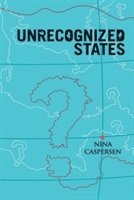
Unrecognized states are territories that have achieved de facto independence, yet have failed to gain international recognition as independent states. These territories constitute anomalies in the international system of sovereign states and often present significant challenges to policy makers, as evidenced by the war in Georgia and the continued debate over Kosovo’s independence. This book draws on both theory and case studies to better understand the phenomenon of unrecognized states, demonstrating that the existence of such entities is less unusual than previously assumed. Moving away from an overt focus on case studies, the chapters present various themes that link the emergence, operations, and development of unrecognized states and assess how the established order of states responds to the challenges they present: How do unrecognized interact with the international system of sovereign states? How does it shape their emergence, operations and development? How do these entities develop in a context of non-recognition? Are we witnessing a new form of statehood, or are these entities better understood as states-in-waiting? What are the strategies available for dealing with unrecognized states? Could power-sharing or autonomy provide a solution or are more innovative strategies necessary? With contributions from leading scholars in a number of fields, this book will appeal not only to students and scholars of Political Science, International Relations, Geography, Area Studies, Sociology, and Conflict Resolution, but also to journalists, government bodies and NGOs.
Unrecognized States
The Struggle for Sovereignty in the Modern International System
Inbunden, Engelska, 2011
715 kr
Skickas inom 7-10 vardagar
Unrecognized states are places that do not exist in international politics; they are state-like entities that have achieved de facto independence, but have failed to gain widespread international recognition. Since the Cold-War, unrecognized states have been involved in conflicts over sovereign statehood in the Balkans, the former Soviet Union, South Asia, the Horn of Africa, and the South Pacific; some of which elicited major international crises and intervention, including the use of armed force.Yet they remain subject to many myths and simplifications. Drawing on a number of contemporary and historical cases, from Nagorno Karabakh and Somaliland to Taiwan, this timely new book provides a comprehensive analysis of unrecognized states. It examines their origins, the factors that enable them to survive and explores their likely future trajectories. But it is not just a book about unrecognized states; it is a book about sovereignty and statehood; one which does not shy way from addressing crucial issues such as how these anomalies survive in a system of sovereign states and how the context of non-recognition affects their attempts to build effective state-like entities.Ideal for students and scholars of global politics, peace and conflict studies, Unrecognized States offers a much needed and engaging account of the development of unrecognized states in the modern international system.
Unrecognized States
The Struggle for Sovereignty in the Modern International System
Häftad, Engelska, 2011
278 kr
Skickas inom 5-8 vardagar
Unrecognized states are places that do not exist in international politics; they are state-like entities that have achieved de facto independence, but have failed to gain widespread international recognition. Since the Cold-War, unrecognized states have been involved in conflicts over sovereign statehood in the Balkans, the former Soviet Union, South Asia, the Horn of Africa, and the South Pacific; some of which elicited major international crises and intervention, including the use of armed force.Yet they remain subject to many myths and simplifications. Drawing on a number of contemporary and historical cases, from Nagorno Karabakh and Somaliland to Taiwan, this timely new book provides a comprehensive analysis of unrecognized states. It examines their origins, the factors that enable them to survive and explores their likely future trajectories. But it is not just a book about unrecognized states; it is a book about sovereignty and statehood; one which does not shy way from addressing crucial issues such as how these anomalies survive in a system of sovereign states and how the context of non-recognition affects their attempts to build effective state-like entities.Ideal for students and scholars of global politics, peace and conflict studies, Unrecognized States offers a much needed and engaging account of the development of unrecognized states in the modern international system.
715 kr
Skickas inom 7-10 vardagar
Since the end of the Cold War a significant number of peace agreements have been signed, many of them in bloody intra-state conflicts that were previously thought beyond resolution. How have these agreements addressed issues of territory, security, power and justice? Do they reveal a blueprint for peace, and what can we learn from both their successes and their failures?This timely book provides a comprehensive and cutting-edge analysis of peace agreements signed in separatist conflicts from 1990 to the present day. Drawing on a diverse range of cases, including Bosnia, Indonesia, the Philippines, Sudan, Israel-Palestine and Ukraine, it analyses the different peace 'packages', focusing on the interaction of the elements in play, and exploring the impact of political contestation within conflict parties and of peace process dynamics.Though some of these agreements have displayed great ingenuity in finding lasting solutions, many have relied on more traditional, and often problematic, designs. For all such agreements, the enduring challenge is that of ensuring flexibility while avoiding destructive ambiguity. This is why the content of peace agreements really matters - not only to sustain peace once it is achieved but to make the prospect of peace possible in the first place.
231 kr
Skickas inom 7-10 vardagar
Since the end of the Cold War a significant number of peace agreements have been signed, many of them in bloody intra-state conflicts that were previously thought beyond resolution. How have these agreements addressed issues of territory, security, power and justice? Do they reveal a blueprint for peace, and what can we learn from both their successes and their failures?This timely book provides a comprehensive and cutting-edge analysis of peace agreements signed in separatist conflicts from 1990 to the present day. Drawing on a diverse range of cases, including Bosnia, Indonesia, the Philippines, Sudan, Israel-Palestine and Ukraine, it analyses the different peace 'packages', focusing on the interaction of the elements in play, and exploring the impact of political contestation within conflict parties and of peace process dynamics.Though some of these agreements have displayed great ingenuity in finding lasting solutions, many have relied on more traditional, and often problematic, designs. For all such agreements, the enduring challenge is that of ensuring flexibility while avoiding destructive ambiguity. This is why the content of peace agreements really matters - not only to sustain peace once it is achieved but to make the prospect of peace possible in the first place.
701 kr
Skickas inom 10-15 vardagar
Unrecognized states are territories that have achieved de facto independence, yet have failed to gain international recognition as independent states. These territories constitute anomalies in the international system of sovereign states and often present significant challenges to policy makers, as evidenced by the war in Georgia and the continued debate over Kosovo’s independence. This book draws on both theory and case studies to better understand the phenomenon of unrecognized states, demonstrating that the existence of such entities is less unusual than previously assumed. Moving away from an overt focus on case studies, the chapters present various themes that link the emergence, operations, and development of unrecognized states and assess how the established order of states responds to the challenges they present: How do unrecognized interact with the international system of sovereign states? How does it shape their emergence, operations and development? How do these entities develop in a context of non-recognition? Are we witnessing a new form of statehood, or are these entities better understood as states-in-waiting? What are the strategies available for dealing with unrecognized states? Could power-sharing or autonomy provide a solution or are more innovative strategies necessary? With contributions from leading scholars in a number of fields, this book will appeal not only to students and scholars of Political Science, International Relations, Geography, Area Studies, Sociology, and Conflict Resolution, but also to journalists, government bodies and NGOs.
1 956 kr
Skickas inom 3-6 vardagar
"Only unity saves the Serbs" is the famous call for unity in the Serb nationalist doctrine. But even though this doctrine was ideologically adhered to by most of the Serb leaders in Croatia and Bosnia, disunity characterized Serb politics during the Yugoslav disintegration and war. Nationalism was contested and nationalist claims to homogeneity did not reflect the reality of Serb politics. This book provides a comprehensive analysis of Serb politics and challenges widespread assumptions regarding the Yugoslav conflict and war. It finds that although Slobodan Milosevic played a highly significant role, he was not always able to control the local Serb leaders. Moreover, it adds to the emerging evidence of the lack of importance of popular attitudes; hardline dominance was generally based on the control of economic and coercive resources rather than on elites successfully "playing the ethnic card." It moves beyond an assumption of automatic ethnic outbidding and thus contributes toward a better understanding of intra-ethnic rivalry in other cases such as Israel/Palestine, Northern Ireland, Nagorno-Karabakh and Rwanda.