Nitsan Chorev - Böcker
Visar alla böcker från författaren Nitsan Chorev. Handla med fri frakt och snabb leverans.
5 produkter
5 produkter
Give and Take
Developmental Foreign Aid and the Pharmaceutical Industry in East Africa
Häftad, Engelska, 2019
282 kr
Skickas inom 7-10 vardagar
Give and Take looks at local drug manufacturing in Kenya, Tanzania, and Uganda, from the early 1980s to the present, to understand the impact of foreign aid on industrial development. While foreign aid has been attacked by critics as wasteful, counterproductive, or exploitative, Nitsan Chorev makes a clear case for the effectiveness of what she terms “developmental foreign aid.”Against the backdrop of Africa’s pursuit of economic self-sufficiency, the battle against AIDS and malaria, and bitter negotiations over affordable drugs, Chorev offers an important corrective to popular views on foreign aid and development. She shows that when foreign aid has provided markets, monitoring, and mentoring, it has supported the emergence and upgrading of local production. In instances where donors were willing to procure local drugs, they created new markets that gave local entrepreneurs an incentive to produce new types of drugs. In turn, when donors enforced exacting standards as a condition to access those markets, they gave these producers an incentive to improve quality standards. And where technical know-how was not readily available and donors provided mentoring, local producers received the guidance necessary for improving production processes.Without losing sight of domestic political-economic conditions, historical legacies, and foreign aid’s own internal contradictions, Give and Take presents groundbreaking insights into the conditions under which foreign aid can be effective.
Give and Take
Developmental Foreign Aid and the Pharmaceutical Industry in East Africa
Inbunden, Engelska, 2019
871 kr
Skickas inom 7-10 vardagar
Give and Take looks at local drug manufacturing in Kenya, Tanzania, and Uganda, from the early 1980s to the present, to understand the impact of foreign aid on industrial development. While foreign aid has been attacked by critics as wasteful, counterproductive, or exploitative, Nitsan Chorev makes a clear case for the effectiveness of what she terms “developmental foreign aid.”Against the backdrop of Africa’s pursuit of economic self-sufficiency, the battle against AIDS and malaria, and bitter negotiations over affordable drugs, Chorev offers an important corrective to popular views on foreign aid and development. She shows that when foreign aid has provided markets, monitoring, and mentoring, it has supported the emergence and upgrading of local production. In instances where donors were willing to procure local drugs, they created new markets that gave local entrepreneurs an incentive to produce new types of drugs. In turn, when donors enforced exacting standards as a condition to access those markets, they gave these producers an incentive to improve quality standards. And where technical know-how was not readily available and donors provided mentoring, local producers received the guidance necessary for improving production processes.Without losing sight of domestic political-economic conditions, historical legacies, and foreign aid’s own internal contradictions, Give and Take presents groundbreaking insights into the conditions under which foreign aid can be effective.
605 kr
Skickas inom 10-15 vardagar
The emergence of globalization was neither accidental nor inevitable. To make the "free flow" of commodities, capital, and money possible, governments first had to introduce a new political infrastructure. In Remaking U.S. Trade Policy, Nitsan Chorev focuses on trade liberalization in the United States from the 1930s to the present as she explores the political origins of today's global economy.The ability of the U.S. government to impose its preferences on other governments is an important part of the story of globalization, but what is central to Chorev's analysis is understanding why the nation's leaders supported trade liberalization in the first place. For Chorev, the explanation lies in domestic political struggles. Advocates of free trade prevailed in the struggle with protectionists by working to change the institutions governing trade policy, replacing institutional arrangements that favored protectionism with new ones that favored a free-market approach.The new institutional arrangements shifted authority from a protectionist Congress to liberal agencies at the executive branch and to the World Trade Organization. These transformations entailed a move from a politicized location, in which direct negotiations and debates dominate the process of decision-making, to bureaucratic and judicial arenas where a legal logic dominates and the citizens have little voice.
685 kr
Skickas inom 10-15 vardagar
Since 1948, the World Health Organization (WHO) has launched numerous programs aimed at improving health conditions around the globe, ranging from efforts to eradicate smallpox to education programs about the health risks of smoking. In setting global health priorities and carrying out initiatives, the WHO bureaucracy has faced the challenge of reconciling the preferences of a small minority of wealthy nations, who fund the organization, with the demands of poorer member countries, who hold the majority of votes. In The World Health Organization between North and South, Nitsan Chorev shows how the WHO bureaucracy has succeeded not only in avoiding having its agenda co-opted by either coalition of member states but also in reaching a consensus that fit the bureaucracy's own principles and interests. Chorev assesses the response of the WHO bureaucracy to member-state pressure in two particularly contentious moments: when during the 1970s and early 1980s developing countries forcefully called for a more equal international economic order, and when in the 1990s the United States and other wealthy countries demanded international organizations adopt neoliberal economic reforms. In analyzing these two periods, Chorev demonstrates how strategic maneuvering made it possible for a vulnerable bureaucracy to preserve a relatively autonomous agenda, promote a consistent set of values, and protect its interests in the face of challenges from developing and developed countries alike.
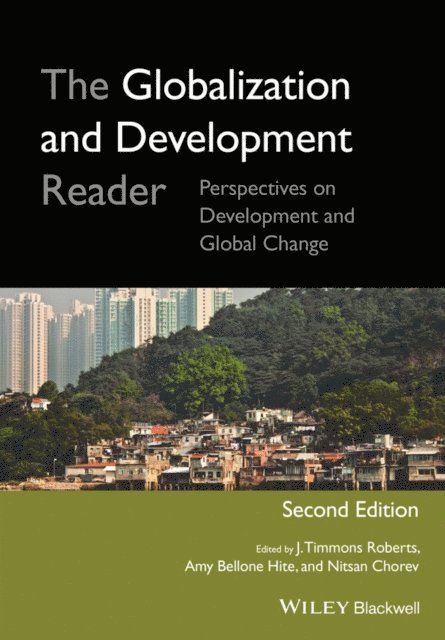
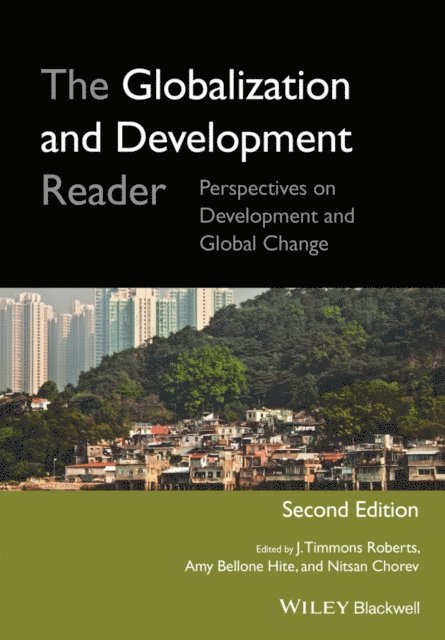
Globalization and Development Reader
Perspectives on Development and Global Change
Häftad, Engelska, 2014
405 kr
Skickas inom 7-10 vardagar
This revised and updated second edition of The Globalization and Development Reader builds on the considerable success of a first edition that has been used around the world. It combines selected readings and editorial material to provide a coherent text with global coverage, reflecting new theoretical and empirical developments. Main text and core reference for students and professionals studying the processes of social change and development in “third world” countries. Carefully excerpted materials facilitate the understanding of classic and contemporary writingsSecond edition includes 33 essential readings, including 21 new selectionsNew pieces cover the impact of the recession in the global North, global inequality and uneven development, gender, international migration, the role of cities, agriculture and on the governance of pharmaceuticals and climate change politicsIncreased coverage of China and India help to provide genuinely global coverage, and for a student readership the materials have been subject to a higher degree of editing in the new editionIncludes a general introduction to the field, and short, insightful section introductions to each readingNew readings include selections by Alexander Gershenkron, Alice Amsden, Amartya Sen, Anne-Marie Slaughter, Cecile Jackson, Dani Rodrik, David Harvey, Greta Krippner, Kathryn Sikkink, Leslie Sklair, Margaret E. Keck, Michael Burawoy, Nitsan Chorev, Oscar Lewis, Patrick Bond, Peter Evans, Philip McMichael, Pranab Bardhan, Ruth Pearson, Sarah Babb, Saskia Sassen, and Steve Radelet