N.J. Nersessian - Böcker
Visar alla böcker från författaren N.J. Nersessian. Handla med fri frakt och snabb leverans.
10 produkter
10 produkter
3 147 kr
Skickas inom 10-15 vardagar
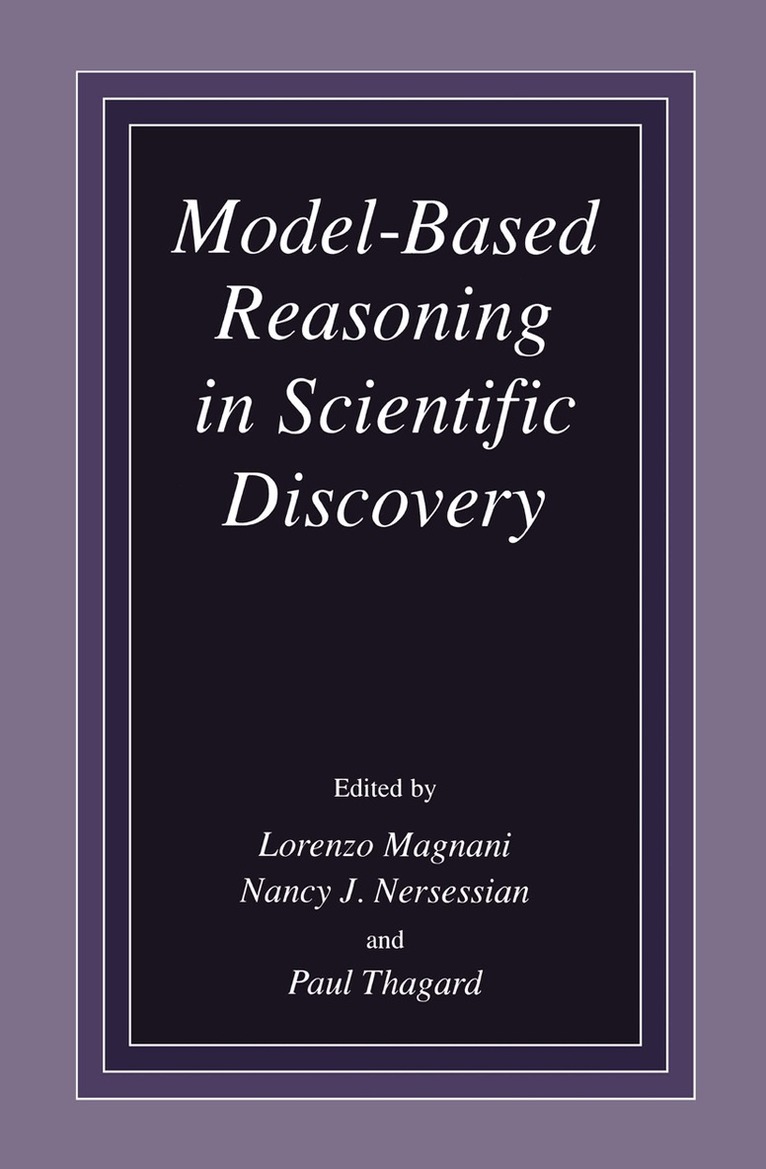
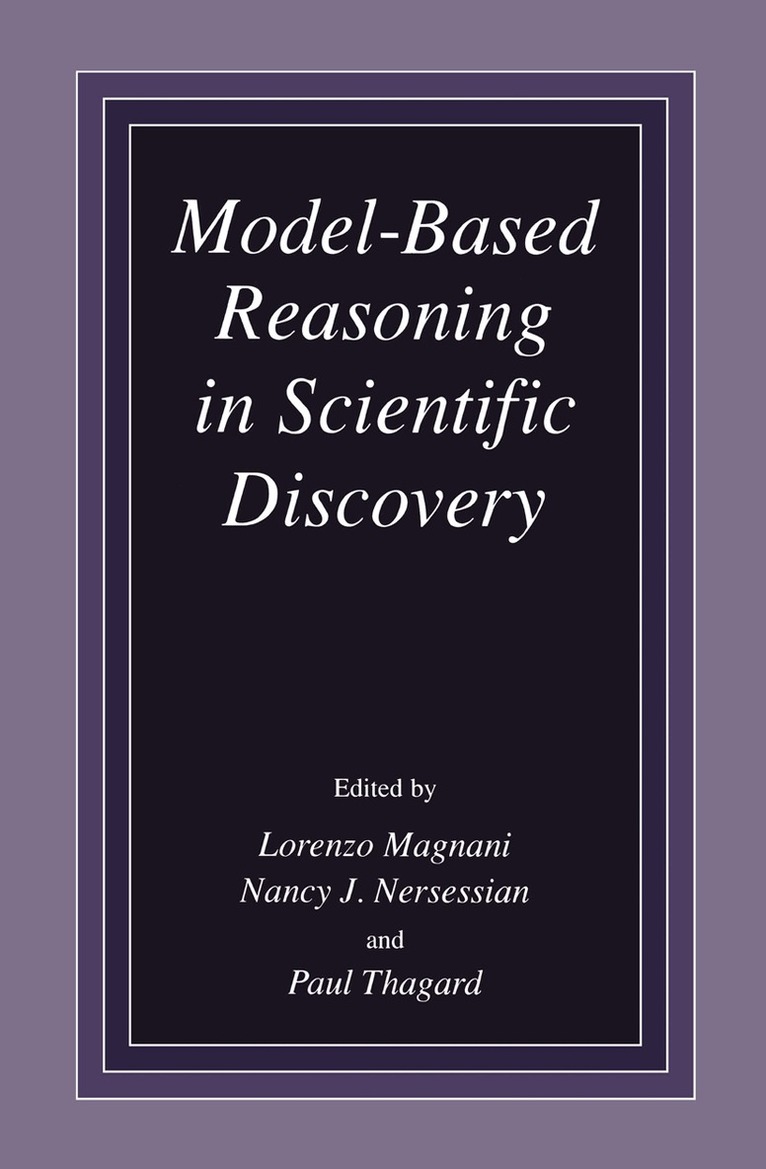
This text aims to explain how specific modelling practices employed by scientists are productive methods of creative changes in science. The study of diagnostic, visual, spatial, analogical, and temporal reasoning has demonstrated that there are many ways of performing intelligent and creative reasoning which cannot be described by classical logic alone. The study of these methods of reasoning is situated at the crossroads of philosophy, artificial intelligence, cognitive psychology, and logic: at the heart of cognitive science. Model-based reasoning promotes conceptual change because it is effective in abstracting, generating, and integrating constraints in ways that produce novel results. There are several key ingredients common to the various forms of model-based reasoning to be considered in this presentation. The models are intended as interpretations of target physical systems, processes, phenomena, or situations. The models are retrieved or constructed on the basis of potentially satisfying salient constraints of the target domain. In the modelling process, various forms of abstraction, such as limiting case, idealization, generalization, and generic modelling are utilized.Evaluation and adaptation take place in the light of structural of structural, causal, and/or functional constraint satisfaction and enhanced understanding of the target problem is obtained through the modelling process. Simulation can be used to produce new states and enable evaluation of behaviours, constraint satisfaction, and other factors. The book also addresses some of the main aspects of the concept of abduction, connecting it to the central epistemological question of hypothesis withdrawal in science and model-based reasoning, where abductive interferences exhibit their cognitive virtues. The recent results and achievements in the above areas are illustrated in detail by the various contributors to the work, who are researchers in philosophy, artificial intelligence and cognitive science.
1 064 kr
Skickas inom 10-15 vardagar
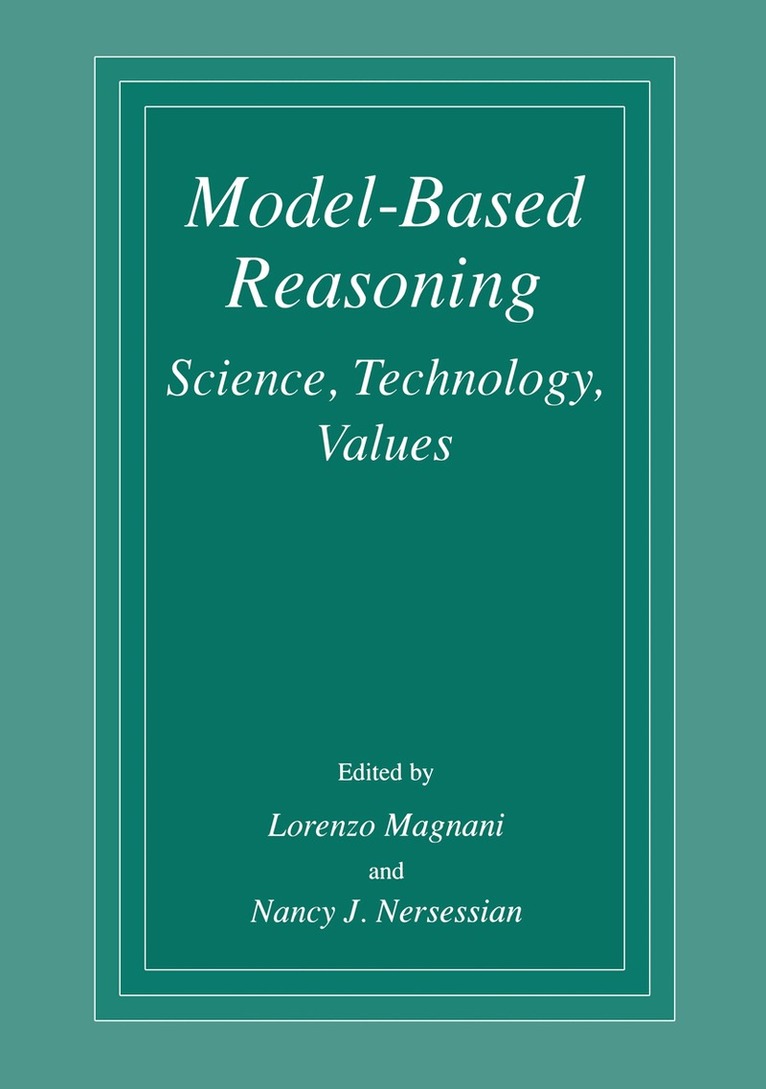
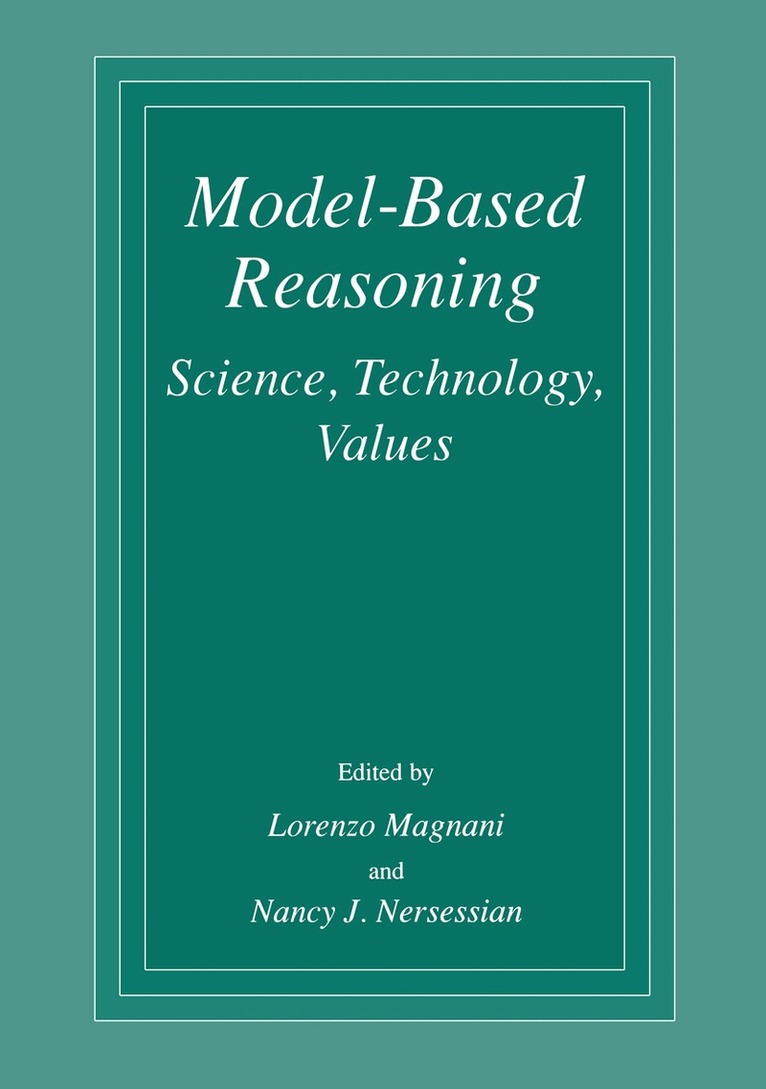
There are several key ingredients common to the various forms of model-based reasoning considered in this book. The term 'model' comprises both internal and external representations. The models are intended as interpretations of target physical systems, processes, phenomena, or situations and are retrieved or constructed on the basis of potentially satisfying salient constraints of the target domain. The book's contributors are researchers active in the area of creative reasoning in science and technology.
1 577 kr
Skickas inom 10-15 vardagar
Einstein often expressed the sentiment that "the eternal mystery of the world is its comprehensibility," and that science is the means through which we comprehend it. However, nearly every one - including scientists - agrees that the concepts of modem physics are quite incomprehensible: They are both unintelligible to the educated lay-person and to the scientific community itself, where there is much dispute over the interpretation of even (and especially) the most basic concepts. There is, of course, almost universal agreement that modem science quite adequately accounts for and predicts events, i. e. , that its calculations work better than those of classical physics; yet the concepts of science are supposed to be descriptive of 'the world' as well - they should enable us to comprehend it. So, it is asked, and needs tobe"asked: Has modem physics failed in an important respect? It failed with me as a physics student. I came to physics, as with most naIve students, out of a desire to know what the world is really like; in particular, to understand Einstein's conception of it. I thought I had grasped the concepts in classical mechanics, but with electrodynamics confusion set in and only increased with relativity and quantum mechanics. At that point I began even to doubt whether I had really understood the basic concepts of classical mechanics.
1 064 kr
Skickas inom 10-15 vardagar
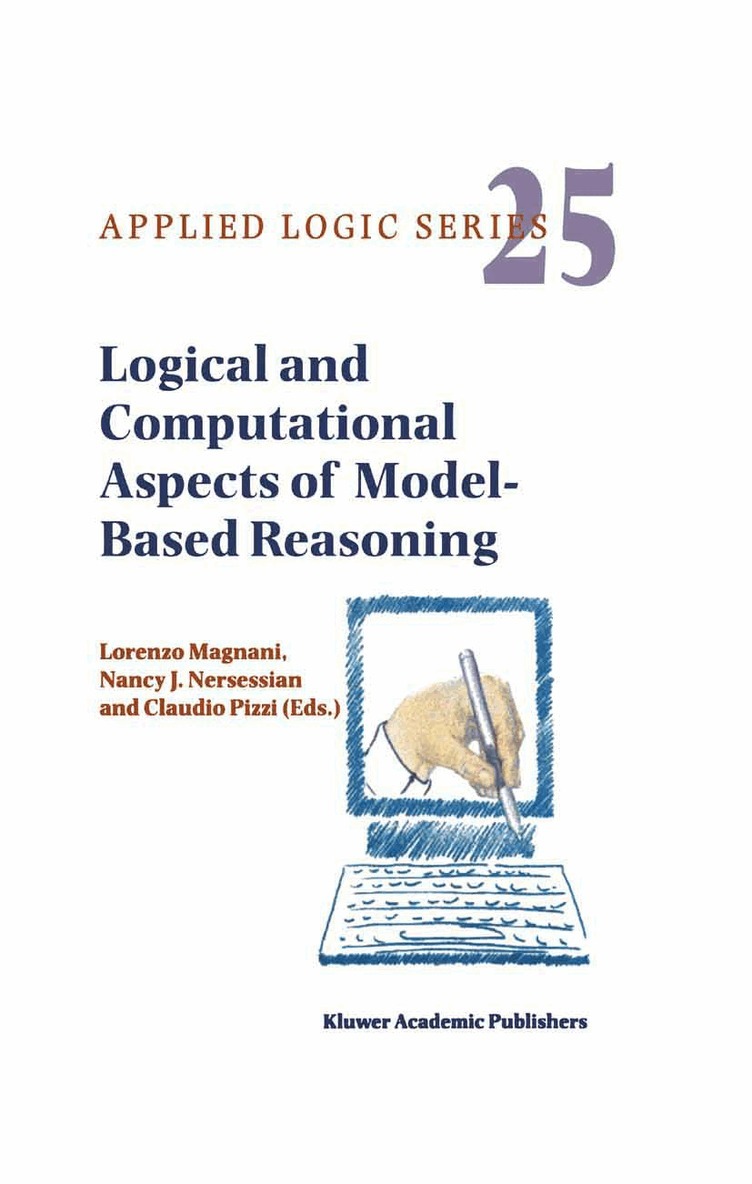
The study of diagnostic, visual, spatial, analogical, and temporal reasoning has demonstrated that there are many ways of performing intelligent and creative reasoning that cannot be described with the help only of traditional notions of reasoning such as classical logic. Understanding the contribution of modeling practices to discovery and conceptual change in science requires expanding scientific reasoning to include complex forms of creative reasoning that are not always successful and can lead to incorrect solutions. The study of these heuristic ways of reasoning is situated at the crossroads of philosophy, artificial intelligence, cognitive psychology, and logic; that is, at the heart of cognitive science. There are several key ingredients common to the various forms of model-based reasoning. The term "model" comprises both internal and external representations. The models are intended as interpretations of target physical systems, processes, phenomena, or situations. The models are retrieved or constructed on the basis of potentially satisfying salient constraints of the target domain. Moreover, in the modeling process, various forms of abstraction are used.Evaluation and adaptation take place in light of structural, causal, and/or functional constraints. Model simulation can be used to produce new states and enable evaluation of behaviors and other factors. The various contributions of the book are written by interdisciplinary researchers who are active in the area of creative reasoning in science and technology, and are logically and computationally oriented: the most recent results and achievements about the topics above are illustrated in detail in this book.
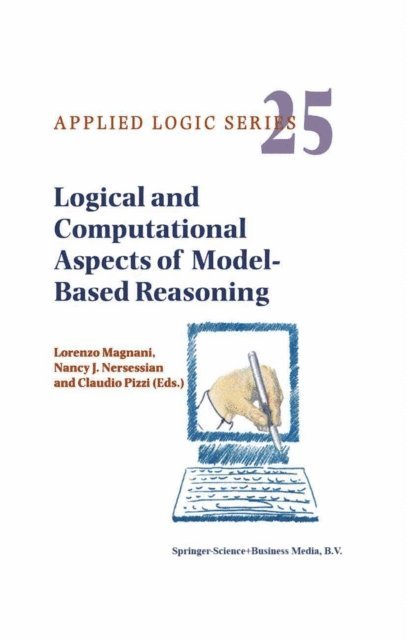
Del 25 - Applied Logic Series
Logical and Computational Aspects of Model-Based Reasoning
Häftad, Engelska, 2002
1 064 kr
Skickas inom 10-15 vardagar
The study of diagnostic, visual, spatial, analogical, and temporal reasoning has demonstrated that there are many ways of performing intelligent and creative reasoning that cannot be described with the help only of traditional notions of reasoning such as classical logic. Understanding the contribution of modeling practices to discovery and conceptual change in science requires expanding scientific reasoning to include complex forms of creative reasoning that are not always successful and can lead to incorrect solutions. The study of these heuristic ways of reasoning is situated at the crossroads of philosophy, artificial intelligence, cognitive psychology, and logic; that is, at the heart of cognitive science. There are several key ingredients common to the various forms of model-based reasoning. The term "model" comprises both internal and external representations. The models are intended as interpretations of target physical systems, processes, phenomena, or situations. The models are retrieved or constructed on the basis of potentially satisfying salient constraints of the target domain. Moreover, in the modeling process, various forms of abstraction are used.Evaluation and adaptation take place in light of structural, causal, and/or functional constraints. Model simulation can be used to produce new states and enable evaluation of behaviors and other factors. The various contributions of the book are written by interdisciplinary researchers who are active in the area of creative reasoning in science and technology, and are logically and computationally oriented: the most recent results and achievements about the topics above are illustrated in detail in this book.
1 064 kr
Skickas inom 10-15 vardagar
There are several key ingredients common to the various forms of model-based reasoning considered in this book. The term 'model' comprises both internal and external representations. The models are intended as interpretations of target physical systems, processes, phenomena, or situations and are retrieved or constructed on the basis of potentially satisfying salient constraints of the target domain. The book's contributors are researchers active in the area of creative reasoning in science and technology.
3 635 kr
Skickas inom 10-15 vardagar
The volume is based on the papers that were presented at the Interna tional Conference Model-Based Reasoning in Scientific Discovery (MBR'98), held at the Collegio Ghislieri, University of Pavia, Pavia, Italy, in December 1998. The papers explore how scientific thinking uses models and explanatory reasoning to produce creative changes in theories and concepts. The study of diagnostic, visual, spatial, analogical, and temporal rea soning has demonstrated that there are many ways of performing intelligent and creative reasoning that cannot be described with the help only of tradi tional notions of reasoning such as classical logic. Traditional accounts of scientific reasoning have restricted the notion of reasoning primarily to de ductive and inductive arguments. Understanding the contribution of model ing practices to discovery and conceptual change in science requires ex panding scientific reasoning to include complex forms of creative reasoning that are not always successful and can lead to incorrect solutions. The study of these heuristic ways of reasoning is situated at the crossroads of philoso phy, artificial intelligence, cognitive psychology, and logic; that is, at the heart of cognitive science. There are several key ingredients common to the various forms of model based reasoning to be considered in this book. The models are intended as in terpretations of target physical systems, processes, phenomena, or situations. The models are retrieved or constructed on the basis of potentially satisfying salient constraints of the target domain.
1 577 kr
Skickas inom 10-15 vardagar
Einstein often expressed the sentiment that "the eternal mystery of the world is its comprehensibility," and that science is the means through which we comprehend it. However, nearly every one - including scientists - agrees that the concepts of modem physics are quite incomprehensible: They are both unintelligible to the educated lay-person and to the scientific community itself, where there is much dispute over the interpretation of even (and especially) the most basic concepts. There is, of course, almost universal agreement that modem science quite adequately accounts for and predicts events, i. e. , that its calculations work better than those of classical physics; yet the concepts of science are supposed to be descriptive of 'the world' as well - they should enable us to comprehend it. So, it is asked, and needs tobe"asked: Has modem physics failed in an important respect? It failed with me as a physics student. I came to physics, as with most naIve students, out of a desire to know what the world is really like; in particular, to understand Einstein's conception of it. I thought I had grasped the concepts in classical mechanics, but with electrodynamics confusion set in and only increased with relativity and quantum mechanics. At that point I began even to doubt whether I had really understood the basic concepts of classical mechanics.
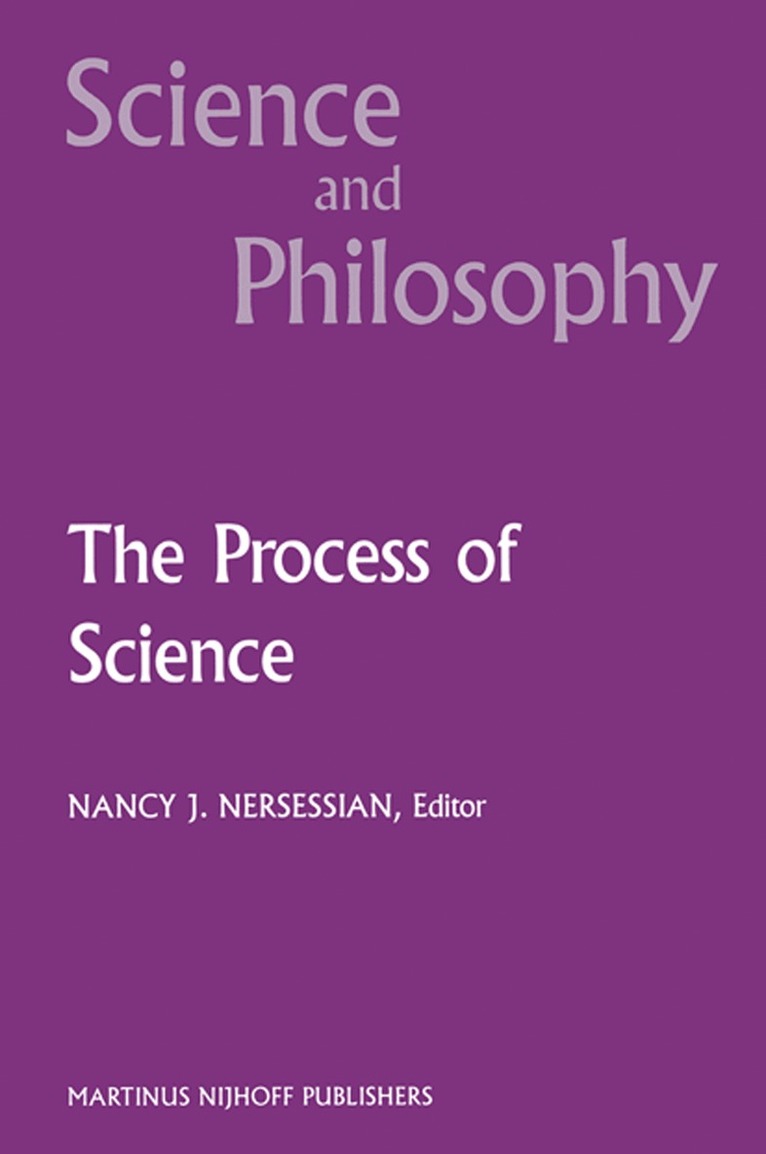
Process of Science
Contemporary Philosophical Approaches to Understanding Scientific Practice
Inbunden, Engelska, 1987
1 064 kr
Skickas inom 10-15 vardagar
For some time now the philosophy of science has been undergoing a major transfor mation. It began when the 'received view' of scientific knowledge -that developed by logical positivists and their intellectual descendants - was challenged as bearing little resemblance to and having little relevance for the understanding of real science. Subsequently, an overwhelming amount of criticism has been added. One would be hard-pressed to find anyone who would support the 'received view' today. Yet, in the search for a new analysis of scientific knowledge, this view continues to exert influence over the tenor of much of present-day philosophy of science; in particular, over its problems and its methods of analysis. There has, however, emerged an area within the discipline - called by some the 'new philosophy of science' - that has been engaged in transforming the problems and methods of philosophy of science. While there is far from a consensus of beliefs in this area, most of the following contentions would be affirmed by those working in it: - that science is an open-ended, on-going activity, whose character has changed significantly during its history - that science is not a monolithic enterprise - that good science can lead to false theories - that science has its roots in everyday circumstances, needs, methods, concepts, etc.
Process of Science
Contemporary Philosophical Approaches to Understanding Scientific Practice
Häftad, Engelska, 2011
1 064 kr
Skickas inom 10-15 vardagar
For some time now the philosophy of science has been undergoing a major transfor mation. It began when the 'received view' of scientific knowledge -that developed by logical positivists and their intellectual descendants - was challenged as bearing little resemblance to and having little relevance for the understanding of real science. Subsequently, an overwhelming amount of criticism has been added. One would be hard-pressed to find anyone who would support the 'received view' today. Yet, in the search for a new analysis of scientific knowledge, this view continues to exert influence over the tenor of much of present-day philosophy of science; in particular, over its problems and its methods of analysis. There has, however, emerged an area within the discipline - called by some the 'new philosophy of science' - that has been engaged in transforming the problems and methods of philosophy of science. While there is far from a consensus of beliefs in this area, most of the following contentions would be affirmed by those working in it: - that science is an open-ended, on-going activity, whose character has changed significantly during its history - that science is not a monolithic enterprise - that good science can lead to false theories - that science has its roots in everyday circumstances, needs, methods, concepts, etc.