L. Magnani – författare
Visar alla böcker från författaren L. Magnani. Handla med fri frakt och snabb leverans.
14 produkter
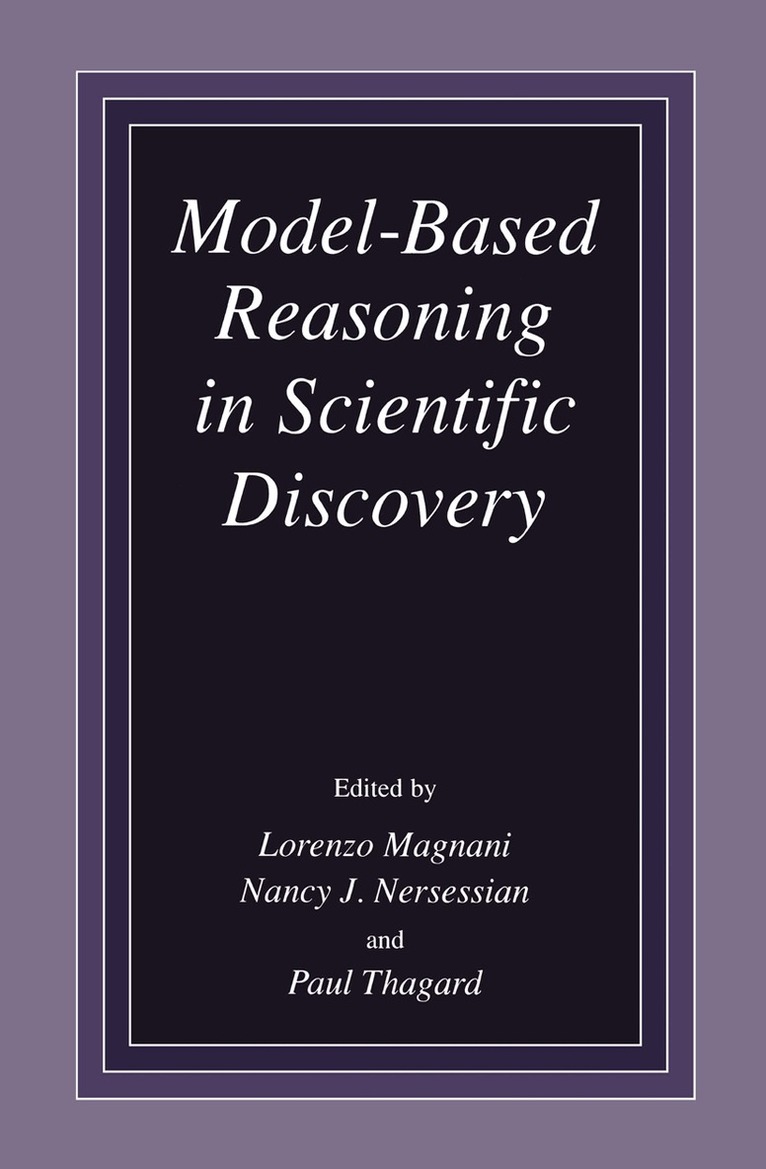
Model-Based Reasoning in Scientific Discovery
Av L. Magnani, N.J. Nersessian m. fl.
Inbunden, 1999
3265 kr
Lägg i varukorg
The volume is based on the papers that were presented at the Interna tional Conference Model-Based Reasoning in Scientific Discovery (MBR'98), held at the Collegio Ghislieri, University of Pavia, Pavia, Italy, in December 1998. The papers explore how scientific thinking uses models and explanatory …
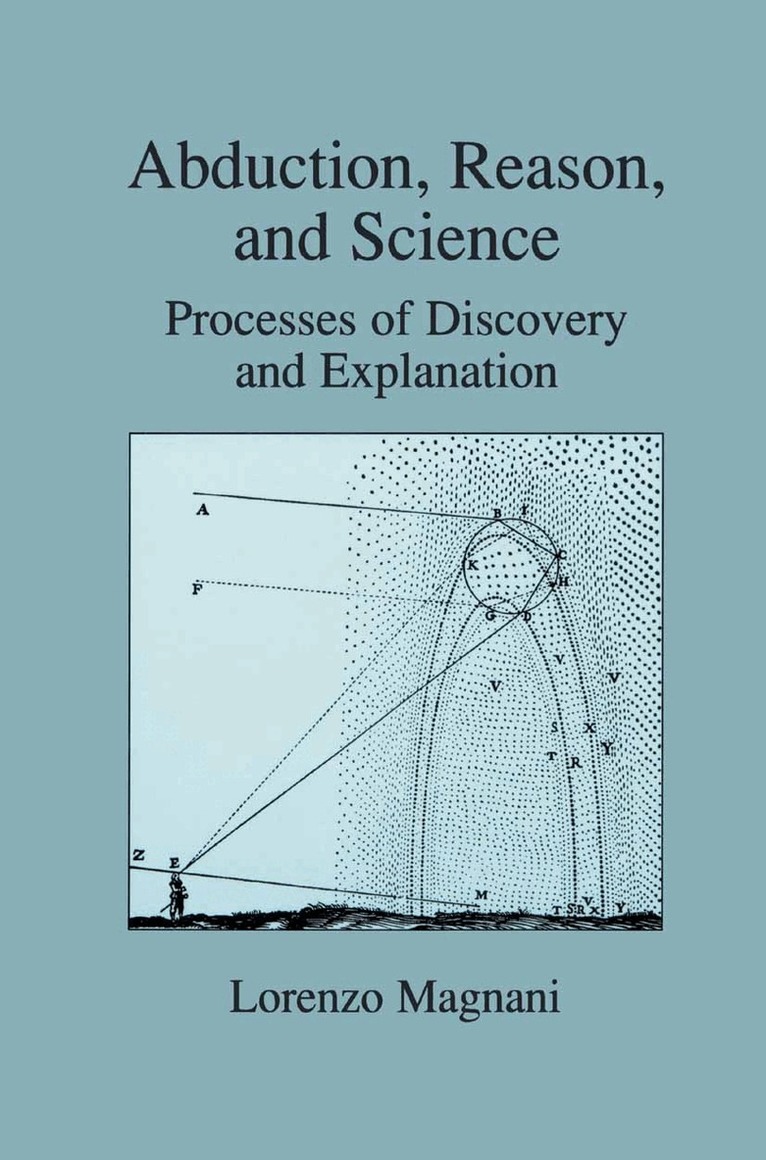
Abduction, Reason and Science
Processes of Discovery and Explanation
Av L. Magnani
Inbunden, 2001
1093 kr
Lägg i varukorg
This volume explores abduction (inference to explanatory hypotheses), an important but neglected topic in scientific reasoning. My aim is to inte grate philosophical, cognitive, and computational issues, while also discuss ing some cases of reasoning in science and medicine. The main thesis is …
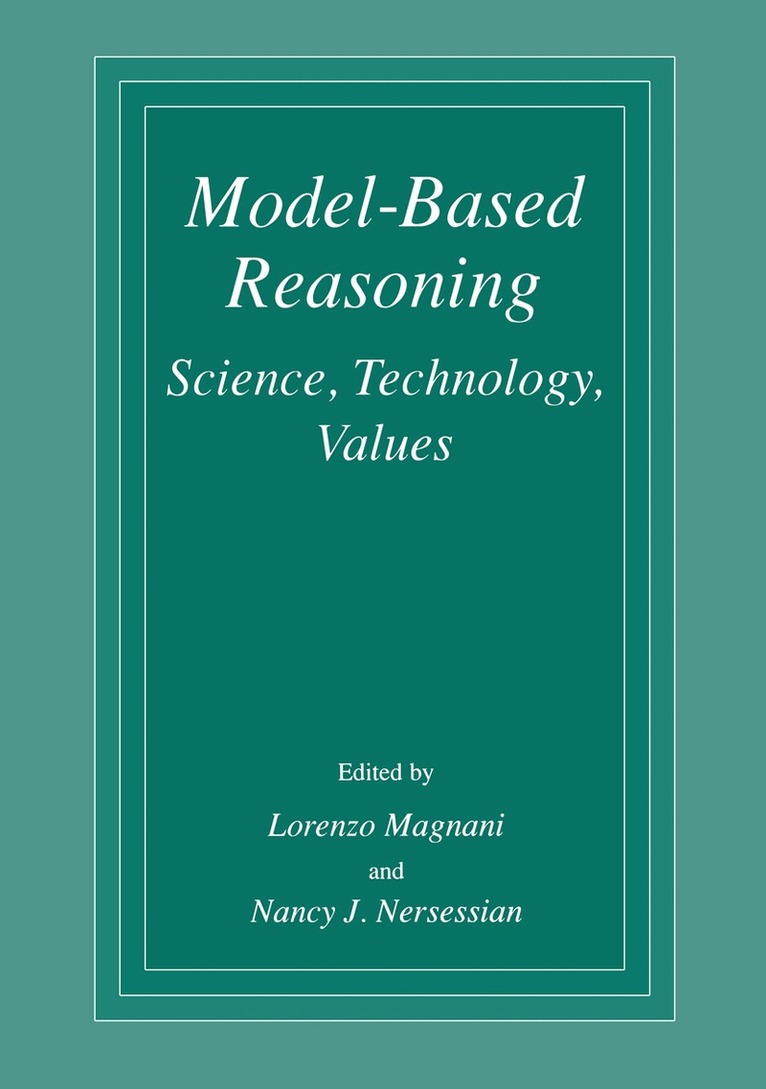
Model-Based Reasoning
Science, Technology, Values
Av Lorenzo Magnani, International Conference on Model-Based m. fl.
Inbunden, 2002
1093 kr
Lägg i varukorg
There are several key ingredients common to the various forms of model-based reasoning considered in this book. The term 'model' comprises both internal and external representations. The models are intended as interpretations of target physical systems, processes, phenomena, or situations and are …
Philosophy and Geometry
Theoretical and Historical Issues
Av L. Magnani
Häftad, 2001
1093 kr
Lägg i varukorg
Philosophers have studied geometry since ancient times. Geometrical knowledge has often played the role of a laboratory for the philosopher's conceptual experiments dedicated to the ideation of powerful theories of knowledge. Lorenzo Magnani's new book Philosophy and Geometry illustrates the rich …
Logical and Computational Aspects of Model-Based Reasoning
Av L. Magnani, N.J. Nersessian m. fl.
Inbunden, 2002
1093 kr
Lägg i varukorg
The study of diagnostic, visual, spatial, analogical, and temporal reasoning has demonstrated that there are many ways of performing intelligent and creative reasoning that cannot be described with the help only of traditional notions of reasoning such as classical logic. Understanding the …
Logical and Computational Aspects of Model-Based Reasoning
Av L. Magnani, N.J. Nersessian m. fl.
Häftad, 2002
1093 kr
Lägg i varukorg
Information technology has been, in recent years, under increasing commercial pressure to provide devices and systems which help/ replace the human in his daily activity. This pressure requires the use of logic as the underlying foundational workhorse of the area. New logics were developed as the …
Abduction, Reason and Science
Processes of Discovery and Explanation
Av L. Magnani
E-bok, 2011
1502 kr
Lägg i varukorg
This volume explores abduction (inference to explanatory hypotheses), an important but neglected topic in scientific reasoning. My aim is to inte grate philosophical, cognitive, and computational issues, while also discuss ing some cases of reasoning in science and medicine. The main thesis is …
Abduction, Reason and Science
Processes of Discovery and Explanation
Av L. Magnani
Häftad, 2012
1093 kr
Lägg i varukorg
This volume explores abduction (inference to explanatory hypotheses), an important but neglected topic in scientific reasoning. My aim is to inte grate philosophical, cognitive, and computational issues, while also discuss ing some cases of reasoning in science and medicine. The main thesis is …
Model-Based Reasoning
Science, Technology, Values
Av L. Magnani, N.J. Nersessian
Häftad, 2012
1093 kr
Lägg i varukorg
There are several key ingredients common to the various forms of model-based reasoning considered in this book. The term 'model' comprises both internal and external representations. The models are intended as interpretations of target physical systems, processes, phenomena, or situations and are …
Model-Based Reasoning in Scientific Discovery
Av L. Magnani, N.J. Nersessian m. fl.
Häftad, 2012
3808 kr
Lägg i varukorg
The volume is based on the papers that were presented at the Interna tional Conference Model-Based Reasoning in Scientific Discovery (MBR'98), held at the Collegio Ghislieri, University of Pavia, Pavia, Italy, in December 1998. The papers explore how scientific thinking uses models and explanatory …
Model-Based Reasoning
Science, Technology, Values
Av N.J. Nersessian, L. Magnani
E-bok, 2012
1459 kr
Lägg i varukorg
There are several key ingredients common to the various forms of model-based reasoning considered in this book. The term ‘model’ comprises both internal and external representations. The models are intended as interpretations of target physical systems, processes, phenomena, or situations and are …
Model-Based Reasoning in Scientific Discovery
Av Paul Thagard, N.J. Nersessian m. fl.
E-bok, 2012
4286 kr
Lägg i varukorg
The volume is based on the papers that were presented at the Interna tional Conference Model-Based Reasoning in Scientific Discovery (MBR''98), held at the Collegio Ghislieri, University of Pavia, Pavia, Italy, in December 1998. The papers explore how scientific thinking uses models and …
Logical and Computational Aspects of Model-Based Reasoning
Av Claudio Pizzi, N.J. Nersessian m. fl.
E-bok, 2012
1427 kr
Lägg i varukorg
Information technology has been, in recent years, under increasing commercial pressure to provide devices and systems which help/ replace the human in his daily activity. This pressure requires the use of logic as the underlying foundational workhorse of the area. New logics were developed as the …
Philosophy and Geometry
Theoretical and Historical Issues
Av L. Magnani
E-bok, 2012
1502 kr
Lägg i varukorg
Philosophers have studied geometry since ancient times. Geometrical knowledge has often played the role of a laboratory for the philosopher''s conceptual experiments dedicated to the ideation of powerful theories of knowledge. Lorenzo Magnani''s new book Philosophy and Geometry illustrates the rich …