Noémie Ndiaye - Böcker
Visar alla böcker från författaren Noémie Ndiaye. Handla med fri frakt och snabb leverans.
6 produkter
6 produkter
2 026 kr
Kommande
442 kr
Kommande
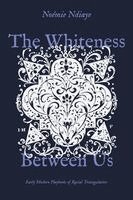
A theorization of the representational juxtapositions, frictions, and connections between Black people and other non-white people in early modern European theatre.Over the course of the seventeenth century, European drama was an important tool for whiteness to imagine itself at the top of an aspirational structure of power relations. Indeed, that structure could only be aspirational at a time when Europeans were profoundly divided along easily racializable religious and ethnic lines, and when their sovereignty was threatened by the Ottoman Empire. It was to strengthen this emerging consciousness of racial whiteness, Noémie Ndiaye argues, that European drama engaged in a form of racial triangulation, fitting Muslim, Jewish, Indigenous, Romani, and Asian characters into a spurious black/white racial binary.Focusing on English, Spanish, and French drama from 1580 to 1715, The Whiteness Between Us shows how plays became a crucial tool to position not only black people but any non-white community in the new racial architecture that white supremacy sought to build. Ndiaye reveals the stage of this era as a space for wish fulfillment, enabling participants to imagine and work towards a whiter future.The early modern playbooks of racial triangulation that Ndiaye brings to light can and have been reactivated for white supremacist purposes in our own day and age. Partly in response to the contemporary threat of white nationalism, scholars and students have sought to unearth the early modern roots of racial whiteness and white supremacy. Ndiaye’s book participates in this wave of interest, offering several innovations, including its capacious transnational claims.
Seeing Race Before Race – Visual Culture and the Racial Matrix in the Premodern World
Inbunden, Engelska, 2023
629 kr
Skickas inom 7-10 vardagar
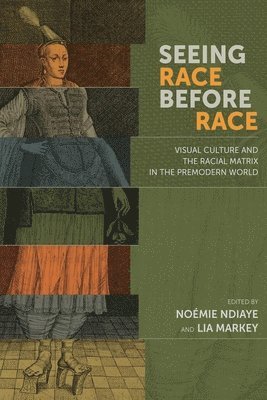
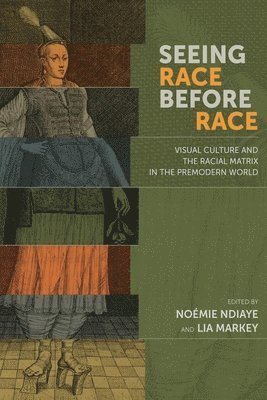
Explores the deployment of racial thinking and racial formations in the visual culture of the pre-modern world. The capacious visual archive studied in this volume includes a trove of materials such as annotated or illuminated manuscripts, Renaissance costume books and travel books, maps and cartographic volumes produced by Europeans as well as Indigenous peoples, mass-printed pamphlets, jewelry, decorative arts, religious iconography, paintings from around the world, ceremonial objects, festival books, and play texts intended for live performance.Contributors explore the deployment of what coeditor Noémie Ndiaye calls “the racial matrix” and its interconnected paradigms across the medieval and early modern chronological divide and across vast transnational and multilingual geographies. This volume uses items from the Fall 2023 exhibition “Seeing Race Before Race”—a collaboration between RaceB4Race and the Newberry Library—as a starting point for an ambitious theoretical conversation between premodern race studies, art history, performance studies, book history, and critical race theory.
Seeing Race Before Race – Visual Culture and the Racial Matrix in the Premodern World
Häftad, Engelska, 2023
400 kr
Skickas inom 7-10 vardagar
Explores the deployment of racial thinking and racial formations in the visual culture of the pre-modern world. The capacious visual archive studied in this volume includes a trove of materials such as annotated or illuminated manuscripts, Renaissance costume books and travel books, maps and cartographic volumes produced by Europeans as well as Indigenous peoples, mass-printed pamphlets, jewelry, decorative arts, religious iconography, paintings from around the world, ceremonial objects, festival books, and play texts intended for live performance.Contributors explore the deployment of what coeditor Noémie Ndiaye calls “the racial matrix” and its interconnected paradigms across the medieval and early modern chronological divide and across vast transnational and multilingual geographies. This volume uses items from the Fall 2023 exhibition “Seeing Race Before Race”—a collaboration between RaceB4Race and the Newberry Library—as a starting point for an ambitious theoretical conversation between premodern race studies, art history, performance studies, book history, and critical race theory.
806 kr
Skickas inom 10-15 vardagar
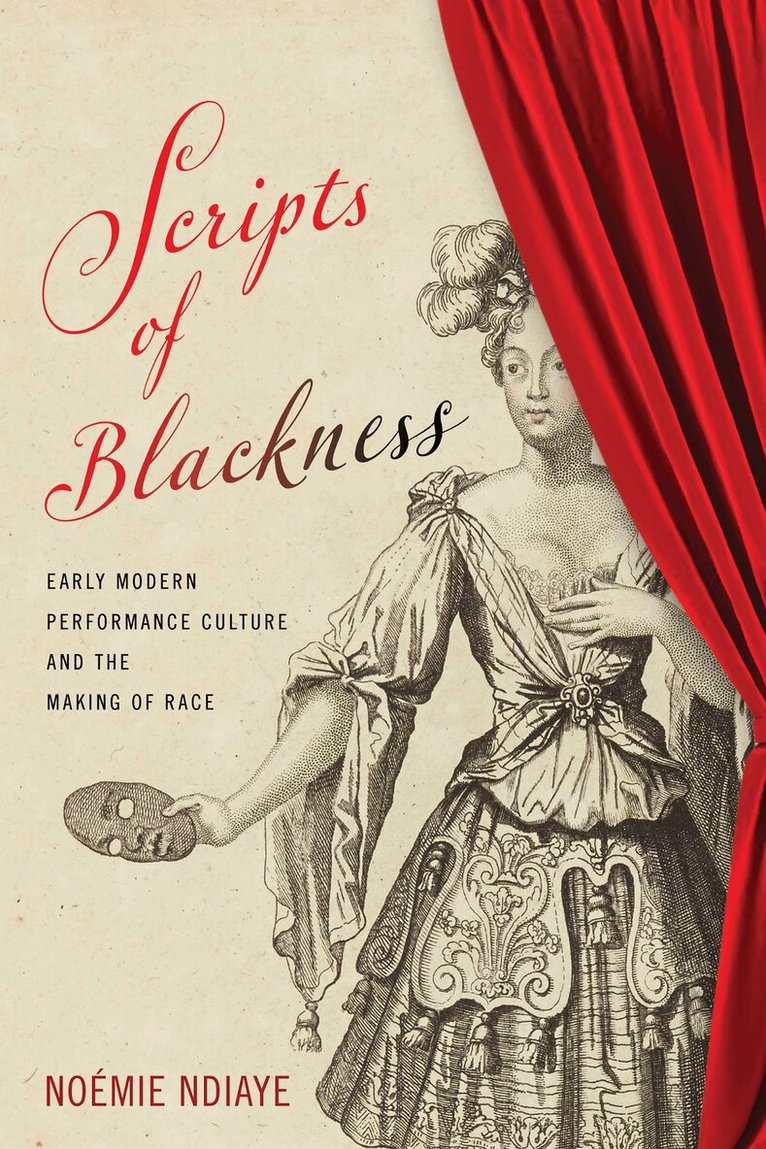
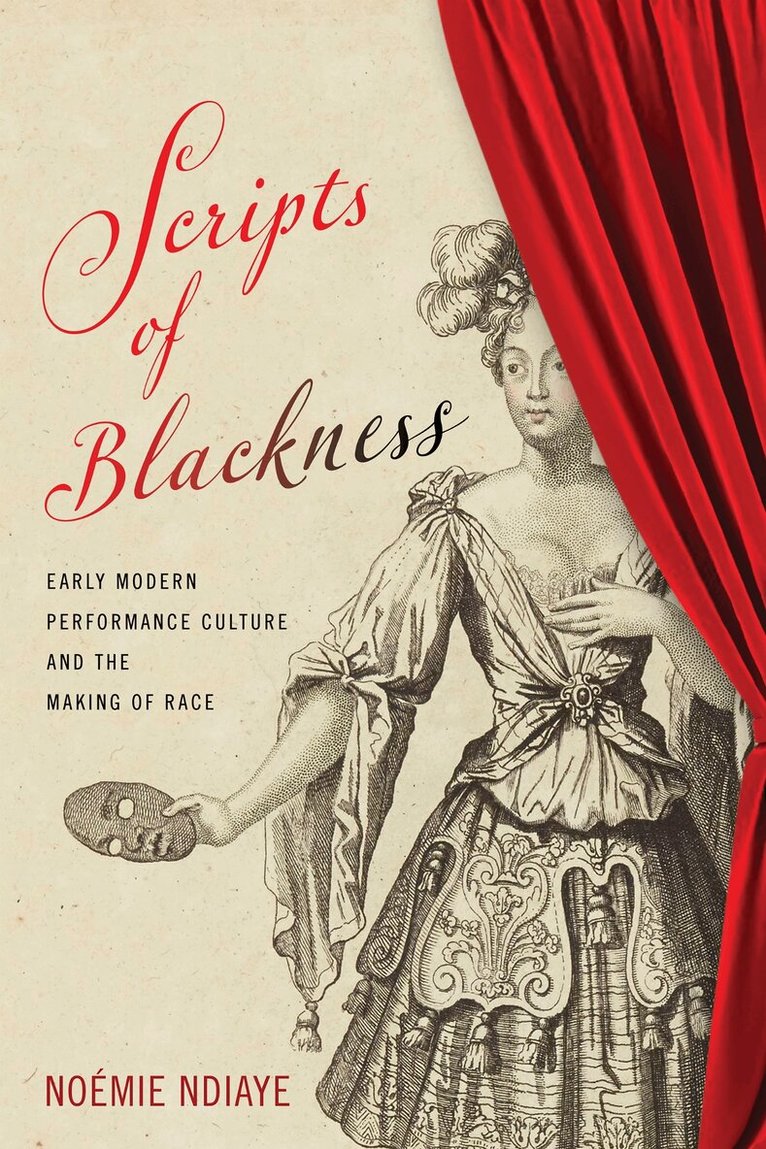
Scripts of Blackness shows how the early modern mass media of theatre and performance culture at-large helped turn blackness into a racial category, that is, into a type of difference justifying emerging social hierarchies and power relations in a new world order driven by colonialism and capitalism.In this book, Noémie Ndiaye explores the techniques of impersonation used by white performers to represent Afro-diasporic people in England, France, and Spain in the sixteenth and seventeenth centuries, using a comparative and transnational framework. She reconstructs three specific performance techniques—black-up (cosmetic blackness), blackspeak (acoustic blackness), and black dances (kinetic blackness)—in order to map out the poetics of those techniques, and track a number of metaphorical strains that early modern playtexts regularly associated with them. Those metaphorical strains, the titular scripts of blackness of this book, operated across national borders and constituted resources, as they provided spectators and participants with new ways of thinking about the Afro-diasporic people who lived or could/would ultimately live in their midst.Those scripts were often gendered and hinged on notions of demonization, exclusion, exploitation, animalization, commodification, sexualization, consensual enslavement, misogynoir, infantilization, and evocative association with other racialized minorities. Scripts of Blackness attempts to grasp the stories that Western Europeans told themselves through performative blackness, and the effects of those fictions on early modern Afro-diasporic subjects.
356 kr
Skickas inom 7-10 vardagar
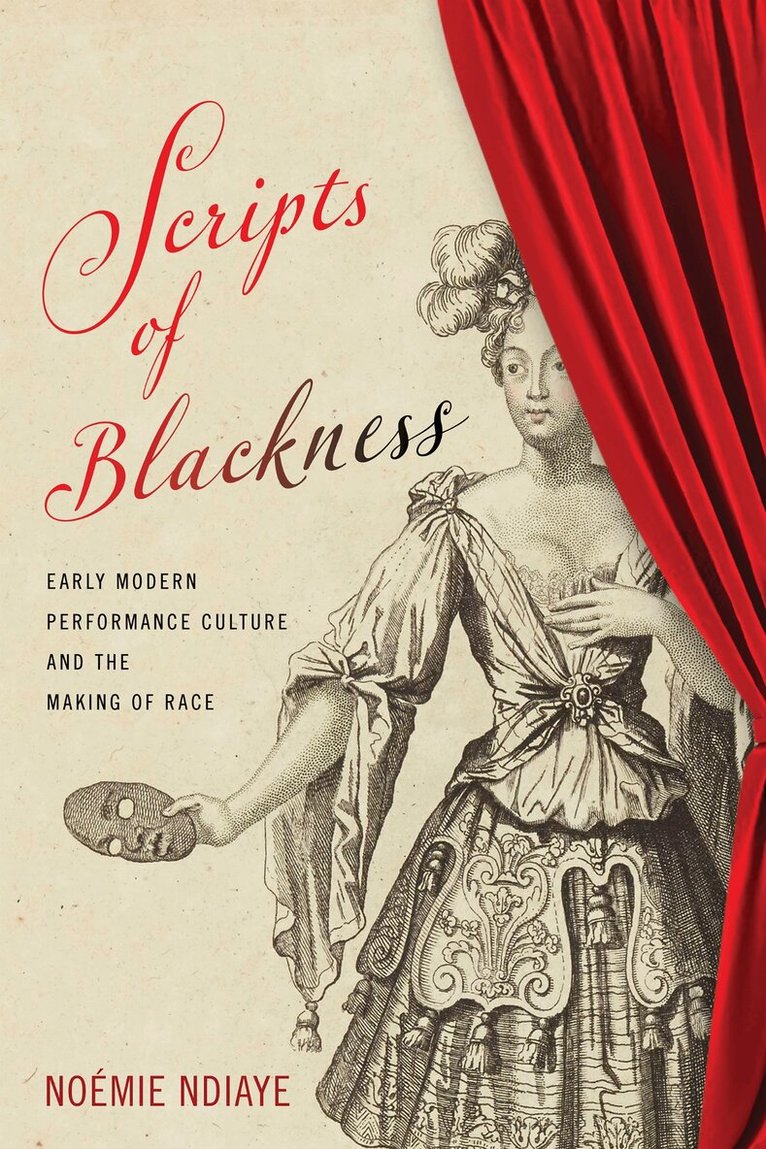
Scripts of Blackness shows how the early modern mass media of theatre and performance culture at-large helped turn blackness into a racial category, that is, into a type of difference justifying emerging social hierarchies and power relations in a new world order driven by colonialism and capitalism.In this book, Noémie Ndiaye explores the techniques of impersonation used by white performers to represent Afro-diasporic people in England, France, and Spain in the sixteenth and seventeenth centuries, using a comparative and transnational framework. She reconstructs three specific performance techniques—black-up (cosmetic blackness), blackspeak (acoustic blackness), and black dances (kinetic blackness)—in order to map out the poetics of those techniques, and track a number of metaphorical strains that early modern playtexts regularly associated with them. Those metaphorical strains, the titular scripts of blackness of this book, operated across national borders and constituted resources, as they provided spectators and participants with new ways of thinking about the Afro-diasporic people who lived or could/would ultimately live in their midst.Those scripts were often gendered and hinged on notions of demonization, exclusion, exploitation, animalization, commodification, sexualization, consensual enslavement, misogynoir, infantilization, and evocative association with other racialized minorities. Scripts of Blackness attempts to grasp the stories that Western Europeans told themselves through performative blackness, and the effects of those fictions on early modern Afro-diasporic subjects.