Oliver Taplin - Böcker
Visar alla böcker från författaren Oliver Taplin. Handla med fri frakt och snabb leverans.
12 produkter
12 produkter
498 kr
Skickas inom 5-8 vardagar
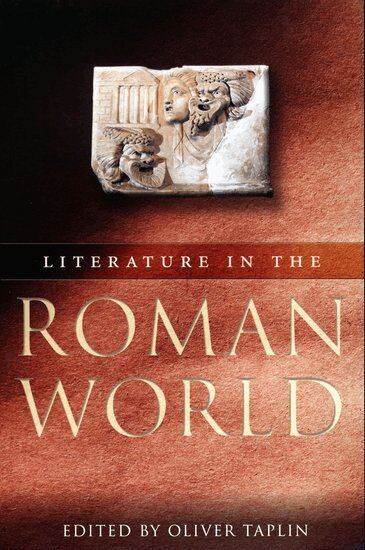
'Our present appreciation of Greek and Roman literature should be informed and influenced by consideration of what it was originally appreciated for. The past, for all its alienness, affects and changes the present.'The focus of this book - its new perspective - is on the 'receivers' of literature: readers, spectators, and audiences. Six contributors, drawn from both sides of the Atlantic, explore the various and changing interactions between the makers of literature and their audiences or readers from the beginning of the Roman empire to the end of the classical era.The contributors deploy fresh insights to map out lively and provocative, yet accessible, surveys. They cover the kinds of literature which have shaped western culture - epic, lyric, tragedy, comedy, history, philosophy, rhetoric, epigram, elegy, pastoral, satire, biography, epistle, declamation, and panegyric. Who were the audiences, and why did they regard their literature as so important?
The Stagecraft of Aeschylus
The Dramatic Use of Exits and Entrances in Greek Tragedy
Häftad, Engelska, 1989
1 079 kr
Skickas inom 5-8 vardagar
The visual effect of the staging of Aeschylus' plays was an essential part of their impact. And yet all that survives today are the scripts. Imagination, helped by anachronistic sources, has played the chief role for those dealing with the dramaturgy of Aeschylus' works, and the result has usually been stages crowded with extras and equipment.In this book, the author approaches the subject from a completely different angle. He clears the stage and looks for clues of Aeschylus' stagecraft in the texts of the plays themselves. He concentrates his study in an analysis of the exits and entrances in Aeschylus' works with constant reference to the practice of Sophocles and Euripides as well. His arguments and conclusions are fascinating and thought-provoking, and make the book indispensable for anyone interested in ancient Greek drama and its staging.
2 572 kr
Skickas inom 5-8 vardagar
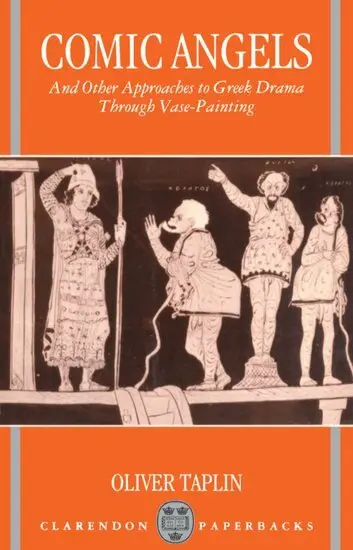
This book opens up a neglected chapter in the reception of Athenian drama, especially comedy; and it gives stage-centre to a particularly attractive and entertaining series of vase-paintings, which have been generally regarded as marginal curiosities. These are the so-called `phlyax vases', nearly all painted in the Greek cities of South Italy in the period 400 t0 360 BC. Up till now, they have been taken to reflect some kind of local folk-theatre, but Oliver Taplin, prompted especially by three that have only been published in the last twelve years, argues that most, if not all, reflect Athenian comedy of the sort represented by Aristophanes.This bold thesis opens up questions of the relation of tragedy as well as comedy to vase-painting, the cultural climate of the Greek cities in Italy, and the extent to which Athenians were aware of drama as a potential `export'. It also enriches appreciation of many key aspects of Aristophanic comedy: its metatheatre and self-reference, its use of stage-action and stage-props, its unabashed indecency, and its polarised relationship, even rivalry, with tragedy. The book has assembled thirty-six photographs of vase-paintings. Many are printed here for the first time outside specialist publications that are not readily accessible.
819 kr
Skickas inom 7-10 vardagar
This book opens up a neglected chapter in the reception of Athenian drama, especially comedy; and it gives stage-centre to a particularly attractive and entertaining series of vase-paintings, which have been generally regarded as marginal curiosities. These are the so-called `phlyax vases', nearly all painted in the Greek cities of South Italy in the period 400 t0 360 BC. Up till now, they have been taken to reflect some kind of local folk-theatre, but Oliver Taplin, prompted especially by three that have only been published in the last twelve years, argues that most, if not all, reflect Athenian comedy of the sort represented by Aristophanes.This bold thesis opens up questions of the relation of tragedy as well as comedy to vase-painting, the cultural climate of the Greek cities in Italy, and the extent to which Athenians were aware of drama as a potential `export'. It also enriches appreciation of many key aspects of Aristophanic comedy: its metatheatre and self-reference, its use of stage-action and stage-props, its unabashed indecency, and its polarised relationship, even rivalry, with tragedy. The book has assembled thirty-six photographs of vase-paintings. Many are printed here for the first time outside specialist publications that are not readily accessible.
3 023 kr
Skickas inom 5-8 vardagar
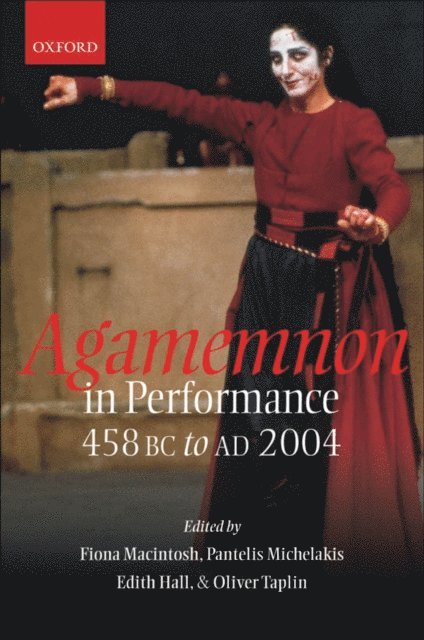
Aeschylus' Agamemnon, the first play in the Oresteia trilogy, is one of the most influential theatrical texts in the global canon. In performance, translation, adaptation, along with sung and danced interpretations, it has been familiar in the Greek world and the Roman empire, and from the Renaissance to the contemporary stage. It has been central to the aesthetic and intellectual avant-garde as well as to radical politics of all complexions and to feminist thinking. Contributors to this interdisciplinary collection of eighteen essays on its performance history include classical scholars, theatre historians, and experts in English and comparative literature. All Greek and Latin has been translated; the book is generously illustrated, and supplemented with the useful research aid of a chronological appendix of performances.
339 kr
Skickas inom 5-8 vardagar
Sophocles stands as one of the greatest dramatists of all time, and one of the most influential on artists and thinkers over the centuries. His plays are deeply disturbing and unpredictable, unrelenting and open-ended, refusing to present firm answers to the questions of human existence, or to provide a redemptive justification of the ways of gods to men-or women. These three tragedies portray the extremes of human suffering and emotion, turning the heroic myths into supreme works of poetry and dramatic action.Antigone's obsession with the dead, Creon's crushing inflexibility, Deianeira's jealous desperation, the injustice of the gods witnessed by Hyllus, Electra's obsessive vindictiveness, the threatening of insoluble dynastic contamination... Such are the pains and distortions and instabilities of Sophoclean tragedy. And yet they do not deteriorate into cacophony or disgust or incoherence or silence: they face the music, and through that the suffering is itself turned into the coherence of music and poetry. These original and distinctive verse translations convey the vitality of Sophocles' poetry and the vigour of the plays in performance, doing justice to both the sound of the poetry and the theatricality of the tragedies. Each play is accompanied by an introduction and substantial notes on topographical and mythical references and interpretation.Antigone is an icon of Greek tragedy, and Antigone is herself a tragic icon in world theatre. Sophocles' best-known and most performed play tells a story of defiance and the impossible demands of loyalty.Deianeira, also known as Women of Trachis or Trachinaian Women, wrestles with the anxieties of matrimony and motherhood, following the doomed attempt by the wife of the hero Heracles to assert her dignity.Electra portrays a vengeful daughter's journey through unflagging grief and murderous fury, ending without resolution in uncertainty and suspense.
3 574 kr
Skickas inom 5-8 vardagar
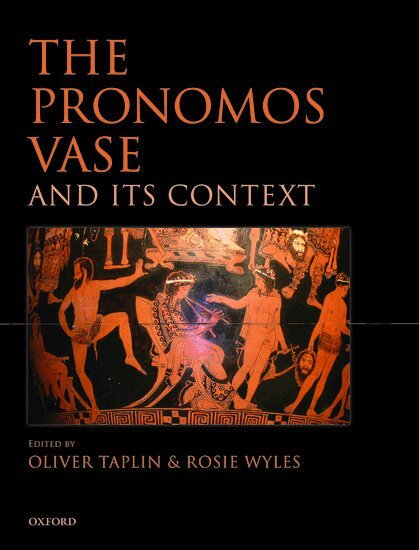
The Pronomos Vase is the single most important piece of pictorial evidence for ancient theatre to have survived from ancient Greece. It depicts an entire theatrical chorus and cast along with the celebrated musician Pronomos, in the presence of their patron god, Dionysos. In this collection of essays, illustrated with nearly 60 drawings and photographs, leading specialists from a variety of disciplines tackle the critical questions posed by this complex hub of evidence. The discussion covers a wide range of perspectives and issues, including the artist's oeuvre; the pottery market; the relation of this piece to other artistic, and especially celebratory, artefacts; the political and cultural contexts of the world that it was produced in; the identification of figures portrayed on it: and the significance of the Pronomos Vase as theatrical evidence. The volume offers not only the most recent scholarship on the vase but also some ground-breaking interpretations of it.
662 kr
Skickas inom 10-15 vardagar
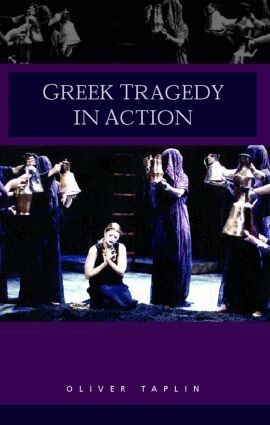
Oliver Taplin's seminal study was revolutionary in drawing out the significance of stage action in Greek tragedy at a time when plays were often read purely as texts, rather than understood as performances.Professor Taplin explores nine plays, including Aeschylus' agamemnon and Sophocles' Oedipus the King. The details of theatrical techniques and stage directions, used by playwrights to highlight key moments, are drawn out and related to the meaning of each play as a whole. With extensive translated quotations, the essential unity of action and speech in Greek tragedy is demonstrated.Now firmly established as a classic text, Greek Tragedy in Action is even more relevant today, when performances of Greek tragedies and plays inspired by them have had such an extraordinary revival around the world.
429 kr
Kommande
A major new history of the revolutionary invention of tragedy that sheds fresh and surprising light on both ancient and modern dramaWhy did tragedy come into being—and why is it still so important 2,500 years after it first arose in fifth-century Athens? Does it serve a deeper purpose beyond entertainment? And was the birth of tragedy at the same time and place as the birth of democracy more than a coincidence? In this book, Oliver Taplin, one of the world’s leading authorities on ancient Greek drama, confronts these fascinating questions by offering a lively, personal, and radical new account of how and why this transformative art form happened. By illuminating the foundations of Greek theatre, he offers surprising new insights into both ancient performance and the persistent power of drama.Tragedy reveals the collaborations that were needed for the new theatrical events to be staged at the Festival of Dionysus each spring—turning storytelling into “story-doing.” It explores the bold theatricality of the earliest plays, especially those of Aeschylus. And it maps the profound impact dramatic performances must have had on their first audiences. Most of all, the book argues that drama, although enabled by democracy, did not reassuringly endorse the standard attitudes of its audience of male Athenian citizens. To the contrary, plays encouraged them to empathize with others, especially women and the disempowered.As Tragedy persuasively argues, the combination of highly crafted performance and deep engagement with the sufferings of others in Greek drama helped to strengthen its audiences, like an inoculation, to face up to the pains of being fallible and mortal. And in doing so, Greek tragedy planted the seeds of drama’s rich flowerings down to today.
2 401 kr
Skickas inom 10-15 vardagar
Oliver Taplin's seminal study was revolutionary in drawing out the significance of stage action in Greek tragedy at a time when plays were often read purely as texts, rather than understood as performances.Professor Taplin explores nine plays, including Aeschylus' agamemnon and Sophocles' Oedipus the King. The details of theatrical techniques and stage directions, used by playwrights to highlight key moments, are drawn out and related to the meaning of each play as a whole. With extensive translated quotations, the essential unity of action and speech in Greek tragedy is demonstrated.Now firmly established as a classic text, Greek Tragedy in Action is even more relevant today, when performances of Greek tragedies and plays inspired by them have had such an extraordinary revival around the world.
1 713 kr
Skickas inom 5-8 vardagar
Our knowledge of the ancient theatre is limited by the textual and iconographic character of the evidence available to us: we cannot watch or otherwise experience an Athenian tragedy or comedy. These essays, by a distinguished group of international scholars, bridge the gap between the surviving literary and iconographic evidence and the realities of performance on the ancient Greek stage. This ambitious goal is reached by means of a detailed examination of several case-studies: the construction of dramatic space in Sophocles’ Antigone; the significance of the use of deictic pronouns in Sophocles’ Trachiniae; the theatrical and religious dynamics of the appearance of divine figures on stage; the relationship between the victory celebrations at the end of Aristophanic comedies and their counterparts in the after-performance real world; the investigation of nude or semi-nude female characters in Aristophanes; the staging of Clouds and the opening scene of Acharnians; the meditation on the metapoetics of the use of props in 5th-century comedy; the relationship between performance context and text through a close reading of a number of Aristophanic fragments; the way the scholia vetera on Frogs imagine and use questions of staging practice; and the potential Aeschylean authorship of some of stage-direction traceable in Aeschylus’ Eumenides and Diktoulkoi.
Del 146 - Trends in Classics - Supplementary Volumes
Page and Stage
Intersections of Text and Performance in Ancient Greek Drama
Häftad, Engelska, 2025
240 kr
Skickas inom 7-10 vardagar
Our knowledge of the ancient theatre is limited by the textual and iconographic character of the evidence available to us: we cannot watch or otherwise experience an Athenian tragedy or comedy. These essays, by a distinguished group of international scholars, bridge the gap between the surviving literary and iconographic evidence and the realities of performance on the ancient Greek stage. This ambitious goal is reached by means of a detailed examination of several case-studies: the construction of dramatic space in Sophocles’ Antigone; the significance of the use of deictic pronouns in Sophocles’ Trachiniae; the theatrical and religious dynamics of the appearance of divine figures on stage; the relationship between the victory celebrations at the end of Aristophanic comedies and their counterparts in the after-performance real world; the investigation of nude or semi-nude female characters in Aristophanes; the staging of Clouds and the opening scene of Acharnians; the meditation on the metapoetics of the use of props in 5th-century comedy; the relationship between performance context and text through a close reading of a number of Aristophanic fragments; the way the scholia vetera on Frogs imagine and use questions of staging practice; and the potential Aeschylean authorship of some of stage-direction traceable in Aeschylus’ Eumenides and Diktoulkoi.