Olutayo Charles Adesina - Böcker
Visar alla böcker från författaren Olutayo Charles Adesina. Handla med fri frakt och snabb leverans.
2 produkter
2 produkter
1 476 kr
Skickas inom 10-15 vardagar
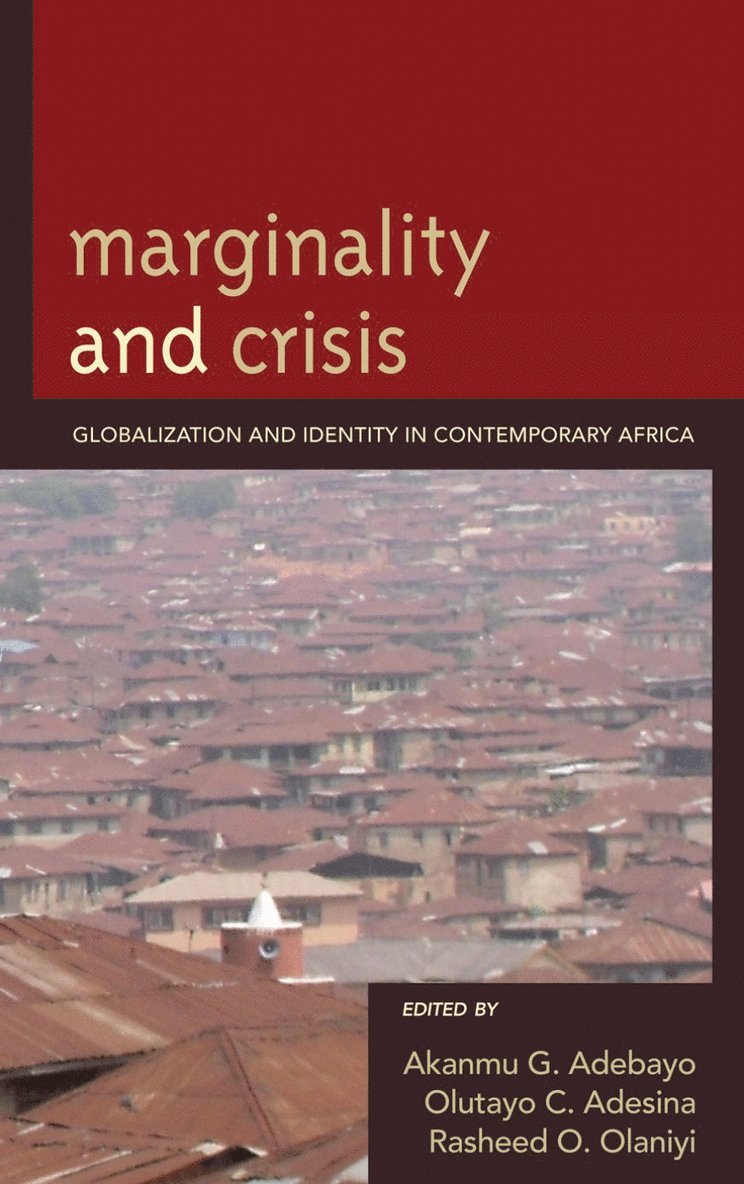
Marginality and Crisis: Globalization and Identity in Contemporary Africa extends the scope and understanding of the effects of globalization and its forces on Africa. With each chapter written by specialists who recognize that the future of Africa is entwined with that of the rest of the world, this volume explains with fresh vigor the new thinking on the historical specificity, value, opportunity, and shortcomings of globalization for a continent many regard as marginalized and in crisis. In the face of much pessimism, several questions have engaged the attention of this young generation of African scholars: Where is Africa in relation to globalization? Where are the things that make Africa Africa (such as economy, politics, culture, identity, and human relations) headed? Are Africa's communities helpless against global forces or empowered by new avenues of access? How do scholars and policymakers engage the problems of globalization vis-à-vis Africa's ethnic, linguistic, and other identities? What are the economic and political trajectories in various countries and localities? An invaluable source for scholars, students, and the general reader, the essays in this book have confidently and clearly explored and explained the crises that have engulfed the continent in the age of globalization. Unlike other works that have dwelt only on the continent's victimhood, this volume identifies key areas in which Africa can become more proactive and outward-looking in response to the forces and values that take the globe as their reference points.
1 488 kr
Kommande
Nigeria: History, Society, and Social Change in the Twenty-first Century explores the history of Nigeria from multiple perspectives. It offers a comprehensive analysis and interpretation of social change in the country before and since independence in 1960. Nigeria has undergone numerous changes: from colonialism to independence; from civilian to military governments and back to civilian rule of the Fourth Republic; from the adoption of a regional constitution in 1946, a federal constitution in 1954, and a Presidential Constitution in 1979. The book gives visibility to women, women’s organizations, and other until now voiceless minorities. What factors promoted social change? Who were/are prime movers for social change? How did powerful politicians, business interests, religious leaders, and the traditional and social media contribute to promoting or resisting social change? Of interest is the minority constitution proposed in 1976 which provided an alternative future for Nigeria. What would Nigeria’s sociopolitical and economic future had been if this constitutional change had been made in the 1970s?