P. Ferretti – författare
Visar alla böcker från författaren P. Ferretti. Handla med fri frakt och snabb leverans.
3 produkter
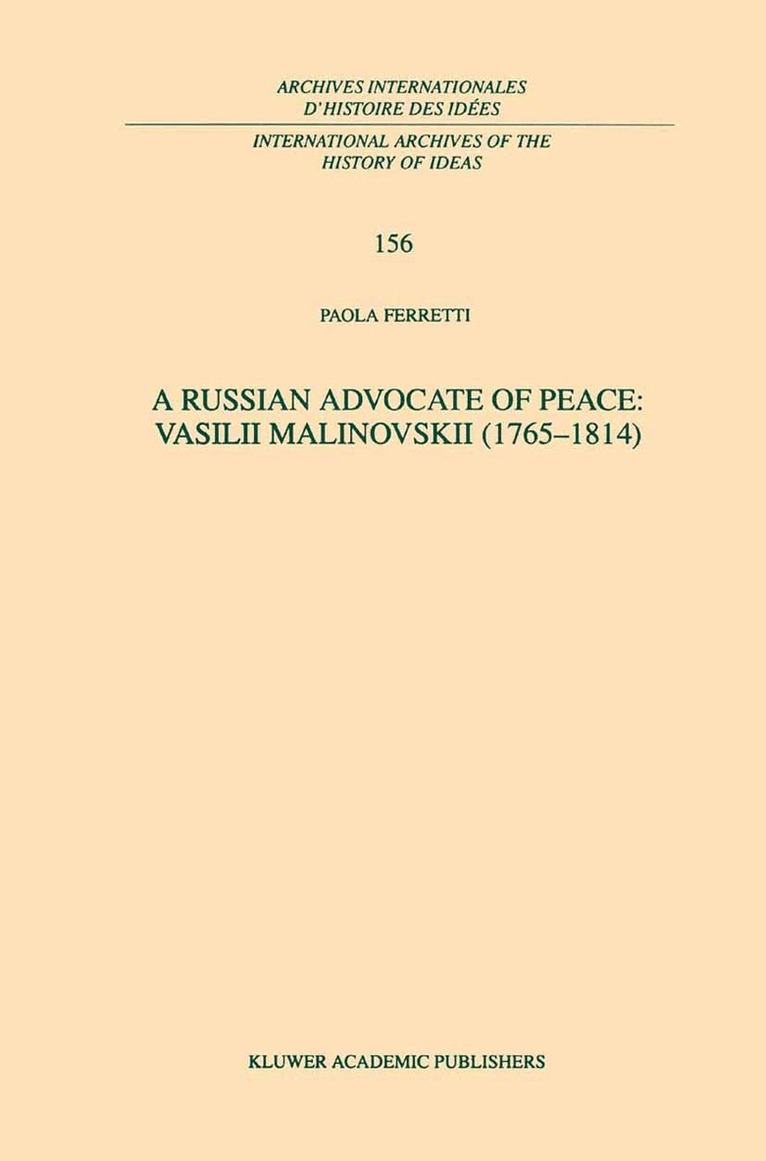
Russian Advocate of Peace: Vasilii Malinovskii (1765–1814)
Av P. Ferretti
Inbunden, 1997
2324 kr
Lägg i varukorg
Vasilii Fedorovich Malinovskii (1765-1814) is a name which has hitherto lacked true resonance in the history of Russian culture. Tt is of course a name known to all students of Alexander Pushkin's biography, for Malinovskii was the first Director of the new Tsarskoe Selo Lyceum, if, sadly, for only …
Russian Advocate of Peace: Vasilii Malinovskii (1765-1814)
Av P. Ferretti
E-bok, 2012
2925 kr
Lägg i varukorg
Vasilii Fedorovich Malinovskii (1765-1814) is a name which has hitherto lacked true resonance in the history of Russian culture. Tt is of course a name known to all students of Alexander Pushkin''s biography, for Malinovskii was the first Director of the new Tsarskoe Selo Lyceum, if, sadly, for …
Russian Advocate of Peace: Vasilii Malinovskii (1765–1814)
Av P. Ferretti
Häftad, 2012
2014 kr
Lägg i varukorg
Vasilii Fedorovich Malinovskii (1765-1814) is a name which has hitherto lacked true resonance in the history of Russian culture. Tt is of course a name known to all students of Alexander Pushkin's biography, for Malinovskii was the first Director of the new Tsarskoe Selo Lyceum, if, sadly, for only …