Paolo Virno - Böcker
Visar alla böcker från författaren Paolo Virno. Handla med fri frakt och snabb leverans.
12 produkter
12 produkter
193 kr
Skickas inom 7-10 vardagar
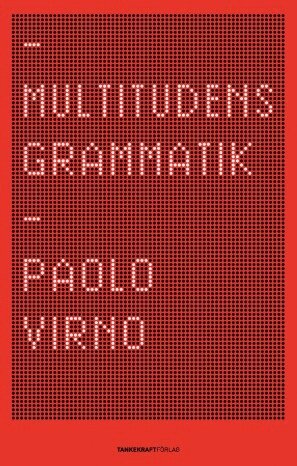
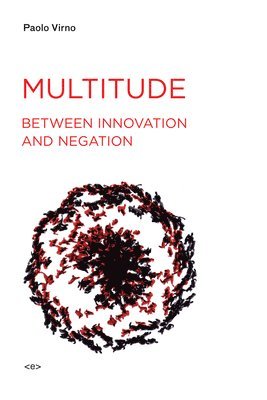
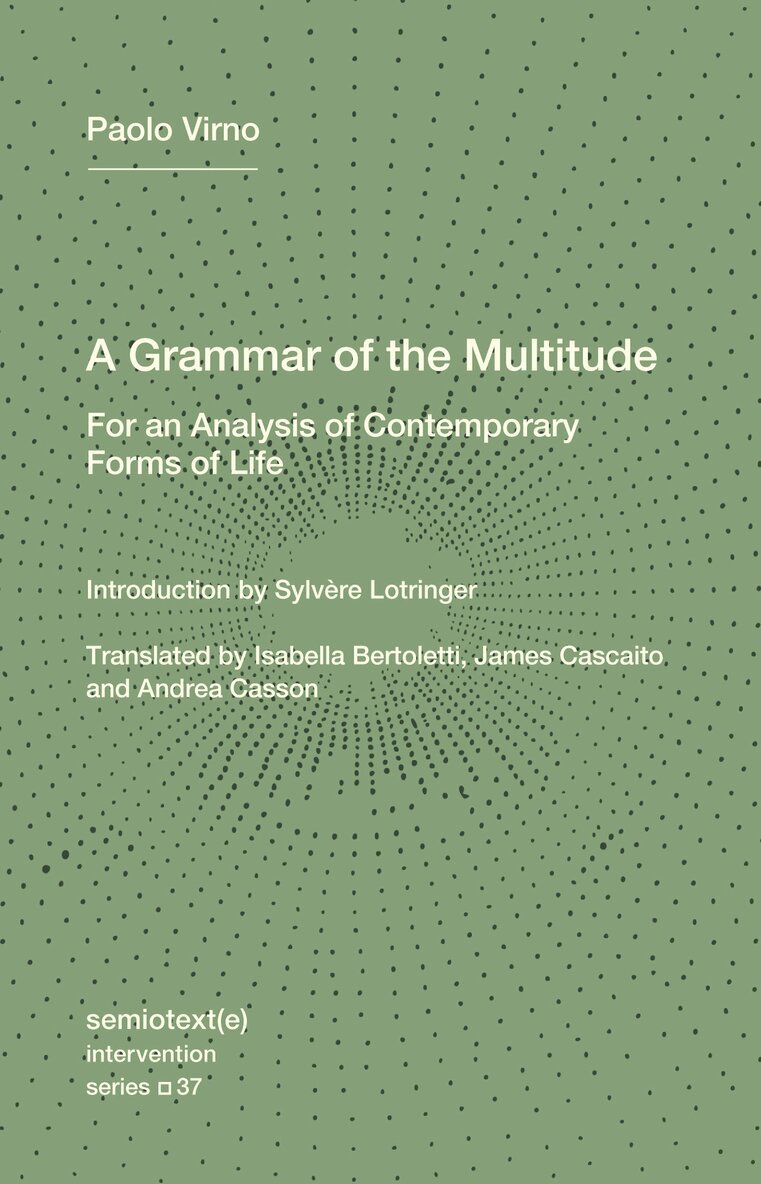
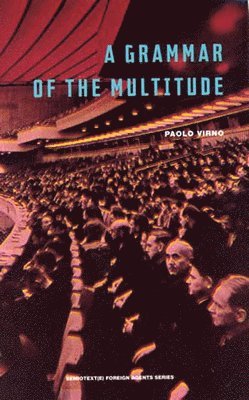
Multitudens grammatik är den italienske filosofen Paolo Virnos internationellt mest kända bok. Denna tunna skrift har använts av och påverkat alltifrån samhällsvetare och ekonomer till aktivister och konstnärer. Multitudens grammatik handlar om vad som händer när hela livet underställs lönearbetets logik, när våra kroppar, språk och känslor har blivit produktiva. Vårt arbetssamhälle arbetslinjens värld grundar sig idag på det rörliga, flexibla och tillfälliga låglönearbetet. Detta arbetsliv utmärks av otrygga anställningar, höga kunskapskrav, krav på en säljande personlighet samt språkliga och sociala förmågor. Den främsta tillgången idag består därför inte längre av råvaror, mark eller fastigheter utan av det levande arbetet människor som delar kunskap, idéer och känslor. Varje aspekt av det mänskliga utgör råvaran för materiell produktion. För att analysera sammansättningen av den samtida arbetskraften återvänder Virno till modernitetens gryning, då folket och multituden representerade två olika sätt att förstå de politiska kategorierna i den framväxande statscentrerade ordningen. Under hela den moderna eran var det folket som drog det längsta strået. Idag är det istället multituden, kollektivet som bibehåller sin mångfald utan att smälta samman till en reducerande enhet, som erbjuder den bästa utgångspunkten för att förstå de rådande livsformerna och interaktionsmönstren i dagens postfordistiska värld. Paolo Virno är filosof och undervisar vid Roms universitet. Under 1960- och 1970-talen var han politiskt aktiv som medlem av den politiska grupperingen Potere Operaio (Arbetarmakt), som senare kom att utvecklas i den bredare autonoma rörelsen. Han är författare till ett flertal böcker i politisk filosofi och språkfilosofi.
373 kr
Skickas
270 kr
Skickas inom 7-10 vardagar
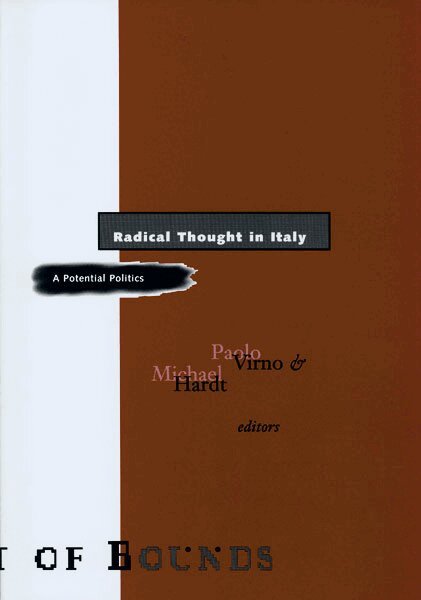
Over the past several decades, Italian revolutionary politics has offered a model for new forms of political thinking. Radical Thought in Italy continues that tradition by providing an original view of the potential for a radical democratic politics today that speaks not only to the Italian situation but also to a broadly international context. First, the essays settle accounts with the culture of cynicism, opportunism, and fear that has come to permeate the Left. They then proceed to analyze the new difficulties and possibilities opened by current economic conditions and the crisis of the welfare state. Finally, the authors propose a series of new concepts that are helpful in rethinking revolution for our times. Contributors: Giorgio Agamben, U of Verona and Collège Internationale de Philosophie, Paris; Massimo De Carolis, U of Salerno; Alisa Del Re, U of Padua; Augusto Illuminati, U of Urbino; Maurizio Lazzarato; Antonio Negri, U of Paris VIII; Franco Piperno, U of Calabria; Marco Revelli, U of Turin; Rossana Rossanda; Carlo Vercellone; Adelino Zanini. Paolo Virno is the author of several books, including the recently translated A Grammar of the Multitude. Michael Hardt is professor of literature and romance studies at Duke University.
177 kr
Skickas inom 7-10 vardagar
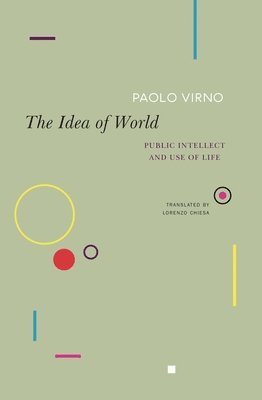
A philosophical exploration of what capitalistic societies truly mean for the individual. A short vade mecum for unrepentant materialism, The Idea of World collects three essays by Italian philosopher Paulo Virno that are intricately wrapped around one another. The first essay, "Mundanity," tries to clarify what the term "world," as referred to as the perceptual and historical context of our existence, means-both with and against Kant and Wittgenstein. How should we understand expressions such as "worldly people," "the course of the world," or "getting by in this world"? The second, "Virtuosity and Revolution," is a minor political treatise. Virno puts forward a set of concepts capable of confronting the magnetic storm that has knocked out the compasses that every reflection on the public sphere has relied on since the seventeenth century. The third, "The Use of Life", is the shorthand delineation of a research program on the notion of use. What exactly are we doing when we use a hammer, a time span, or an ironic sentence? And, above all, what does the use of the self-of one's own life, which lies at the basis of all uses-amount to in human existence? Presenting his ideas in three distinct vignettes, Virno examines how the philosophy of language, anthropology, and political theory are inextricably linked.
157 kr
Tillfälligt slut
301 kr
Skickas inom 5-8 vardagar
175 kr
Tillfälligt slut
156 kr
Skickas
225 kr
Skickas
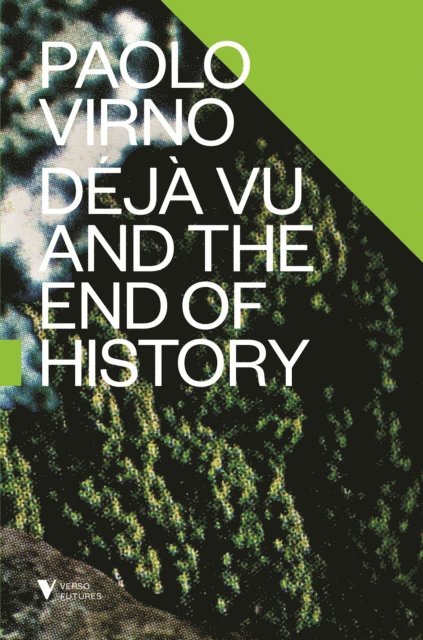
This book places two key notions up against each other to imagine a new way of conceptualizing historical time. How do the experience of déjà vu and the idea 'End of History' relate to one another? Through thinkers like Bergson, Kojève and Nietzsche, Virno explores these constructs of memory and the passage of time. In showing how the experience of time becomes historical, Virno considers two fundamental concepts from Western philosophy: Power and The Act, reinterpreting these with respect to time. Through these, he elegantly constructs a radical new theory of historical temporality.
180 kr
Skickas inom 7-10 vardagar
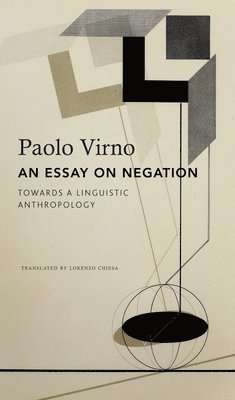
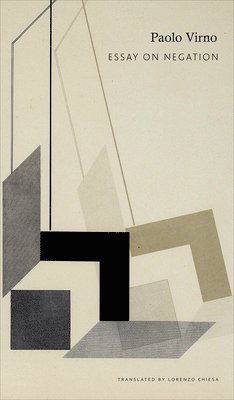
A vital addition to Seagull’s growing Italian List that focuses on leftist Italian thought, bringing famous as well as little-known yet crucial voices into the English language.As speaking animals, we continuously make use of an unassuming grammatical particle, without suspecting that what is at work in its inconspicuousness is a powerful apparatus, which orchestrates language, signification, and the world at large. What particle might this be? The word not.In Essay on Negation, Paolo Virno argues that the importance of the not is perhaps comparable only to that of money—that is, the universality of exchange. Negation is what separates verbal thought from silent cognitive operations, such as feelings and mental images. Speaking about what is not happening here and now, or about properties that are not referable to a given object, the human animal deactivates its original neuronal empathy, which is prelinguistic; it distances itself from the prescriptions of its own instinctual endowment and accesses a higher sociality, negotiated and unstable, which establishes the public sphere. In fact, the speaking animal soon learns that the negative statement does not amount to the linguistic double of unpleasant realities or destructive emotions: while it rejects them, negation also names them and thus includes them in social life. Virno sees negation as a crucial effect of civilization, one that is, however, also always exposed to further regressions. Taking his cue from a humble word, the author is capable of unfolding the unexpected phenomenology of the negating consciousness.
1 314 kr
Kommande
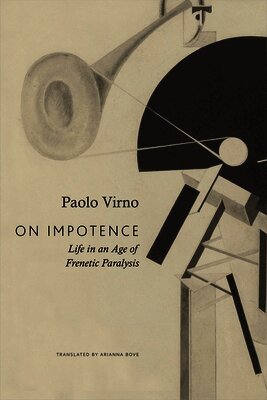
An incisive and urgent book that explores the hidden roots of our contemporary powerlessness.Contemporary life is marked by a paradoxical form of impotence. Whether in love, labor, or political struggle, we often find ourselves locked in a state of frenetic paralysis—unable to act as we wish or to endure what confronts us. This impotence is not born of lack, but of excess: an abundance of skills, capacities, and opportunities that, instead of taking form as coherent actions or speech, stagnate and turn in on themselves. In this thought-provoking meditation, philosopher Paolo Virno examines this strange impotence through the lens of classical thought, drawing especially on Aristotle and Marx. To overcome this troubling state, Virno calls for a collective search for a shared spiritual and practical exercise aimed at reclaiming agency. He argues that only by learning to renounce renunciation can we cultivate deliberate words and timely decisions.
283 kr
Kommande
An incisive and urgent book that explores the hidden roots of our contemporary powerlessness.Contemporary life is marked by a paradoxical form of impotence. Whether in love, labor, or political struggle, we often find ourselves locked in a state of frenetic paralysis—unable to act as we wish or to endure what confronts us. This impotence is not born of lack, but of excess: an abundance of skills, capacities, and opportunities that, instead of taking form as coherent actions or speech, stagnate and turn in on themselves. In this thought-provoking meditation, philosopher Paolo Virno examines this strange impotence through the lens of classical thought, drawing especially on Aristotle and Marx. To overcome this troubling state, Virno calls for a collective search for a shared spiritual and practical exercise aimed at reclaiming agency. He argues that only by learning to renounce renunciation can we cultivate deliberate words and timely decisions.