Patience P. Barnes – författare
Visar alla böcker från författaren Patience P. Barnes. Handla med fri frakt och snabb leverans.
7 produkter
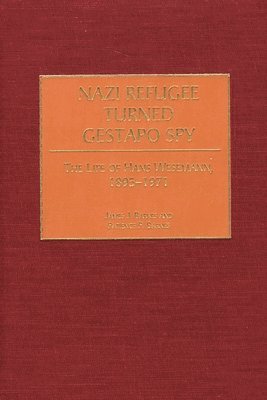
Nazi Refugee Turned Gestapo Spy
The Life of Hans Wesemann, 1895-1971
Av James J. Barnes, Patience P. Barnes
Inbunden, 2001
1131 kr
Lägg i varukorg
Why would a journalist who was an ardent socialist and an anti-Nazi during the waning years of the Weimar Republic decide to go to work for the Gestapo abroad? Hans Wesemann, a veteran of World War I and a successful journalist, fled his native Germany in 1933 after writing a number of anti-Nazi …
American Civil War Through British Eyes: Dispatches from British Diplomats V. 1; November 1860-April 1862
Dispatches from British Diplomats
Av James Barnes, Patience Barnes m. fl.
Inbunden, 2003
583 kr
Lägg i varukorg
The diplomatic dispatches included in this volume offer an insight into contemporary Anglo-American relations. The period covered witnessed the election of Abraham Lincoln, the secession crisis, the formation of the Confederacy and the first military confrontations of the war.
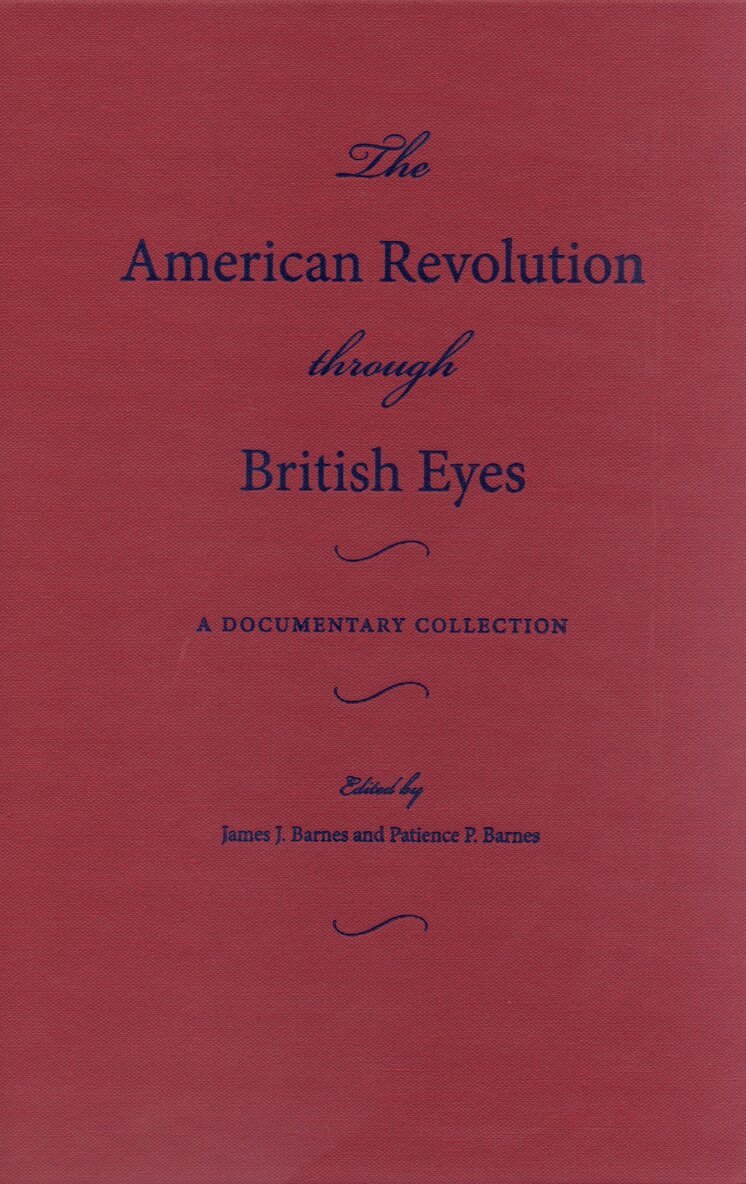
American Revolution Through British Eyes
A Documentary Collection
Av James Barnes, Patience Barnes m. fl.
Inbunden, 2013
2888 kr
Lägg i varukorg
Eyewitness accounts of the War of Independence by British observers and participants. The letters in this collection were written mostly by British military officers and diplomats reporting directly to their superiors in London. Many of the writers were actively engaged in fighting the Americans …
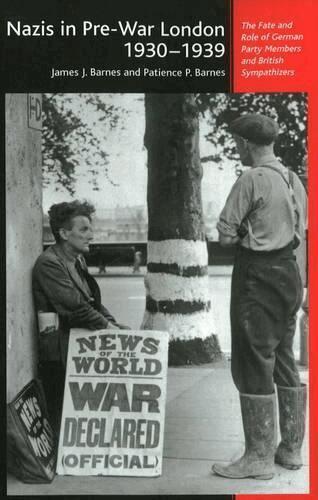
Nazis in Pre-War London, 1930-1939
The Fate and Role of German Party Members and British Sympathizers
Av James J Barnes, Patience P Barnes
Häftad, 2010
518 kr
Lägg i varukorg
Once war broke out in September 1930 the Nazi Party newspaper, Völkischer Beobachter, sent its first representative to London. Soon afterwards, German residents in London established an Ortsgruppe, or local Nazi group, which provided Party members with a place to congregate and support the new …
James Vincent Murphy
Translator and Interpreter of Fascist Europe 1880-1946
Av James F. Barnes, Patience P. Barnes
Häftad, 1987
542 kr
Tillfälligt slut
A biography of Irish journalist, James Vincent Murphy, who started out as a Catholic priest, spent the twenties in Rome and Paris, and reported from Berlin on the Nazis as an official propagandist. An international lecturer and linguist, Murphy knew many of Europe's famed intellectuals. For a time, …
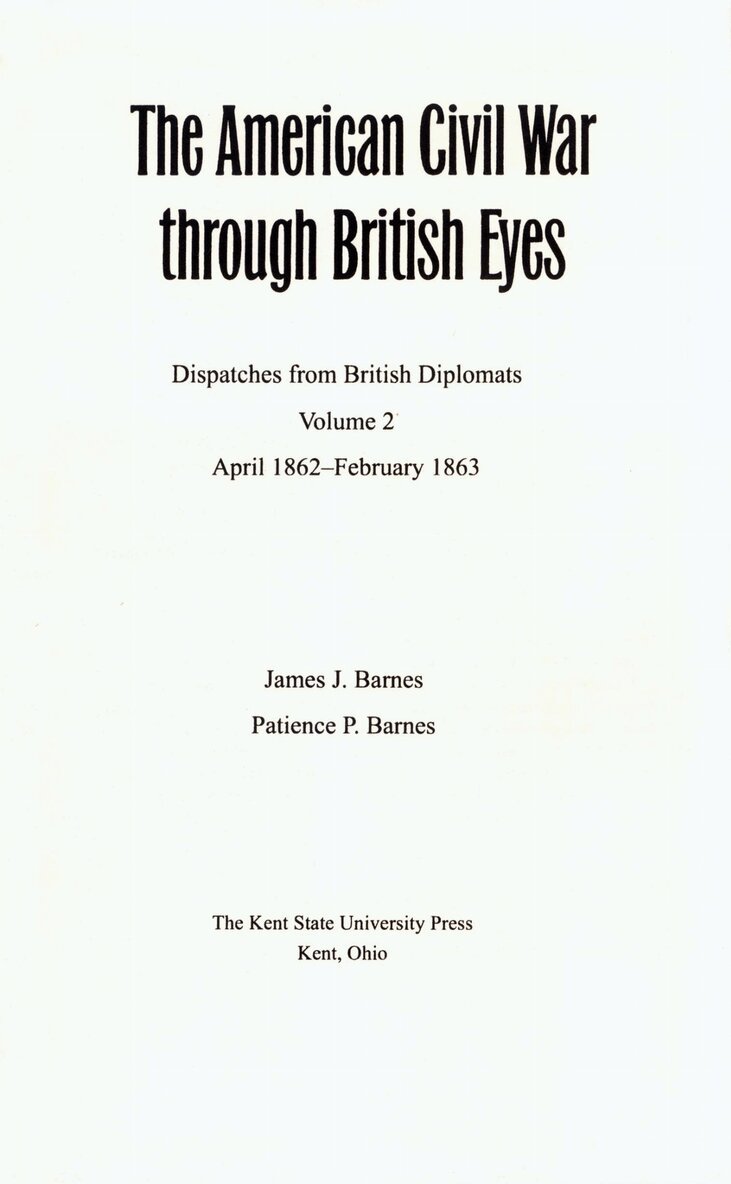
American Civil War Through British Eyes V. 2; April 1862-February 1863
Dispatches from British Diplomats
Av The Kent State University Press, Barnes m. fl.
Inbunden, 2005
583 kr
Tillfälligt slut
The dispatches from Lord Richard Bickerton Pemell Lyons, Second Baron, British Envoy Extraordinary in Washington, D.C., during the Civil War offer insight into contemporaneous Anglo-American relations. The three-and-a-half-year period covered in these two volumes witnessed the fierce and deadly …
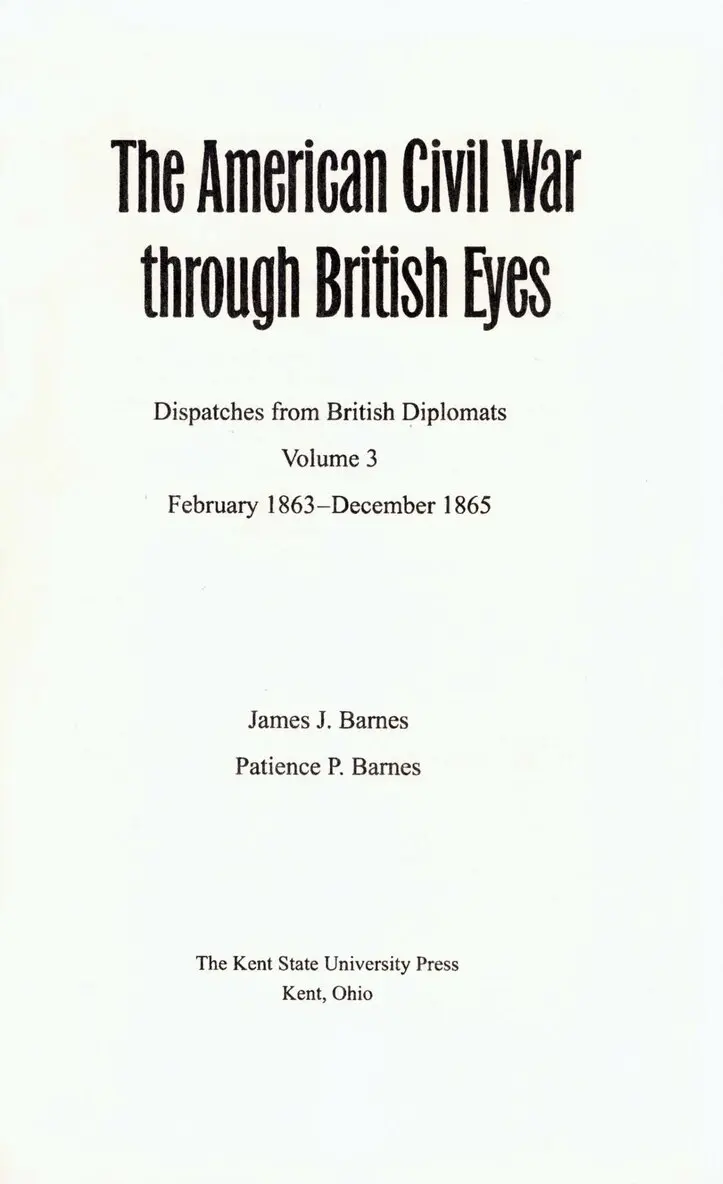
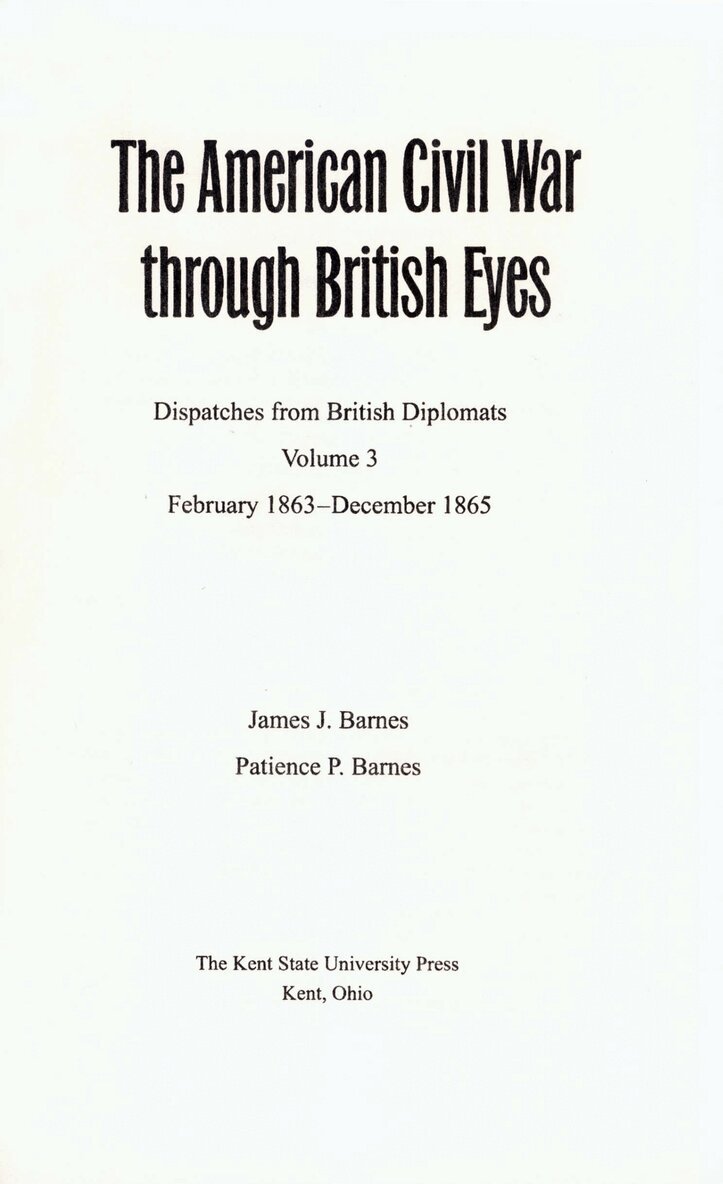
American Civil War Through British Eyes V. 3; February 1863-December 1865
Dispatches from British Diplomats
Av The Kent State University Press, Barnes m. fl.
Inbunden, 2005
583 kr
Tillfälligt slut
The dispatches from Lord Richard Bickerton Pemell Lyons, Second Baron, British Envoy Extraordinary in Washington, D.C., during the Civil War offer insight into contemporaneous Anglo-American relations. The three-and-a-half-year period covered in these two volumes witnessed the fierce and deadly …