Patricia Eunji Kim - Böcker
Visar alla böcker från författaren Patricia Eunji Kim. Handla med fri frakt och snabb leverans.
6 produkter
6 produkter
1 228 kr
Skickas inom 7-10 vardagar
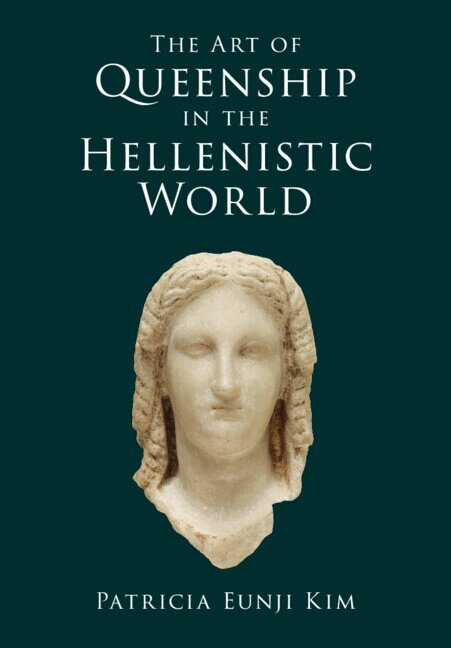
In The Art of Queenship in the Hellenistic World, Patricia Eunji Kim examines the visual and material cultures of Hellenistic queens, the royal and dynastic women who served as subjects and patrons of art. Exploring evidence in the interconnected eastern Mediterranean and western Asia from the fourth to second centuries BCE, Kim argues that the arts of queenship were central to expressions of dynastic (and sometimes even imperial) consolidation, continuity, and legitimacy. From gems, coins, and vessels to monuments and sculpture, the visual and material cultures of queenship appeared in a range of sacred settings, public spaces, royal courts, and domestic domains. Encompassing several dynasties, including the Hecatomnids, Argeads, Ptolemies, Seleucids, and Attalids, Kim inaugurates new methods for comparing and interpreting visual articulations of queenship and ideal femininity from distinct yet culturally entangled contexts, thus illuminating the ways that women had an impact art and politics in the ancient world.
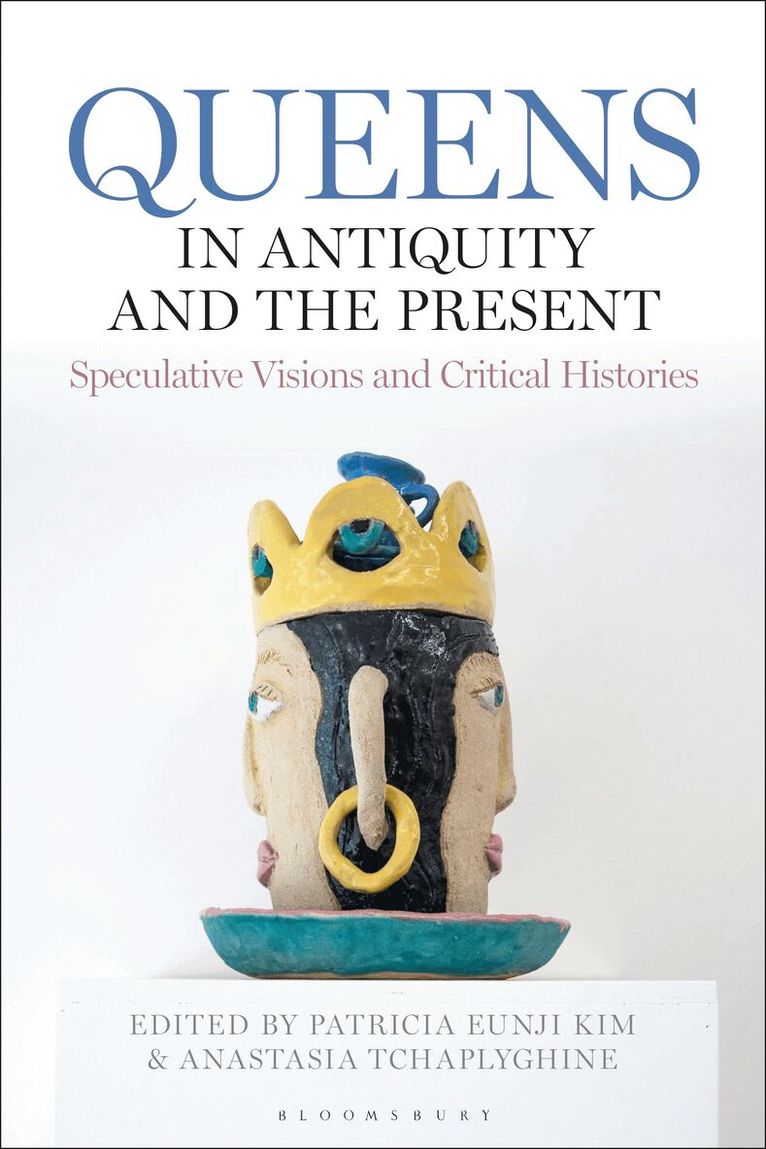
Queens in Antiquity and the Present
Speculative Visions and Critical Histories
Inbunden, Engelska, 2024
1 289 kr
Skickas inom 7-10 vardagar
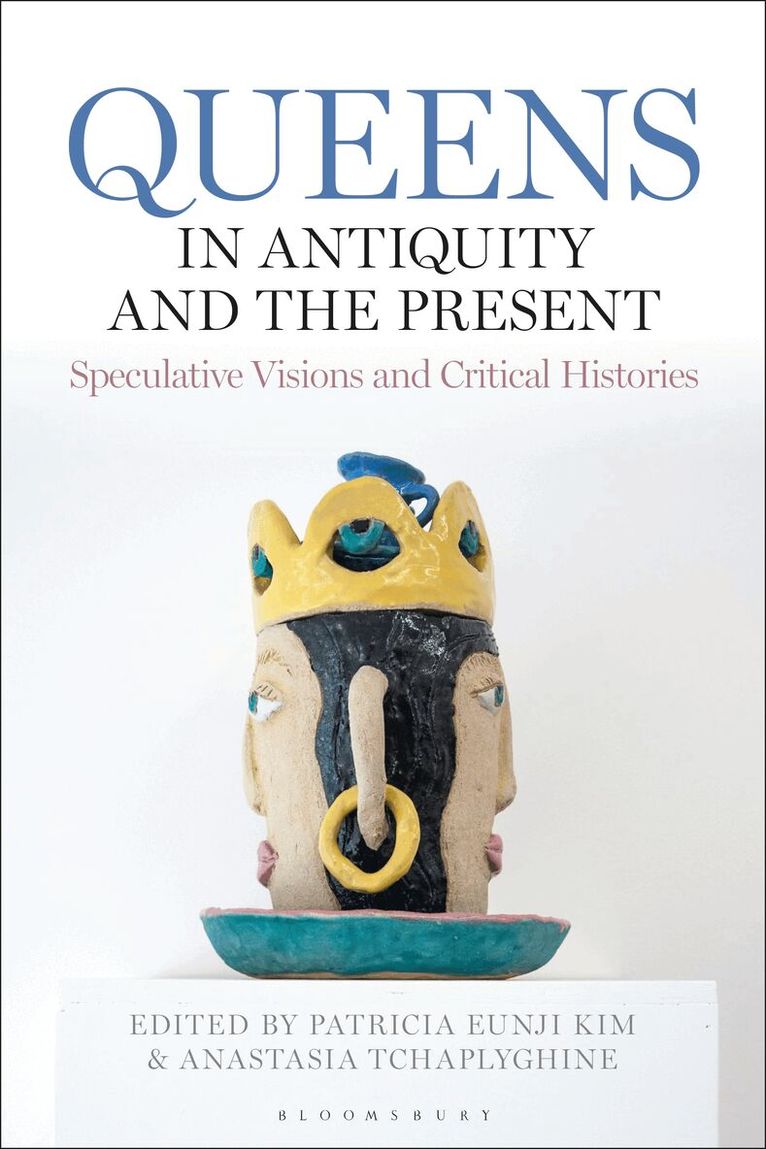
This interdisciplinary edited volume explores the notion of queenship as it has manifest from antiquity to the present, in contexts ranging from political acts to art production. Featuring the work of scholars, educators, curators and artists, this book gathers temporally and geographically distinct ideas about queenship into a single discursive space. Invigorating the conversation around powerful historical women and their legacies, the contributors discuss ‘queenship’ as a concept with contemporary urgency—from North America to Africa, and Europe to Asia—foregrounding critical methodologies and creative interventions that address the gaps within archives and current cultural and socio-political representation.Although traditional narratives present queens of the ancient Mediterranean world primarily as the wives, daughters and mothers of kings, such as Semiramis and Cleopatra, the ways in which royal women wielded power—whether directly or indirectly—were actually multivariate, highly nuanced and culturally specific. The current contributions featured in this volume are concerned with teasing out the modern assumptions that have heavily influenced interpretations of gender norms and power dynamics in antiquity. In addition to re-examining primary sources, this volume scrutinizes the historiographies, methodologies and stereotypes that have shaped knowledge production and popular imagination over the course of hundreds and even thousands of years. As such, contributors present different kinds of receptions and speculative articulations of historical queenship, thus forging new paths forward for reconstructing and imagining queenships from antiquity to the present.
406 kr
Skickas inom 10-15 vardagar
This interdisciplinary edited volume explores the notion of queenship as it has manifest from antiquity to the present, in contexts ranging from political acts to art production. Featuring the work of scholars, educators, curators and artists, this book gathers temporally and geographically distinct ideas about queenship into a single discursive space. Invigorating the conversation around powerful historical women and their legacies, the contributors discuss ‘queenship’ as a concept with contemporary urgency—from North America to Africa, and Europe to Asia—foregrounding critical methodologies and creative interventions that address the gaps within archives and current cultural and socio-political representation.Although traditional narratives present queens of the ancient Mediterranean world primarily as the wives, daughters and mothers of kings, such as Semiramis and Cleopatra, the ways in which royal women wielded power—whether directly or indirectly—were actually multivariate, highly nuanced and culturally specific. The current contributions featured in this volume are concerned with teasing out the modern assumptions that have heavily influenced interpretations of gender norms and power dynamics in antiquity. In addition to re-examining primary sources, this volume scrutinizes the historiographies, methodologies and stereotypes that have shaped knowledge production and popular imagination over the course of hundreds and even thousands of years. As such, contributors present different kinds of receptions and speculative articulations of historical queenship, thus forging new paths forward for reconstructing and imagining queenships from antiquity to the present.
1 147 kr
Skickas inom 7-10 vardagar
Humanists, scientists, and artists collaborate to address the disjunctive temporalities of ecological crisis In 2016, Antarctica’s Totten Glacier, formed some 34 million years ago, detached from its bedrock, melted from the bottom by warming ocean waters. For the editors of Timescales, this event captures the disjunctive temporalities of our era’s-the Anthropocene’s-ecological crises: the rapid and accelerating degradation of our planet’s life-supporting environment established slowly over millennia. They contend that, to represent and respond to these crises (i.e., climate change, rising sea levels, ocean acidification, species extinction, and biodiversity loss) requires reframing time itself, making more visible the relationship between past, present, and future, and between a human life span and the planet’s. Timescales’ collection of lively and thought-provoking essays puts oceanographers, geophysicists, geologists, and anthropologists into conversation with literary scholars, art historians, and archaeologists. Together forging new intellectual spaces, they explore the relationship between geological deep time and historical particularity, between ecological crises and cultural expression, between environmental policy and social constructions, between restoration ecology and future imaginaries, and between constructive pessimism and radical (and actionable) hope. Interspersed among these essays are three complementary “etudes,” in which artists describe experimental works that explore the various timescales of ecological crisis.Contributors: Jason Bell, Harvard Law School; IemanjÁ Brown, College of Wooster; Beatriz Cortez, California State U, Northridge; Wai Chee Dimock, Yale U; Jane E. Dmochowski, U of Pennsylvania; David A. D. Evans, Yale U; Kate Farquhar; Marcia Ferguson, U of Pennsylvania; ÖmÜr Harmanşah, U of Illinois at Chicago; Troy Herion; Mimi Lien; Mary Mattingly; Paul Mitchell, U of Pennsylvania; Frank Pavia, California Institute of Technology; Dan Rothenberg; Jennifer E. Telesca, Pratt Institute; Charles M. Tung, Seattle U.
282 kr
Skickas inom 7-10 vardagar
Humanists, scientists, and artists collaborate to address the disjunctive temporalities of ecological crisis In 2016, Antarctica’s Totten Glacier, formed some 34 million years ago, detached from its bedrock, melted from the bottom by warming ocean waters. For the editors of Timescales, this event captures the disjunctive temporalities of our era’s-the Anthropocene’s-ecological crises: the rapid and accelerating degradation of our planet’s life-supporting environment established slowly over millennia. They contend that, to represent and respond to these crises (i.e., climate change, rising sea levels, ocean acidification, species extinction, and biodiversity loss) requires reframing time itself, making more visible the relationship between past, present, and future, and between a human life span and the planet’s. Timescales’ collection of lively and thought-provoking essays puts oceanographers, geophysicists, geologists, and anthropologists into conversation with literary scholars, art historians, and archaeologists. Together forging new intellectual spaces, they explore the relationship between geological deep time and historical particularity, between ecological crises and cultural expression, between environmental policy and social constructions, between restoration ecology and future imaginaries, and between constructive pessimism and radical (and actionable) hope. Interspersed among these essays are three complementary “etudes,” in which artists describe experimental works that explore the various timescales of ecological crisis.Contributors: Jason Bell, Harvard Law School; IemanjÁ Brown, College of Wooster; Beatriz Cortez, California State U, Northridge; Wai Chee Dimock, Yale U; Jane E. Dmochowski, U of Pennsylvania; David A. D. Evans, Yale U; Kate Farquhar; Marcia Ferguson, U of Pennsylvania; ÖmÜr Harmanşah, U of Illinois at Chicago; Troy Herion; Mimi Lien; Mary Mattingly; Paul Mitchell, U of Pennsylvania; Frank Pavia, California Institute of Technology; Dan Rothenberg; Jennifer E. Telesca, Pratt Institute; Charles M. Tung, Seattle U.
651 kr
Kommande
In the ancient Mediterranean and West Asian worlds, queens and royal dynastic women, including Arsinoe II, Ada, Naqia and Cleopatra VII, maintained power through their artistic portrayal, their cultural patronage and their relationship with cult worship. Ancient Queenship: Art, Power, and Presence recovers the lived experiences, responsibilities and public personas of dynastic women. Sources drawn from the first millennium BCE to today question our assumptions on queenly status, and ask us to reconsider who holds power, to examine how histories are created and altered, and to centre the often-unexplored narratives of royal women.The volume looks at how the theme of queenship has been “re-owned” and repositioned over time by creating conversation between ancient objects and artworks and ephemera dating from the 15th to the 21st century. These dynamic visions of ancient feminine power occupy new contexts in contemporary popular culture. The blurring of the historical and archaeological records with more modern mythologies, especially those of Salome and the Queen of Sheba, continue to facilitate new connections with royal women over 2000 years old.Ancient Queenship features over 60 artworks drawn from international museum collections, and includes a specially-commissioned piece by contemporary artist Maryam Yousif.