Patricia Meyer Spacks - Böcker
Visar alla böcker från författaren Patricia Meyer Spacks. Handla med fri frakt och snabb leverans.
14 produkter
14 produkter
1 017 kr
Skickas inom 3-6 vardagar
After Aphra Behn, Eliza Haywood was the most important woman novelist of the early eighteenth century. In the 1740s and 50s Haywood also edited several serial newspapers, the most important being The Female Spectator which appeared every month from April 1744 to May 1746 and was written with a markedly female audience in mind. The first modern periodical both written by a woman and addressed to a female audience, The Female Spectator takes up exciting themes found in Haywood's short fiction.
925 kr
Skickas inom 5-8 vardagar
After Aphra Behn, Eliza Haywood was the most important woman novelist of the early eighteenth century. In the 1740s and 50s Haywood also edited several serial newspapers, the most important being The Female Spectator which appeared every month from April 1744 to May 1746 and was written with a markedly female audience in mind. The first modern periodical both written by a woman and addressed to a female audience, The Female Spectator takes up exciting themes found in Haywood's short fiction.
659 kr
Skickas inom 7-10 vardagar
Desire and Truth offers a major reassessment of the history of eighteenth-century fiction by showing how plot challenges or reinforces conventional categories of passion and rationality. Arguing that fiction creates and conveys its essential truths through plot, Patricia Meyer Spacks demonstrates that eighteenth-century fiction is both profoundly realistic and consistently daring.
472 kr
Tillfälligt slut
This work offers an explanation of why boredom both haunts and motivates the literary imagination. Moving from Samuel Johnson to Donald Barthelme, from Jane Austen to Anita Brookner, Spacks shows us at last how we arrived in a postmodern world where boredom is the all-encompassing name we give our discontent. Her book aims to provide new insight into the cultural usefulness - and deep interest - of boredom as a state of mind.
342 kr
Skickas inom 7-10 vardagar
This text offers an explanation of why boredom both haunts and motivates the literary imagination. Moving from Samuel Johnson and Jane Austen to Donald Barthelme and Anita Brookner, the author shows us how we arrived in a postmodern world where boredom is the all-encompassing name we give our discontent.
1 139 kr
Skickas inom 5-8 vardagar
A celebratory history and appreciation of the varied, wildly experimental nature of fiction in eighteenth-century EnglandIn this study intended for general readers, eminent critic Patricia Meyer Spacks provides a fresh, engaging account of the early history of the English novel. Novel Beginnings departs from the traditional, narrow focus on the development of the realistic novel to emphasize the many kinds of experimentation that marked the genre in the eighteenth century before its conventions were firmly established in the nineteenth. Treating well-known works like Tom Jones and Tristram Shandy in conjunction with less familiar texts such as Sarah Fielding’s The Cry (a kind of hybrid novel and play) and Jane Barker’s A Patch-Work Screen for the Ladies (a novel of adventure replete with sentimental verse and numerous subnarratives), the book evokes the excitement of a multifaceted and unpredictable process of growth and change.Investigating fiction throughout the 1700s, Spacks delineates the individuality of specific texts while suggesting connections among novels. She sketches a wide range of forms and themes, including Providential narratives, psychological thrillers, romans à clef, sentimental parables, political allegories, Gothic romances, and many others. These multiple narrative experiments show the impossibility of thinking of eighteenth-century fiction simply as a precursor to the nineteenth-century novel, Spacks shows. Instead, the vast variety of engagements with the problems of creating fiction demonstrates that literary history—by no means inexorable—might have taken quite a different course.
81 kr
Tillfälligt slut
This revised Norton Critical Edition is based on the first edition text (dated 1818, but likely issued in late 1817). The editor has spelled out ampersands and made superscript letters lowercased. The novel, which is accompanied by revised and expanded explanatory annotations, is followed by the two canceled chapters that comprise Persuasion’s original ending. “Backgrounds and Contexts” collects contemporary assessments of Jane Austen as well as materials relating to the social issues of the day. Included are an excerpt from William Hayley’s 1785 “Essay on Old Maids”; Austen’s letters to Fanny Knight, which reveal her skepticism about marriage as the key to happiness; Henry Austen’s memorial tribute to his famous sister; assessments by nineteenth-century critics Julia Kavanagh and Goldwin Smith, who viewed Austen as an unassuming, sheltered, and “feminine” rural writer; and the perspective of Austen’s biographer, Geraldine Edith Mitten. The Second Edition emphasizes current critical scholarship, reflecting enormous shifts in our comprehension of Austen’s achievement and opening the door to new ways of thinking about Persuasion and its author. For the first time, we can think complexly about Austen living through the Napoleonic Wars on the Continent and experiencing their political repercussions at home—the same as everyone else in England at that time. Four new essays—by Linda Bree, Sidney Gottlieb, John Wiltshire, and David Monaghan—speak to these new perspectives; those by Gottlieb and Monaghan expand the conversation into film adaptations of the novel. A Chronology of Austen’s life and work, new to the Second Edition, is included along with an updated Selected Bibliography.
361 kr
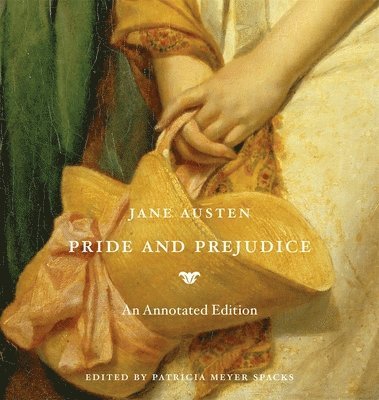
Along with the plays of William Shakespeare and the works of Charles Dickens, Jane Austen’s novels are among the most beloved books of Western literature. Pride and Prejudice (1813) was in Austen’s lifetime her most popular novel, and it was the author’s personal favorite. Adapted many times to the screen and stage, and the inspiration for numerous imitations, it remains today her most widely read book. Now, in this beautifully illustrated and annotated edition, distinguished scholar Patricia Meyer Spacks instructs the reader in a larger appreciation of the novel’s enduring pleasures and provides analysis of Darcy, Elizabeth Bennet, Lady Catherine, and all the characters who inhabit the world of Pride and Prejudice.This edition will be treasured by specialists and first-time readers, and especially by devoted Austen fans who think of themselves as Friends of Jane. In her Introduction, Spacks considers Austen’s life and career, the continuing appeal of Pride and Prejudice, and its power as a stimulus for fantasy (Maureen Dowd, writing in the New York Times, can hold forth at length on Obama as a Darcy-figure, knowing full well her readers will “understand that she wished to suggest glamour and sexiness”). Her Introduction also explores the value and art of literary annotation. In her running commentary on the novel, she provides notes on literary and historical contexts, allusions, and language likely to cause difficulty to modern readers. She offers interpretation and analysis, always with the wisdom, humor, and light touch of an experienced and sensitive teacher.
324 kr
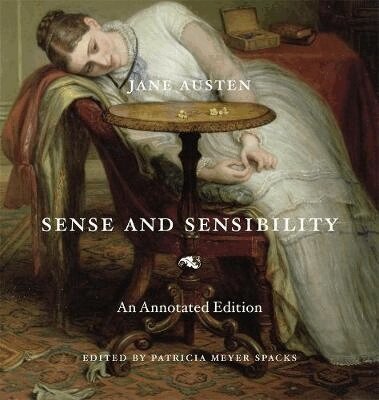
Sense and Sensibility (1811) marked the auspicious debut of a novelist identified only as “A Lady.” Jane Austen’s name has since become as familiar as Shakespeare’s, and her tale of two sisters has lost none of its power to delight. Patricia Meyer Spacks guides readers to a deeper appreciation of the richness of Austen’s delineation of her heroines, Elinor and Marianne Dashwood, as they experience love, romance, and heartbreak. On display again in the editor’s running commentary are the wit and light touch that delighted readers of Spacks’s Pride and Prejudice: An Annotated Edition.In her notes, Spacks elucidates language and allusions that have become obscure (What are Nabobs? When is rent day?), draws comparisons to Austen’s other work and to that of her precursors, and gives an idea of how other critics have seen the novel. In her introduction and annotations, she explores Austen’s sympathy with both Elinor and Marianne, the degree to which the sisters share “sense” and “sensibility,” and how they must learn from each other. Both manage to achieve security and a degree of happiness by the novel’s end. Austen’s romance, however, reveals darker overtones, and Spacks does not leave unexamined the issue of the social and psychological restrictions of women in Austen’s era.As with other volumes in Harvard’s series of Austen novels, Sense and Sensibility: An Annotated Edition comes handsomely illustrated with numerous color reproductions that vividly recreate Austen’s world. This will be an especially welcome addition to the library of any Janeite.
341 kr
Skickas inom 10-15 vardagar
After retiring from a lifetime of teaching literature, Patricia Meyer Spacks embarked on a year-long project of rereading dozens of novels: childhood favorites, fiction first encountered in young adulthood and never before revisited, books frequently reread, canonical works of literature she was supposed to have liked but didn’t, guilty pleasures (books she oughtn’t to have liked but did), and stories reread for fun vs. those read for the classroom. On Rereading records the sometimes surprising, always fascinating, results of her personal experiment.Spacks addresses a number of intriguing questions raised by the purposeful act of rereading: Why do we reread novels when, in many instances, we can remember the plot? Why, for example, do some lovers of Jane Austen’s fiction reread her novels every year (or oftener)? Why do young children love to hear the same story read aloud every night at bedtime? And why, as adults, do we return to childhood favorites such as The Hobbit, Alice in Wonderland, and the Harry Potter novels? What pleasures does rereading bring? What psychological needs does it answer? What guilt does it induce when life is short and there are so many other things to do (and so many other books to read)? Rereading, Spacks discovers, helps us to make sense of ourselves. It brings us sharply in contact with how we, like the books we reread, have both changed and remained the same.
Female Imagination
A Literary and Psychological Investigation of Women's Writing
Inbunden, Engelska, 2022
2 185 kr
Skickas inom 10-15 vardagar
Is there such a thing as a female literary imagination – a special brand of insight and intuition that characterises women’s writing? Is there something about a novel, whether by Jane Austen, Charlotte Brontë or Doris Lessing, that tells us that it could only have been written by a woman? Do the subject matter, form and style that women choose throw light on the way they think and feel?In this brilliant and highly readable book, originally published in 1976, Patricia Spacks analyses the female view of the world. Juxtaposing – sometimes in startlingly original combination some eighty books written between the seventeenth century and the present day she uses both literary and psychological analysis to explore patterns that recur again and again in the stories women tell – whether about their own lives or the lives of their fictional characters. She dissects female experience in the twentieth century as viewed by an array of writers ranging from Kate Millet to Virginia Woolf; examines the interplay of social passivity and psychic power that dominates characters such as Maggie Tulliver and Jane Eyre, the altruism that impels Jane Austen’s and Mrs Gaskell’s heroines, the ‘acceptance’ of Virginia Woolf’s Mrs Ramsey, the personal and social conflicts that beset so many of the adolescent girls that figure in both nineteenth-century and contemporary literature; reveals the complex motives that can be bound up in a women’s deliberate choice of the artist’s role, as appears in the writings of Isadora Duncan’s and Dora Carrington, Marie Bashkirtseff and Mary McCartney – and the surprising forms ‘freedom’ can take, as for Beatrice Webb in the East End of London or Isak Dinerson in the wilds of Africa…The voices echo and re-echo across the years in fascinating counter-point. Their range is enormous – rebels and reformers, actresses and painters, Society ladies and unknown girls in small towns, novels, poems, memoirs, diaries and letters, both English and American, and alongside classics such as Wuthering Heights and well-known modern works such as The Bell Jar, Patricia Spacks introduces an intriguing selection of relatively unknown writers, such as Napoleon’s psychoanalyst great-niece Marie Bonaparte, the Victorian arch-fantasist Mary MacLane and the autobiography of a seventeenth-century Duchess.The Female Imagination is much more than a study of women’s writing. It is an inquiry into the nature of female thought, self-expression and experience. As such it should appeal to every educated woman – and to many men too.
Female Imagination
A Literary and Psychological Investigation of Women's Writing
Häftad, Engelska, 2024
490 kr
Skickas inom 10-15 vardagar
Is there such a thing as a female literary imagination – a special brand of insight and intuition that characterises women’s writing? Is there something about a novel, whether by Jane Austen, Charlotte Brontë or Doris Lessing, that tells us that it could only have been written by a woman? Do the subject matter, form and style that women choose throw light on the way they think and feel?In this brilliant and highly readable book, originally published in 1976, Patricia Spacks analyses the female view of the world. Juxtaposing – sometimes in startlingly original combination some eighty books written between the seventeenth century and the present day she uses both literary and psychological analysis to explore patterns that recur again and again in the stories women tell – whether about their own lives or the lives of their fictional characters. She dissects female experience in the twentieth century as viewed by an array of writers ranging from Kate Millet to Virginia Woolf; examines the interplay of social passivity and psychic power that dominates characters such as Maggie Tulliver and Jane Eyre, the altruism that impels Jane Austen’s and Mrs Gaskell’s heroines, the ‘acceptance’ of Virginia Woolf’s Mrs Ramsey, the personal and social conflicts that beset so many of the adolescent girls that figure in both nineteenth-century and contemporary literature; reveals the complex motives that can be bound up in a women’s deliberate choice of the artist’s role, as appears in the writings of Isadora Duncan’s and Dora Carrington, Marie Bashkirtseff and Mary McCartney – and the surprising forms ‘freedom’ can take, as for Beatrice Webb in the East End of London or Isak Dinerson in the wilds of Africa…The voices echo and re-echo across the years in fascinating counter-point. Their range is enormous – rebels and reformers, actresses and painters, Society ladies and unknown girls in small towns, novels, poems, memoirs, diaries and letters, both English and American, and alongside classics such as Wuthering Heights and well-known modern works such as The Bell Jar, Patricia Spacks introduces an intriguing selection of relatively unknown writers, such as Napoleon’s psychoanalyst great-niece Marie Bonaparte, the Victorian arch-fantasist Mary MacLane and the autobiography of a seventeenth-century Duchess.The Female Imagination is much more than a study of women’s writing. It is an inquiry into the nature of female thought, self-expression and experience. As such it should appeal to every educated woman – and to many men too.
1 305 kr
Skickas inom 7-10 vardagar
Reading Eighteenth-Century Poetry recaptures for modern readers the urgency, distinctiveness and rewarding nature of this challenging and powerful body of poetry. An essential guide to reading eighteenth-century poetry, written by world-renowned critic, Patricia Meyer SpacksExposes the multiplicity of forms, tones, and topics engaged by poets during this periodProvides in-depth analysis of poems by established figures such as Alexander Pope and Jonathan Swift, as well as work by less familiar figures, including Anne Finch and Mary LeaporA broadly chronological structure incorporates close reading alongside insightful contextual and historical detailCaptures the power and uniqueness of eighteenth-century poetry, creating an ideal guide for those returning to this period, or delving into it for the first time
506 kr
Skickas inom 11-20 vardagar
Reading Eighteenth-Century Poetry recaptures for modern readers the urgency, distinctiveness and rewarding nature of this challenging and powerful body of poetry. An essential guide to reading eighteenth-century poetry, written by world-renowned critic, Patricia Meyer SpacksExposes the multiplicity of forms, tones, and topics engaged by poets during this periodProvides in-depth analysis of poems by established figures such as Alexander Pope and Jonathan Swift, as well as work by less familiar figures, including Anne Finch and Mary LeaporA broadly chronological structure incorporates close reading alongside insightful contextual and historical detailCaptures the power and uniqueness of eighteenth-century poetry, creating an ideal guide for those returning to this period, or delving into it for the first time