Patrick Nickleson - Böcker
Visar alla böcker från författaren Patrick Nickleson. Handla med fri frakt och snabb leverans.
6 produkter
6 produkter
488 kr
Tillfälligt slut
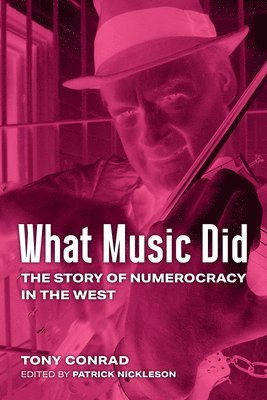
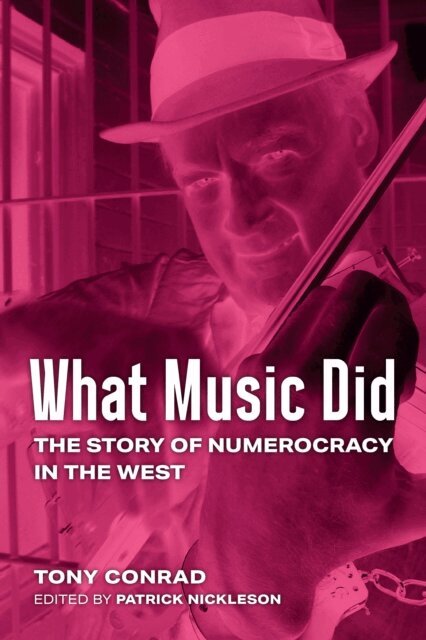
In What Music Did, experimental filmmaker and violinist Tony Conrad explores in depth the relationship between music and mathematics. A work of decades that was left unfinished at the time of his death in 2016, Conrad’s expansive history of the interrelationship of music and mathematics is published here for the first time. Editor Patrick Nickleson describes Conrad’s method as that of an anarchic, interarts haberdasher; much of the research comes from musty and out-of-print sources, giving the impression that Conrad followed paths opened up for him in used book shops and conversations, rather than seeking a direct scholarly argument. Throughout the book, readers encounter scenes from over two thousand years of history, mathematics, and music: Pythagoras using pebbles to articulate didactic number games to his disciples; Galileo fretting a hill and listening with a musician’s ear to calculate the rate of acceleration under gravity; Rameau trapping Western music in a five-limit tuning system, and what could have been if he were more adept with numbers. Even when drawing on classical sources to explore canonical figures like Saint Augustine, What Music Did offers idiosyncratic critical insights that highlight our ongoing cultural reverence when answers result in simple whole number ratios like 3:2, 4:3, or 5:4. What Music Did is Tony Conrad’s extended indictment of music’s role, from the Pythagoreans to the twentieth century, in upholding the use of number as a clandestine and circumscribed armature of power.
371 kr
Skickas inom 7-10 vardagar
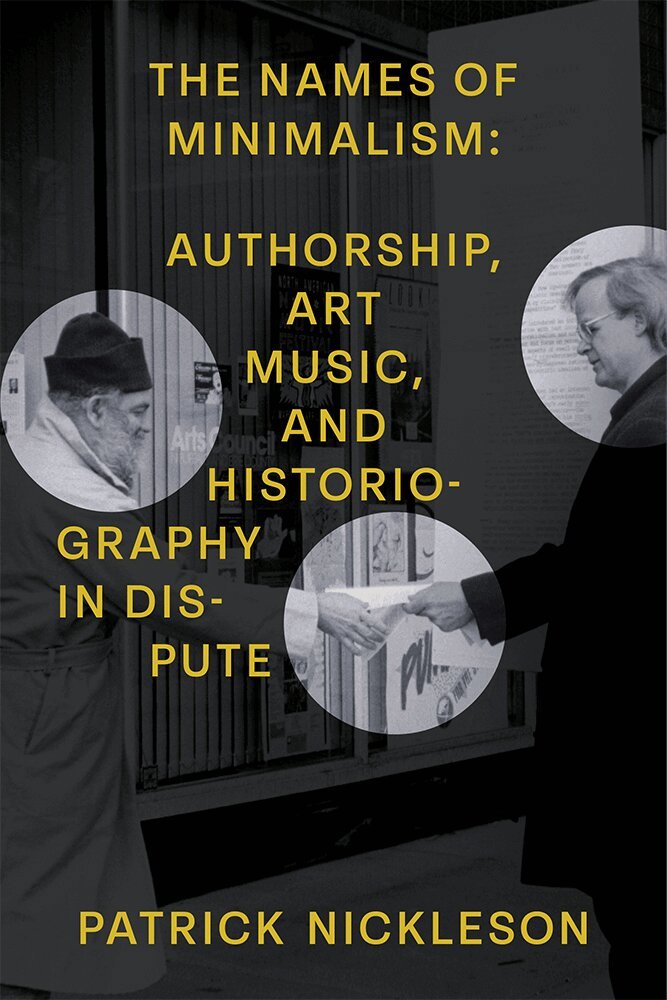
Minimalism stands as the key representative of 1960s radicalism in art music histories—but always as a failed project. In The Names of Minimalism, Patrick Nickleson holds in tension collaborative composers in the period of their collaboration, as well as the musicological policing of authorship in the wake of their eventual disputes. Through examinations of the droning of the Theatre of Eternal Music, Reich’s Pendulum Music, Glass’s work for multiple organs, the austere performances of punk and no wave bands, and Rhys Chatham and Glenn Branca’s works for massed electric guitars, Nickleson argues for authorship as always impure, buzzing, and indistinct.Expanding the place of Jacques Rancière’s philosophy within musicology, Nickleson draws attention to disciplinary practices of guarding compositional authority against artists who set out to undermine it. The book reimagines the canonic artists and works of minimalism as “(early) minimalism,” to show that art music histories refuse to take seriously challenges to conventional authorship as a means of defending the very category “art music.” Ultimately, Nickleson asks where we end up if we imagine the early minimalist project—artists forming bands to perform their own music, rejecting the score in favor of recording, making extensive use of magnetic type as compositional and archival medium, hosting performances in lofts and art galleries rather than concert halls—not as a utopian moment within a 1960s counterculture doomed to fail, but as the beginning of a process with a long and influential afterlife.
1 356 kr
Skickas inom 7-10 vardagar
In What Music Did, experimental filmmaker and violinist Tony Conrad explores in depth the relationship between music and mathematics. A work of decades that was left unfinished at the time of his death in 2016, Conrad’s expansive history of the interrelationship of music and mathematics is published here for the first time. Editor Patrick Nickleson describes Conrad’s method as that of an anarchic, interarts haberdasher; much of the research comes from musty and out-of-print sources, giving the impression that Conrad followed paths opened up for him in used book shops and conversations, rather than seeking a direct scholarly argument. Throughout the book, readers encounter scenes from over two thousand years of history, mathematics, and music: Pythagoras using pebbles to articulate didactic number games to his disciples; Galileo fretting a hill and listening with a musician’s ear to calculate the rate of acceleration under gravity; Rameau trapping Western music in a five-limit tuning system, and what could have been if he were more adept with numbers. Even when drawing on classical sources to explore canonical figures like Saint Augustine, What Music Did offers idiosyncratic critical insights that highlight our ongoing cultural reverence when answers result in simple whole number ratios like 3:2, 4:3, or 5:4. What Music Did is Tony Conrad’s extended indictment of music’s role, from the Pythagoreans to the twentieth century, in upholding the use of number as a clandestine and circumscribed armature of power.
998 kr
Skickas
Minimalism stands as the key representative of 1960s radicalism in art music histories—but always as a failed project. In The Names of Minimalism, Patrick Nickleson holds in tension collaborative composers in the period of their collaboration, as well as the musicological policing of authorship in the wake of their eventual disputes. Through examinations of the droning of the Theatre of Eternal Music, Reich’s Pendulum Music, Glass’s work for multiple organs, the austere performances of punk and no wave bands, and Rhys Chatham and Glenn Branca’s works for massed electric guitars, Nickleson argues for authorship as always impure, buzzing, and indistinct.Expanding the place of Jacques Rancière’s philosophy within musicology, Nickleson draws attention to disciplinary practices of guarding compositional authority against artists who set out to undermine it. The book reimagines the canonic artists and works of minimalism as “(early) minimalism,” to show that art music histories refuse to take seriously challenges to conventional authorship as a means of defending the very category “art music.” Ultimately, Nickleson asks where we end up if we imagine the early minimalist project—artists forming bands to perform their own music, rejecting the score in favor of recording, making extensive use of magnetic type as compositional and archival medium, hosting performances in lofts and art galleries rather than concert halls—not as a utopian moment within a 1960s counterculture doomed to fail, but as the beginning of a process with a long and influential afterlife.
1 227 kr
Skickas
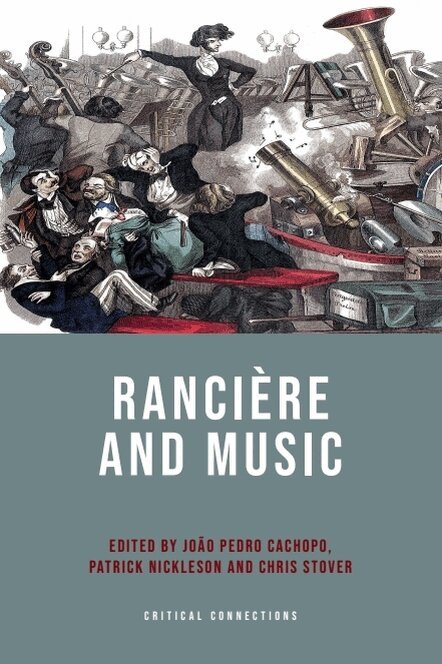
The place of music in Rancière’s thought has long been underestimated or unrecognised. This volume responds to this absence with a collection of 15 essays by scholars from a variety of music- and sound-related fields, including an Afterword by Rancière on the role of music in his thought and writing. The essays engage closely with Rancière’s existing commentary on music and its relationship to other arts in the aesthetic regime, revealed through detailed case studies around music, sound and listening. Rancière’s thought is explored along a number of music-historical trajectories, including Italian and German opera, Romantic and modernist music, Latin American and South African music, jazz, and contemporary popular music. Rancière’s work is also set creatively in dialogue with other key contemporary thinkers including Adorno, Althusser, Badiou and Deleuze.
594 kr
Skickas inom 3-6 vardagar
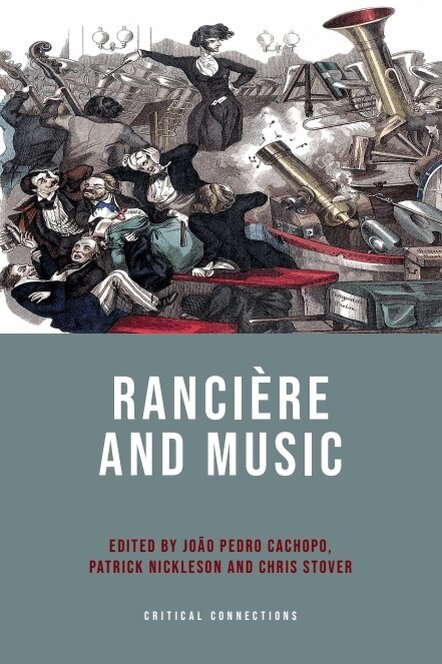
The place of music in Ranciere's thought has long been underestimated or unrecognised. Ranciere and Music responds to this absence with a collection of 15 essays by scholars from a variety of music- and sound-related fields including an original Afterword by Ranciere on the role of music in his thought and writing.Contributions engage closely with Ranciere's existing commentary on music, its relationship to other arts in the aesthetic regime, revealed through detailed case studies around music, sound, and listening.Ranciere's thought is explored along a number of music-historical trajectories, including Italian and German opera, Romantic and modernist music, Latin American and South African music, jazz, and contemporary popular music. Ranciere's work is also set creatively in dialogue with other key contemporary thinkers including Adorno, Althusser, Badiou and Deleuze.