Patrycja Grzebyk - Böcker
Visar alla böcker från författaren Patrycja Grzebyk. Handla med fri frakt och snabb leverans.
7 produkter
7 produkter
2 056 kr
Skickas inom 10-15 vardagar
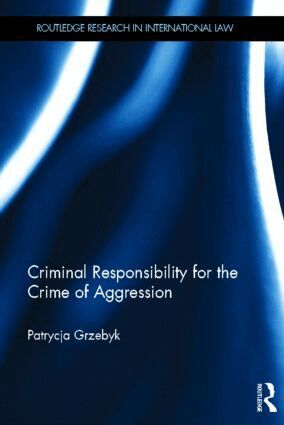
Since the Nuremberg trial, the crime of aggression has been considered one of the gravest international crimes. However, since the 1940s no defendants have been charged with this crime, with some states actively opposing the notion of punishing aggression. The option of trying an individual for aggression is expressly included in the statute of the International Criminal Court. In 2010 the Assembly of States Parties adopted a definition of the crime of aggression and conditions of the exercise of jurisdiction over this crime by the Court. The Assembly also agreed that the decision on including the crime of aggression within the Court’s jurisdiction would be made in 2017 at the earliest. It is still internationally debatable whether the criminalisation of aggression is an outcome to strive for, or whether its abandonment is more preferable.In Criminal Responsibility for the Crime of Aggression, Patrycja Grzebyk explores the scope of criminal responsibility of individuals for crimes of aggression and asks why those responsible for aggression are not brought to justice. The book first works to identify the legal norms that define and delegalise aggression, before moving to determine the basis and scope for the criminalisation of aggression. The book then goes on to identify the key risks and difficulties inherent in trials for aggression.Following a string of awards in Poland, including the Manfred Lachs Prize for the best first book on public international law, this cutting investigation of aggression is now deservedly made available to the wider world. In its extensive analysis of international trials on aggression, and its synthesis of legal, political and historical rhetoric, this book offers broad and striking insight into the criminal responsibility of individuals on a world stage.
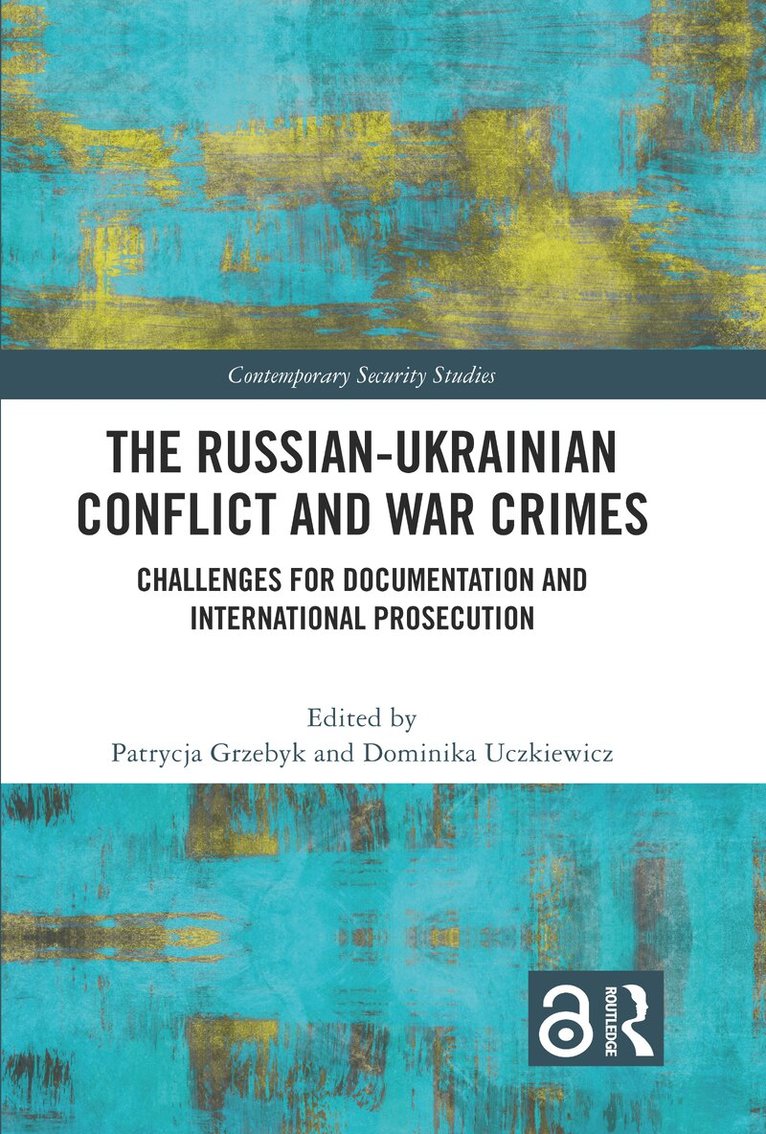
Russian-Ukrainian Conflict and War Crimes
Challenges for Documentation and International Prosecution
Inbunden, Engelska, 2024
1 994 kr
Skickas inom 10-15 vardagar
This book offers a multidisciplinary examination of the international crimes committed in the Russia-Ukraine War, and the challenges of their prosecution and documentation.As the largest international armed conflict in Europe since World War II, Russia’s war against Ukraine has provoked strong reactions and questions about the post-1945 world order, the utility of the war, and the effectiveness of international criminal justice. Throughout the chapters in this volume, scholars and legal practitioners from Canada, Germany, Poland, Ukraine, the UK, and the United States present the results of interdisciplinary research, insights from the perspective of other post-communist states, and first-hand expertise from directly working on the documentation and prosecution of these crimes. This offers a broader picture of post-Cold War relations and sheds light on the roots and nature of the war and the importance of regional approaches. The chapters also present some possible responses to the crimes committed in the conflict, with a focus on a victims-centered approach to transitional justice.This volume will be of interest to scholars and students of international criminal and humanitarian law, security studies, peace and conflict studies, and Eastern European history.An electronic version of this book is freely available, thanks to the support of libraries working with Knowledge Unlatched (KU). KU is a collaborative initiative designed to make high quality books Open Access for the public good. The Open Access ISBN for this book is 9781003493785. More information about the initiative and links to the Open Access version can be found at www.knowledgeunlatched.org
Russian-Ukrainian Conflict and War Crimes
Challenges for Documentation and International Prosecution
Häftad, Engelska, 2026
621 kr
Kommande
This book offers a multidisciplinary examination of the international crimes committed in the Russia-Ukraine War, and the challenges of their prosecution and documentation.As the largest international armed conflict in Europe since World War II, Russia’s war against Ukraine has provoked strong reactions and questions about the post-1945 world order, the utility of the war, and the effectiveness of international criminal justice. Throughout the chapters in this volume, scholars and legal practitioners from Canada, Germany, Poland, Ukraine, the UK, and the United States present the results of interdisciplinary research, insights from the perspective of other post-communist states, and first-hand expertise from directly working on the documentation and prosecution of these crimes. This offers a broader picture of post-Cold War relations and sheds light on the roots and nature of the war and the importance of regional approaches. The chapters also present some possible responses to the crimes committed in the conflict, with a focus on a victims-centered approach to transitional justice.This volume will be of interest to scholars and students of international criminal and humanitarian law, security studies, peace and conflict studies, and Eastern European history.An electronic version of this book is freely available, thanks to the support of libraries working with Knowledge Unlatched (KU). KU is a collaborative initiative designed to make high quality books Open Access for the public good. The Open Access ISBN for this book is 9781003493785. More information about the initiative and links to the Open Access version can be found at www.knowledgeunlatched.org
1 266 kr
Skickas inom 7-10 vardagar
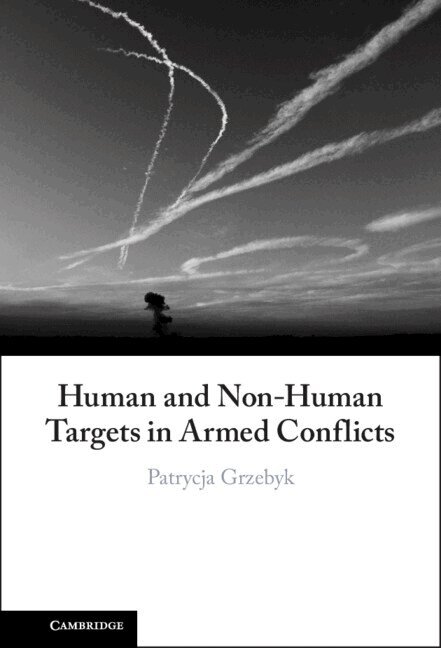
What norms apply to the determination of lawful targets? What persons and objects may be lawfully targeted in armed conflict? What are the reasons, both legal and extra-legal, of civilian losses? What principles must be observed when attacking military objectives? How can the protection of persons who are not participating in hostilities can be strengthened? Is it possible to develop a consistent approach to targeting in armed conflict regardless of the legal qualification of the armed conflict? This monograph answers these questions and many more. Taking into account both military objectives and civilian objects, it considers the extent of their protection in a range of contexts, providing an essential source of reference for scholars dealing with issues across international humanitarian law and armed conflict.
370 kr
Kommande
What norms apply to the determination of lawful targets? What persons and objects may be lawfully targeted in armed conflict? What are the reasons, both legal and extra-legal, of civilian losses? What principles must be observed when attacking military objectives? How can the protection of persons who are not participating in hostilities can be strengthened? Is it possible to develop a consistent approach to targeting in armed conflict regardless of the legal qualification of the armed conflict? This monograph answers these questions and many more. Taking into account both military objectives and civilian objects, it considers the extent of their protection in a range of contexts, providing an essential source of reference for scholars dealing with issues across international humanitarian law and armed conflict.
665 kr
Skickas inom 10-15 vardagar
Since the Nuremberg trial, the crime of aggression has been considered one of the gravest international crimes. However, since the 1940s no defendants have been charged with this crime, with some states actively opposing the notion of punishing aggression. The option of trying an individual for aggression is expressly included in the statute of the International Criminal Court. In 2010 the Assembly of States Parties adopted a definition of the crime of aggression and conditions of the exercise of jurisdiction over this crime by the Court. The Assembly also agreed that the decision on including the crime of aggression within the Court’s jurisdiction would be made in 2017 at the earliest. It is still internationally debatable whether the criminalisation of aggression is an outcome to strive for, or whether its abandonment is more preferable.In Criminal Responsibility for the Crime of Aggression, Patrycja Grzebyk explores the scope of criminal responsibility of individuals for crimes of aggression and asks why those responsible for aggression are not brought to justice. The book first works to identify the legal norms that define and delegalise aggression, before moving to determine the basis and scope for the criminalisation of aggression. The book then goes on to identify the key risks and difficulties inherent in trials for aggression.Following a string of awards in Poland, including the Manfred Lachs Prize for the best first book on public international law, this cutting investigation of aggression is now deservedly made available to the wider world. In its extensive analysis of international trials on aggression, and its synthesis of legal, political and historical rhetoric, this book offers broad and striking insight into the criminal responsibility of individuals on a world stage.
Del 55 - Queen Mary Studies in International Law
Polish Contributions to International Criminal Law
Inbunden, Engelska, 2025
2 834 kr
Skickas inom 3-6 vardagar
The book delves into the substantial and enduring influence of Polish representatives on the development of international criminal law for decades. The authors meticulously document the crucial and distinct role played by Polish diplomats in crafting relevant international treaties and analyze the intricacies of cooperation regarding the prosecution of war criminals following both World Wars. Additionally, the book examines Polish national regulations that have impacted international law itself, alongside the jurisprudence of Polish courts concerning international crimes. Notably, some of these judgments are referenced in the works of international commissions and tribunals, demonstrating their continued relevance in contemporary discussions on immunities and the scope of responsibility for international crimes.