
Paul A. Olson – författare
Visar alla böcker från författaren . Handla med fri frakt och snabb leverans.
7 produkter
7 produkter
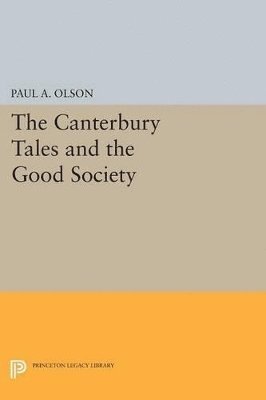
Häftad, Engelska, 2014
1 269 kr
Skickas inom 3-6 vardagar
Paul Olson argues that Chaucer's narratives emerge from his deep concern about the crises of late fourteenth-century England and his vision of the renewal of that troubled society through the ideal of parlement, the various orders of society speaking together, and through a perfective religious discipline. Originally published in 1987. The Princeton Legacy Library uses the latest print-on-demand technology to again make available previously out-of-print books from the distinguished backlist of Princeton University Press. These editions preserve the original texts of these important books while presenting them in durable paperback and hardcover editions. The goal of the Princeton Legacy Library is to vastly increase access to the rich scholarly heritage found in the thousands of books published by Princeton University Press since its founding in 1905.
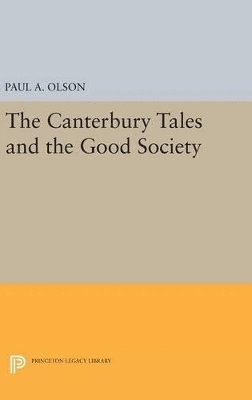
Inbunden, Engelska, 2016
3 099 kr
Skickas inom 3-6 vardagar
Paul Olson argues that Chaucer's narratives emerge from his deep concern about the crises of late fourteenth-century England and his vision of the renewal of that troubled society through the ideal of parlement, the various orders of society speaking together, and through a perfective religious discipline. Originally published in 1987. The Princeton Legacy Library uses the latest print-on-demand technology to again make available previously out-of-print books from the distinguished backlist of Princeton University Press. These editions preserve the original texts of these important books while presenting them in durable paperback and hardcover editions. The goal of the Princeton Legacy Library is to vastly increase access to the rich scholarly heritage found in the thousands of books published by Princeton University Press since its founding in 1905.
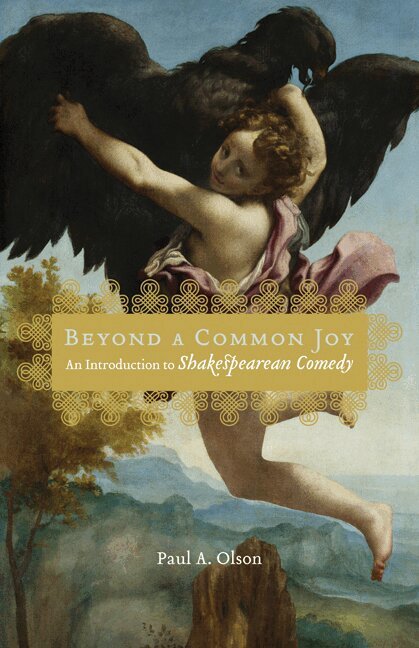
Inbunden, Engelska, 2008
585 kr
Skickas inom 10-15 vardagar
"Soul of the age!" Ben Jonson eulogized Shakespeare, and in the next breath, "He was not of an age but for all time." That he was both "of the age" and "for all time" is, this book suggests, the key to Shakespeare's comic genius. In this engaging introduction to the First Folio comedies, Paul A. Olson gives a persuasive and thoroughly engrossing account of the playwright's comic transcendence, showing how Shakespeare, by taking on the great themes of his time, elevated comedy from a mere mid-level literary form to its own form of greatness—on par with epic and tragedy.Like the best tragic or epic writers, Shakespeare in his comedies goes beyond private and domestic matters in order to draw on the whole of the commonwealth. He examines how a ruler's or a court's community at the household and local levels shapes the politics of empire—existing or nascent empires such as England, the Holy Roman Empire, Spain, Venice, and the Ottoman Empire or part empires such as Rome and Athens—where all their suffering and silliness play into how they govern. In Olson's work we also see how Shakespeare's appropriation of his age's ideas about classical myth and biblical scriptures bring to his comic action a sort of sacral profundity in keeping with notions of poetry as "inspired" and comic endings as more than merely happy but as, in fact, uncommonly joyful.
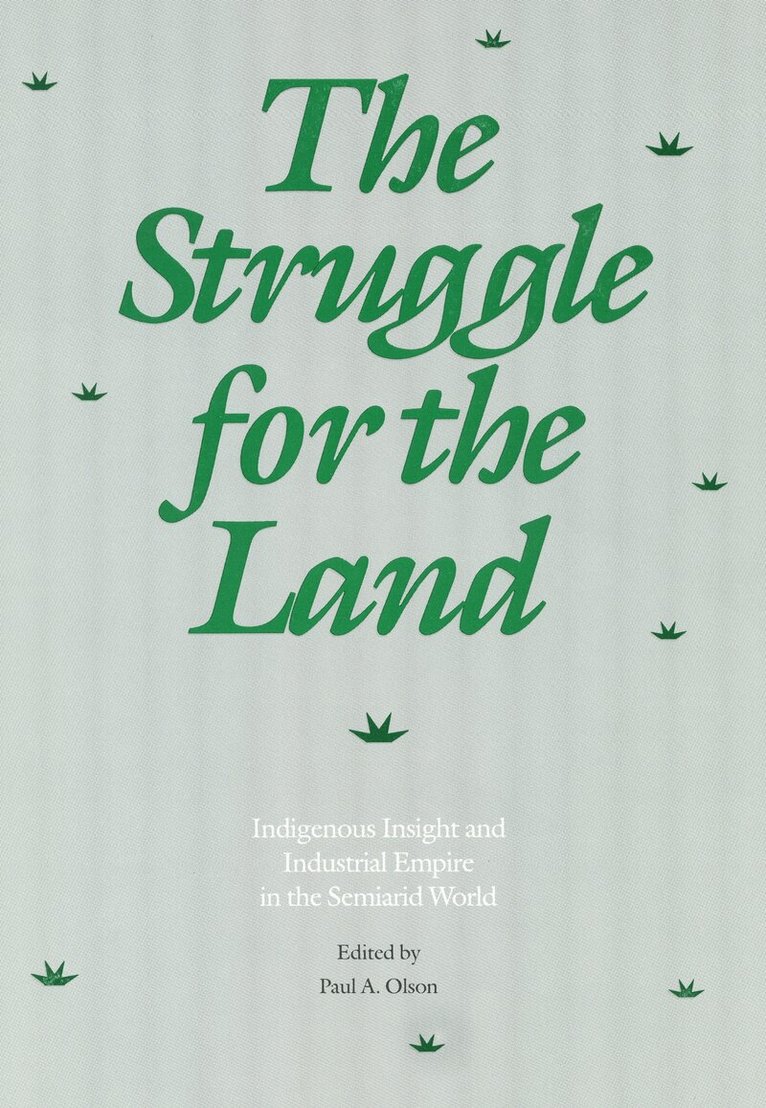
Inbunden, Engelska, 1990
639 kr
Skickas inom 10-15 vardagar
At an 1887 council when his people were told to learn farming in the semidesert region east of the Wind River Mountains, the Shosone chief Washakie exploded with "God damn a potato!" His instincts were all against the cultivation of semiarid land. The relationship between the buffalo hunter and the potato eater–between indigenous peoples and industrial empire–is the basic theme of the studies in The Struggle for the Land. As the editor, Paul A. Olson, points out in his introduction, the theme is as old as the biblical battle between the descendents of Nimrod, the city dweller, and of Abraham, the pastoralist. But the environmental cost of developing the world's semiarid regions is a new and urgent concern. Soil erosion, the loss of lands to dams, the pollution of once productive regions through mining, and the destruction of native food plants have everywhere decreased the quality of life for indigenous peoples, who have been forced to adopt the Western agricultural practices, property concepts, and economic institutions that created the environmental crisis. The eleven chapters in this collection look at the industrial and indigenous relationships in the lands of the North American Plains Indians, the Australian Aborigines, the Kazakhs in the USSR, the Maasai in Kenya, and several groups in southern Africa, and Alaskan and Lapp (Saami) native peoples. Representing a broad range of disciplines, including anthropology, history, ecology, and agricultural science, the contributors are John W. Bennett, Anatoly Khazanov, Russel L. Barsh, Gary C. Anders, Robson Silitshena, Peter Iverson, Patrick Morris, Annette Hamilton, J. Baird Callicott, O. Douglas Schwarz, and Solomon Bekure and Ishmael Ole Pasha. They recommend realistic solutions for the problems facing people who have essentially been disenfranchised by Western-style developmentof their native semiarid lands.
Inbunden, Engelska, 1995
714 kr
Skickas inom 10-15 vardagar
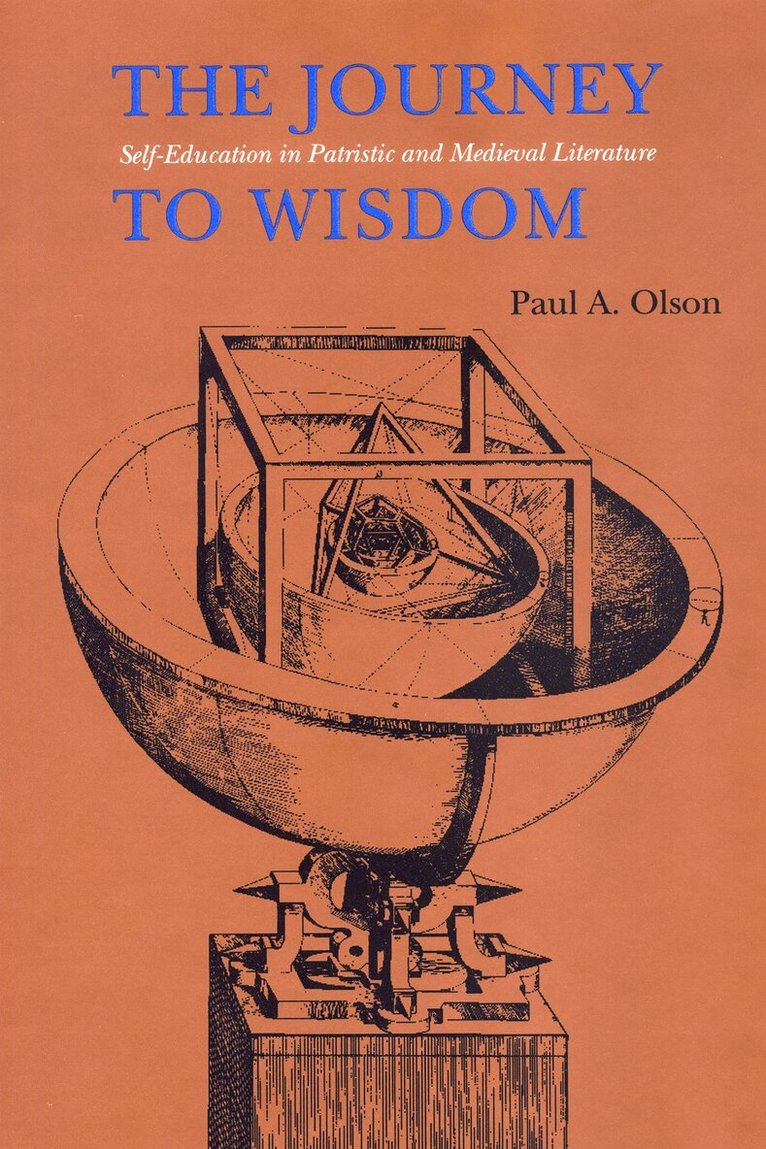
The Journey to Wisdom addresses a broad array of topics in education, the natural world, and medieval intellectual history. The book examines a philosophy of education that originated with the ancient Greeks and that reached its culmination in the late-medieval and early-Renaissance periods. That philosophy of education promotes a journey to wisdom, involving an escape from pure subjectivity and "the seductions of rhetoric" and leading to a profound awareness of the natural world and "nature's God." It grants us a renewed sense of education as a self-directed, transforming journey to knowledge and insight—rather than (as is so often the case now) as an impersonal, bureaucratized trek that reflects little sense of the ultimate aims of education. The volume opens with a discussion of the quarrel in ancient Greece between the Sophists and the so-called "philosophers"—a quarrel, Paul A. Olson writes, "out of which the [philosophers'] tradition centering education in reality, as opposed to social convention, develops." Subsequent chapters follow the development of this tradition in the writings of Augustine, Boethius, Dante, Petrarch, Copernicus, Galileo, Kepler, and others. Here Olson refutes several recent theories: that medieval intellectuals helped legitimize technological mastery and exploitation of the environment; that medieval education involved no systematic progress "toward recognizing the sanctity of creation"; and that all literary works—medieval ones included—"are self-referenced," and therefore that they offer no guidance to a world beyond themselves. The Journey to Wisdom will be essential reading for students of ancient, medieval, and Renaissance intellectual history. But in its unmistakably modern concerns about education, the book also speaks to a far wider spectrum of readers. Olson's study falls into that rarest category of scholarly productions: one that reflects both its author's profound knowledge of the past and his equally great commitment to the present. That dual commitment accounts for the uncommon insights—and pleasures—offered by this book.
Inbunden, Engelska, 2003
869 kr
Skickas inom 10-15 vardagar
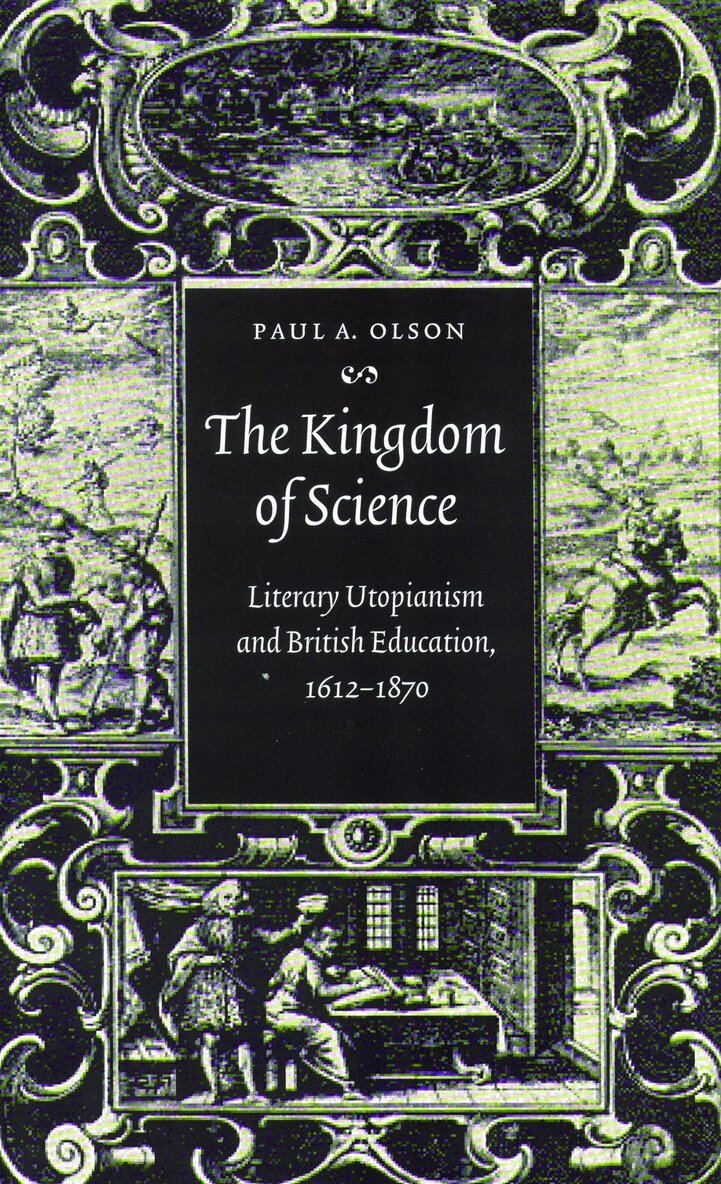
The Kingdom of Science examines Baconian utopias as blueprints for a scientific sociology of knowledge that founded a new social and economic world in the seventeenth century. Looking backward, Paul A. Olson begins with More's Utopia and Shakespeare's The Tempest, static state utopias designed to woo us toward a moral as opposed to a scientific reform. To these, Olson then contrasts the primary subjects of his study—Bacon's New Atlantis, the Commonwealth educational utopias, and the utopianism of Adam Smith and his Utilitarian followers. These later utopias increasingly point to an ideal world to be dominated by a science linked to technology, compelled education, and competitive capitalism. They posit as their end the conquest of nature and use as their means the routinizing of research and education. Their visions, Olson argues, lie at the center of the educational models adopted by mainstream British and American policymakers in the last century and a half—despite the warnings of both conservative and radical critics concerning their potential consequences for the environment and for culture. The challenge Olson presents for those responsible for forging our social future is creating visions sufficient to energize human groups while allowing both for the critical reflection necessary for constructive policy debate and for the action necessary to prevent environmental chaos and cultural disruption.The Kingdom of Science is a companion to Olson's earlier book, The Journey to Wisdom, and carries the assumptions of that patristic-medieval study into the early-modern and modern periods.
E-bok
PDF, Engelska, 2014956 kr
Läs direkt efter köp
Paul Olson argues that Chaucer's narratives emerge from his deep concern about the crises of late fourteenth-century England and his vision of the renewal of that troubled society through the ideal of parlement, the various orders of society speaking together, and through a perfective religious discipline.Originally published in 1987.The Princeton Legacy Library uses the latest print-on-demand technology to again make available previously out-of-print books from the distinguished backlist of Princeton University Press. These editions preserve the original texts of these important books while presenting them in durable paperback and hardcover editions. The goal of the Princeton Legacy Library is to vastly increase access to the rich scholarly heritage found in the thousands of books published by Princeton University Press since its founding in 1905.