Paul C. Rosier - Böcker
Visar alla böcker från författaren Paul C. Rosier. Handla med fri frakt och snabb leverans.
7 produkter
7 produkter
742 kr
Skickas inom 10-15 vardagar
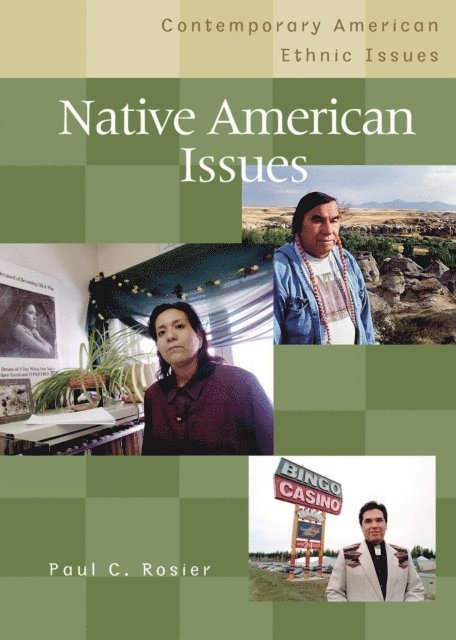
This volume presents six major issues that have been divisive in and out of the Native American community. Readers will learn about the varied cultural, political, social, and economic dimensions of contemporary Native America and will be prompted to consider the complexity and complications of ethnic and cultural diversity in the United States.Where do you stand on the issue of sports teams named after Native Americans? Are tribal claims on ancestral remains and sacred objects in museums valid? The contemporary issues that Native Americans struggle with are critical concerns for all Americans. This volume presents six major issues that have been divisive in and out of the Native American community. Readers will learn about the varied cultural, political, social, and economic dimensions of contemporary Native America and will be prompted to consider the complexity and complications of ethnic and cultural diversity in the United States.Readers will ponder the very foundations of the United States and the rights of its original inhabitants' descendants. The range of issues encompasses Native Americans throughout the country, from the Mashpee Wampanoags of Massachusetts to Pacific Northwest tribes. This book incorporates views from a wide variety of sources, including newspaper op-eds, Supreme Court rulings, and more. A resource guide complementing each chapter includes an extensive listing of suggested reading plus videos/film, Web sites, and organizations.
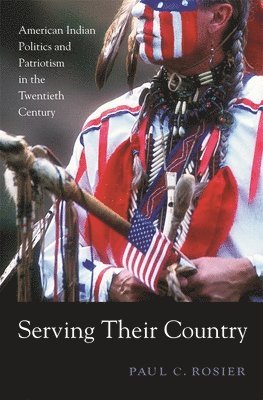
Serving Their Country
American Indian Politics and Patriotism in the Twentieth Century
Häftad, Engelska, 2012
308 kr
Skickas inom 10-15 vardagar
Over the twentieth century, American Indians fought for their right to be both American and Indian. In an illuminating book, Paul C. Rosier traces how Indians defined democracy, citizenship, and patriotism in both domestic and international contexts.Battles over the place of Indians in the fabric of American life took place on reservations, in wartime service, in cold war rhetoric, and in the courtroom. The Society of American Indians, founded in 1911, asserted that America needed Indian cultural and spiritual values. In World War II, Indians fought for their ancestral homelands and for the United States. The domestic struggle of Indian nations to defend their cultures intersected with the international cold war stand against termination—the attempt by the federal government to end the reservation system. Native Americans seized on the ideals of freedom and self-determination to convince the government to preserve reservations as places of cultural strength. Red Power activists in the 1960s and 1970s drew on Third World independence movements to assert an ethnic nationalism that erupted in a series of protests—in Iroquois country, in the Pacific Northwest, during the occupation of Alcatraz Island, and at Wounded Knee.Believing in an empire of liberty for all, Native Americans pressed the United States to honor its obligations at home and abroad. Like African Americans, twentieth-century Native Americans served as a visible symbol of an America searching for rights and justice. American history is incomplete without their story.
347 kr
Skickas inom 7-10 vardagar
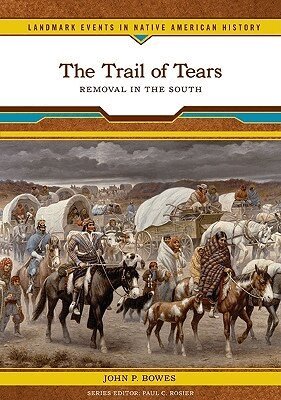
In 1830, Congress passed the Indian Removal Act, which authorized President Andrew Jackson to move eastern Indian tribes west of the Mississippi River to Indian Territory. Often solely associated with the Cherokee, the ""Trail of Tears"" more accurately describes the forced removal of the Five Civilized Tribes, which in addition to the Cherokee includes the Chickasaw, Choctaw, Creek, and Seminole. This book is an insightful and honest exploration of this dark chapter in Native American history.
325 kr
Skickas inom 10-15 vardagar
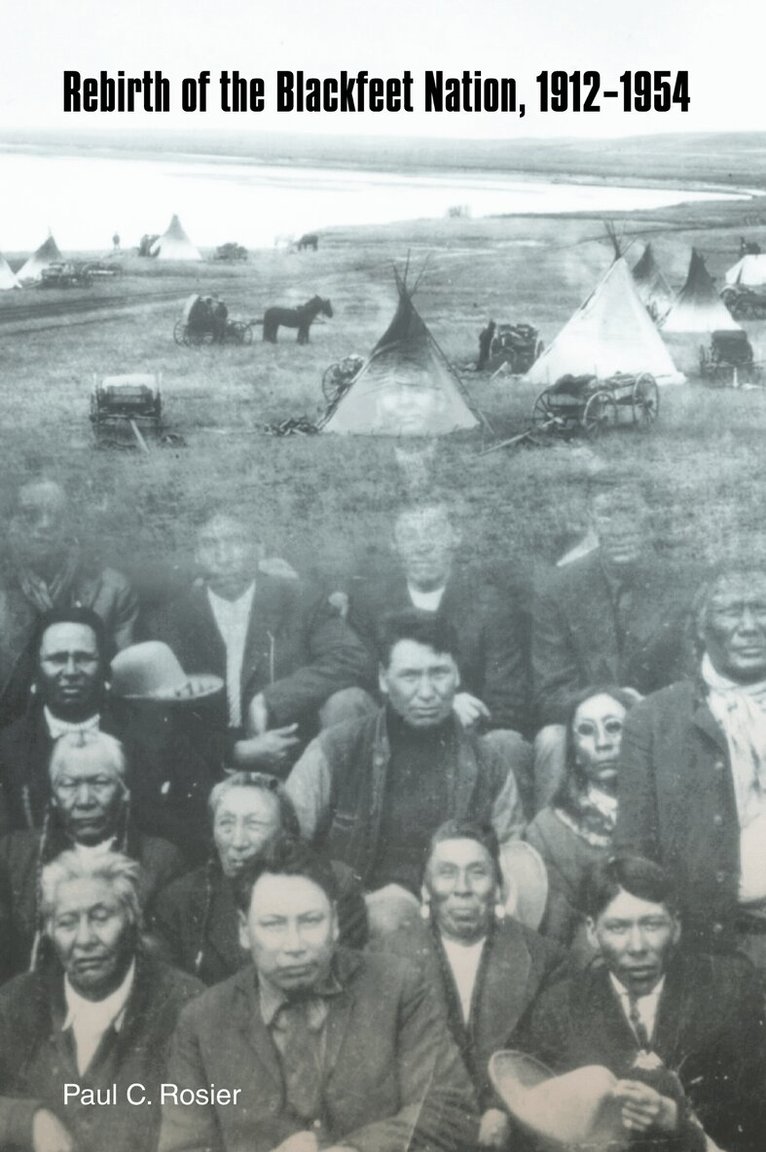
Drawing on interviews, democratic theory, and extensive archival research, Paul C. Rosier focuses on the internal political, economic, and ethnic forces shaping the Blackfeet Nation during the first half of the twentieth century. Incorporating Blackfeet voices throughout his study, Rosier shows how transformations were not imposed on the Blackfeet but were the result of their continuing efforts to create a community of their own design and to reorganize relations with outsiders on their own terms. Rebirth of the Blackfeet Nation, 1912–1954 illuminates a pivotal time in modern Indian-white relations and broadens our understanding of the meaning of democracy in America.
565 kr
Skickas inom 10-15 vardagar
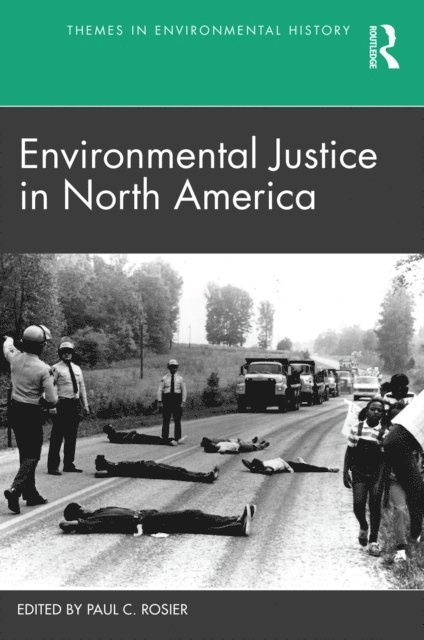
Emphasizing the voices of activists, this book’s diverse contributors examine communities’ common experiences with environmental injustice, how they organize to address it, and the ways in which their campaigns intersect with related movements such as Black Lives Matter and Indigenous sovereignty.The global COVID-19 pandemic exposed the ways in which BIPOC (Black, Indigenous, People of Color) communities and white working-class communities have suffered disproportionately from the crisis due to sustained exposure to toxic land, air, and water, creating a new urgency for addressing underlying conditions of systemic racism and poverty in North America. In addition to exploring the historical roots of the Environmental Justice movement in the 1980s and 1990s, the volume offers coverage of recent events such as the DAPL pipeline controversy, the Flint water crisis, and the rise of climate justice. The collection incorporates the experiences of rural and urban communities, Alaska Natives, Native Hawaiians, Puerto Ricans, and Indigenous peoples in the U.S., Canada, and Mexico.The chapters offer instructors, undergraduate and graduate students, and general readers a range of accessible case studies that create opportunities for comparative and intersectional analysis across geographical and ethnic boundaries.
2 098 kr
Skickas inom 10-15 vardagar
Emphasizing the voices of activists, this book’s diverse contributors examine communities’ common experiences with environmental injustice, how they organize to address it, and the ways in which their campaigns intersect with related movements such as Black Lives Matter and Indigenous sovereignty.The global COVID-19 pandemic exposed the ways in which BIPOC (Black, Indigenous, People of Color) communities and white working-class communities have suffered disproportionately from the crisis due to sustained exposure to toxic land, air, and water, creating a new urgency for addressing underlying conditions of systemic racism and poverty in North America. In addition to exploring the historical roots of the Environmental Justice movement in the 1980s and 1990s, the volume offers coverage of recent events such as the DAPL pipeline controversy, the Flint water crisis, and the rise of climate justice. The collection incorporates the experiences of rural and urban communities, Alaska Natives, Native Hawaiians, Puerto Ricans, and Indigenous peoples in the U.S., Canada, and Mexico.The chapters offer instructors, undergraduate and graduate students, and general readers a range of accessible case studies that create opportunities for comparative and intersectional analysis across geographical and ethnic boundaries.
380 kr
Skickas inom 3-6 vardagar
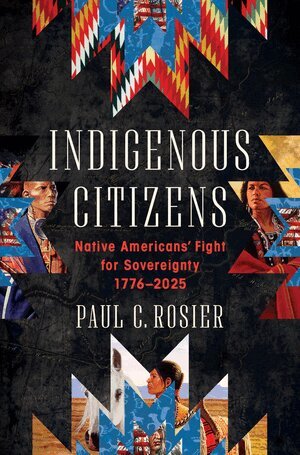
Indigenous Citizens chronicles Native Americans’ extraordinary resilience and resistance to colonialism, coercive assimilation programmes such as Indian Boarding Schools and white Americans’ backlash against their treaty rights, from the American Revolution to the 2024 election. It highlights their efforts to both preserve tribal sovereignty and secure the civil rights accorded to other Americans, a dual citizenship codified in the 1924 Indian Citizenship Act. Covering the arc of American history, Paul C. Rosier reveals Indigenous Americans’ vision of a country that lives up to the ideals expressed in the Declaration of Independence and the Constitution. Through patriotic military service, activism and political writings Native Americans championed their belief in a multicultural America that honoured its legal obligations as it assumed international prominence in the twentieth century. Indigenous Citizens is unique in its breadth, its focus on the evolution of Native peoples’ dual allegiances and its coverage of twenty-first-century Indigenous issues.