Ronald H. Bayor - Böcker
Visar alla böcker från författaren Ronald H. Bayor. Handla med fri frakt och snabb leverans.
11 produkter
11 produkter
590 kr
Skickas inom 5-8 vardagar
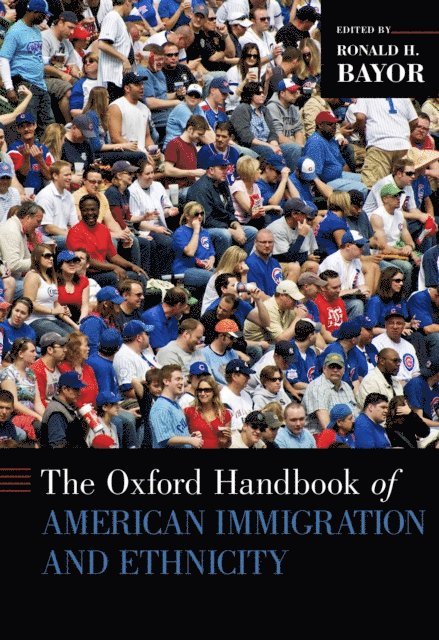
Scholarship on immigration to America is a coin with two sides: it asks both how America changed immigrants, and how they changed America. Were the immigrants uprooted from their ancestral homes, leaving everything behind, or were they transplanted, bringing many aspects of their culture with them? Although historians agree with the transplantation concept, the notion of the melting pot, which suggests a complete loss of the immigrant culture, persists in the public mind. The Oxford Handbook of American Immigration and Ethnicity bridges this gap and offers a comprehensive and nuanced survey of American racial and ethnic development, assessing the current status of historical research and simultaneously setting the goals for future investigation.Early immigration historians focused on the European migration model, and the ethnic appeal of politicians such as Fiorello La Guardia and James Michael Curley in cities with strong ethno-political histories like New York and Boston. But the story of American ethnicity goes far beyond Ellis Island. Only after the 1965 Immigration Act and the increasing influx of non-Caucasian immigrants, scholars turned more fully to the study of African, Asian and Latino migrants to America.This Handbook brings together thirty eminent scholars to describe the themes, methodologies, and trends that characterize the history and current debates on American immigration. The Handbook's trenchant chapters provide compelling analyses of cutting-edge issues including identity, whiteness, borders and undocumented migration, immigration legislation, intermarriage, assimilation, bilingualism, new American religions, ethnicity-related crime, and pan-ethnic trends. They also explore the myth of "model minorities" and the contemporary resurgence of anti-immigrant feelings. A unique contribution to the field of immigration studies, this volume considers the full racial and ethnic unfolding of the United States in its historical context.
2 079 kr
Skickas inom 5-8 vardagar
Scholarship on immigration to America is a coin with two sides: how did America change immigrants, and how did they change America? Were the immigrants uprooted from their ancestral homes, leaving all behind, or were they transplanted, bringing many aspects of their culture with them? Although historians agree with the transplantation concept, the notion of the melting pot, which suggests a complete loss of the immigrant culture, persists in the public mind. The Oxford Handbook of American Immigration and Ethnicity explores how Americans think of themselves and how science, religion, period of migration, gender, education, politics, and occupational mobility shape both this image and American life. Since the 1965 Immigration Act opened the gates to newer groups, historical writing on immigration and ethnicity has evolved over the years to include numerous immigrant sources and to provide trenchant analyses of American immigration and ethnicity. For the first time, this handbook brings together thirty leading scholars in the field to make sense of all the themes, methodologies, and trends that characterize the debate on American immigration. They examine a wide-range of topics, including pan-ethnicity, whiteness, intermarriage, bilingualism, religion, museum ethnic displays, naturalization, regional mobility, census categorization, immigration legislation and its reception, ethnicity-related crime and gang formation. The Oxford Handbook of American Immigration and Ethnicity explores the idea of assimilation in a multicultural society showing how deeply pan-ethnicity changed American identity over the time.
1 147 kr
Skickas inom 7-10 vardagar
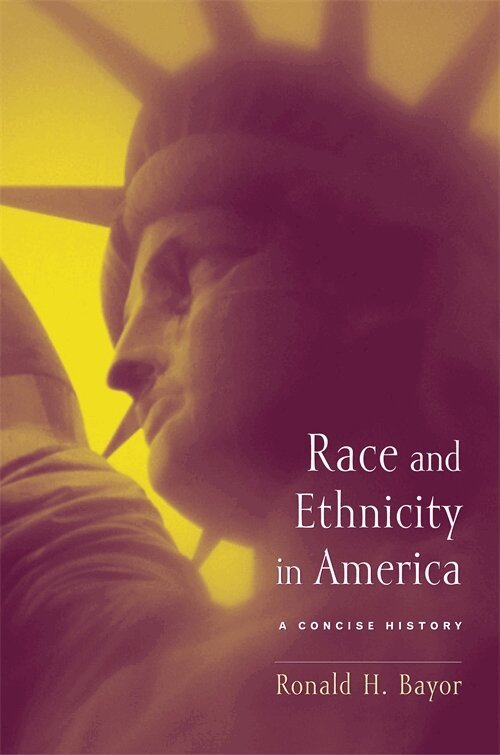
Featuring essays by leading historians, including Carol Berkin, Andrew Heinze, Earl Lewis, and Mai M. Ngai, Race and Ethnicity in America is a timely introduction to the interrelated themes of race, ethnicity, and immigration in American history and a first-stop resource for students and others exploring the historical roots of today's identity politics. Spanning from 1600 to 2000 and covering everything from the Trail of Tears to the Black Power movement, the book is comprehensive both chronologically and in terms of ethnic groups addressed: It examines not only the history of black-white relations in America, but also the experiences of Irish Catholics, Native Americans, Latinos, Jews, and many others. Topics covered include anti-Catholicism and nativism, slavery and abolitionism, Indian removal, assimilation and scientific racism, the National Origins Act, the civil rights movement, and contemporary debates over affirmative action and bilingualism.
300 kr
Skickas inom 7-10 vardagar
Featuring essays by leading historians, including Carol Berkin, Andrew Heinze, Earl Lewis, and Mai M. Ngai, Race and Ethnicity in America is a timely introduction to the interrelated themes of race, ethnicity, and immigration in American history and a first-stop resource for students and others exploring the historical roots of today's identity politics. Spanning from 1600 to 2000 and covering everything from the Trail of Tears to the Black Power movement, the book is comprehensive both chronologically and in terms of ethnic groups addressed: It examines not only the history of black-white relations in America, but also the experiences of Irish Catholics, Native Americans, Latinos, Jews, and many others. Topics covered include anti-Catholicism and nativism, slavery and abolitionism, Indian removal, assimilation and scientific racism, the National Origins Act, the civil rights movement, and contemporary debates over affirmative action and bilingualism.
742 kr
Skickas inom 10-15 vardagar
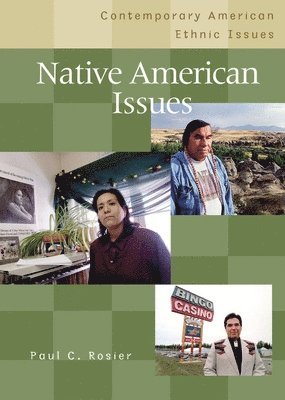
This volume presents six major issues that have been divisive in and out of the Native American community. Readers will learn about the varied cultural, political, social, and economic dimensions of contemporary Native America and will be prompted to consider the complexity and complications of ethnic and cultural diversity in the United States.Where do you stand on the issue of sports teams named after Native Americans? Are tribal claims on ancestral remains and sacred objects in museums valid? The contemporary issues that Native Americans struggle with are critical concerns for all Americans. This volume presents six major issues that have been divisive in and out of the Native American community. Readers will learn about the varied cultural, political, social, and economic dimensions of contemporary Native America and will be prompted to consider the complexity and complications of ethnic and cultural diversity in the United States.Readers will ponder the very foundations of the United States and the rights of its original inhabitants' descendants. The range of issues encompasses Native Americans throughout the country, from the Mashpee Wampanoags of Massachusetts to Pacific Northwest tribes. This book incorporates views from a wide variety of sources, including newspaper op-eds, Supreme Court rulings, and more. A resource guide complementing each chapter includes an extensive listing of suggested reading plus videos/film, Web sites, and organizations.
526 kr
Skickas inom 5-8 vardagar
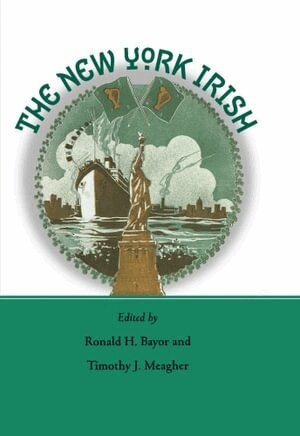
When Ellis Island opened in 1892, nearly four million Irish men and women had already made the journey to America. By the 1990s, Ireland had sent another million or more. New York has been both port of entry and home to the Irish for three centuries. During that time, America's premier city has undergone massive changes, and the Irish-one of the country's oldest ethnic groups-have played a vital part in its history. The New York Irish tackles subjects like the medicalization of anti-immigrant prejudice; entrepreneurship in business; the impact of music and language on ethnic social life; the effect of nationalist movements on local politics; the dynamics of Irish relations with African-Americans, Chinese, and Dominicans; the battle for freedom of religious expression; and the problem of illegal immigration. It offers a fresh perspective on an immigrant people's encounter with the famed metropolis. A joint project of the Irish Institute and the New York Irish History Roundtable
463 kr
Skickas inom 10-15 vardagar
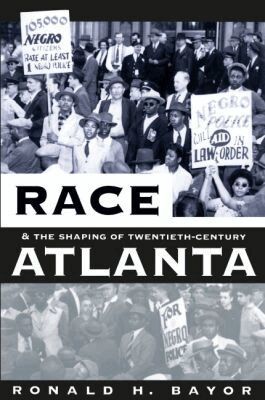
Atlanta is often cited as a prime example of a progressive New South metropolis in which blacks and whites have forged ""a city too busy to hate."" But Ronald Bayor argues that the city continues to bear the indelible mark of racial bias. Offering the first comprehensive history of Atlanta race relations, he discusses the impact of race on the physical and institutional development of the city from the end of the Civil War through the mayorship of Andrew Young in the 1980s. Bayor shows the extent of inequality, investigates the gap between rhetoric and reality, and presents a fresh analysis of the legacy of segregation and race relations for the American urban environment. Bayor explores frequently ignored public policy issues through the lens of race--including hospital care, highway placement and development, police and fire services, schools, and park use, as well as housing patterns and employment. He finds that racial concerns profoundly shaped Atlanta, as they did other American cities. Drawing on oral interviews and written records, Bayor traces how Atlanta's black leaders and their community have responded to the impact of race on local urban development. By bringing long-term urban development into a discussion of race, Bayor provides an element missing in usual analyses of cities and race relations. |Offering the first comprehensive history of Atlanta race relations, Ronald Bayor discusses the impact of racial bias on physical and institutional development of the city from the end of the Civil War through the mayorship of Andrew Young in the 1980s. Bayor explores frequently ignored policy issues through the lens of race--including hospital care, highway placement and development, police and fire services, schools, and park use, as well as housing patterns and employment.
1 056 kr
Skickas inom 7-10 vardagar
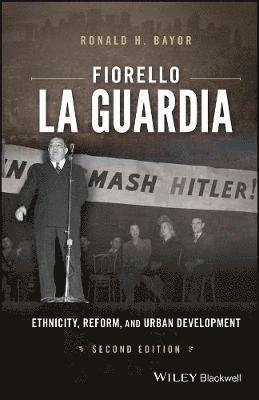
Fiorello La Guardia was an ambitious man who wanted great success for himself—but he also wanted to advocate on behalf of the poor and forgotten. Through hard work and perseverance he managed to achieve both. This work examines the life of the man who not only became one of New York’s greatest and most renowned mayors, but who brought about some of the most important changes in the history of the city.This thoroughly revised second edition of Fiorello La Guardia: Ethnicity, Reform, and Urban Development looks at the many events of the popular mayor’s life—his early beginnings as a politician, the events surrounding his life and city, his multiple terms as New York City’s Mayor, his personal and professional disappointments, and his ultimate place in history. It also examines the broader subject of cities during times of stress, the ability of mayors to enhance urban life, and the origins of federal aid to cities. Connects the New York and urban story to that of the nation and to the subfields of Progressivism, the Depression, the New Deal, and World War IIContains 16 new images—of La Guardia, his contemporaries, and city shots—spaced throughout the textOffers a timeline of principal dates in La Guardia’s life keyed to significant events in the city’s, state’s, and nation’s historyIncludes key terms and study questions for each chapterFeatures a completely updated bibliographical essayComprehensive, yet highly accessible, Fiorello La Guardia: Ethnicity, Reform, and Urban Development, Second Edition makes ideal supplementary reading for survey courses in the history of New York or New York City as well as for general American History courses.
360 kr
Skickas inom 7-10 vardagar
Fiorello La Guardia was an ambitious man who wanted great success for himself—but he also wanted to advocate on behalf of the poor and forgotten. Through hard work and perseverance he managed to achieve both. This work examines the life of the man who not only became one of New York’s greatest and most renowned mayors, but who brought about some of the most important changes in the history of the city.This thoroughly revised second edition of Fiorello La Guardia: Ethnicity, Reform, and Urban Development looks at the many events of the popular mayor’s life—his early beginnings as a politician, the events surrounding his life and city, his multiple terms as New York City’s Mayor, his personal and professional disappointments, and his ultimate place in history. It also examines the broader subject of cities during times of stress, the ability of mayors to enhance urban life, and the origins of federal aid to cities. Connects the New York and urban story to that of the nation and to the subfields of Progressivism, the Depression, the New Deal, and World War IIContains 16 new images—of La Guardia, his contemporaries, and city shots—spaced throughout the textOffers a timeline of principal dates in La Guardia’s life keyed to significant events in the city’s, state’s, and nation’s historyIncludes key terms and study questions for each chapterFeatures a completely updated bibliographical essayComprehensive, yet highly accessible, Fiorello La Guardia: Ethnicity, Reform, and Urban Development, Second Edition makes ideal supplementary reading for survey courses in the history of New York or New York City as well as for general American History courses.
323 kr
Skickas inom 5-8 vardagar
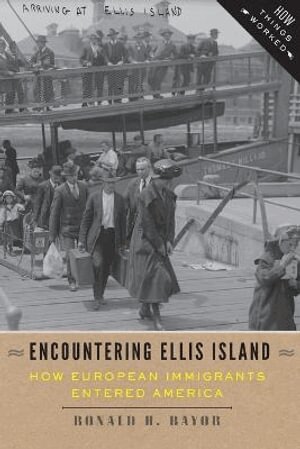
America is famously known as a nation of immigrants. Millions of Europeans journeyed to the United States in the peak years of 1892-1924, and Ellis Island, New York, is where the great majority landed. Ellis Island opened in 1892 with the goal of placing immigration under the control of the federal government and systematizing the entry process. Encountering Ellis Island introduces readers to the ways in which the principal nineteenth- and early twentieth-century American portal for Europeans worked in practice, with some comparison to Angel Island, the main entry point for Asian immigrants. What happened along the journey? How did the processing of so many people work? What were the reactions of the newly arrived to the process (and threats) of inspection, delays, hospitalization, detention, and deportation? How did immigration officials attempt to protect the country from diseased or "unfit" newcomers, and how did these definitions take shape and change? What happened to people who failed screening? And how, at the journey's end, did immigrants respond to admission to their new homeland? Ronald H.Bayor, a senior scholar in immigrant and urban studies, gives voice to both immigrants and Island workers to offer perspectives on the human experience and institutional imperatives associated with the arrival experience. Drawing on firsthand accounts from, and interviews with, immigrants, doctors, inspectors, aid workers, and interpreters, Bayor paints a vivid and sometimes troubling portrait of the immigration process. In reality, Ellis Island had many liabilities as well as assets. Corruption was rife. Immigrants with medical issues occasionally faced a hostile staff. Some families, on the other hand, reunited in great joy and found relief at their journey's end. Encountering Ellis Island lays bare the profound and sometimes-victorious story of people chasing the American Dream: leaving everything behind, facing a new language and a new culture, and starting a new American life.
Neighbors in Conflict
The Irish, Germans, Jews, and Italians of New York City, 1929-1941
Häftad, Engelska, 2020
528 kr
Skickas inom 7-10 vardagar
Originally published in 1978. Millions of immigrants seeking a better life came to New York City in the nineteenth and twentieth centuries. Ronald H. Bayor's study details how the relative tranquility among the city's four major ethnic groups was disturbed by economic depression, political divisions arising out of ties with the Old Country, and factional strife stirred up by local politicians seeking ethnic votes. Also evaluated are the effects of such emotional and political issues such as Nazism and Fascism upon the allegiances of Germans and Italians; the rift in the ethnic community caused by the communist scare; and the influence of such figures such as Franklin D. Roosevelt, Father Charles Coughlin, and Fiorello La Guardia.