Paul C. Stern – författare
1 358 kr
Skickas
268 kr
Läs direkt efter köp
738 kr
Läs direkt efter köp
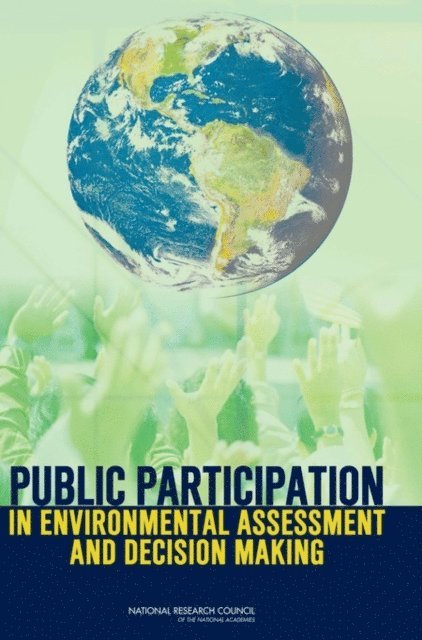
Proponents of public participation argue that those who must live with the outcome of an environmental decision should have some influence on it. Critics maintain that public participation slows decision making and can lower its quality by including people unfamiliar with the science involved.
This book concludes that, when done correctly, public participation improves the quality of federal agencies'' decisions about the environment. Well-managed public involvement also increases the legitimacy of decisions in the eyes of those affected by them, which makes it more likely that the decisions will be implemented effectively. This book recommends that agencies recognize public participation as valuable to their objectives, not just as a formality required by the law. It details principles and approaches agencies can use to successfully involve the public.
714 kr
Läs direkt efter köp
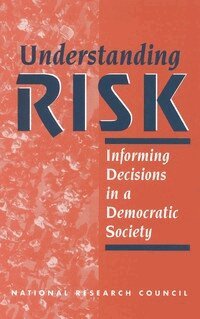
Understanding Risk addresses a central dilemma of risk decisionmaking in a democracy: detailed scientific and technical information is essential for making decisions, but the people who make and live with those decisions are not scientists. The key task of risk characterization is to provide needed and appropriate information to decisionmakers and the public. This important new volume illustrates that making risks understandable to the public involves much more than translating scientific knowledge. The volume also draws conclusions about what society should expect from risk characterization and offers clear guidelines and principles for informing the wide variety of risk decisions that face our increasingly technological society.
Frames fundamental questions about what risk characterization means. Reviews traditional definitions and explores new conceptual and practical approaches. Explores how risk characterization should inform decisionmakers and the public. Looks at risk characterization in the context of the entire decisionmaking process.Understanding Risk discusses how risk characterization has fallen short in many recent controversial decisions. Throughout the text, examples and case studies—such as planning for the long-term ecological health of the Everglades or deciding on the operation of a waste incinerator—bring key concepts to life. Understanding Risk will be important to anyone involved in risk issues: federal, state, and local policymakers and regulators; risk managers; scientists; industrialists; researchers; and concerned individuals.
1 093 kr
Läs direkt efter köp
Proponents of public participation argue that those who must live with the outcome of an environmental decision should have some influence on it. Critics maintain that public participation slows decision making and can lower its quality by including people unfamiliar with the science involved.
This book concludes that, when done correctly, public participation improves the quality of federal agencies'' decisions about the environment. Well-managed public involvement also increases the legitimacy of decisions in the eyes of those affected by them, which makes it more likely that the decisions will be implemented effectively. This book recommends that agencies recognize public participation as valuable to their objectives, not just as a formality required by the law. It details principles and approaches agencies can use to successfully involve the public.
463 kr
Läs direkt efter köp
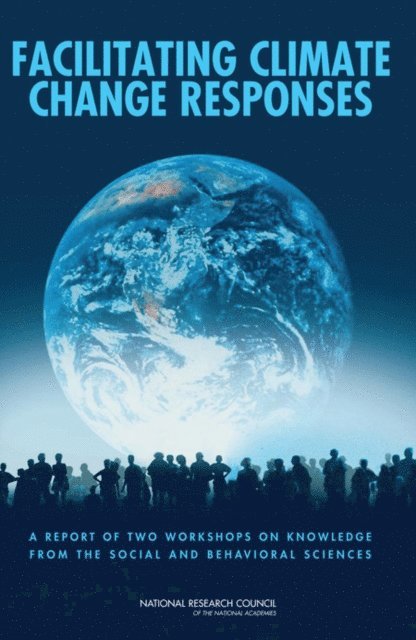
The William and Flora Hewlett Foundation, understanding the need for policy makers at the national level to entrain the behavioral and social sciences in addressing the challenges of global climate change, called on the National Research Council to organize two workshops to showcase some of the decision-relevant contributions that these sciences have already made and can advance with future efforts. The workshops focused on two broad areas: (1) mitigation (behavioral elements of a strategy to reduce the net future human influence on climate) and (2) adaptation (behavioral and social determinants of societal capacity to minimize the damage from climate changes that are not avoided).
Facilitating Climate Change Responses documents the information presented in the workshop presentations and discussions. This material illustrates some of the ways the behavioral and social sciences can contribute to the new era of climate research.
892 kr
Läs direkt efter köp
824 kr
Läs direkt efter köp
974 kr
Läs direkt efter köp
295 kr
Läs direkt efter köp
The USGCRP''s Carbon Cycle Working Group asked the National Research Council''s Committee on the Human Dimensions of Global Change to hold a workshop on Human Interactions with the Carbon Cycle. The basic purpose of the workshop was to help build bridges between the research communities in the social sciences and the natural sciences that might eventually work together to produce the needed understanding of the carbon cycle-an understanding that can inform public decisions that could, among other things, prevent disasters from resulting from the ways humanity has been altering the carbon cycle. Members of the working group hoped that a successful workshop would improve communication between the relevant research communities in the natural and social sciences, leading eventually to an expansion of the carbon cycle program element in directions that would better integrate the two domains.
584 kr
Läs direkt efter köp
974 kr
Läs direkt efter köp
The end of the Cold War has changed the shape of organized violence in the world and the ways in which governments and others try to set its limits. Even the concept of international conflict is broadening to include ethnic conflicts and other kinds of violence within national borders that may affect international peace and security. What is not yet clear is whether or how these changes alter the way actors on the world scene should deal with conflict:
Do the old methods still work? Are there new tools that could work better? How do old and new methods relate to each other?International Conflict Resolution After the Cold War critically examines evidence on the effectiveness of a dozen approaches to managing or resolving conflict in the world to develop insights for conflict resolution practitioners. It considers recent applications of familiar conflict management strategies, such as the use of threats of force, economic sanctions, and negotiation. It presents the first systematic assessments of the usefulness of some less familiar approaches to conflict resolution, including truth commissions, "engineered" electoral systems, autonomy arrangements, and regional organizations. It also opens up analysis of emerging issues, such as the dilemmas facing humanitarian organizations in complex emergencies. This book offers numerous practical insights and raises key questions for research on conflict resolution in a transforming world system.
762 kr
Läs direkt efter köp
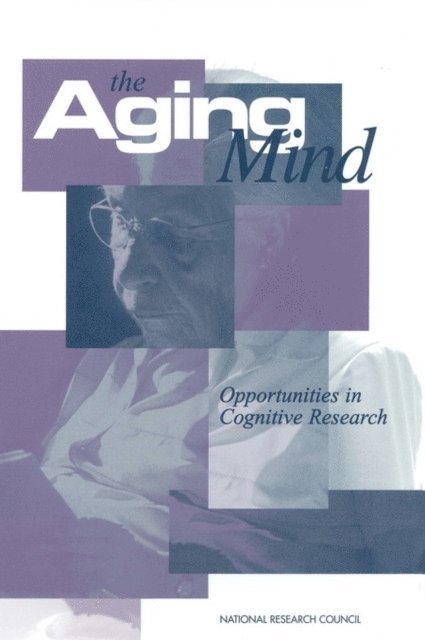
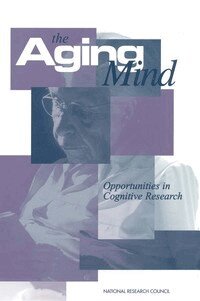
Possible new breakthroughs in understanding the aging mind that can be used to benefit older people are now emerging from research. This volume identifies the key scientific advances and the opportunities they bring. For example, science has learned that among older adults who do not suffer from Alzheimer''s disease or other dementias, cognitive decline may depend less on loss of brain cells than on changes in the health of neurons and neural networks. Research on the processes that maintain neural health shows promise of revealing new ways to promote cognitive functioning in older people. Research is also showing how cognitive functioning depends on the conjunction of biology and culture. The ways older people adapt to changes in their nervous systems, and perhaps the changes themselves, are shaped by past life experiences, present living situations, changing motives, cultural expectations, and emerging technology, as well as by their physical health status and sensory-motor capabilities. Improved understanding of how physical and contextual factors interact can help explain why some cognitive functions are impaired in aging while others are spared and why cognitive capability is impaired in some older adults and spared in others. On the basis of these exciting findings, the report makes specific recommends that the U.S. government support three major new initiatives as the next steps for research.
673 kr
Läs direkt efter köp
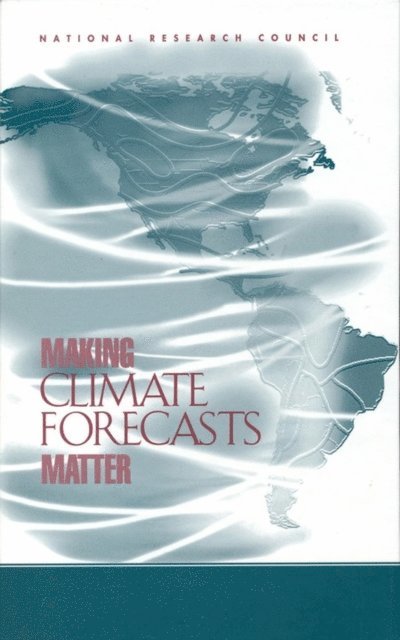
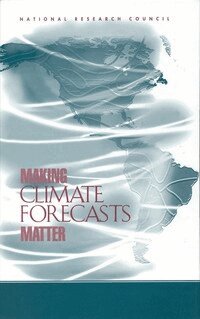
El Nino has been with us for centuries, but now we can forcast it, and thus can prepare far in advance for the extreme climatic events it brings. The emerging ability to forecast climate may be of tremendous value to humanity if we learn how to use the information well.
How does society cope with seasonal-to-interannual climatic variations? How have climate forecasts been used—and how useful have they been? What kinds of forecast information are needed? Who is likely to benefit from forecasting skill? What are the benefits of better forecasting?
This book reviews what we know about these and other questions and identifies research directions toward more useful seasonal-to-interannual climate forecasts. In approaching their recommendations, the panel explores:
Vulnerability of human activities to climate. State of the science of climate forecasting. How societies coevolved with their climates and cope with variations in climate. How climate information should be disseminated to achieve the best response. How we can use forecasting to better manage the human consequences of climate change.849 kr
Läs direkt efter köp
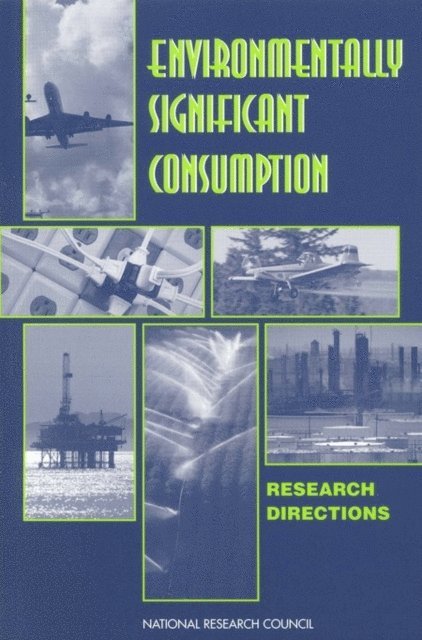
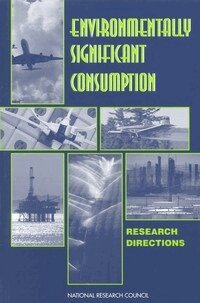
There has been much polemic about affluence, consumption, and the global environment. For some observers, "consumption" is at the root of global environmental threats: wealthy individuals and societies use far too much of the earth''s resource base and should scale back their appetites to preserve the environment for future generations and allow a decent life for the rest of the world. Other observers see affluence as the way to escape environmental threats: economic development increases public pressure for environmental protection and makes capital available for environmentally benign technologies. The arguments are fed by conflicting beliefs, values, hopes, and fears—but surprisingly little scientific analysis.
This book demonstrates that the relationship of consumption to the environment needs careful analysis by environmental and social scientists and conveys some of the excitement of treating the issue scientifically. It poses the key empirical questions: Which kinds of consumption are environmentally significant? Which actors are responsible for that consumption? What forces cause or explain environmentally significant consumption? How can it be changed? The book presents studies that open up important issues for empirical study: Are there any signs of saturation in the demand for travel in wealthy countries? What is the relationship between environmental consumption and human well-being? To what extent do people in developing countries emulate American consumption styles? The book also suggests broad strategies that scientists and research sponsors can use to better inform future debates about the environment, development, and consumption.
390 kr
Läs direkt efter köp
615 kr
Läs direkt efter köp
723 kr
Läs direkt efter köp
714 kr
Läs direkt efter köp
Climate change can reasonably be expected to increase the frequency and intensity of a variety of potentially disruptive environmental events—slowly at first, but then more quickly. It is prudent to expect to be surprised by the way in which these events may cascade, or have far-reaching effects. During the coming decade, certain climate-related events will produce consequences that exceed the capacity of the affected societies or global systems to manage; these may have global security implications. Although focused on events outside the United States, Climate and Social Stress: Implications for Security Analysis recommends a range of research and policy actions to create a whole-of-government approach to increasing understanding of complex and contingent connections between climate and security, and to inform choices about adapting to and reducing vulnerability to climate change.
619 kr
Skickas inom 3-6 vardagar
538 kr
Läs direkt efter köp
Natural gas in deep shale formations, which can be developed by hydraulic fracturing and associated technologies (often collectively referred to as "fracking") is dramatically increasing production of natural gas in the United States, where significant gas deposits exist in formations that underlie many states. Major deposits of shale gas exist in many other countries as well. Proponents of shale gas development point to several kinds of benefits, for instance, to local economies and to national "energy independence". Shale gas development has also brought increasing expression of concerns about risks, including to human health, environmental quality, non-energy economic activities in shale regions, and community cohesion. Some of these potential risks are beginning to receive careful evaluation; others are not. Although the risks have not yet been fully characterized or all of them carefully analyzed, governments at all levels are making policy decisions, some of them hard to reverse, about shale gas development and/or how to manage the risks.
Risks and Risk Governance in Shale Gas Development is the summary of two workshops convened in May and August 2013 by the National Research Council''s Board on Environmental Change and Society to consider and assess claims about the levels and types of risk posed by shale gas development and about the adequacy of existing governance procedures. Participants from engineering, natural, and social scientific communities examined the range of risks and of social and decision-making issues in risk characterization and governance related to gas shale development. Central themes included risk governance in the context of (a) risks that emerge as shale gas development expands, and (b) incomplete or declining regulatory capacity in an era of budgetary stringency. This report summarizes the presentations on risk issues raised in the first workshop, the risk management and governance concepts presented at the second workshop, and the discussions at both workshops.
200 kr
Läs direkt efter köp
The USGCRP''s Carbon Cycle Working Group asked the National Research Council''s Committee on the Human Dimensions of Global Change to hold a workshop on Human Interactions with the Carbon Cycle. The basic purpose of the workshop was to help build bridges between the research communities in the social sciences and the natural sciences that might eventually work together to produce the needed understanding of the carbon cycle-an understanding that can inform public decisions that could, among other things, prevent disasters from resulting from the ways humanity has been altering the carbon cycle. Members of the working group hoped that a successful workshop would improve communication between the relevant research communities in the natural and social sciences, leading eventually to an expansion of the carbon cycle program element in directions that would better integrate the two domains.
690 kr
Läs direkt efter köp
601 kr
Läs direkt efter köp
The end of the Cold War has changed the shape of organized violence in the world and the ways in which governments and others try to set its limits. Even the concept of international conflict is broadening to include ethnic conflicts and other kinds of violence within national borders that may affect international peace and security. What is not yet clear is whether or how these changes alter the way actors on the world scene should deal with conflict:
Do the old methods still work? Are there new tools that could work better? How do old and new methods relate to each other?International Conflict Resolution After the Cold War critically examines evidence on the effectiveness of a dozen approaches to managing or resolving conflict in the world to develop insights for conflict resolution practitioners. It considers recent applications of familiar conflict management strategies, such as the use of threats of force, economic sanctions, and negotiation. It presents the first systematic assessments of the usefulness of some less familiar approaches to conflict resolution, including truth commissions, "engineered" electoral systems, autonomy arrangements, and regional organizations. It also opens up analysis of emerging issues, such as the dilemmas facing humanitarian organizations in complex emergencies. This book offers numerous practical insights and raises key questions for research on conflict resolution in a transforming world system.
438 kr
Läs direkt efter köp
494 kr
Läs direkt efter köp
Possible new breakthroughs in understanding the aging mind that can be used to benefit older people are now emerging from research. This volume identifies the key scientific advances and the opportunities they bring. For example, science has learned that among older adults who do not suffer from Alzheimer''s disease or other dementias, cognitive decline may depend less on loss of brain cells than on changes in the health of neurons and neural networks. Research on the processes that maintain neural health shows promise of revealing new ways to promote cognitive functioning in older people. Research is also showing how cognitive functioning depends on the conjunction of biology and culture. The ways older people adapt to changes in their nervous systems, and perhaps the changes themselves, are shaped by past life experiences, present living situations, changing motives, cultural expectations, and emerging technology, as well as by their physical health status and sensory-motor capabilities. Improved understanding of how physical and contextual factors interact can help explain why some cognitive functions are impaired in aging while others are spared and why cognitive capability is impaired in some older adults and spared in others. On the basis of these exciting findings, the report makes specific recommends that the U.S. government support three major new initiatives as the next steps for research.
598 kr
Läs direkt efter köp
There has been much polemic about affluence, consumption, and the global environment. For some observers, "consumption" is at the root of global environmental threats: wealthy individuals and societies use far too much of the earth''s resource base and should scale back their appetites to preserve the environment for future generations and allow a decent life for the rest of the world. Other observers see affluence as the way to escape environmental threats: economic development increases public pressure for environmental protection and makes capital available for environmentally benign technologies. The arguments are fed by conflicting beliefs, values, hopes, and fears—but surprisingly little scientific analysis.
This book demonstrates that the relationship of consumption to the environment needs careful analysis by environmental and social scientists and conveys some of the excitement of treating the issue scientifically. It poses the key empirical questions: Which kinds of consumption are environmentally significant? Which actors are responsible for that consumption? What forces cause or explain environmentally significant consumption? How can it be changed? The book presents studies that open up important issues for empirical study: Are there any signs of saturation in the demand for travel in wealthy countries? What is the relationship between environmental consumption and human well-being? To what extent do people in developing countries emulate American consumption styles? The book also suggests broad strategies that scientists and research sponsors can use to better inform future debates about the environment, development, and consumption.
580 kr
Läs direkt efter köp
622 kr
Läs direkt efter köp
560 kr
Läs direkt efter köp
Understanding Risk addresses a central dilemma of risk decisionmaking in a democracy: detailed scientific and technical information is essential for making decisions, but the people who make and live with those decisions are not scientists. The key task of risk characterization is to provide needed and appropriate information to decisionmakers and the public. This important new volume illustrates that making risks understandable to the public involves much more than translating scientific knowledge. The volume also draws conclusions about what society should expect from risk characterization and offers clear guidelines and principles for informing the wide variety of risk decisions that face our increasingly technological society.
Frames fundamental questions about what risk characterization means. Reviews traditional definitions and explores new conceptual and practical approaches. Explores how risk characterization should inform decisionmakers and the public. Looks at risk characterization in the context of the entire decisionmaking process.Understanding Risk discusses how risk characterization has fallen short in many recent controversial decisions. Throughout the text, examples and case studies—such as planning for the long-term ecological health of the Everglades or deciding on the operation of a waste incinerator—bring key concepts to life. Understanding Risk will be important to anyone involved in risk issues: federal, state, and local policymakers and regulators; risk managers; scientists; industrialists; researchers; and concerned individuals.