Paul Dafydd Jones - Böcker
Visar alla böcker från författaren Paul Dafydd Jones. Handla med fri frakt och snabb leverans.
15 produkter
15 produkter
1 932 kr
Skickas inom 5-8 vardagar
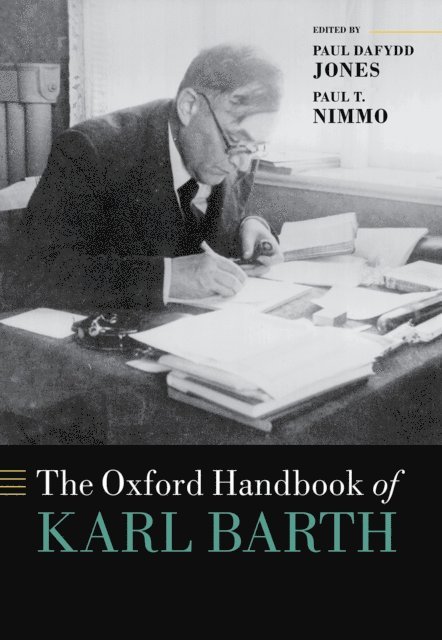
Karl Barth (1886-1968) is generally acknowledged to be the most important European Protestant theologian of the twentieth century, a figure whose importance for Christian thought compares with that of Augustine, Thomas Aquinas, John Calvin, Martin Luther, and Friedrich Schleiermacher. Author of the Epistle to the Romans, the multi-volume Church Dogmatics, and a wide range of other works - theological, exegetical, historical, political, pastoral, and homiletic - Barth has had significant and perduring influence on the contemporary study of theology and on the life of contemporary churches. In the last few decades, his work has been at the centre of some of the most important interpretative, critical, and constructive developments in in the fields of Christian theology, philosophy of religion, and religious studies.The Oxford Handbook of Karl Barth is the most expansive guide to Barth's work published to date. Comprising over forty original chapters, each of which is written by an expert in the field, the Handbook provides rich analysis of Barth's life and context, advances penetrating interpretations of the key elements of his thought, and opens and charts new paths for critical and constructive reflection. In the process, it seeks to illuminate the complex and challenging world of Barth's theology, to engage with it from multiple perspectives, and to communicate something of the joyful nature of theology as Barth conceived it. It will serve as an indispensable resource for undergraduates, postgraduates, academics, and general readers for years to come.
619 kr
Skickas inom 5-8 vardagar
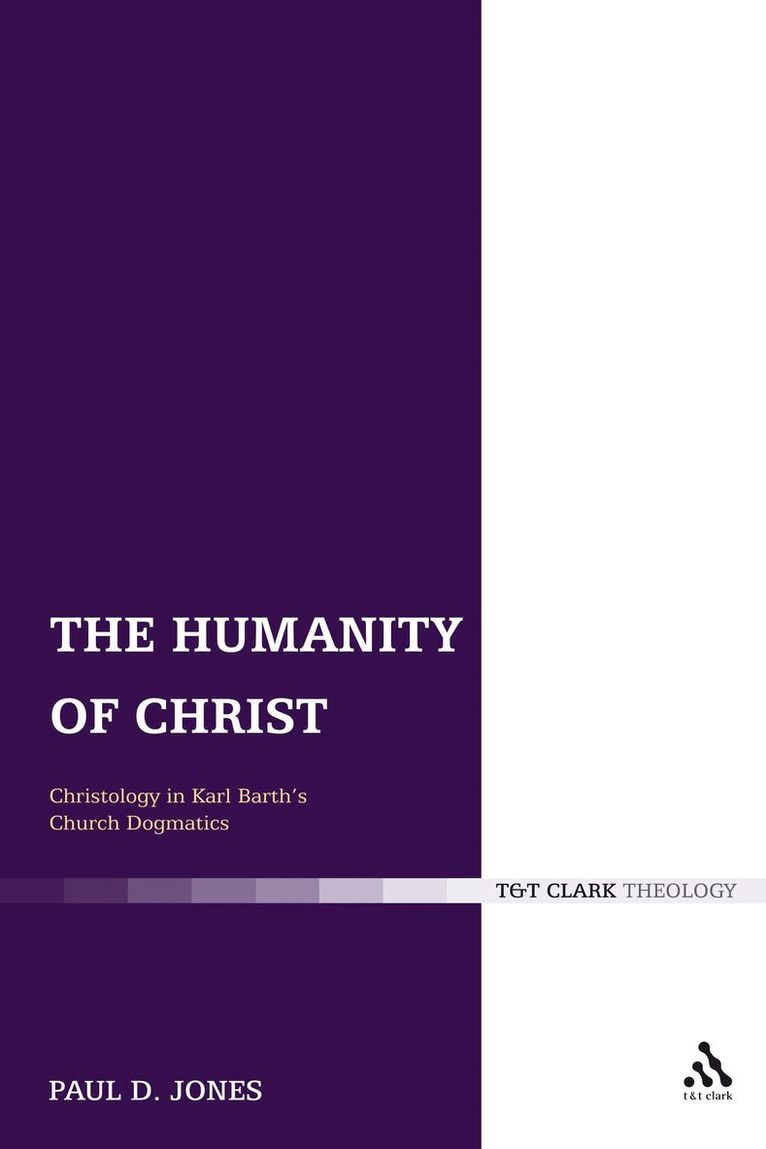
Drawing on the best English and German language scholarship to date, this book offers a novel interpretation of Barth's mature Christology. Examining the entirety of the Dogmatics, it provides a nuanced analysis of Barth's treatment of the Chalcedonian Definition, the enhypostasis/anhypostasis pairing, and various Protestant scholastic Christological distinctions; an examination of the co-inherence of Barth's doctrines of God and Christ, which contributes to current debates about Barth's doctrine of election; and a lengthy account of the Christology of Church Dogmatics IV that foregrounds Barth's understanding of Christ's human involvement in the drama of reconciliation. Throughout the text, the author shows convincingly that Barth's emphasis on Christ's divinity goes hand-in-hand with a dogmatically rich and often startling account of Christ's humanity. The text does not confine itself to the Church Dogmatics. It also situates Barth in the context of the wider Christian tradition and modern western philosophy of religion. Thus Barth is set in conversation with a wide range of thinkers, including Anselm of Canterbury, Martin Luther, John Calvin, Friedrich Schleiermacher, G. W. F.Hegel, Gottfried Thomasius, and Harry Frankfurt. In addition, the text makes a number of constructive gestures, showing a particular interest in feminist and liberationist trajectories of thought. The final chapter considers the standing of Barth's Christology today and its pertinence for theological ethics and political theology.
2 183 kr
Skickas inom 5-8 vardagar
Drawing on the best English and German language scholarship to date, this book offers a novel interpretation of Barth's mature Christology. Examining the entirety of the Dogmatics, it provides a nuanced analysis of Barth's treatment of the Chalcedonian Definition, the enhypostasis/anhypostasis pairing, and various Protestant scholastic Christological distinctions; an examination of the co-inherence of Barth's doctrines of God and Christ, which contributes to current debates about Barth's doctrine of election; and a lengthy account of the Christology of Church Dogmatics IV that foregrounds Barth's understanding of Christ's human involvement in the drama of reconciliation. Throughout the text, the author shows convincingly that Barth's emphasis on Christ's divinity goes hand-in-hand with a dogmatically rich and often startling account of Christ's humanity. The text does not confine itself to the Church Dogmatics. It also situates Barth in the context of the wider Christian tradition and modern western philosophy of religion. Thus Barth is set in conversation with a wide range of thinkers, including Anselm of Canterbury, Martin Luther, John Calvin, Friedrich Schleiermacher, G. W. F. Hegel, Gottfried Thomasius, and Harry Frankfurt. In addition, the text makes a number of constructive gestures, showing a particular interest in feminist and liberationist trajectories of thought. The final chapter considers the standing of Barth's Christology today and its pertinence for theological ethics and political theology.
2 028 kr
Skickas inom 5-8 vardagar
Many scholars believe that Friedrich Schleiermacher relegates the doctrine of the Trinity to an appendix at the end of his magnum opus, The Christian Faith (1830/31); his alleged disregard for the Trinity is the supposed death knell for serious consideration of his work within the history of Christian thought.This volume argues that Schleiermacher not only calls for the doctrine’s revitalization, but also makes it the centrepiece of Protestant Christianity. Following Schleiermacher’s own thought experiment, Poe presents his doctrine of God in reverse order of its original presentation. Her examination centres on the Trinity, treating it as the keystone of the entire work, while analysing the divine attributes: love and wisdom, justice and holiness, eternity, omniscience, omnipotence, and omnipresence. When viewed from the standpoint of the conclusion, the Trinitarian shape of Schleiermacher’s theology comes to the fore. What emerges is a middle way between merely economic Trinitarianism and a full-fledged development of immanent Trinitarianism, examining divine personhood and the union of the divine with humanity.The central thesis of this work runs boldly counter to the prevailing academic account of Schleiermacher’s doctrine of the Trinity, and offers an innovative and constructive reading. Readers will be privy to a fresh look at Schleiermacher’s doctrine of God and its importance for contemporary theology.
1 873 kr
Skickas inom 5-8 vardagar
This volume is a critical and constructive analysis of the sexually differentiated self in Karl Barth’s Church Dogmatic. It secures in his Christocentric pattern of human agency an untapped resource for unsettling and reimagining the heteropatriarchal structure of human fellowship at the heart of his theological anthropology.Moving through Barth’s doctrines of revelation, creation, theological anthropology, and special ethics, Faye Bodley-Dangelo locates the human agent in his broader project aimed at re-habilitating the subject of modern protestant theology. She argues the human actor comes into view as the recipient of Christ’s redemptive activity, which redirects it out of self-aggrandizing isolation and into relationships of dependency, responsiveness, and ethical responsibility to multiple sites of divine and creaturely alterity. The book debates that Barth’s model of human agency cannot on its own terms sustain his version of female subordination nor his repudiation of same-sex relationships. Rather, it contains ethically-oriented, critical and reflective mechanisms that resist the sexist heterosexist dimension of his theological anthropology and lend themselves to an anti-essentialist performative account of gender.
557 kr
Skickas inom 5-8 vardagar
Many scholars believe that Friedrich Schleiermacher relegates the doctrine of the Trinity to an appendix at the end of his magnum opus, The Christian Faith (1830/31); his alleged disregard for the Trinity is the supposed death knell for serious consideration of his work within the history of Christian thought.This volume argues that Schleiermacher not only calls for the doctrine’s revitalization, but also makes it the centrepiece of Protestant Christianity. Following Schleiermacher’s own thought experiment, Poe presents his doctrine of God in reverse order of its original presentation. Her examination centres on the Trinity, treating it as the keystone of the entire work, while analysing the divine attributes: love and wisdom, justice and holiness, eternity, omniscience, omnipotence, and omnipresence. When viewed from the standpoint of the conclusion, the Trinitarian shape of Schleiermacher’s theology comes to the fore. What emerges is a middle way between merely economic Trinitarianism and a full-fledged development of immanent Trinitarianism, examining divine personhood and the union of the divine with humanity.The central thesis of this work runs boldly counter to the prevailing academic account of Schleiermacher’s doctrine of the Trinity, and offers an innovative and constructive reading. Readers will be privy to a fresh look at Schleiermacher’s doctrine of God and its importance for contemporary theology.
460 kr
Skickas
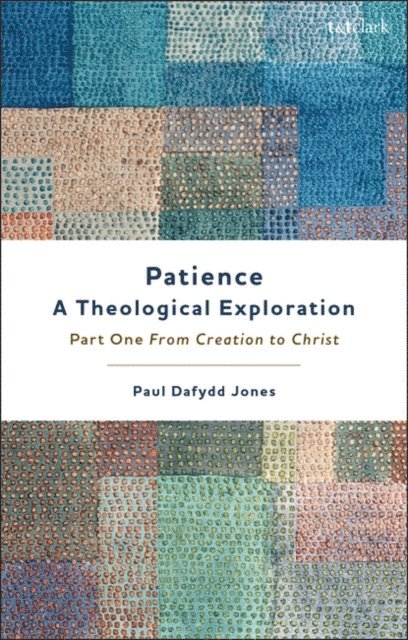
What does it mean to exercise patience? What does it mean to endure, to wait, and to persevere—and, on other occasions, to reject patience in favor of resistance, haste, and disruptive action? And what might it mean to describe God as patient? Might patience play a leading role in a Christian account of God’s creative work, God’s relationship to ancient Israel, God’s governance of history, and God’s saving activity?The first instalment of Patience—A Theological Exploration engages these questions in searching, imaginative, and sometimes surprising ways. Following reflections on the biblical witness and the nature of constructive theological inquiry, its interpretative chapters engage landmark works by a number of ancient, medieval, modern, and contemporary authors, disclosing both the promise and peril of talk about patience. Patience stands at the center of this innovative account of God’s creative work, God’s relationship with ancient Israel, creaturely sin, scripture, and God’s broader providential and salvific purposes.
2 028 kr
Skickas inom 5-8 vardagar
What does it mean to exercise patience? What does it mean to endure, to wait, and to persevere—and, on other occasions, to reject patience in favor of resistance, haste, and disruptive action? And what might it mean to describe God as patient? Might patience play a leading role in a Christian account of God’s creative work, God’s relationship to ancient Israel, God’s governance of history, and God’s saving activity?The first instalment of Patience—A Theological Exploration engages these questions in searching, imaginative, and sometimes surprising ways. Following reflections on the biblical witness and the nature of constructive theological inquiry, its interpretative chapters engage landmark works by a number of ancient, medieval, modern, and contemporary authors, disclosing both the promise and peril of talk about patience. Patience stands at the center of this innovative account of God’s creative work, God’s relationship with ancient Israel, creaturely sin, scripture, and God’s broader providential and salvific purposes.
1 295 kr
Skickas
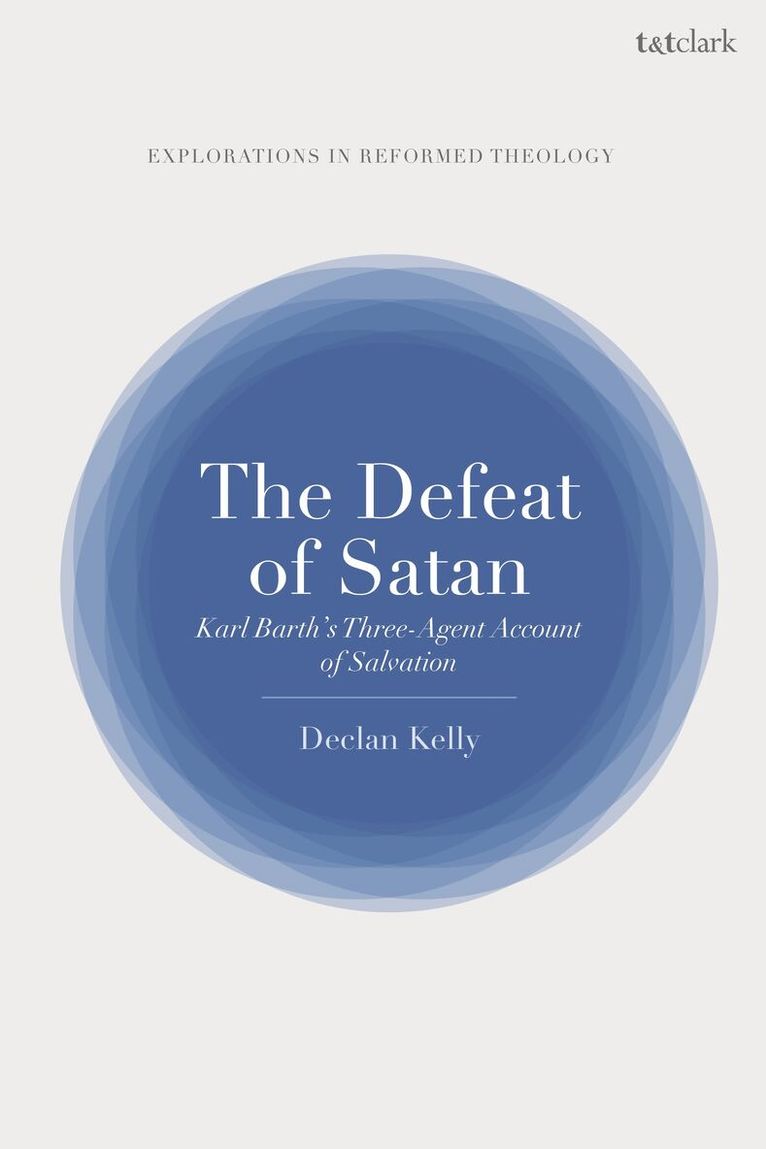
This book offers an innovative, critical, and constructive exploration of Barth’s theology, one which demonstrates the radicality of his thought and which underscores the continued contribution he might make to theological reflection on a central element of the Christian tradition.Declan Kelly uncovers the promise of viewing Barth’s account of salvation as a “three-agent drama”—a drama involving God, humanity, and anti-God powers. Kelly demonstrates and examines Barth’s cosmological portrayal of God’s saving event as a defeat of the lordship of Satan in the cosmos—and, bound up with this, as an ending of God’s “left handed” activity—and as the bringing into existence of a new creation under the rule of God’s right hand. Barth’s doctrines of election, the atonement, and the resurrection receive a fresh reading as the book explores his apocalyptic grasp of God’s eschatological deed of salvation and as it puts forward the claim—with and against Barth—that the climax of this deed of salvation is best located in the event of God’s raising of Christ from the dead.
1 409 kr
Skickas inom 5-8 vardagar
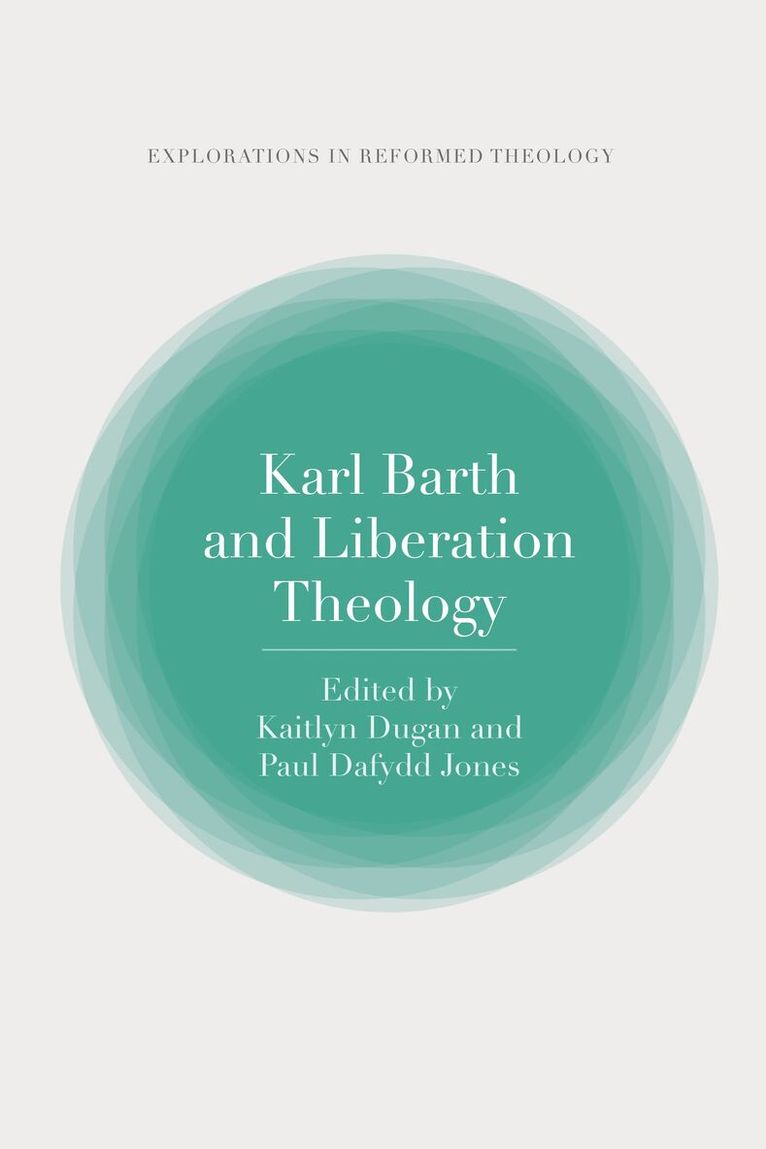
This volume puts Barth and liberation theologies in critical and constructive conversation. With incisive essays from a range of noted scholars, it forges new connections between Barth’s expansive corpus and the multifaceted world of Christian liberation theology. It shows how Barth and liberation theologians can help us to make sense of – and perhaps even to respond to – some of the most pressing issues of our day: race and racism in the United States; changing understandings of sex, gender, and sexuality; the ongoing degradation of the ecosphere; the relationship between faith, theological reflection, and the arts; the challenge of decolonizing Christian thought; and ecclesial and political life in the Global South.
479 kr
Skickas inom 5-8 vardagar
This volume puts Barth and liberation theologies in critical and constructive conversation. With incisive essays from a range of noted scholars, it forges new connections between Barth’s expansive corpus and the multifaceted world of Christian liberation theology. It shows how Barth and liberation theologians can help us to make sense of – and perhaps even to respond to – some of the most pressing issues of our day: race and racism in the United States; changing understandings of sex, gender, and sexuality; the ongoing degradation of the ecosphere; the relationship between faith, theological reflection, and the arts; the challenge of decolonizing Christian thought; and ecclesial and political life in the Global South.
464 kr
Skickas inom 5-8 vardagar
This is the first book to apply Bavinck’s theological anthropology to contemporary theological issues. Sutanto provides a sustained close reading of Herman Bavinck’s contributions to theological anthropology and positions him in conversation with current and historical dialogues on embodiment, revelation, affect theory, phenomenology, the cognitive science of religion, ethics, race, covenant, and the beatific vision. Sutanto explores the holistic character of Bavinck’s vision of humanity, suggesting ways in which his theological anthropology cuts across several potential binaries in contemporary discourse, between affect and reason, body and soul, animality and religiosity, unity and diversity, and between a this-worldly or other-worldly eschatology.
484 kr
Kommande
Adding her distinctive voice to lively conversations about the work and legacy of Jonathan Edwards, Larsen shows that Edwards thinks boldly about the freedom of the Father and the Son within their blessed fellowship in the Spirit. She identifies profound insights into the relationship between the divine being and the divine economy by focusing on Edwards’s understanding of the Son as he undertakes the work of ad extra glorification—the work by which God is externally blessed through God’s communication to creatures. In addition to careful analyses of the ‘covenantal’ and ‘evocative’ registers in which Edwards describes the fittingness of the Son’s redemptive mission, Larsen concludes by drawing resources from Edwards’s Christology that speak to key issues of freedom and aesthetics in Reformed thought today.
1 678 kr
Kommande
An in-depth analysis of the function of feeling (Gefühl) in the development of Karl Barth’s theological anthropology in dialogue with Friedrich Schleiermacher’s theology.If feeling is recognised at all in Karl Barth’s theology, it is often treated as part of Friedrich Schleiermacher’s ‘feeling (Gefühl) of absolute dependence’ that Barth rejected when he broke with theological liberalism. This study offers a different and more nuanced account. It argues that feeling has been neglected in the interpretation of Barth’s theological understanding of the human being. Affect theory, which highlights changeable disposition and environmental attunement, is used to discover the ways in which the concepts of feeling and experience change as Barth’s theology develops. Templeton also offers a fresh angle on Barth’s complex relationship with the theology of Schleiermacher. Initially, as a young scholar of modern theology, Barth embraces Schleiermacher’s concept of feeling, claiming that Christ’s revelation is verified in the believer’s affection. Then, as a pastor shocked at the capitulation of the Church and Academy to Germany’s war ideology, Barth rejects feeling as the root of a subjective and experiential theology that evades the judgment of God’s Word. Finally, as a professor of theology, Barth rehabilitates feeling by de-coupling it from Schleiermacher’s account, proposing instead that human feeling (with knowing and willing) becomes an analogy of Christ’s self-determination through the Spirit’s baptising.
1 406 kr
Kommande
Mason carefully develops a theology of prayer that builds on the dogmatic and moral theology of one of the most significant Reformed theologians of the past 50 years: John Webster.Ambitious in scope and exacting in analysis, this volume provides a creative and constructive exploration of the theology of prayer that grows out of Webster’s theology and ethics when considered as a whole. Mason offers close theological readings of Webster’s works against the backdrop of the development of his thought and his major sources in the Christian tradition. In so doing, he roots a dogmatics of prayer in various theological loci that are central to the theology of prayer and Webster’s own writings. This book pays careful attention to the doctrines of God, creation and providence, and sin and salvation, as well as to Webster’s sophisticated moral theology of creaturely agency. Central insights from Webster – in conversation with Aquinas, Barth, Calvin and Reformed scholastic sources – are brought to bear on the major components of a theology of prayer. In doing so, Mason develops a rich and detailed account of the central act of the Christian life in a way that displays the resourcefulness of Webster’s theology and ethics.