Paul Millett – författare
Visar alla böcker från författaren Paul Millett. Handla med fri frakt och snabb leverans.
8 produkter
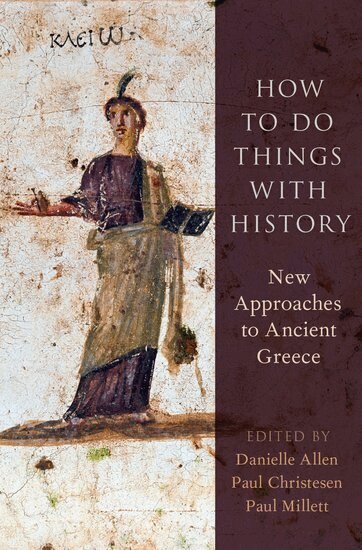
How to Do Things with History
New Approaches to Ancient Greece
Inbunden, 2018
2286 kr
Lägg i varukorg
How to Do Things with History is a collection of essays that explores current and future approaches to the study of ancient Greek cultural history. Rather than focus directly on methodology, the essays in this volume demonstrate how some of the most productive and significant methodologies for …
How to Do Things with History
New Approaches to Ancient Greece
Av Paul Millett, Paul Christesen m. fl.
E-bok, 2018
1624 kr
Lägg i varukorg
How to Do Things with History is a collection of essays that explores current and future approaches to the study of ancient Greek cultural history. Rather than focus directly on methodology, the essays in this volume demonstrate how some of the most productive and significant methodologies for …
How to Do Things with History
New Approaches to Ancient Greece
Av Paul Millett, Paul Christesen m. fl.
E-bok, 2018
1624 kr
Lägg i varukorg
How to Do Things with History is a collection of essays that explores current and future approaches to the study of ancient Greek cultural history. Rather than focus directly on methodology, the essays in this volume demonstrate how some of the most productive and significant methodologies for …
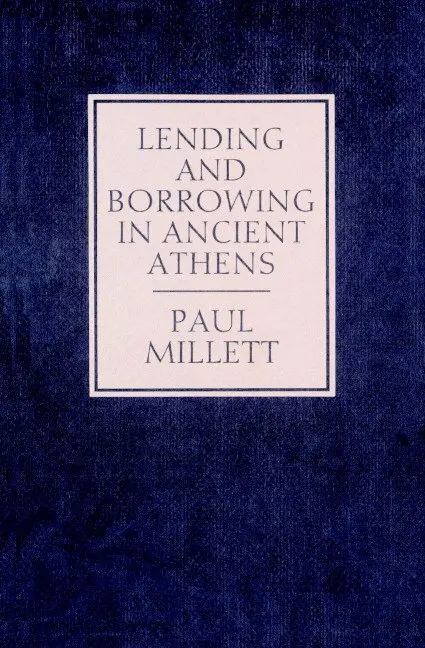
Lending and Borrowing in Ancient Athens
Av Paul Millett
Inbunden, 1991
1224 kr
Lägg i varukorg
Lending and borrowing were commonplace in Athens during the fourth century BC and could involve interest rates, security and banks, but the part played by credit was very different from its familiar role in capitalist society. Using a combination of sources, but concentrating on the law-court …
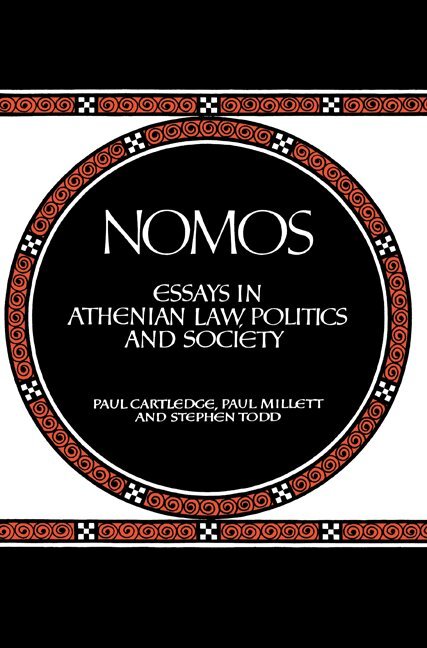
Nomos
Essays in Athenian Law, Politics and Society
Av Paul Cartledge, Paul Millett m. fl.
Häftad, 2003
754 kr
Lägg i varukorg
The relationship between law, politics and society in democratic Athens is a central but neglected aspect of ancient Greek history that is beginning to attract increasing interest. Nomos brings together ten essays by a group of British and American scholars who aim to explore ways in which Athenian …
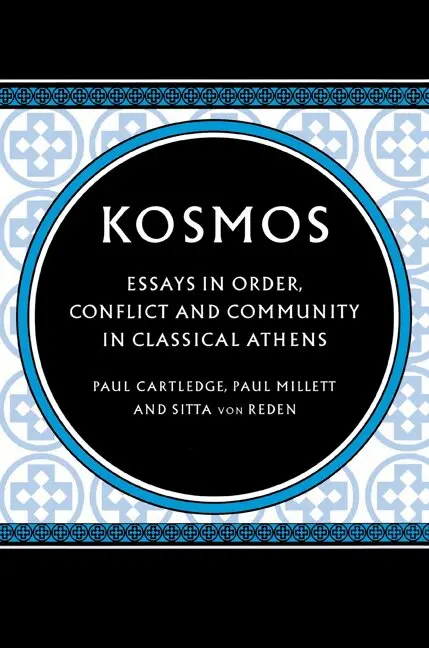
Kosmos
Essays in Order, Conflict and Community in Classical Athens
Av Paul Cartledge, Paul Millett m. fl.
Häftad, 2002
621 kr
Lägg i varukorg
'Kosmos' is the word the ancient Greeks used for human social order. It has therefore a special application to the Greeks' peculiar social and political unit of communal life that they called the 'polis'. Of the many hundreds of such units in classical Greece the best documented and the most …
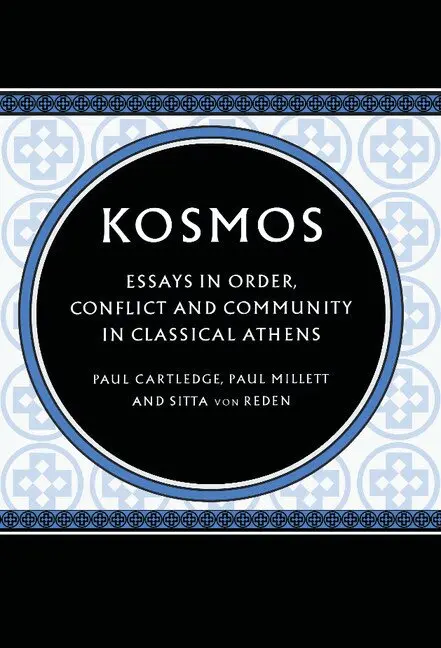
Kosmos
Essays in Order, Conflict and Community in Classical Athens
Av Paul Cartledge, Paul Millett m. fl.
Inbunden, 1998
1610 kr
Lägg i varukorg
'Kosmos' is the word the ancient Greeks used for human social order. It has therefore a special application to the Greeks' peculiar social and political unit of communal life that they called the 'polis'. Of the many hundreds of such units in classical Greece the best documented and the most …
Lending and Borrowing in Ancient Athens
Av Paul Millett
Häftad, 2002
821 kr
Lägg i varukorg
Lending and borrowing were commonplace in Athens during the fourth century BC and could involve interest rates, security and banks, but the part played by credit was very different from its familiar role in capitalist society. Using a combination of sources, but concentrating on the law-court …