Paul Murdin - Böcker
Visar alla böcker från författaren Paul Murdin. Handla med fri frakt och snabb leverans.
11 produkter
11 produkter
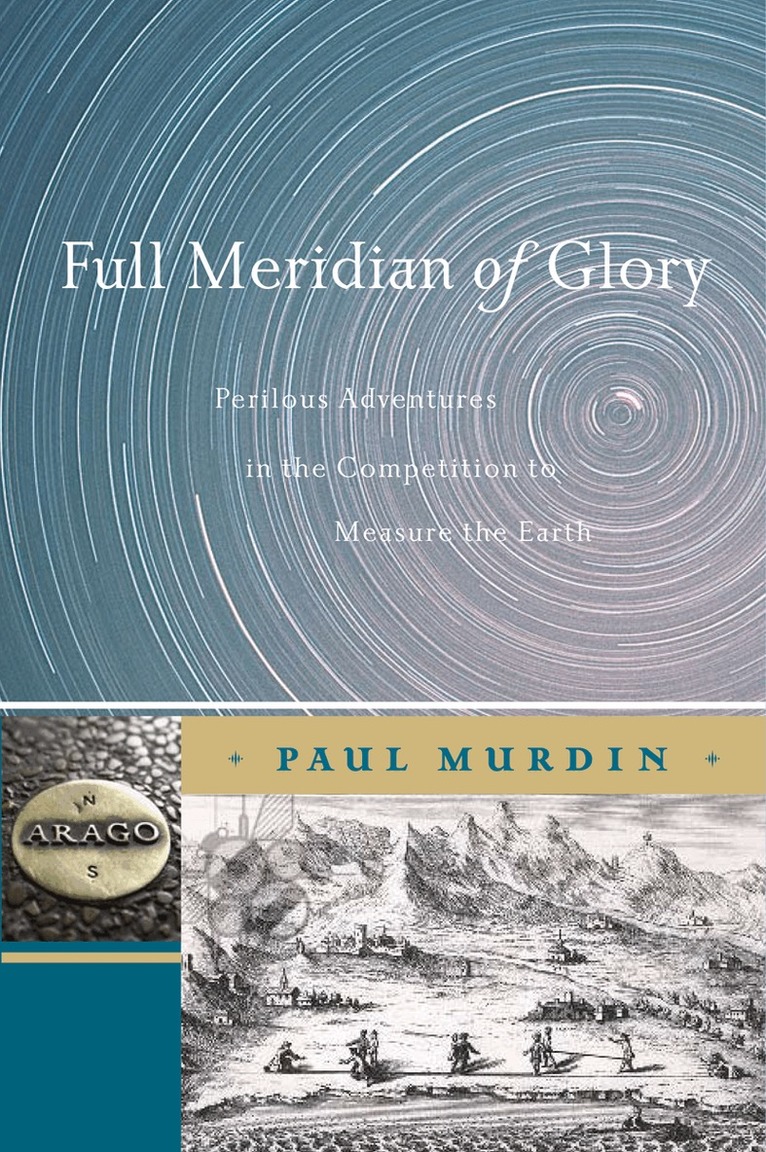
Full Meridian of Glory
Perilous Adventures in the Competition to Measure the Earth
Inbunden, Engelska, 2008
298 kr
Skickas inom 10-15 vardagar
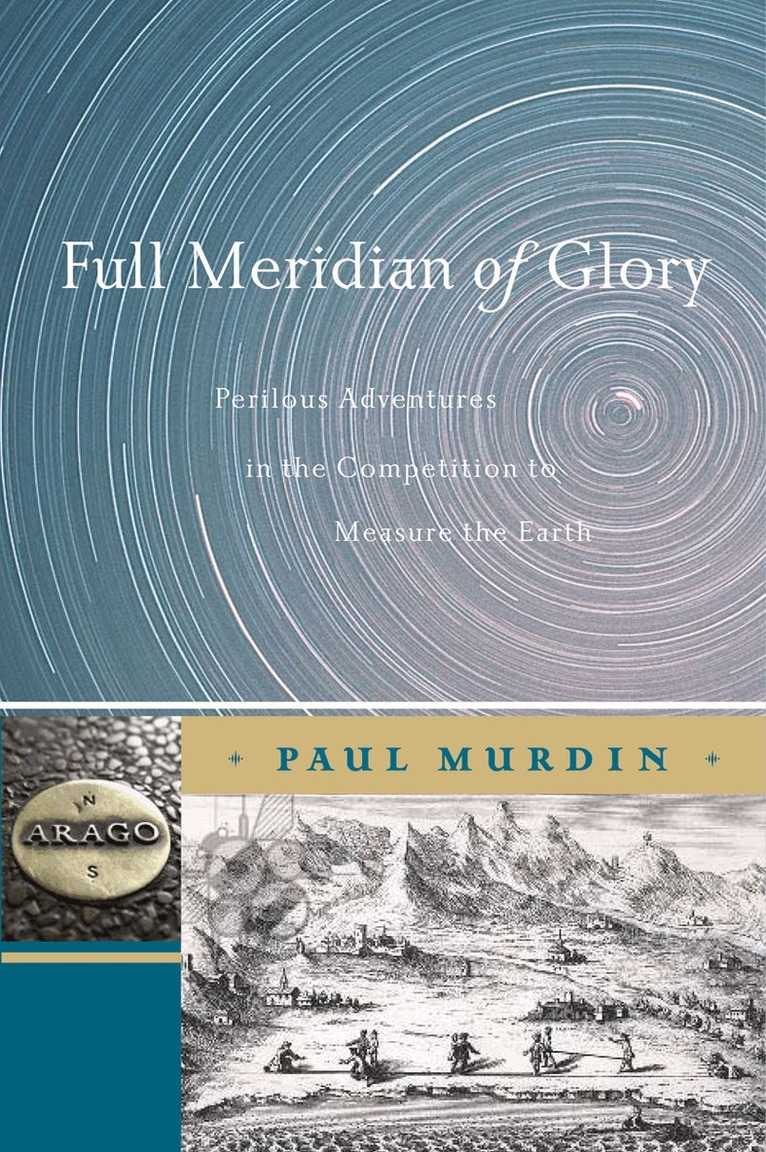
[the text below needs editing and we must be careful not to say things about Dan Brown's book that could get Springer in legal trouble]Dan Brown’s novel, The Da Vinci Code, was first published in 2003; its sales have reached 40 million worldwide. The book mixes a small spice of fact into a large dollop of fiction to create an entertaining novel of intrigue, adventure, romance, danger and conspiracy, which have been imaginatively worked together to cook up the successful bestseller. Most interest in the book’s origins has centred on the sensational religious aspects. Dan Brown has written: ‘All of the art, architecture, secret rituals, secret societies, all of that is historical fact.’ This gives an air of authenticity to the book. Brown has, however, made up the religious doctrines, or based them on questionable accounts by others. The locations of the actions of The Da Vinci Code are not, however, made up. The present book is the scientific story behind the scene of several of the book’s actions that take place on the axis of France that passes through Paris. The Paris Meridian is the name of this location. It is the line running north-south through the astronomical observatory in Paris. One of the original intentions behind the founding of the Paris Observatory was to determine and measure this line. The French government financed the Paris Academy of Sciences to do so in the seventeenth to nineteenth centuries. It employed both astronomers – people who study and measure the stars – and geodesists – people who study and measure the Earth. This book is about what they did and why. It is a true story behind Dan Brown’s fiction. This is the first English language presentation of this historical material. It is attractively written and it features the story of the community of scientists who created the Paris Meridian. They knew each other well – some were members of the same families, in one caseof four generations. Like scientists everywhere they collaborated and formed alliances; they also split into warring factions and squabbled. They travelled to foreign countries, somehow transcending the national and political disputes, as scientists do now, their eyes fixed on ideas of accuracy, truth and objective, enduring values – save where the reception given to their own work is concerned, when some became blind to high ideals and descended into petty politics. To establish the Paris Meridian, the scientists endured hardship, survived danger and gloried in amazing adventures during a time of turmoil in Europe, the French Revolution and the Napoleonic War between France and Spain. Some were accused of witchcraft. Some of their associates lost their heads on the guillotine. Some died of disease. Some won honour and fame. One became the Head of State in France, albeit for no more than a few weeks. Some found dangerous love in foreign countries. One scientist killed in self defence when attacked by a jealous lover, another was himself killed by a jealous lover, a third brought back a woman to France and then jilted her, whereupon she joined a convent. The scientists worked on practical problems of interest to the government and to the people. They also worked on one of the important intellectual problems of the time, a problem of great interest to their fellow scientists all over the world, nothing less than the theory of universal gravitation. They succeeded in their intellectual work, while touching politics and the affairs of state. Their endeavours have left their marks on the landscape, in art and in literature.
240 kr
Skickas inom 7-10 vardagar
The story of our Universe, from its beginning in the first milliseconds of the Big Bang right up to our present moment and beyond, told in a gripping narrative. We have entered a new age of exploration and discovery, enabling us to probe ever more distant reaches of space and greatly advance our knowledge of the Universe. Today, telescopes peer not only into outer space, but also into the deep past. Paul Murdin takes us on an original and breathtaking journey across the lifetime of the Universe, from the first milliseconds of the Big Bang right up to our present moment and even beyond. Murdin draws on the latest discoveries in astronomy to describe the most important characters and events in the life of our Universe: the most powerful explosions, the most curious planets, and the most spectacular celestial bodies. He charts our developing understanding of the cosmos, showing how thinkers have deduced profound truths from even the simplest observations – everyone can see that it is dark at night, but only recently have we understood this as proof that the Universe has not been the same forever. Since then, the Universe has grown up from childhood: astronomers have tracked it as it passed through maturity and as it now moves into middle age. Murdin shows how our own lives were seeded from the Big Bang, galaxies, stars and planets. He considers some of the key questions: how did structures like galaxies and ourselves emerge from the dense maelstrom of the Universe’s birth? How did the ‘dark matter’ that we can’t even see speed up the development of galaxies, and how does ‘dark energy’ work to speed up the expansion of the Universe? Why hasn’t the Universe collapsed in on itself – and will it one day? And finally, he offers a glimpse into the future old age of our Universe, and what it means for us all.
106 kr
Skickas inom 7-10 vardagar
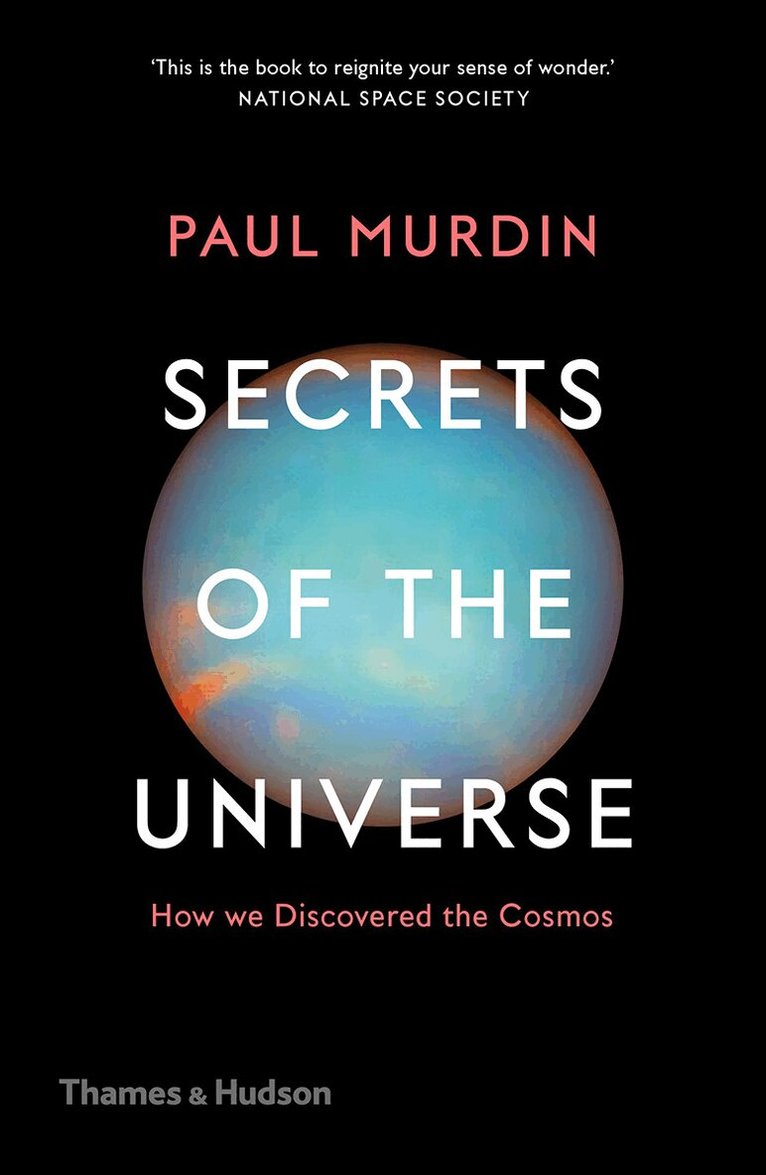
How did our universe come to exist? Why do stars shine? Is there life beyond the Earth? For millennia, humans have looked to the celestial sphere to explain the cosmos, first recording the movements of the Moon 25,000 years ago. Since the Enlightenment and the dawn of the space age, scientists have been unravelling cosmic mysteries, and raising astonishing new questions for future generations to answer. Today we live in an age of unprecedented astronomical revelation, from the discovery of water on Marsto the detection of gravitational waves and the first photograph of a black hole. World-renowned astronomer Paul Murdin explains the science behind these discoveries, along with the passions, struggles and quirks of fate that made them some of the most intriguing dramas of their times, demonstrating how human ingenuity and technological innovation have expanded our knowledge of the Universe beyond anything our ancestors – even as recently as a generation ago – could ever have imagined.
586 kr
Skickas inom 7-10 vardagar
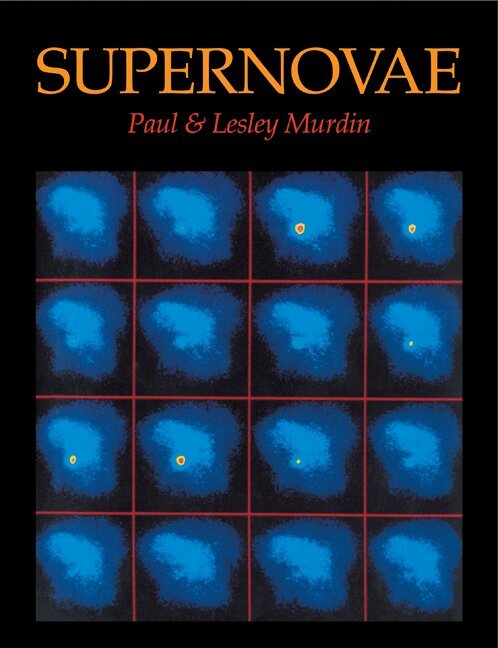
Supernovae are gigantic stellar explosions. The effects of these rare events pervade astronomy, creating and spreading the chemical elements, triggering the formation of new stars, creating black holes and pulsars. Originally published in 1978 and first published by Cambridge as this revised edition in 1985, is the story of supernovae. It captures the flavour of ancient astronomy and lays out the accidents, coincidences, false leads and flashes of inspiration that followed as astronomers grasped the implications behind the rare appearance of supernovae. Two supernovae, seen in 1572 and 1604, made scientists aware that the stars changed and could be studied like everything else. Eventually, modern astronomers came to link supernovae with black holes, pulsars, and even with the creation of the chemical elements. The whole entertaining story is told clearly, in non-technical language, showing the triumph of human imagination as we discovered our place in the universe.
Full Meridian of Glory
Perilous Adventures in the Competition to Measure the Earth
Häftad, Engelska, 2010
248 kr
Skickas inom 10-15 vardagar
[the text below needs editing and we must be careful not to say things about Dan Brown's book that could get Springer in legal trouble]Dan Brown’s novel, The Da Vinci Code, was first published in 2003; its sales have reached 40 million worldwide. The book mixes a small spice of fact into a large dollop of fiction to create an entertaining novel of intrigue, adventure, romance, danger and conspiracy, which have been imaginatively worked together to cook up the successful bestseller. Most interest in the book’s origins has centred on the sensational religious aspects. Dan Brown has written: ‘All of the art, architecture, secret rituals, secret societies, all of that is historical fact.’ This gives an air of authenticity to the book. Brown has, however, made up the religious doctrines, or based them on questionable accounts by others. The locations of the actions of The Da Vinci Code are not, however, made up. The present book is the scientific story behind the scene of several of the book’s actions that take place on the axis of France that passes through Paris. The Paris Meridian is the name of this location. It is the line running north-south through the astronomical observatory in Paris. One of the original intentions behind the founding of the Paris Observatory was to determine and measure this line. The French government financed the Paris Academy of Sciences to do so in the seventeenth to nineteenth centuries. It employed both astronomers – people who study and measure the stars – and geodesists – people who study and measure the Earth. This book is about what they did and why. It is a true story behind Dan Brown’s fiction. This is the first English language presentation of this historical material. It is attractively written and it features the story of the community of scientists who created the Paris Meridian. They knew each other well – some were members of the same families, in one caseof four generations. Like scientists everywhere they collaborated and formed alliances; they also split into warring factions and squabbled. They travelled to foreign countries, somehow transcending the national and political disputes, as scientists do now, their eyes fixed on ideas of accuracy, truth and objective, enduring values – save where the reception given to their own work is concerned, when some became blind to high ideals and descended into petty politics. To establish the Paris Meridian, the scientists endured hardship, survived danger and gloried in amazing adventures during a time of turmoil in Europe, the French Revolution and the Napoleonic War between France and Spain. Some were accused of witchcraft. Some of their associates lost their heads on the guillotine. Some died of disease. Some won honour and fame. One became the Head of State in France, albeit for no more than a few weeks. Some found dangerous love in foreign countries. One scientist killed in self defence when attacked by a jealous lover, another was himself killed by a jealous lover, a third brought back a woman to France and then jilted her, whereupon she joined a convent. The scientists worked on practical problems of interest to the government and to the people. They also worked on one of the important intellectual problems of the time, a problem of great interest to their fellow scientists all over the world, nothing less than the theory of universal gravitation. They succeeded in their intellectual work, while touching politics and the affairs of state. Their endeavours have left their marks on the landscape, in art and in literature.
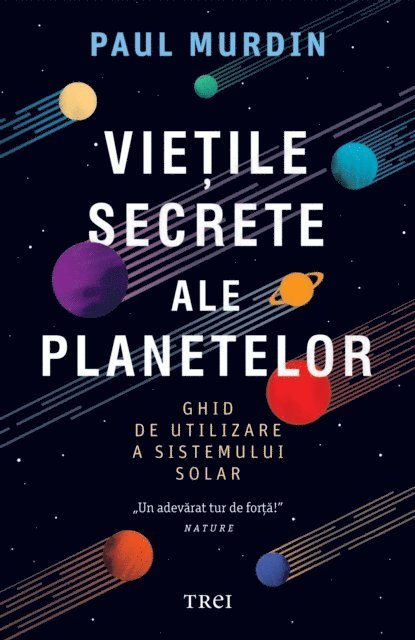
Secret Lives of Planets
A User's Guide to the Solar System – BBC Sky At Night's Best Astronomy and Space Books of 2019
Häftad, Engelska, 2020
137 kr
Skickas inom 7-10 vardagar
'A deft, frequently dramatic tour'Nature'A wonderfully clear and readable book . . . Gives a splendid overview of our Sun's planetary system, including its history and exploration'Dame Jocelyn Bell Burnell*We have the impression that the solar system is perfectly regular like a clock, or a planetarium instrument. On a short timescale it is. But, seen in a longer perspective, the planets, and their satellites, have exciting lives, full of events - for example, did you know that Saturn's moon, Titan, boasts lakes which contain liquid methane surrounded by soaring hills and valleys, exactly as the earth did before life evolved on our fragile planet? Or that Mercury is the shyest planet? Or, that Mars' biggest volcano is 100 times the size of Earth's, or that its biggest canyon is 10 times the depth of the Grand Canyon, or that it wasn't always red, but blue? The culmination of a lifetime of astronomy and wonder, Paul Murdin's enchanting new book reveals everything you ever wanted to know about the planets, their satellites, and our place in the solar system.
318 kr
Kommande
It has been recognised for centuries that, statistically, the Earth must be one of many, literally billions, of planets in our Galaxy, but the first planets beyond the solar system were recognised only 30 years ago. This book sets out to show the variety of the over 6,000 planets orbiting other stars that are now known by describing 50 of them. Few resemble our own Earth, although the largest telescopes and the most advanced spacecraft have been deployed to find them, as well as smaller scale projects operated by less wealthy but clever scientists, including amateurs and students.While we have no indications yet of new life and new civilisations, we have definitively found strange new worlds, some stranger than either science or science fiction has previously imagined.Rocky worlds like the Moon, some stiflingly hot, some ice-covered, one or two tantalisingly like the Earth in some respectsA planetary system with seven planets, some of them Earth-sized and in the habitable zone of the system where liquid water and therefore life are possibleAn ocean-covered planet, like Earth in Kevin Costner's film Waterworld, apparently with chemical biosignaturesA world covered with volcanoes; one side permanently lit up by hot lava outflowsA zombie planetary system of three planets, re-formed from the body of an exploded star, orbiting a star that is not quite deadPlanets orbiting a double star (two stars like our Sun), like Tattooine in Star Wars, some with a disorientingly complex day/night cycleA planet in a star cluster whose night-time skies are ablaze with the light of a million starsA giant planet with one side perpetually facing its sun, roasting, with superheated gales blowing into the cold side, carrying glass rainThe book describes the discovery of the selected planets: the how, the who, the determination, the luck and the feuds. Each planet’s wider planetary system is mapped out. The constitution of each planet is described, with the most significant conclusions about its surface and atmosphere, and comparing each to Earth. Each entry is written within the limits of scientific knowledge, a sedentary exploration of each strange new world, extrapolated from but firmly grounded in the science. Within the 50 chapters there are descriptions of the various classes of worlds recognised by planetary scientists and their techniques. The author ends by discussing what makes a world habitable and how close we have come to discovering a planetary system like ours and a planet like Earth – or even one that is better for life to live on.
356 kr
Skickas inom 10-15 vardagar
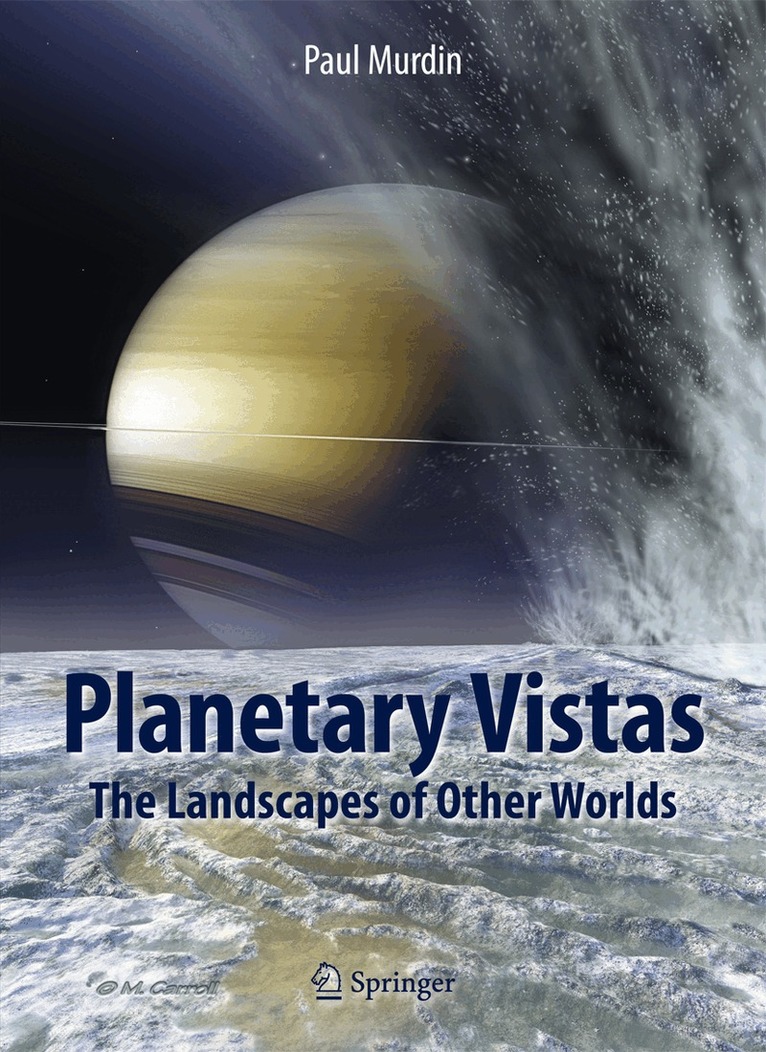
The word “landscape” can mean picture as well as natural scenery. Recent advances in space exploration imaging have allowed us to now have landscapes never before possible, and this book collects some of the greatest views and vistas of Mars, Venus’s Titan, Io and more in their full glory, with background information to put into context the foreign landforms of our Solar System. Here, literally, are 'other-worldly' visions of strange new scenes, all captured by the latest technology by landing and roving vehicles or by very low-flying spacecraft. There is more than scientific interest in these views. They are also aesthetically beautiful and intriguing, and Dr. Murdin in a final chapter compares them to terrestrial landscapes in fine art. Planetary Vistas is a science book and a travel book across the planets and moons of the Solar System for armchair space explorers who want to be amazed and informed. This book shows what future space explorers will experience, because these are the landscapes that astronauts and space tourists will see.
14 968 kr
Skickas inom 10-15 vardagar
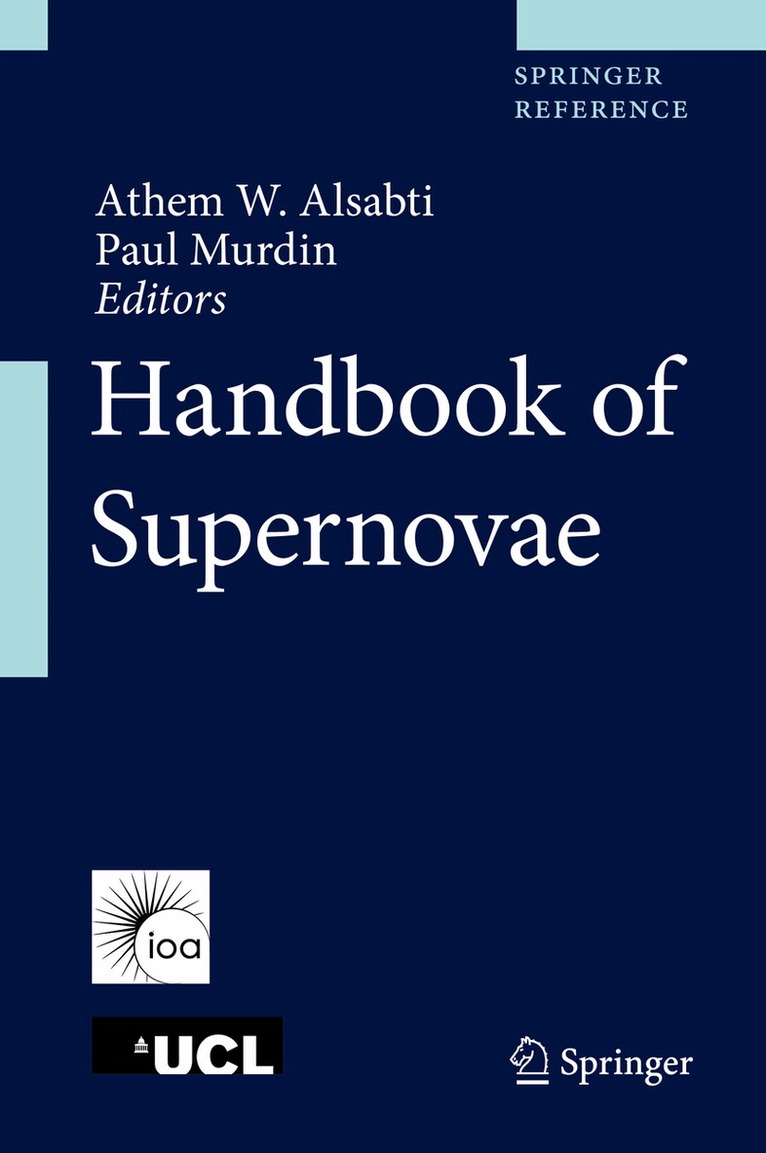
This reference work gathers all of the latest research in the supernova field areas to create a definitive source book on supernovae, their remnants and related topics. It includes each distinct subdiscipline, including stellar types, progenitors, stellar evolution, nucleosynthesis of elements, supernova types, neutron stars and pulsars, black holes, swept up interstellar matter, cosmic rays, neutrinos from supernovae, supernova observations in different wavelengths, interstellar molecules and dust. While there is a great deal of primary and specialist literature on supernovae, with a great many scientific groups around the world focusing on the phenomenon and related subdisciplines, nothing else presents an overall survey. This handbook closes that gap at last. As a comprehensive and balanced collection that presents the current state of knowledge in the broad field of supernovae, this is to be used as a basis for further work and study by graduate students, astronomers and astrophysicists working in close/related disciplines, and established groups. Editorial BoardEDITORS-IN-CHIEFAthem W. Alsabti University College London Observatory, University College London, London, UKSections: Supernovae and Supernova Remnants Supernovae and the Environment of the Solar SystemPaul Murdin Institute of Astronomy, University of Cambridge, Cambridge, UKSection: Supernovae and Supernova RemnantsSECTION EDITORSDavid Arnett Steward Observatory,University of Arizona, Tucson, AZ, USASection: Nucleosynthesis in SupernovaePhil Charles University of Southampton, School of Physics and Astronomy, Southampton, UKSection: Stellar Remnants - Neutron Stars and Black HolesRobert A. Fesen Department of Physics and Astronomy, Dartmouth College, Hanover, NH, USASection: Evolution of Supernovae and the Interstellar MediumDavid A. Green Cavendish Laboratory, University of Cambridge, Cambridge, UKSection: Historical SupernovaeMario Hamuy Astronomy Department, University of Chile, Santiago, Chile; Millennium Institute of Astrophysics, Santiago, ChileSection: Cosmology from SupernovaePeter Hoeflich Department of Physics, Florida State University, Tallahassee, FL, USASection: Explosion Mechanisms of SupernovaeKen’ichi Nomoto Kavli Institute for the Physics and Mathematics of the Universe (WPI), The University of Tokyo, Kashiwa, Chiba, JapanSection: Supernovae and Stellar EvolutionStephen Smart Astrophysics Research Centre, Queen's University, Belfast; Northern Ireland, UKSection: Light Curves and Spectra of SupernovaeMark Sullivan School of Physics and Astronomy, University of Southampton, Highfield, Southampton, UK Section: Types of SupernovaeFriedrich-Karl Thielemann Department of Physics, University of Basel, Basel, SwitzerlandSections: Neutrinos, Gravitational Waves and Cosmic Rays Nucleosynthesis in SupernovaeChengmin M. Zhang National Astronomical Observatories, Chinese Academy of Sciences, Beijing, China; Key Laboratory of Radio Astronomy, CAS, Beijing, China; School of Physical Science, University of Chinese Academy of Sciences, Beijing, China Section: Stellar Remnants - Neutron Stars and Black Holes
409 kr
Skickas inom 10-15 vardagar
This book relates the history of asteroid discoveries and christenings, from those of the early pioneering giants of Hersehel and Piazzi to modern-day amateurs. Moving from history and anecdotal information to science, the book's structure is provided by the names of the asteroids, including one named after the author.Free from a need to conform to scientific naming conventions, the names evidence hero-worship, sycophancy, avarice, vanity, whimsy, erudition and wit, revealing the human side of astronomers, especially where controversy has followed the christening. Murdin draws from extensive historical records to explore the debate over these names. Each age reveals its own biases and preferences in the naming process.
407 kr
Skickas inom 10-15 vardagar
This book relates the history of asteroid discoveries and christenings, from those of the early pioneering giants of Hersehel and Piazzi to modern-day amateurs. Moving from history and anecdotal information to science, the book's structure is provided by the names of the asteroids, including one named after the author.Free from a need to conform to scientific naming conventions, the names evidence hero-worship, sycophancy, avarice, vanity, whimsy, erudition and wit, revealing the human side of astronomers, especially where controversy has followed the christening. Murdin draws from extensive historical records to explore the debate over these names. Each age reveals its own biases and preferences in the naming process.