Paul S Wesson – författare
Visar alla böcker från författaren Paul S Wesson. Handla med fri frakt och snabb leverans.
8 produkter
8 produkter
3 633 kr
Tillfälligt slut
Bringing together some of the top researchers gravitational physics, the 1990 Banff Summer Institute on Gravitation focussed on three of the most exciting areas of research in this subject today: Cosmology, Quantum Gravity and Tests of Gravitational Theory. Besides covering the most up-to-date developments, special emphasis was placed upon the interdisciplinary aspects of each of these topics. The pedagogical character of the lectures is designed to bring graduate students up to the forefront of research.
1 221 kr
Tillfälligt slut
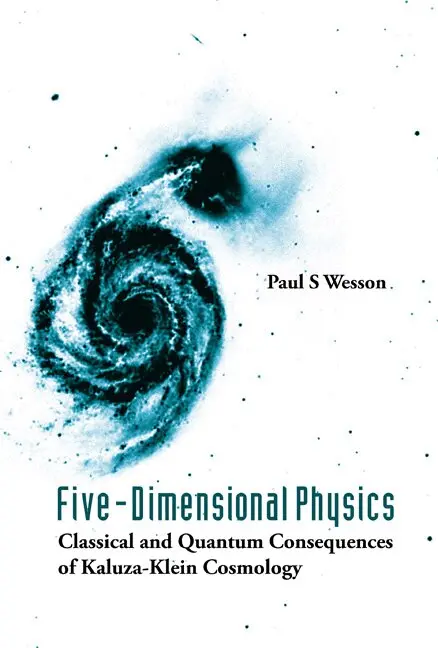
Einstein endorsed the view of Kaluza that gravity could be combined with electromagnetism if the dimensionality of the world is extended from 4 to 5. Klein applied this idea to quantum theory, laying a basis for the various modern versions of string theory. Recently, work by a group of researchers has resulted in a coherent formulation of 5D relativity, in which matter in 4D is induced by geometry in 5D. This theory is based on an unrestricted group of 5D coordinate transformations that leads to new solutions and agreement with the classical tests of relativity. This book collects together the main technical results on 5D relativity, and shows how far we can realize Einstein's vision of physics as geometry.
Five-dimensional Physics: Classical And Quantum Consequences Of Kaluza-klein Cosmology
Inbunden, Engelska, 2006
1 301 kr
Skickas inom 5-8 vardagar
Extra dimensions — beyond space and time — are the best methods for unifying gravity with particle physics. The basic extension is to five dimensions (5D), as in the induced-matter and membrane theory. This descriptive text gives an up-to-date account of the classical and quantum consequences of 5D physics. It includes topics that range from Einstein's original theory of relativity to modern views on matter. The book is mathematically precise and focuses on new ideas which appeal to readers. Examples of new ideas are: The big-bang universe, which is curved by matter in 4D, may be viewed as a smooth and empty world in 5D; the uncertainty of quantum interactions in spacetime may be regarded as the consequence of deterministic laws in higher dimensions. This book will interest people who think about the 'meaning of things'.
1 080 kr
Tillfälligt slut
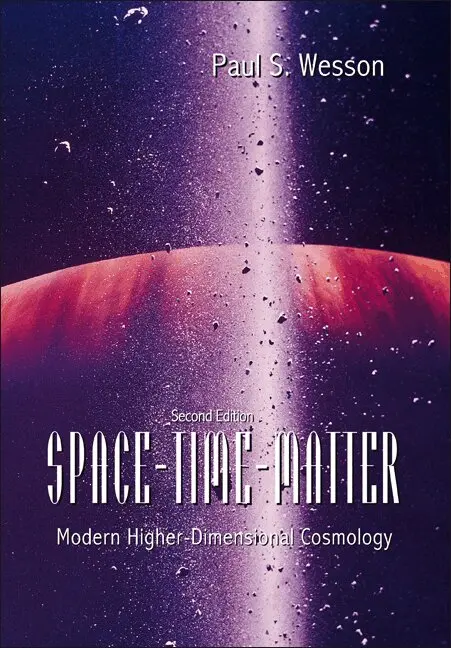
Albert Einstein, together with Theodor Kaluza and Oskar Klein, realized that extra dimensions can be used to unify the different fields of physics, as well as unifying the fields with their material sources. In fact, it was Einstein's dream to transpose the “base wood†of the matter term in his field equations to the “marble” of the geometrical term. During his lifetime, this kind of unified theory achieved only partial success. But the modern approach, outlined in this bestseller, is elegant and agrees with all the classical tests. The basic idea is to unify the source and its field using the rich algebra of higher-dimensional Riemannian geometry. In other words, space, time and matter become parts of geometry.
1 263 kr
Skickas inom 5-8 vardagar
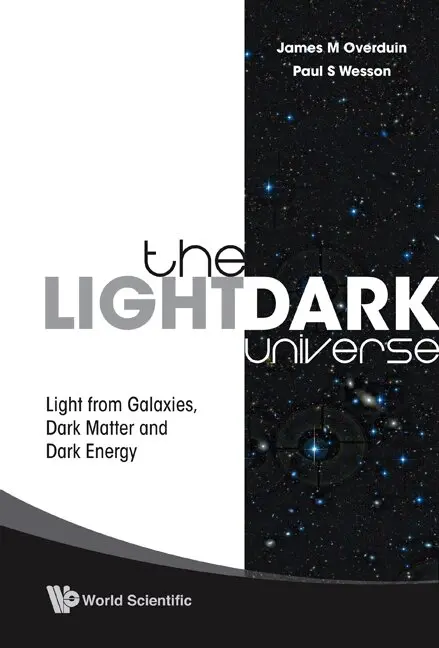
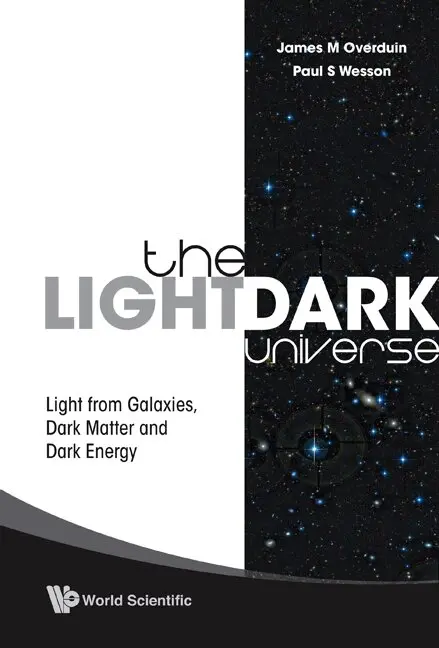
To the eyes of the average person and the trained scientist, the night sky is dark, even though the universe is populated by myriads of bright galaxies. Why this happens is a question commonly called Olbers' Paradox, and dates from at least 1823. How dark is the night sky is a question which preoccupies astrophysicists at the present. The answer to both questions tells us about the origin of the universe and the nature of its contents — luminous galaxies like the Milky Way, plus the dark matter between them and the mysterious dark energy which appears to be pushing everything apart. In this book, the fascinating history of Olbers' Paradox is reviewed, and the intricate physics of the light/dark universe is examined in detail. The fact that the night sky is dark (a basic astronomical observation that anybody can make) turns out to be connected with the finite age of the universe, thereby confirming some event like the Big Bang. But the space between the galaxies is not perfectly black, and data on its murkiness at various wavelengths can be used to constrain and identify its unseen constituents.
426 kr
Tillfälligt slut
To the eyes of the average person and the trained scientist, the night sky is dark, even though the universe is populated by myriads of bright galaxies. Why this happens is a question commonly called Olbers' Paradox, and dates from at least 1823. How dark is the night sky is a question which preoccupies astrophysicists at the present. The answer to both questions tells us about the origin of the universe and the nature of its contents — luminous galaxies like the Milky Way, plus the dark matter between them and the mysterious dark energy which appears to be pushing everything apart. In this book, the fascinating history of Olbers' Paradox is reviewed, and the intricate physics of the light/dark universe is examined in detail. The fact that the night sky is dark (a basic astronomical observation that anybody can make) turns out to be connected with the finite age of the universe, thereby confirming some event like the Big Bang. But the space between the galaxies is not perfectly black, and data on its murkiness at various wavelengths can be used to constrain and identify its unseen constituents.
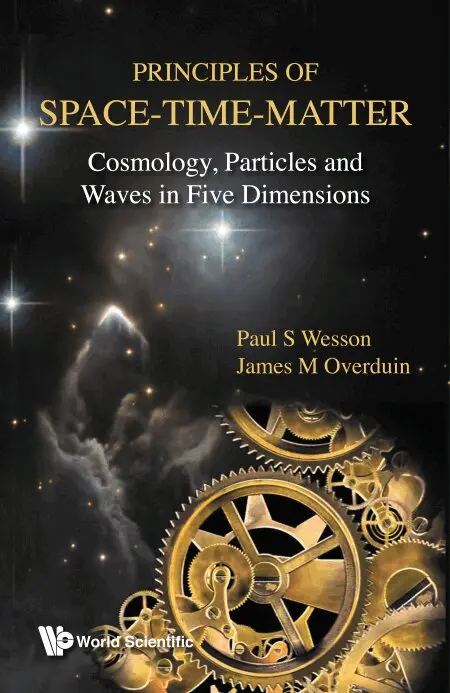
Principles Of Space-time-matter: Cosmology, Particles And Waves In Five Dimensions
Inbunden, Engelska, 2019
1 370 kr
Skickas inom 3-6 vardagar
"For those interested, the book is a good and well-written overview of the work of Wesson and his collaborators. For those with a general interest in extensions of standard physics, accessibility is strongly dependent on the reader's technical background, though the good structure of the book and copious references (including many to work by more-mainstream physicists on related topics) make that possible for those willing to invest some time."The Observatory MagazineThis book is a summing up of the prospects for unification between relativity and particle physics based on the extension of Einstein's theory of General Relativity to five dimensions. This subject was first established by Paul Wesson in his previous best-seller, Space-Time-Matter, and discussed from a different perspective in Five-Dimensional Physics, both published by World Scientific in 1999 and 2006 respectively. This third book brings the field up to date and details many new developments and connections to particle theory and wave mechanics in particular. It was in largely finished form at the time of Paul Wesson's untimely death in 2015, and has been completed and expanded by his former student and longtime collaborator, James Overduin.
1 115 kr
Skickas inom 5-8 vardagar
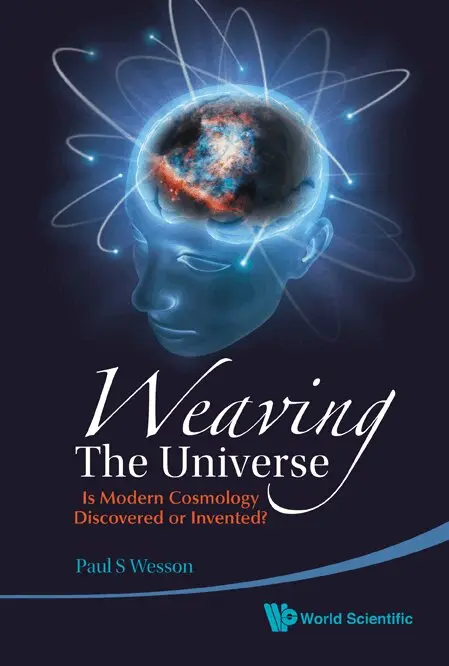
This new book is a thorough but short review of the history and present status of ideas in cosmology. It is aimed at a broad audience, but will contain a few equations where needed to make the argument exact. The coverage of cosmological ideas will focus mainly on the period from the early 1900s when Einstein formulated relativity and when his colleague Sir Arthur Eddington was creating relativistic models of the universe. It ends with the completion of the Large Hadron Collider in late 2008, having surveyed modern ideas of particle physics and astrophysics. To organize the large body of information involved, the book uses the life of Eddington and the weaving together of ideas in cosmology as themes. This should provide a clear and entertaining account presented in a historical context that leads up to the present day.