James M. Overduin – författare
Visar alla böcker från författaren James M. Overduin. Handla med fri frakt och snabb leverans.
5 produkter
Weight of the Vacuum
A Scientific History of Dark Energy
Av Helge S. Kragh, James M. Overduin
Häftad, 2014
767 kr
Lägg i varukorg
The 2011 Nobel Prize in Physics was awarded for the discovery of cosmic acceleration due to dark energy, a discovery that is all the more perplexing as nobody knows what dark energy actually is. We put the modern concept of cosmological vacuum energy into historical context and show how it grew out …
Weight of the Vacuum
A Scientific History of Dark Energy
Av James M. Overduin, Helge S. Kragh
E-bok, 2014
978 kr
Lägg i varukorg
The 2011 Nobel Prize in Physics was awarded for the discovery of cosmic acceleration due to dark energy, a discovery that is all the more perplexing as nobody knows what dark energy actually is. We put the modern concept of cosmological vacuum energy into historical context and show how it grew out …
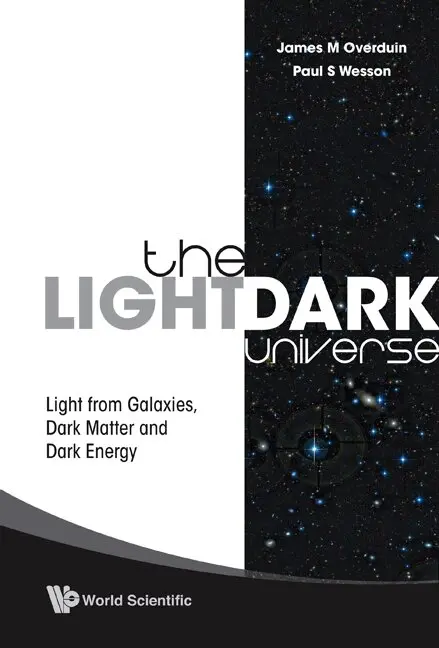
LIGHT/DARK UNIVERSE, THE: LIGHT FROM GALAXIES, DARK MATTER AND DARK ENERGY
Av James M Overduin, Paul S Wesson
Inbunden, 2008
1345 kr
Lägg i varukorg
To the eyes of the average person and the trained scientist, the night sky is dark, even though the universe is populated by myriads of bright galaxies. Why this happens is a question commonly called Olbers' Paradox, and dates from at least 1823. How dark is the night sky is a question which …
PRINCIPLES OF SPACE-TIME-MATTER: COSMOLOGY, PARTICLES AND WAVES IN FIVE DIMENSIONS
Cosmology, Particles and Waves in Five Dimensions
Av Paul S Wesson, James M Overduin
Inbunden, 2019
1377 kr
Lägg i varukorg
"For those interested, the book is a good and well-written overview of the work of Wesson and his collaborators. For those with a general interest in extensions of standard physics, accessibility is strongly dependent on the reader's technical background, though the good structure of the book and …
LIGHT/DARK UNIVERSE, THE: LIGHT FROM GALAXIES, DARK MATTER AND DARK ENERGY
Av James M Overduin, Paul S Wesson
Häftad, 2008
595 kr
Tillfälligt slut
To the eyes of the average person and the trained scientist, the night sky is dark, even though the universe is populated by myriads of bright galaxies. Why this happens is a question commonly called Olbers' Paradox, and dates from at least 1823. How dark is the night sky is a question which …