Paul Seaton - Böcker
Visar alla böcker från författaren Paul Seaton. Handla med fri frakt och snabb leverans.
7 produkter
7 produkter
1 142 kr
Skickas inom 10-15 vardagar
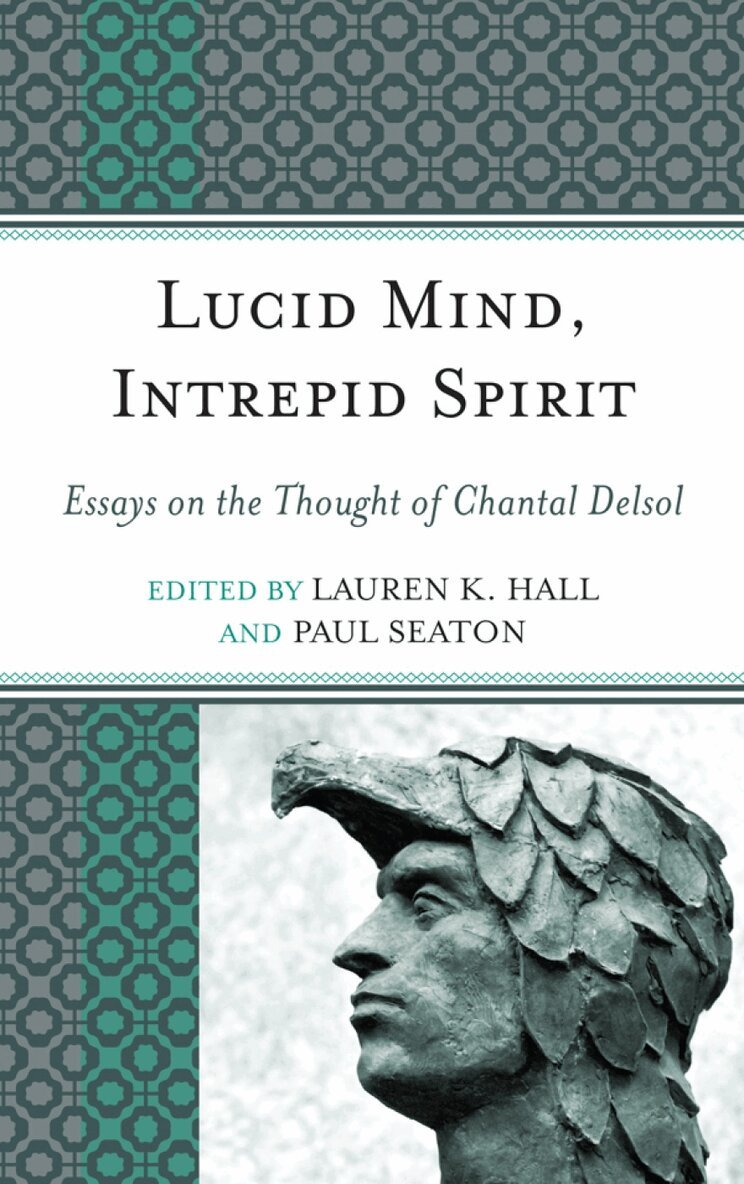
This volume of essays explores the bases and significant aspects of the thought of contemporary French philosopher, historian of ideas, and novelist Chantal Delsol. A member of the French Academy of Moral and Political Sciences, she is well known in France as a political analyst and cultural diagnostician. This collection is the first book-length treatment of her thought available in English, bringing together studies that analyze her work. In between, essays present her remarkable portrait of human beings increasingly characteristic of Western societies, as well as her defense of the human person rightly understood. An exposition of the virtues of her conception of the family, as well as her analysis of contemporary “matriarchy,” complements those treatments. The authors highlight her unique mode of cultural analysis, together with her stout defense of genuine political life. The volume also includes translations of two chapters of her fundamental work of philosophical anthropology, Qu’est-ce que l’homme?, appearing here for the first time in English. A thoughtful examination of Delsol’s work, this book provides new resources to those studying this French philosopher and author.
581 kr
Skickas inom 10-15 vardagar
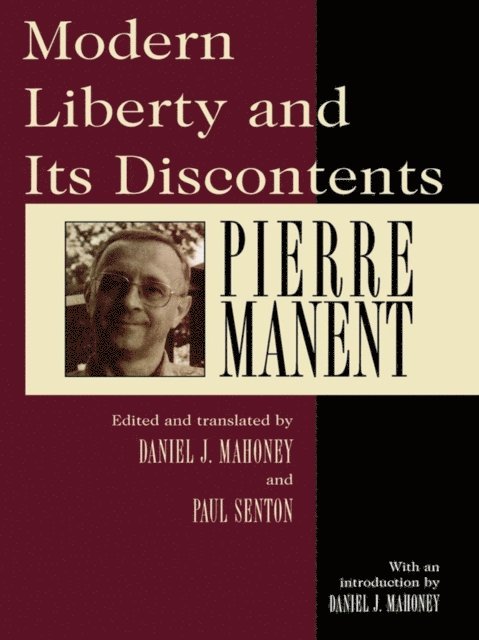
In this book, distinguished French philosopher Pierre Manent addresses a wide range of subjects, including the Machiavellian origins of modernity, Tocqueville's analysis of democracy, the political role of Christianity, the nature of totalitarianism, and the future of the nation-state. As a whole, the book constitutes a meditation on the nature of modern freedom and the permanent discontents which accompany it. Manent is particularly concerned with the effects of modern democracy on the maintenance and sustenance of substantial human ties. Modern Liberty and its Discontents is both an important contribution to an understanding of modern society, and a significant contribution to political philosophy in its own right.
164 kr
Skickas inom 7-10 vardagar
211 kr
Skickas inom 7-10 vardagar
The Legitimacy of the Human presents itself as a satellite work to a more voluminous effort by Rémi Brague, The Kingdom of Man. The larger book argues the thesis of the increasingly visible failure of the modern project, founded upon a view of man as thoroughly emancipated and autonomous, his own sovereign and the world’s. This is most visible in our technological powers and predicaments, with their ever-growing capacity to destroy or fundamentally transform our humanity, but understandings of freedom and equality unable to justify themselves before the bar of reason, but willfully asserting themselves, complement the picture. If modernity’s precious gains are to be preserved, and with them their beneficiaries, modern human beings, then the founding thoughts of the modern world need to be revisited and revised, often in terms of a creative reengagement with premodern ones. A new, truly humanistic, culture needs to be sought.The Legitimacy of the Human drives home that basic argument, surveying contemporary challenges to the very existence of humanity, then interrogating modern thought and philosophy for reasons it might have for the continuation of the human adventure. Brague finds the self-proclaimed advocates of the modern strikingly silent or even negative about the proposition. To be sure, in many instances modern philosophy has helped humanity organize itself better in terms of justice, peaceful coexistence, and prosperity. But on the basic question whether it is good that humans exist, it is strangely tongue-tied. Other authorities must be consulted, other sources drawn from, to credibly answer that fundamental existential question. The last two chapters of the book hearken to the answer of the biblical God, as expressed in Genesis 1 and recapitulated by the Word Incarnate of the Gospels.
243 kr
Skickas inom 7-10 vardagar
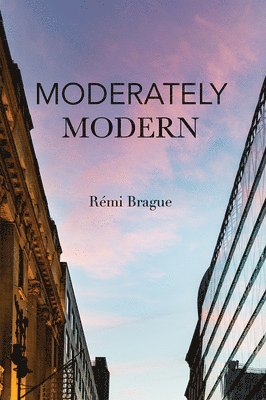
Moderately Modern wears its thesis on its sleeve. Modern men and women, those thoroughly imbued with modernity’s ideas, hopes, and projects, need to moderate themselves. They need to rein themselves in, they need to think and act beyond their comfort zone. Implicit in this claim, of course, is a slew of topics, claims, and an argument. What is modernity? What’s lacking in it? Where should its adherents look outside and beyond it? What would they find? And what would a conjunction of a chastened modernity and a newly respected outside look like? It would be difficult to find someone more equipped to raise and pursue these questions than Rémi Brague.Le règne de l’homme: l’echec du projet modern (The kingdom of man: the failure of the modern project) already laid out his basic views: modernity is the project of radical anthropocentrism, of man construed as the sovereign of the world and of his very humanity. If the traditional order of the West located man within a wider scheme of God/world/man, with the former two providing models of excellence for the latter, then modern thought reverses the order, expelling God and the divine from public centrality and, by means of technological science, aiming to make man, in Descartes’ famous phrase, “master and possessor of Nature”. The Legitimacy of the Human picks up the theme and surveys the results. Birth dearths, looming ecological disasters, and the threat of destruction on enormous scales testify to something having gone terribly awry. Its concluding chapters advise a reconsideration of the rejected premodern option: the biblical God and his providential care.Moderately Modern brings all of the foregoing together, mixing cultural critique with cultural restoration. It does so in characteristically Braguean ways: attention to the meaning and history of important terms; brilliant aperçus of the contemporary scene; enormous learning worn lightly and brought to bear deftly; a personal tone with intellectual and spiritual gravitas. His theme being the current condition of the West, this son of the West brings to bear all that she has made available to her children to live thoughtful and genuinely human lives. Let us hope that he is not a Cassandra, but more akin to Isaiah, albeit in a philosophical mode.
321 kr
Skickas inom 7-10 vardagar
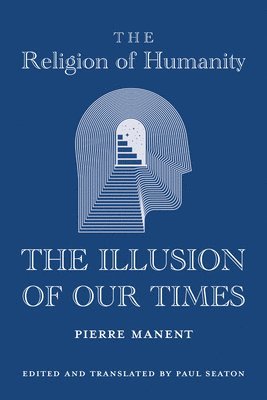
"Is not modern democracy the finally-found form of the religion of Humanity?" (2007)The Religion of Humanity: The Illusion of Our Time is the first anthology in any language of the writings of the contemporary French political philosopher, Pierre Manent, on “the religion of Humanity.” The striking phrase comes from nineteenth-century French thinker, Auguste Comte (1798–1857). Comte coined the phrase and indeed created an atheistic religion of a self-adoring Humanity. In the aftermath of the Cold War, Manent observed victorious democracy interpreting itself in a similar framework. He took it upon himself to track this development, analyze it, and warn his fellow Europeans of its deleterious political, intellectual, moral, and spiritual effects. With conceptual precision and (most often) a sober tone, many contemporary sacred cows were gored. But in addition to cursing the humanitarian darkness, he also lit many candles of judicious political, philosophical, moral, and spiritual analysis. This anthology is thus almost unique in its subject matter, and certainly unique in its treatment of the subject. It is a rarity and gem: a first-rate work of political philosophy.
133 kr
Skickas inom 7-10 vardagar
Paul Seaton’s Public Philosophy and Patriotism: The Declaration and Us is a very countercultural book. It advances the provocative thesis that not only is the Declaration worthy of our study today, but its principles and way of thinking about politics can and should be used to judge us and our politics today. That’s countercultural. While conservatives still have a warm place for the document in their hearts, one rarely hears them apply it to today’s debates. Progressives tend to take two contradictory tacks toward the founding document: on one hand, it’s the negligible product of hypocritical white males, on another, it limns the “ideals” and “values” of the American project that History is charged with fulfilling. Neither of these views takes the document intellectually seriously. Jefferson, however, articulated a different view when he called the Declaration “an expression of the American mind” at the time of the Revolution. Here was a self-conscious, self-confident American mind, ready to take on the world. Taking his cue from Jefferson, Seaton takes the Declaration seriously. He takes it seriously as the expression of a mind that confidently judged despotic designs, but also grasped the principles of free government and free and reasonable politics and looked forward to a country embodying them. Seaton argues that both these dimensions of Declaration political thought are applicable today. He does so in an interesting way. For a number of years, he penned a Fourth of July essay on “the Declaration and Us” for the Law & Liberty website. On that occasion, he provided an exposition of some theme of the Declaration and applied it to a contemporary debate or issue. Over the years, they added up to a rather full exposition of the document, as well as an ongoing commentary on American political life. With this collection, the essentials of the Declaration’s view of politics are laid bare, and significant threats to freedom-loving Americans are identified. This is the bold claim and aim of this unique book. At the beginning and end of the collection, Seaton makes a point of dating the completion of the manuscript on April 18th. When the curious reader looks up the date, he finds that it is the date when Paul Revere undertook his famous ride. In this way, the author indicates his judgment of the dire circumstances in which we live today and the patriotic models to which he hearkens. In the form of an explication de texte, this collection is a call to arms against today’s enemies of ordered liberty.