Paul Stern - Böcker
Visar alla böcker från författaren Paul Stern. Handla med fri frakt och snabb leverans.
9 produkter
9 produkter
901 kr
Tillfälligt slut
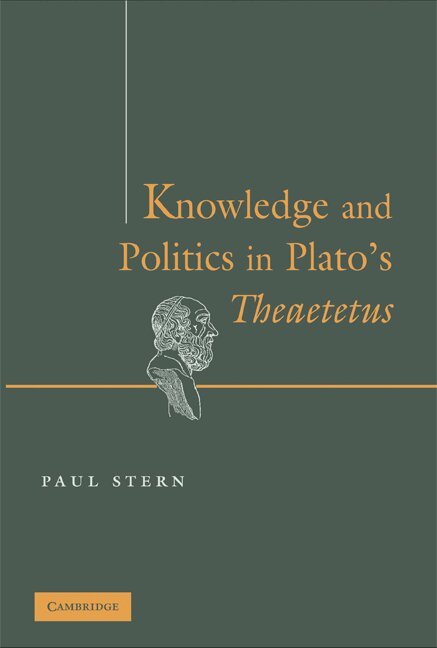
The Theaetetus is one of the most widely studied of any of the Platonic dialogues because its dominant theme concerns the significant philosophical question, what is knowledge? In this book Paul Stern provides a full-length treatment of its political character in relationship to this dominant theme. He argues that this approach sheds significant light on the distinctiveness of the Socratic way of life, with respect to both its initial justification and its ultimate character. More specifically, he argues that Socrates' revolutionary decision to subject political life to philosophic reflection, the decision that leads directly to his trial and execution, is based on his awareness of the elusiveness of comprehensive knowledge and the implications of that elusiveness for the validity of philosophic inquiry. This view of Socrates' rationale has important consequences for our understanding of political philosophy and of the validity of the life of reason itself.
Del 18 - Interpersonal Violence: The Practice Series
Preparing and Presenting Expert Testimony in Child Abuse Litigation
A Guide for Expert Witnesses and Attorneys
Inbunden, Engelska, 1997
3 736 kr
Skickas inom 3-6 vardagar
I found the book extremely interesting and informative. I was particularly impressed with the practical advice given in the text, advice that is not often found in the legal literature. . . . The writing is clear and compelling, and Paul Stern's style is perfect: he entertains as he educates. --Thomas D. Lyon, The Law School, University of Southern California, Los Angeles Called upon to educate courtroom decision makers, the expert witness provides testimony that is critical to achieving intelligent and just verdicts. Few judges and jury members possess the knowledge base needed to adequately understand complexities of human behavior as they relate to acts of interpersonal violence. While the lay witness can testify to actual incidents or observations, it is the "expert witness" who can provide forensic significance to such evidence. With this vital insight, courts can more accurately assess and weigh evidence, leading to more informed and appropriate decisions. Timely and accessible, The Preparation and Presentation of Expert Testimony clearly defines the need for and role of expert witnesses in litigation. Author Paul Stern demystifies the process while providing practical, stepwise guidance for those who want to prepare and present expert testimony with confidence and clarity. Beginning with discussions of the who, what, and why of expert testimony, the book also defines the role of the expert, including ethical and professional issues that may arise. Filled with tips, techniques, and case examples, chapters also show expert witnesses and attorneys how to prepare for court, how to present testimony in the most convincing and credible manner possible, how to deal with cross-examination, and how to cross-examine irresponsible expert witnesses. Anyone who may be called upon to testify--or participate in court in any way--in cases of interpersonal violence will find this book an invaluable resource. In particular, mental health professionals, medical personnel, scientists, investigators, attorneys, and judges will want to use the book to prepare themselves for the rigors involved in every aspect of expert testimony.
Del 18 - Interpersonal Violence: The Practice Series
Preparing and Presenting Expert Testimony in Child Abuse Litigation
A Guide for Expert Witnesses and Attorneys
Häftad, Engelska, 1997
2 623 kr
Skickas inom 3-6 vardagar
I found the book extremely interesting and informative. I was particularly impressed with the practical advice given in the text, advice that is not often found in the legal literature. . . . The writing is clear and compelling, and Paul Stern's style is perfect: he entertains as he educates. --Thomas D. Lyon, The Law School, University of Southern California, Los Angeles Called upon to educate courtroom decision makers, the expert witness provides testimony that is critical to achieving intelligent and just verdicts. Few judges and jury members possess the knowledge base needed to adequately understand complexities of human behavior as they relate to acts of interpersonal violence. While the lay witness can testify to actual incidents or observations, it is the "expert witness" who can provide forensic significance to such evidence. With this vital insight, courts can more accurately assess and weigh evidence, leading to more informed and appropriate decisions. Timely and accessible, The Preparation and Presentation of Expert Testimony clearly defines the need for and role of expert witnesses in litigation. Author Paul Stern demystifies the process while providing practical, stepwise guidance for those who want to prepare and present expert testimony with confidence and clarity. Beginning with discussions of the who, what, and why of expert testimony, the book also defines the role of the expert, including ethical and professional issues that may arise. Filled with tips, techniques, and case examples, chapters also show expert witnesses and attorneys how to prepare for court, how to present testimony in the most convincing and credible manner possible, how to deal with cross-examination, and how to cross-examine irresponsible expert witnesses. Anyone who may be called upon to testify--or participate in court in any way--in cases of interpersonal violence will find this book an invaluable resource. In particular, mental health professionals, medical personnel, scientists, investigators, attorneys, and judges will want to use the book to prepare themselves for the rigors involved in every aspect of expert testimony.
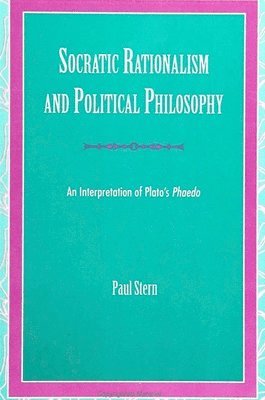
Socratic Rationalism and Political Philosophy
An Interpretation of Plato's Phaedo
Häftad, Engelska, 1993
382 kr
Tillfälligt slut
In this new interpretation of Plato's Phaedo, Paul Stern considers the dialogue as an invaluable source for understanding the distinctive character of Socratic rationalism. First, he demonstrates, contrary to the charge of such thinkers as Nietzsche, Heidegger, and Rorty, that Socrates' rationalism does not rest on the dogmatic presumption of the rationality of nature. Second, he shows that the distinctively Socratic mode of philosophizing is formulated precisely with a view to vindicating the philosophic life in the face of these uncertainties. And finally, he argues that this vindication results in a mode of inquiry that finds its ground in a clear understanding of the problematical but enduring human situation. Stern concludes that Socratic rationalism, aware as it is of the limits of reason, still provides a nondogmatic and nonarbitrary basis for human understanding.
809 kr
Skickas inom 10-15 vardagar
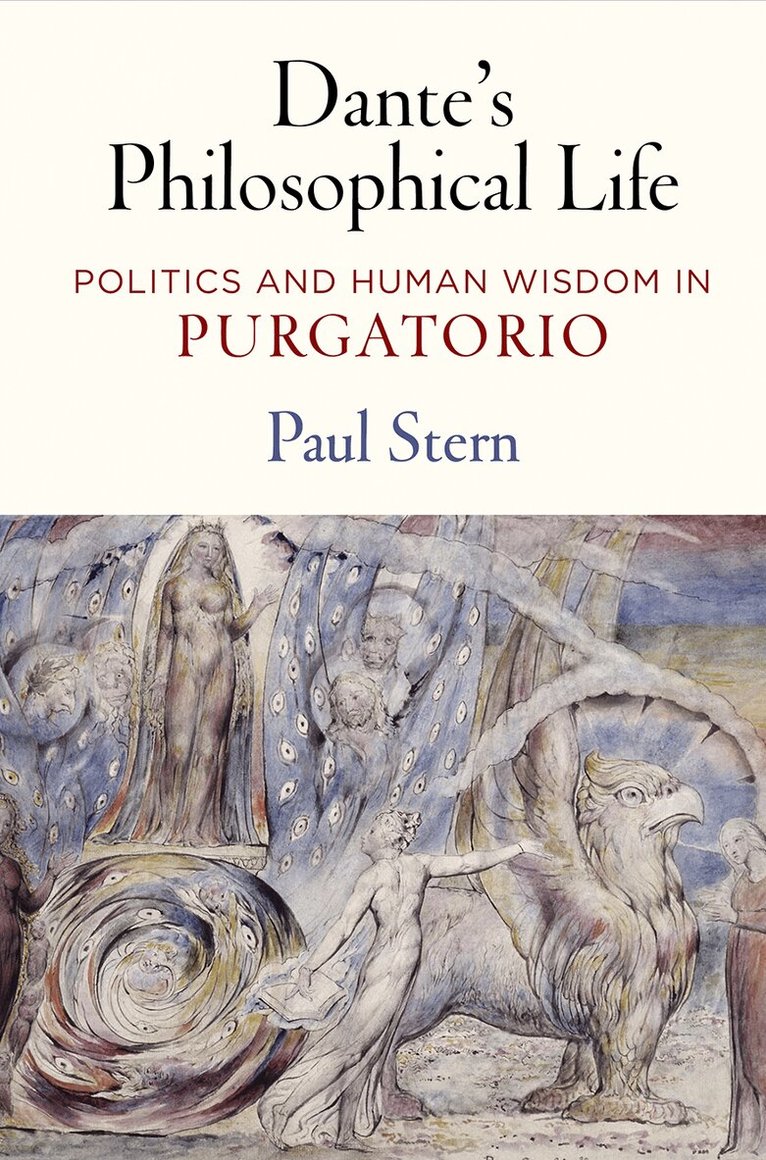
When political theorists teach the history of political philosophy, they typically skip from the ancient Greeks and Cicero to Augustine in the fifth century and Thomas Aquinas in the thirteenth, and then on to the origins of modernity with Machiavelli and beyond. Paul Stern aims to change this settled narrative and makes a powerful case for treating Dante Alighieri, arguably the greatest poet of medieval Christendom, as a political philosopher of the first rank.In Dante's Philosophical Life, Stern argues that Purgatorio's depiction of the ascent to Earthly Paradise, that is, the summit of Mount Purgatory, was intended to give instruction on how to live the philosophic life, understood in its classical form as "love of wisdom." As an object of love, however, wisdom must be sought by the human soul, rather than possessed. But before the search can be undertaken, the soul needs to consider from where it begins: its nature and its good. In Stern's interpretation of Purgatorio, Dante's intense concern for political life follows from this need, for it is law that supplies the notions of good that shape the soul's understanding and it is law, especially its limits, that provides the most evident display of the soul's enduring hopes.According to Stern, Dante places inquiry regarding human nature and its good at the heart of philosophic investigation, thereby rehabilitating the highest form of reasoned judgment or prudence. Philosophy thus understood is neither a body of doctrines easily situated in a Christian framework nor a set of intellectual tools best used for predetermined theological ends, but a way of life. Stern's claim that Dante was arguing for prudence against dogmatisms of every kind addresses a question of contemporary concern: whether reason can guide a life.
1 258 kr
Skickas inom 7-10 vardagar
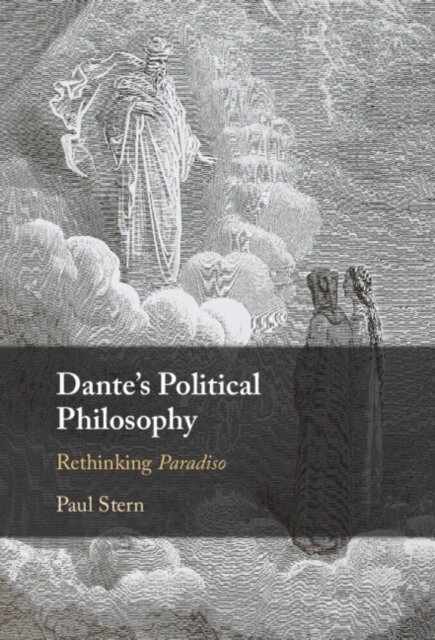
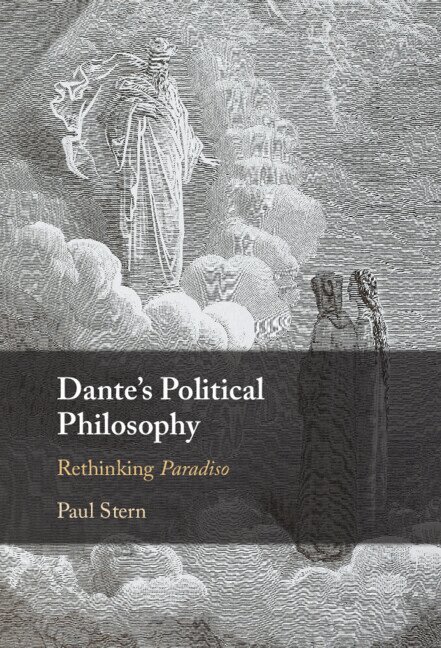
Dante's Divina Commedia/Divine Comedy (completed c. 1321) is considered one of the greatest works in Western literature, and its three canticles - Inferno, Purgatorio, and Paradiso - have had a powerful influence on subsequent literature and thought. Dante shares the classical idea that political philosophy aims to defend the philosophic life, and in Paradiso he does just that, defending philosophy, understood as a way of life, against its subordination to Christianity. Paul Stern shows the contribution Dante's reflection on political life makes to his theoretical defense of the philosophic life, a life whose character and goodness are conveyed by his intensely self-reflective poetry. On his account, Dante's approach can guide our judgment of any proposal for the comprehensive transformation of human existence. It enables us, in short, to think more clearly about just what we should mean by paradise.
Einfühlung und Association in der Neueren Ästhetik
Ein Beitrag zur Psychologischen Analyse der ästh
Inbunden, Engelska, 2022
390 kr
Skickas inom 5-8 vardagar
Einfühlung und Association in der Neueren Ästhetik
Ein Beitrag zur Psychologischen Analyse der ästh
Häftad, Engelska, 2022
203 kr
Skickas inom 5-8 vardagar
614 kr
Skickas inom 7-10 vardagar
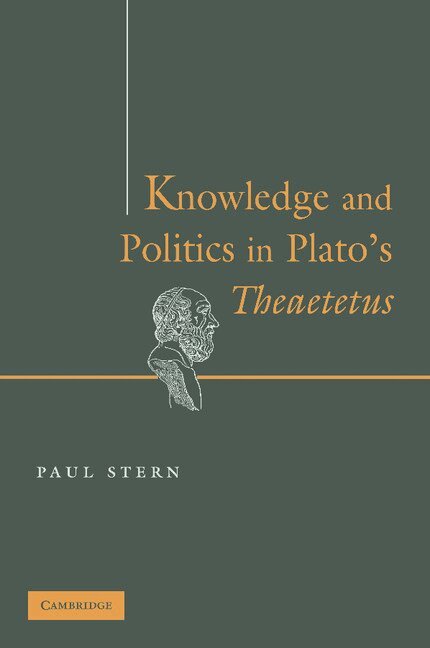
The Theaetetus is one of the most widely studied of any of the Platonic dialogues because its dominant theme concerns the significant philosophical question, what is knowledge? In this book Paul Stern provides a full-length treatment of its political character in relationship to this dominant theme. He argues that this approach sheds significant light on the distinctiveness of the Socratic way of life, with respect to both its initial justification and its ultimate character. More specifically, he argues that Socrates' revolutionary decision to subject political life to philosophic reflection, the decision that leads directly to his trial and execution, is based on his awareness of the elusiveness of comprehensive knowledge and the implications of that elusiveness for the validity of philosophic inquiry. This view of Socrates' rationale has important consequences for our understanding of political philosophy and of the validity of the life of reason itself.