Paul W. Werth - Böcker
Visar alla böcker från författaren Paul W. Werth. Handla med fri frakt och snabb leverans.
7 produkter
7 produkter
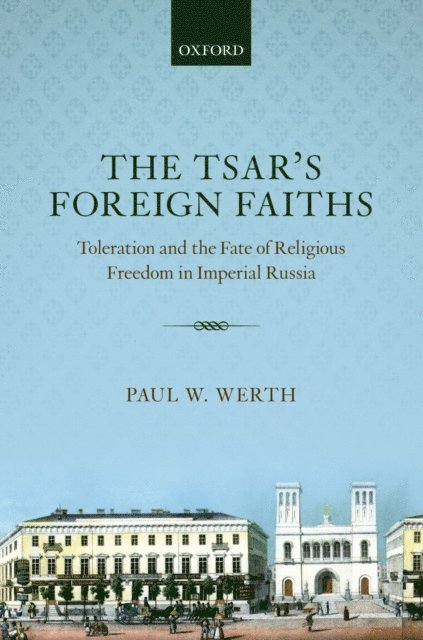
The Tsar's Foreign Faiths
Toleration and the Fate of Religious Freedom in Imperial Russia
Häftad, Engelska, 2016
651 kr
Skickas inom 5-8 vardagar
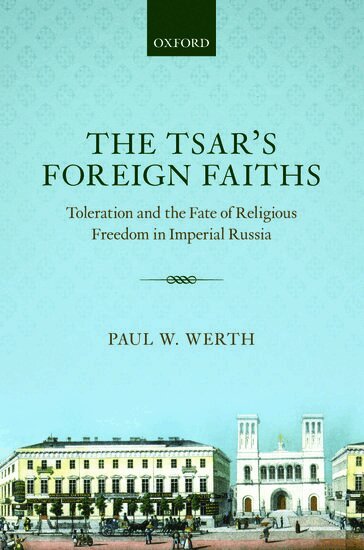
The Russian Empire presented itself to its subjects and the world as an Orthodox state, a patron and defender of Eastern Christianity. Yet the tsarist regime also lauded itself for granting religious freedoms to its many heterodox subjects, making 'religious toleration' a core attribute of the state's identity. The Tsar's Foreign Faiths shows that the resulting tensions between the autocracy's commitments to Orthodoxy and its claims to toleration became a defining feature of the empire's religious order. In this panoramic account, Paul W. Werth explores the scope and character of religious freedom for Russia's diverse non-Orthodox religions, from Lutheranism and Catholicism to Islam and Buddhism. Considering both rhetoric and practice, he examines discourses of religious toleration and the role of confessional institutions in the empire's governance. He reveals the paradoxical status of Russia's heterodox faiths as both established and 'foreign', and explains the dynamics that shaped the fate of newer conceptions of religious liberty after the mid-nineteenth century. If intellectual change and the shifting character of religious life in Russia gradually pushed the regime towards the acceptance of freedom of conscience, then statesmen's nationalist sentiments and their fears of 'politicized' religion impeded this development. Russia's religious order thus remained beset by contradiction on the eve of the Great War. Based on archival research in five countries and a vast scholarly literature, The Tsar's Foreign Faiths represents a major contribution to the history of empire and religion in Russia, and to the study of toleration and religious diversity in Europe.
633 kr
Skickas inom 7-10 vardagar
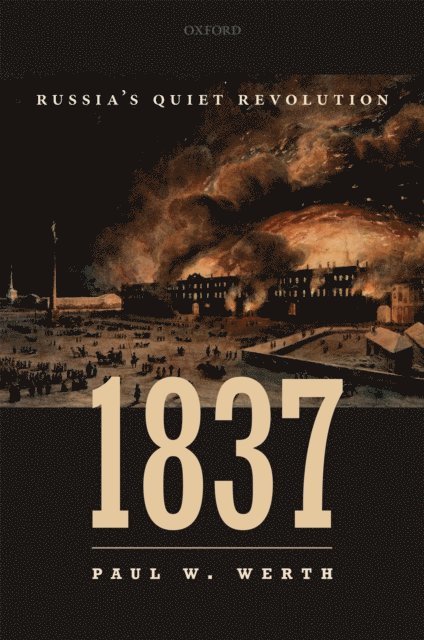
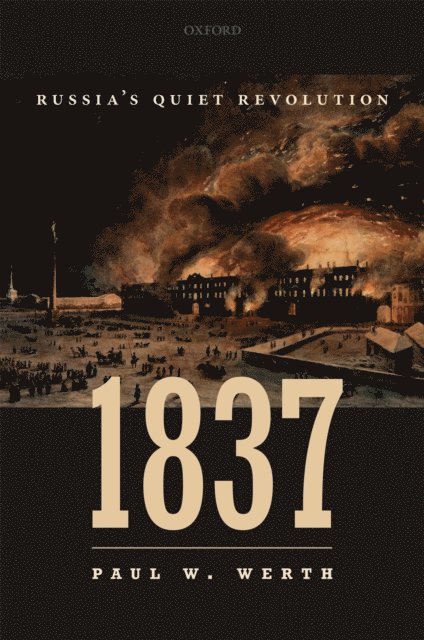
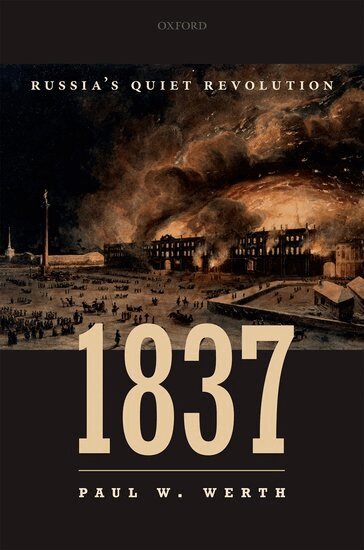
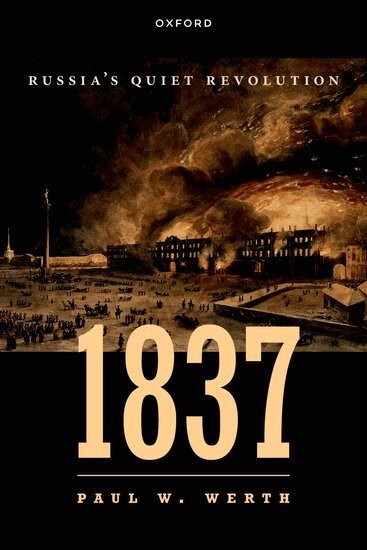
Historians often think of Russia before the 1860s in terms of conservative stasis, when the "gendarme of Europe" secured order beyond the country's borders and entrenched the autocratic system at home. This book offers a profoundly different vision of Russia under Nicholas I. Drawing on an extensive array of sources, it reveals that many of modern Russia's most distinctive and outstanding features can be traced back to an inconspicuous but exceptional year. Russia became what it did, in no small measure, because of 1837. The catalogue of the year's noteworthy occurrences extends from the realms of culture, religion, and ideas to those of empire, politics, and industry. Exploring these diverse issues and connecting seemingly divergent historical actors, Paul W. Werth reveals that the 1830s in Russia were a period of striking dynamism and consequence, and that 1837 was pivotal for the country's entry into the modern age. From the romantic death of Russia's greatest poet Alexander Pushkin in January to a colossal fire at the Winter Palace in December, Russia experienced much that was astonishing in 1837: the railway and provincial press appeared, Russian opera made its debut, Orthodoxy pushed westward, the first Romanov visited Siberia-and much else besides. The cumulative effect was profound. The country's integration accelerated, and a Russian nation began to emerge, embodied in new institutions and practices, within the larger empire. The result was a quiet revolution, after which Russia would never be the same.
279 kr
Skickas inom 5-8 vardagar
Historians often think of Russia before the 1860s in terms of conservative stasis, when the "gendarme of Europe" secured order beyond the country's borders and entrenched the autocratic system at home. This book offers a profoundly different vision of Russia under Nicholas I. Drawing on an extensive array of sources, it reveals that many of modern Russia's most distinctive and outstanding features can be traced back to an inconspicuous but exceptional year. Russia became what it did, in no small measure, because of 1837.The catalogue of the year's noteworthy occurrences extends from the realms of culture, religion, and ideas to those of empire, politics, and industry. Exploring these diverse issues and connecting seemingly divergent historical actors, Paul W. Werth reveals that the 1830s in Russia were a period of striking dynamism and consequence, and that 1837 was pivotal for the country's entry into the modern age. From the romantic death of Russia's greatest poet Alexander Pushkin in January to a colossal fire at the Winter Palace in December, Russia experienced much that was astonishing in 1837: the railway and provincial press appeared, Russian opera made its debut, Orthodoxy pushed westward, the first Romanov visited Siberia—and much else besides. The cumulative effect was profound. The country's integration accelerated, and a Russian nation began to emerge, embodied in new institutions and practices, within the larger empire. The result was a quiet revolution, after which Russia would never be the same.
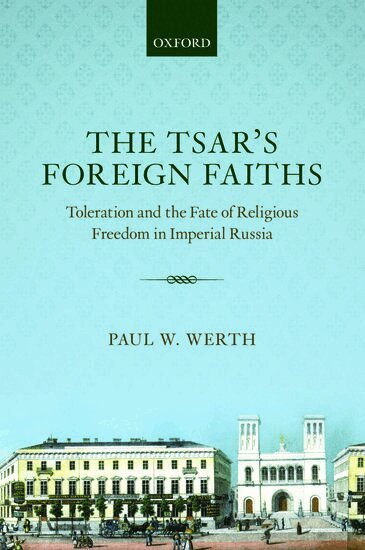
The Tsar's Foreign Faiths
Toleration and the Fate of Religious Freedom in Imperial Russia
Inbunden, Engelska, 2014
2 074 kr
Skickas inom 7-10 vardagar
The Russian Empire presented itself to its subjects and the world as an Orthodox state, a patron and defender of Eastern Christianity. Yet the tsarist regime also lauded itself for granting religious freedoms to its many heterodox subjects, making 'religious toleration' a core attribute of the state's identity. The Tsar's Foreign Faiths shows that the resulting tensions between the autocracy's commitments to Orthodoxy and its claims to toleration became a defining feature of the empire's religious order.In this panoramic account, Paul W. Werth explores the scope and character of religious freedom for Russia's diverse non-Orthodox religions, from Lutheranism and Catholicism to Islam and Buddhism. Considering both rhetoric and practice, he examines discourses of religious toleration and the role of confessional institutions in the empire's governance. He reveals the paradoxical status of Russia's heterodox faiths as both established and 'foreign', and explains the dynamics that shaped the fate of newer conceptions of religious liberty after the mid-nineteenth century. If intellectual change and the shifting character of religious life in Russia gradually pushed the regime towards the acceptance of freedom of conscience, then statesmen's nationalist sentiments and their fears of 'politicized' religion impeded this development. Russia's religious order thus remained beset by contradiction on the eve of the Great War. Based on archival research in five countries and a vast scholarly literature, The Tsar's Foreign Faiths represents a major contribution to the history of empire and religion in Russia, and to the study of toleration and religious diversity in Europe.
At the Margins of Orthodoxy
Mission, Governance, and Confessional Politics in Russia's Volga-Kama Region, 1827–1905
Inbunden, Engelska, 2001
1 194 kr
Skickas inom 10-15 vardagar
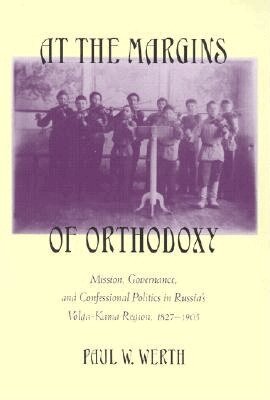
In a period of dramatic social change, when Orthodoxy and nationalism were the twin pillars of the Russian state, how did the tsarist bureaucracy govern an expansive realm inhabited by the peoples of many nations and ethnicities professing various faiths? Did the nature of tsarist rule change over time, and did it vary from region to region? Paul W. Werth considers these large questions in his survey of imperial Russian rule in the vast Volga-Kama region. First conquered in the sixteenth century, the Volga-Kama lands were by the nineteenth century both part of the Russian heartland and resolutely "other"—the home of a mix of Slavic, Finnic, and Turkic peoples where the urge to assimilate was always counterbalanced by determined efforts to preserve cultural and religious differences. The Volga-Kama thus poses the dilemmas of empire in especially complex and telling ways. Drawing on a wide range of printed and archival sources, Werth untangles and reconstructs this complicated history, focusing on the ways in which the tsarist state and Orthodox missions used conversion in their ongoing (and regularly frustrated) efforts to transform the region's Muslim and animist populations into imperial, Orthodox citizens. He shows that the regime became less concerned with religion and more concerned with secular attributes as the marker of cultural differences, an emphasis that would change dramatically in the early years of Soviet rule.
183 kr
Skickas inom 7-10 vardagar
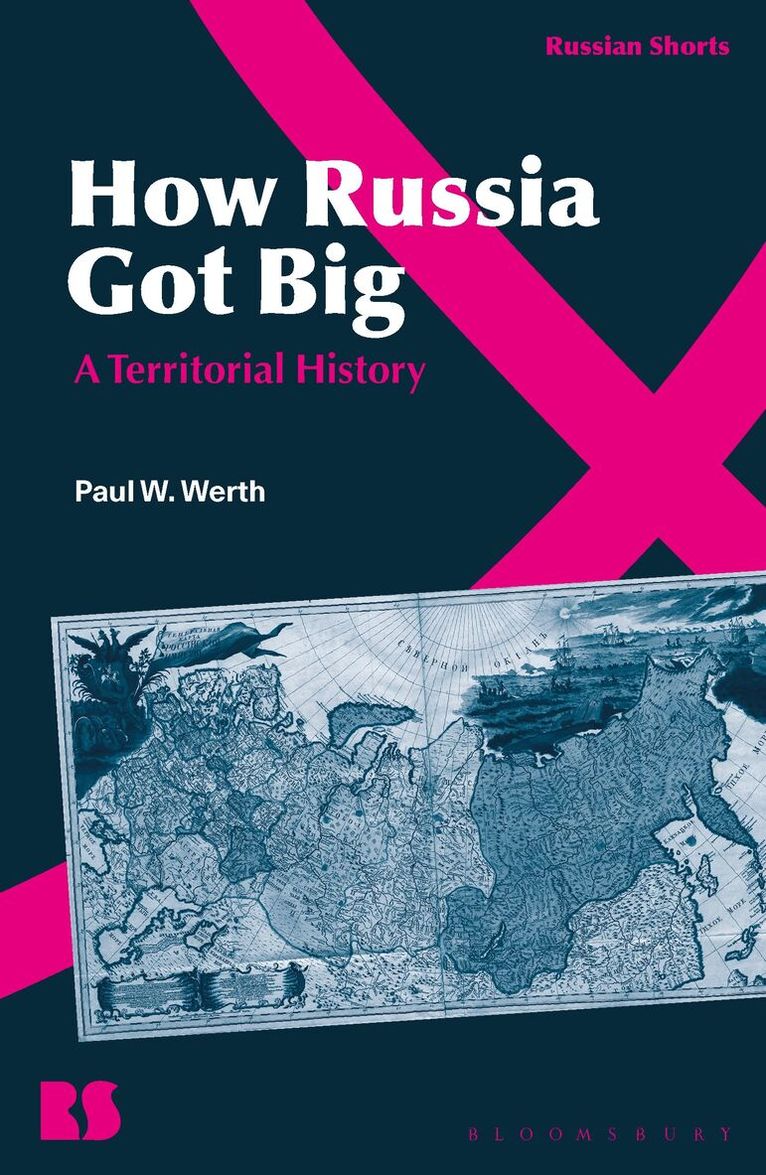
How Russia Got Big accounts for Russia's changing physical scope over some seven centuries.Even people who know little about Russia know that it is big. This concise book tells the story of how it became so. Beginning with the small principality of Moscow in the early 14th century, Paul W. Werth recounts the construction of the world's largest country—from Muscovy and the Russian Empire through the USSR to today’s Russian Federation—as well as its territorial retrenchment and even collapse on several occasions. Integrating geography, diplomacy, war, and imperial politics, the book ranges across three continents and recounts diverse interactions with neighboring polities and peoples. Werth likewise contemplates different ways of conceptualizing territorial possession and related understandings of sovereignty, authority, and belonging. The result, illustrated with 29 original maps, is a grand story from a bird's-eye view that reveals deeper rhythms to Russia’s territorial history involving alternations of enlargement and crisis—ones that continue in our own day.
626 kr
Skickas inom 10-15 vardagar
How Russia Got Big accounts for Russia's changing physical scope over some seven centuries.Even people who know little about Russia know that it is big. This concise book tells the story of how it became so. Beginning with the small principality of Moscow in the early 14th century, Paul W. Werth recounts the construction of the world's largest country—from Muscovy and the Russian Empire through the USSR to today’s Russian Federation—as well as its territorial retrenchment and even collapse on several occasions. Integrating geography, diplomacy, war, and imperial politics, the book ranges across three continents and recounts diverse interactions with neighboring polities and peoples. Werth likewise contemplates different ways of conceptualizing territorial possession and related understandings of sovereignty, authority, and belonging. The result, illustrated with 29 original maps, is a grand story from a bird's-eye view that reveals deeper rhythms to Russia’s territorial history involving alternations of enlargement and crisis—ones that continue in our own day.