Paul Workman – författare
Visar alla böcker från författaren Paul Workman. Handla med fri frakt och snabb leverans.
6 produkter
Principles of Molecular Oncology
Av Paul Workman, Olufunmilayo I. Olopade m. fl.
E-bok, 2008
2948 kr
Lägg i varukorg
Drawing on years of significant scientific advances and clinical developments, the editors of POMO III have thoroughly updated the highly praised first and second editions and added new chapters to reflect the knowledge emerging from research on genomics, proteomics, chemoprevention strategies, new …
Principles of Molecular Oncology
Av Miguel H. Bronchud, MaryAnn Foote m. fl.
Inbunden, 2007
2254 kr
Lägg i varukorg
Drawing on years of significant scientific advances and clinical developments, the editors of POMO III have thoroughly updated the highly praised first and second editions and added new chapters to reflect the knowledge emerging from research on genomics, proteomics, chemoprevention strategies, new …
New Approaches in Cancer Pharmacology: Drug Design and Development
Av Paul Workman
E-bok, 2012
739 kr
Lägg i varukorg
The European School of Oncology came into existence to respond to a need for information, education and training in the field of the diagnosis and treatment of cancer. There are two main reasons why such an initiative was considered necessary. Firstly, the teaching of oncology requires a rigorously …
New Approaches in Cancer Pharmacology: Drug Design and Development
Av Paul Workman
Häftad, 2012
569 kr
Lägg i varukorg
The European School of Oncology came into existence to respond to a need for information, education and training in the field of the diagnosis and treatment of cancer. There are two main reasons why such an initiative was considered necessary. Firstly, the teaching of oncology requires a rigorously …
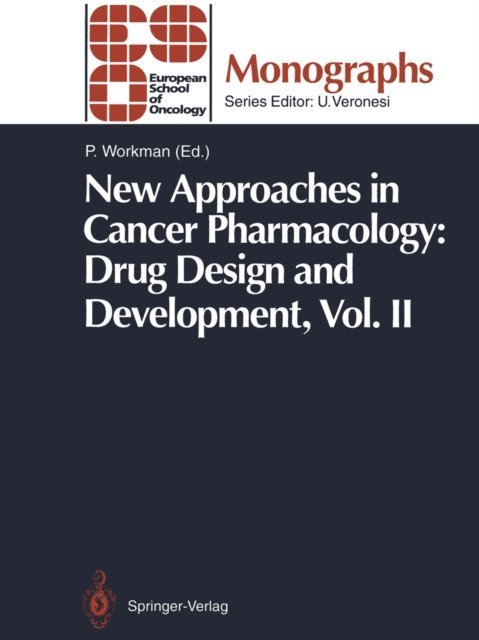
New Approaches in Cancer Pharmacology: Drug Design and Development
Vol. II
Av Paul Workman
E-bok, 2012
1502 kr
Lägg i varukorg
The European School of Oncology came into existence to respond to a need for information, education and training in the field of the diagnosis and treatment of cancer. There are two main reasons why such an initiative was considered necessary. Firstly, the teaching of oncology requires a rigorously …
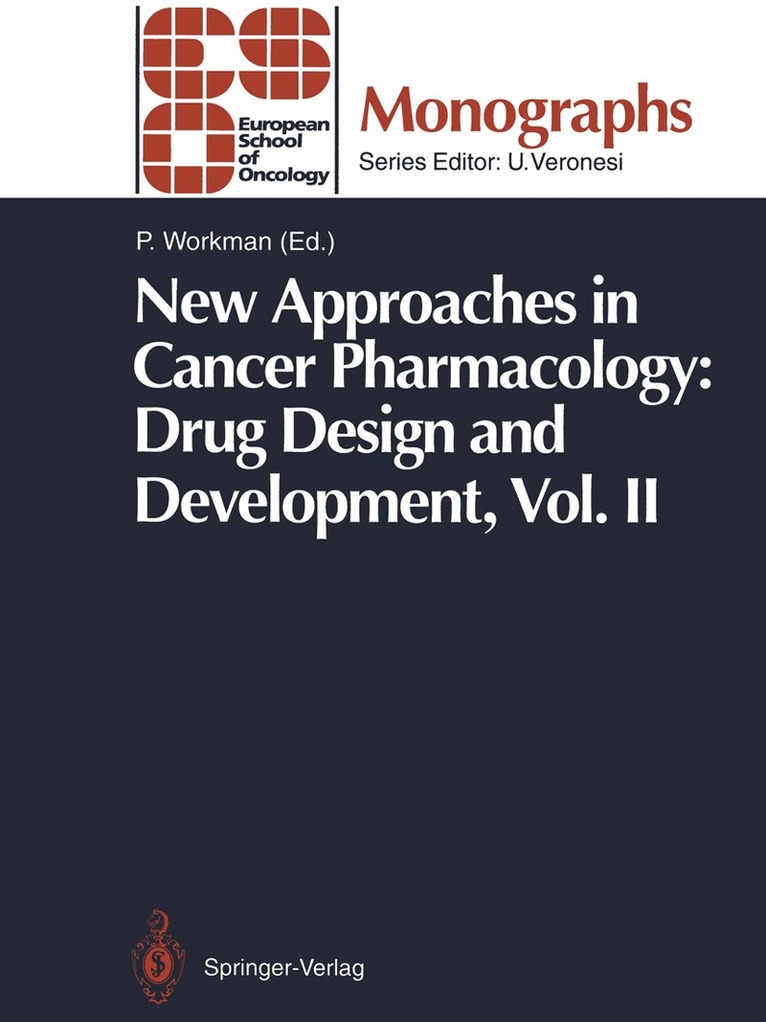
New Approaches in Cancer Pharmacology: Drug Design and Development
Vol. II
Häftad, 2011
1128 kr
Lägg i varukorg
The European School of Oncology came into existence to respond to a need for information, education and training in the field of the diagnosis and treatment of cancer. There are two main reasons why such an initiative was considered necessary. Firstly, the teaching of oncology requires a rigorously …