Pauline Fairclough - Böcker
Visar alla böcker från författaren Pauline Fairclough. Handla med fri frakt och snabb leverans.
15 produkter
15 produkter
1 499 kr
Skickas inom 3-6 vardagar
Shostakovich's lurid opera of sex, violence, and murder, Lady Macbeth of Mtsensk, is famous for being banned by personal decree of Joseph Stalin in 1936. Dramatically revived by Shostakovich's close friend, the cellist and Soviet émigré Mstislav Rostropovich in 1979, Lady Macbeth is now an international hit. In the first-ever study of this beloved but still-controversial opera, Pauline Fairclough asks whether we have become so distracted by its traumatic reception history that we overlook what is truly shocking about it: namely, Lady Macbeth's frank portrayal of sexual violence against women. Arguing that Shostakovich himself vacillated over how consensual its central sex scene should be, she grounds the opera's presentation of women, sexuality, and sexual violence in both real-life events and culture of early Soviet Russia. In a challenge to the still-potent Cold War Western assumption that only the banned original was faithful to Shostakovich's true creative impulse, Fairclough asks that we take another look at the composer's revision of the 1950s, Katerina Izmailova, which cut the sex scene altogether. In questioning the assertion - repeated even today - that Shostakovich simply "sanitized" Lady Macbeth for puritanical Soviet censors, she invites us to take the older composer at his word and consider whether, in fact, his revised opera solves the intractable dramaturgical problems that had caused him to make so many revisions to the sex scene when the opera was first staged in 1934.
189 kr
Skickas inom 5-8 vardagar
Shostakovich's lurid opera of sex, violence, and murder, Lady Macbeth of Mtsensk, is famous for being banned by personal decree of Joseph Stalin in 1936. Dramatically revived by Shostakovich's close friend, the cellist and Soviet émigré Mstislav Rostropovich in 1979, Lady Macbeth is now an international hit. In the first-ever study of this beloved but still-controversial opera, Pauline Fairclough asks whether we have become so distracted by its traumatic reception history that we overlook what is truly shocking about it: namely, Lady Macbeth's frank portrayal of sexual violence against women. Arguing that Shostakovich himself vacillated over how consensual its central sex scene should be, she grounds the opera's presentation of women, sexuality, and sexual violence in both real-life events and culture of early Soviet Russia. In a challenge to the still-potent Cold War Western assumption that only the banned original was faithful to Shostakovich's true creative impulse, Fairclough asks that we take another look at the composer's revision of the 1950s, Katerina Izmailova, which cut the sex scene altogether. In questioning the assertion - repeated even today - that Shostakovich simply "sanitized" Lady Macbeth for puritanical Soviet censors, she invites us to take the older composer at his word and consider whether, in fact, his revised opera solves the intractable dramaturgical problems that had caused him to make so many revisions to the sex scene when the opera was first staged in 1934.
1 199 kr
Skickas inom 7-10 vardagar
Music has always been profoundly transnational, transcending language barriers and crossing borders in ways that few other cultural artifacts can. In Unpredictable Encounters, leading scholars from around the world examine how Russia's musical culture has undergone this process, interrogating its engagement with other cultures from the 19th century to the present.Dedicated to the memory of the late Richard Taruskin, a leading scholar of Russian and East European music, Unpredictable Encounters considers how individuals, organizations, and cultural artifacts crossed seemingly immutable and impenetrable borders. Its contributors address several fundamental questions: about music as an activity operating along complex transnational networks, including what roles composers, performers, critics, and others played in the exchange of musical information; about music's roles in Russia's ongoing sociocultural and sociopolitical development; and, most broadly, about the methodological and ethical implications of studying Russia's engagement with the world – and vice versa – both musical and otherwise.Written against the backdrop of Russia's full-scale invasion of Ukraine in 2022, the essays in Unpredictable Encounters aim to confront Russia's colonial power and assess the effects of these events on the creation, performance, and reception of Russian music and musicians today.
522 kr
Skickas inom 7-10 vardagar
Music has always been profoundly transnational, transcending language barriers and crossing borders in ways that few other cultural artifacts can. In Unpredictable Encounters, leading scholars from around the world examine how Russia's musical culture has undergone this process, interrogating its engagement with other cultures from the 19th century to the present.Dedicated to the memory of the late Richard Taruskin, a leading scholar of Russian and East European music, Unpredictable Encounters considers how individuals, organizations, and cultural artifacts crossed seemingly immutable and impenetrable borders. Its contributors address several fundamental questions: about music as an activity operating along complex transnational networks, including what roles composers, performers, critics, and others played in the exchange of musical information; about music's roles in Russia's ongoing sociocultural and sociopolitical development; and, most broadly, about the methodological and ethical implications of studying Russia's engagement with the world – and vice versa – both musical and otherwise.Written against the backdrop of Russia's full-scale invasion of Ukraine in 2022, the essays in Unpredictable Encounters aim to confront Russia's colonial power and assess the effects of these events on the creation, performance, and reception of Russian music and musicians today.
Classics for the Masses
Shaping Soviet Musical Identity under Lenin and Stalin
Inbunden, Engelska, 2016
387 kr
Skickas inom 7-10 vardagar
Musicologist Pauline Fairclough explores the evolving role of music in shaping the cultural identity of the Soviet Union in a revelatory work that counters certain hitherto accepted views of an unbending, unchanging state policy of repression, censorship, and dissonance that existed in all areas of Soviet artistic endeavor. Newly opened archives from the Leninist and Stalinist eras have shed new light on Soviet concert life, demonstrating how the music of the past was used to help mold and deliver cultural policy, how “undesirable” repertoire was weeded out during the 1920s, and how Russian and non-Russian composers such as Mozart, Tchaikovsky, Wagner, Bach, and Rachmaninov were “canonized” during different, distinct periods in Stalinist culture. Fairclough’s fascinating study of the ever-shifting Soviet musical-political landscape identifies 1937 as the start of a cultural Cold War, rather than occurring post-World War Two, as is often maintained, while documenting the efforts of musicians and bureaucrats during this period to keep musical channels open between Russia and the West.
1 282 kr
Skickas inom 7-10 vardagar
When Shostakovich Studies was published in 1995, archival research in the ex-Soviet Union was only just beginning. Since that time, research carried out in the Shostakovich Family Archive, founded by the composer's widow Irina Antonovna Shostakovich in 1975, and the Glinka Museum of Musical Culture has significantly raised the level of international Shostakovich studies. At the same time, scholarly understanding of Soviet society and culture has developed significantly since 1991, and this has also led to a more nuanced appreciation of Shostakovich's public and professional identity. Shostakovich Studies 2 reflects these changes, focusing on documentary research, manuscript sources, film studies and musical analysis informed by literary criticism and performance. Contributions in this volume include chapters on Orango, Shostakovich's diary, behind-the-scenes events following Pravda's criticisms of Shostakovich in 1936 and a new memoir of Shostakovich by the Soviet poet Evgeniy Dolmatovsky, as well as analytical studies from a range of perspectives.
422 kr
Skickas inom 7-10 vardagar
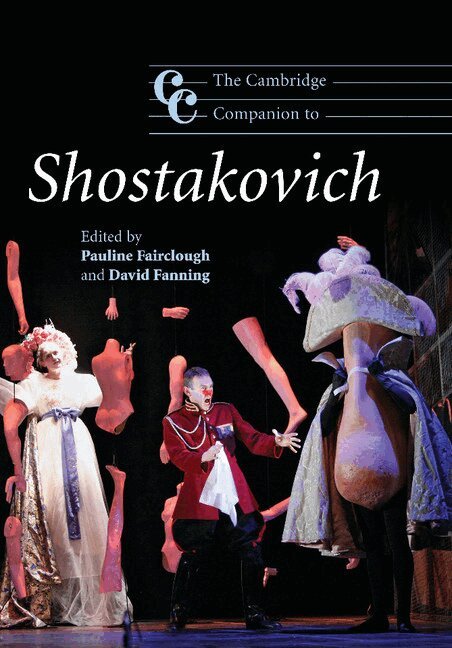
As the Soviet Union's foremost composer, Shostakovich's status in the West has always been problematic. Regarded by some as a collaborator, and by others as a symbol of moral resistance, both he and his music met with approval and condemnation in equal measure. The demise of the Communist state has, if anything, been accompanied by a bolstering of his reputation, but critical engagement with his multi-faceted achievements has been patchy. This Companion offers a starting point and a guide for readers who seek a fuller understanding of Shostakovich's place in the history of music. Bringing together an international team of scholars, the book brings research to bear on the full range of Shostakovich's musical output, addressing scholars, students and all those interested in this complex, iconic figure.
1 200 kr
Skickas inom 7-10 vardagar
As the Soviet Union's foremost composer, Shostakovich's status in the West has always been problematic. Regarded by some as a collaborator, and by others as a symbol of moral resistance, both he and his music met with approval and condemnation in equal measure. The demise of the Communist state has, if anything, been accompanied by a bolstering of his reputation, but critical engagement with his multi-faceted achievements has been patchy. This Companion offers a starting point and a guide for readers who seek a fuller understanding of Shostakovich's place in the history of music. Bringing together an international team of scholars, the book brings research to bear on the full range of Shostakovich's musical output, addressing scholars, students and all those interested in this complex, iconic figure.
2 219 kr
Skickas inom 10-15 vardagar
Composed in 1935-36 and intended to be his artistic 'credo', Shostakovich's Fourth Symphony was not performed publicly until 1961. Here, Dr Pauline Fairclough tackles head-on one of the most significant and least understood of Shostakovich's major works. She argues that the Fourth Symphony was radically different from its Soviet contemporaries in terms of its structure, dramaturgy, tone and even language, and therefore challenged the norms of Soviet symphonism at a crucial stage of its development. With the backing of prominent musicologists such as Ivan Sollertinsky, the composer could realistically have expected the premiere to have taken place, and may even have intended the symphony to be a model for a new kind of 'democratic' Soviet symphonism. Fairclough meticulously examines the score to inform a discussion of tonal and thematic processes, allusion, paraphrase and reference to musical types, or intonations. Such analysis is set deeply in the context of Soviet musical culture during the period 1932-36, involving Shostakovich's contemporaries Shebalin, Myaskovsky, Kabalevsky and Popov. A new method of analysis is also advanced here, where a range of Soviet and Western analytical methods are informed by the theoretical work of Shostakovich's contemporaries Viktor Shklovsky, Boris Tomashevsky, Mikhail Bakhtin and Ivan Sollertinsky, together with Theodor Adorno's late study of Mahler. In this way, the book will significantly increase an understanding of the symphony and its context.
789 kr
Skickas inom 10-15 vardagar
When considering the role music played in the major totalitarian regimes of the century it is music's usefulness as propaganda that leaps first to mind. But as a number of the chapters in this volume demonstrate, there is a complex relationship both between art music and politicised mass culture, and between entertainment and propaganda. Nationality, self/other, power and ideology are the dominant themes of this book, whilst key topics include: music in totalitarian regimes; music as propaganda; music and national identity; émigré communities and composers; music's role in shaping identities of 'self' and 'other' and music as both resistance to and instrument of oppression. Taking the contributions together it becomes clear that shared experiences such as war, dictatorship, colonialism, exile and emigration produced different, yet clearly inter-related musical consequences.
845 kr
Skickas inom 10-15 vardagar
Composed in 1935-36 and intended to be his artistic 'credo', Shostakovich's Fourth Symphony was not performed publicly until 1961. Here, Dr Pauline Fairclough tackles head-on one of the most significant and least understood of Shostakovich's major works. She argues that the Fourth Symphony was radically different from its Soviet contemporaries in terms of its structure, dramaturgy, tone and even language, and therefore challenged the norms of Soviet symphonism at a crucial stage of its development. With the backing of prominent musicologists such as Ivan Sollertinsky, the composer could realistically have expected the premiere to have taken place, and may even have intended the symphony to be a model for a new kind of 'democratic' Soviet symphonism. Fairclough meticulously examines the score to inform a discussion of tonal and thematic processes, allusion, paraphrase and reference to musical types, or intonations. Such analysis is set deeply in the context of Soviet musical culture during the period 1932-36, involving Shostakovich's contemporaries Shebalin, Myaskovsky, Kabalevsky and Popov. A new method of analysis is also advanced here, where a range of Soviet and Western analytical methods are informed by the theoretical work of Shostakovich's contemporaries Viktor Shklovsky, Boris Tomashevsky, Mikhail Bakhtin and Ivan Sollertinsky, together with Theodor Adorno's late study of Mahler. In this way, the book will significantly increase an understanding of the symphony and its context.
441 kr
Skickas inom 7-10 vardagar
When Shostakovich Studies was published in 1995, archival research in the ex-Soviet Union was only just beginning. Since that time, research carried out in the Shostakovich Family Archive, founded by the composer's widow Irina Antonovna Shostakovich in 1975, and the Glinka Museum of Musical Culture has significantly raised the level of international Shostakovich studies. At the same time, scholarly understanding of Soviet society and culture has developed significantly since 1991, and this has also led to a more nuanced appreciation of Shostakovich's public and professional identity. Shostakovich Studies 2 reflects these changes, focusing on documentary research, manuscript sources, film studies and musical analysis informed by literary criticism and performance. Contributions in this volume include chapters on Orango, Shostakovich's diary, behind-the-scenes events following Pravda's criticisms of Shostakovich in 1936 and a new memoir of Shostakovich by the Soviet poet Evgeniy Dolmatovsky, as well as analytical studies from a range of perspectives.
2 357 kr
Skickas inom 10-15 vardagar
When considering the role music played in the major totalitarian regimes of the century it is music's usefulness as propaganda that leaps first to mind. But as a number of the chapters in this volume demonstrate, there is a complex relationship both between art music and politicised mass culture, and between entertainment and propaganda. Nationality, self/other, power and ideology are the dominant themes of this book, whilst key topics include: music in totalitarian regimes; music as propaganda; music and national identity; émigré communities and composers; music's role in shaping identities of 'self' and 'other' and music as both resistance to and instrument of oppression. Taking the contributions together it becomes clear that shared experiences such as war, dictatorship, colonialism, exile and emigration produced different, yet clearly inter-related musical consequences.
255 kr
Skickas inom 5-8 vardagar
162 kr
Skickas
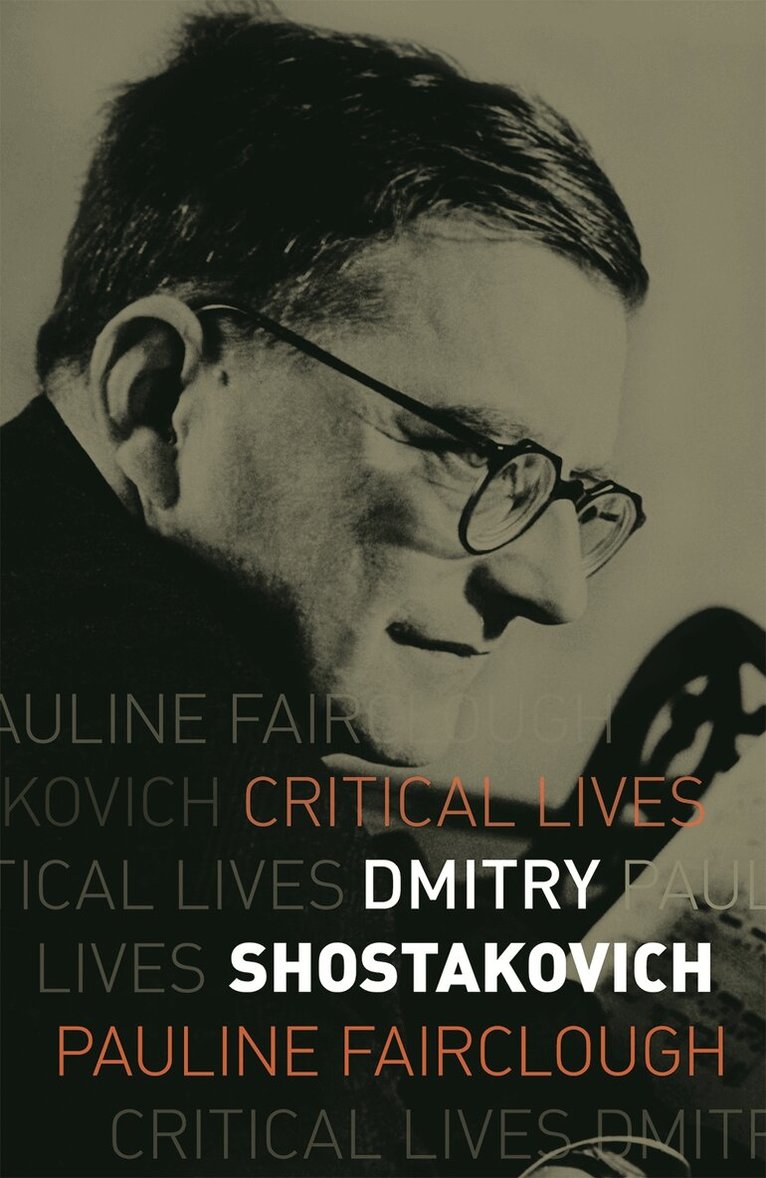
Dmitry Shostakovich was one of the most successful composers of the twentieth century – a musician who adapted as no other to the unique pressures of his age. By turns vilified and feted by Stalin during the Great Purge, Shostakovich twice came close to the whirlwind of political repression and he remained under political surveillance all his life, despite the many privileges and awards heaped upon him in old age. Yet Shostakovich had a remarkable ability to work with, rather than against, prevailing ideological demands, and it was this quality that ensured both his survival and his posterity.Pauline Fairclough’s absorbing new biography offers a vivid portrait that goes well beyond the habitual clichés of repression and suffering. Featuring quotations from previously unpublished letters as well as rarely-seen photographs, Fairclough provides a fresh insight into the music and life of a composer whose legacy, above all, was to have written some of the greatest and most cherished music of the last century.