P.D. van Loo – författare
Visar alla böcker från författaren P.D. van Loo. Handla med fri frakt och snabb leverans.
2 produkter
2 produkter
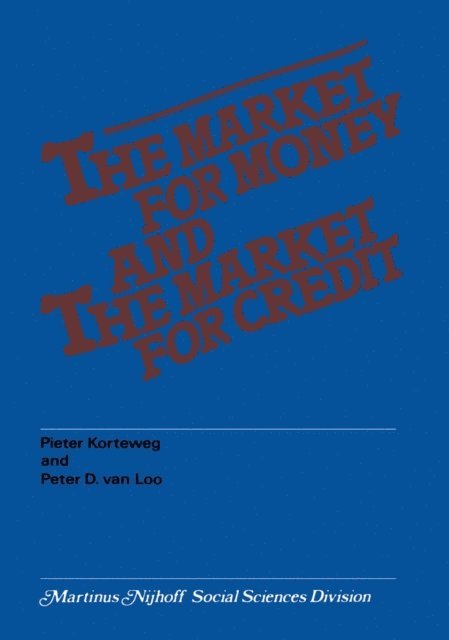
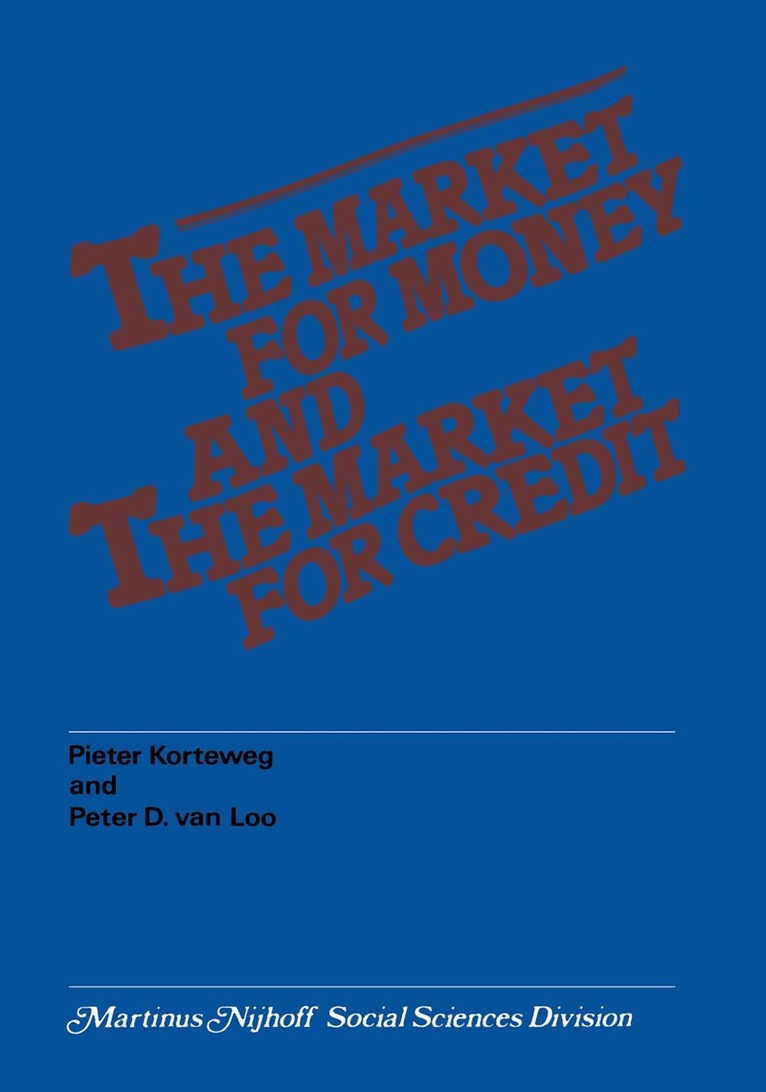
market for money and the market for credit
Theory, evidence and implications for Dutch monetary policy
Häftad, Engelska, 1977
1 094 kr
Skickas inom 10-15 vardagar
In most Keynesian-type macroeconomic models the financial sector is modelled in terms of money demand, money supply and money market equilibrium. The market equations for private and government debt, i.e. credit, are implicit in these models by virtue of Walras' Law and need not be explicitly specified. Market equations for existing physical capital, or shares in capital, are absent from these models on the tacit assumption that physical capital cannot be traded and, consequently, has no market price. Money in these models is a substitute for private and government debt, not for current output, let alone for physical capital (or claims thereon). Models with these characteristics have three basic weaknesses. They narrow down the monetary transmission mechanism to a small subset of assets. Moreover, they produce downward-biased estimates of the degree of controllability of money in open economies if money and claims on physical capital are actually substitutes. Finally, these models are ill-suited to analyze adequately the effects of open market operations and of financing government budget deficits which change the stocks of money and debt.
Del 5 - Monetary Monographs
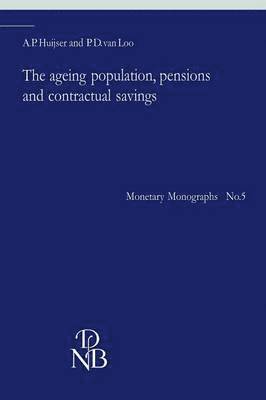
ageing population, pensions and contractual savings
Häftad, Engelska, 1986
550 kr
Skickas inom 10-15 vardagar
Since Malthus and the days of the long-term conceptions ofthe other classical econ omists - an era characterized so poignantly by W.]. Baumol as the magnificent dynamics - demography has not featured prominently in economics. Although admittedly post-war growth theories have always included the growth ofthe volume of labour as an exogenous variable in their considerations, this did not receive the explicit attention of economists. Analyses of the capital market tended even less to draw attention to or inspire interest in the demographic element, despite the fact that the savings behaviour ofindividuals is also determined by their life cycle, an interest ing demographic detail. This study by A.P. Huijser and PD. van Loo, staff members of the Econometric Research and Special Studies Department of the Nederlandsche Bank, is expressly based on expected demographic developments in the Netherlands until the year 2025. The study centres on the premise that the much-discussed ageing ofthe Dutch population will make heavy demands on the financing of old age pensions and on capital market supply, notably after the turn of the century. The link between pen sions and the capital market runs via the increase in the pension funds' premium reserve as the main component of contractual savings.