Pearl K. Ford Dowe – Författare
Visar alla böcker från författaren Pearl K. Ford Dowe. Handla med fri frakt och snabb leverans.
3 produkter
3 produkter
929 kr
Skickas inom 7-10 vardagar
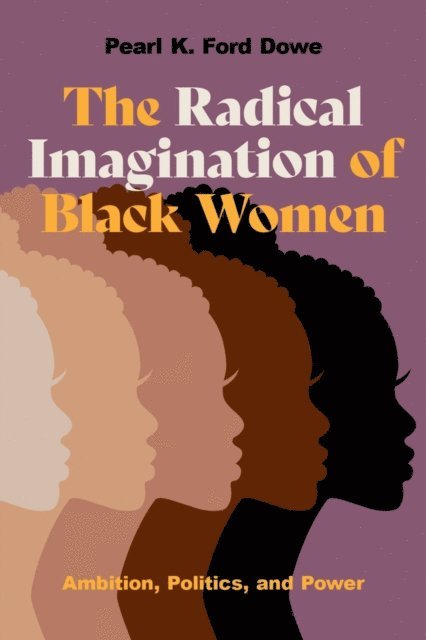
Historically, many Black women have viewed political participation as a means to achieve full equality and improve their status in US society. To this end, Black women have long engaged in politics through activism, voting, mobilization, and seeking office. Since 2016 the number of women, particularly Black women, seeking office has increased dramatically. Including interviews with Black women holding political office at the national, state, and local levels, as well as focus group data, The Radical Imagination of Black Women challenges political science's current approach to political ambition by exploring how Black women decide to seek political office. Pearl K. Ford Dowe argues that ambition for Black women cannot be measured only by political candidacies and ascents of the political chain of power. Black women are uniquely positioned within their communities to influence politics and public policy, which stems from unique variables of socialization, gender and racial identity, and marginalization that shape the political attitudes of Black women. Thus, Dowe asserts that Black women's political ambition often manifests outside formal politics, in activism and community building, a process that is linked to a wider radical vision for a full democracy. This is ambition that occurs in a specific context of marginalization, and both motivation and the conditions surrounding such motivation are critical to understanding the full range of Black women's political work. By focusing on Black women's experiences in elite politics, The Radical Imagination of Black Women is a much-needed intervention in the literature on electoral ambition, women in politics, and candidates and elections.
268 kr
Skickas inom 5-8 vardagar
Historically, many Black women have viewed political participation as a means to achieve full equality and improve their status in US society. To this end, Black women have long engaged in politics through activism, voting, mobilization, and seeking office. Since 2016 the number of women, particularly Black women, seeking office has increased dramatically. Including interviews with Black women holding political office at the national, state, and local levels, as well as focus group data, The Radical Imagination of Black Women challenges political science's current approach to political ambition by exploring how Black women decide to seek political office. Pearl K. Ford Dowe argues that ambition for Black women cannot be measured only by political candidacies and ascents of the political chain of power. Black women are uniquely positioned within their communities to influence politics and public policy, which stems from unique variables of socialization, gender and racial identity, and marginalization that shape the political attitudes of Black women. Thus, Dowe asserts that Black women's political ambition often manifests outside formal politics, in activism and community building, a process that is linked to a wider radical vision for a full democracy. This is ambition that occurs in a specific context of marginalization, and both motivation and the conditions surrounding such motivation are critical to understanding the full range of Black women's political work. By focusing on Black women's experiences in elite politics, The Radical Imagination of Black Women is a much-needed intervention in the literature on electoral ambition, women in politics, and candidates and elections.
Remaking the Democratic Party
Lyndon B. Johnson as a Native-Son Presidential Candidate
Häftad, Engelska, 2018
564 kr
Skickas inom 7-10 vardagar
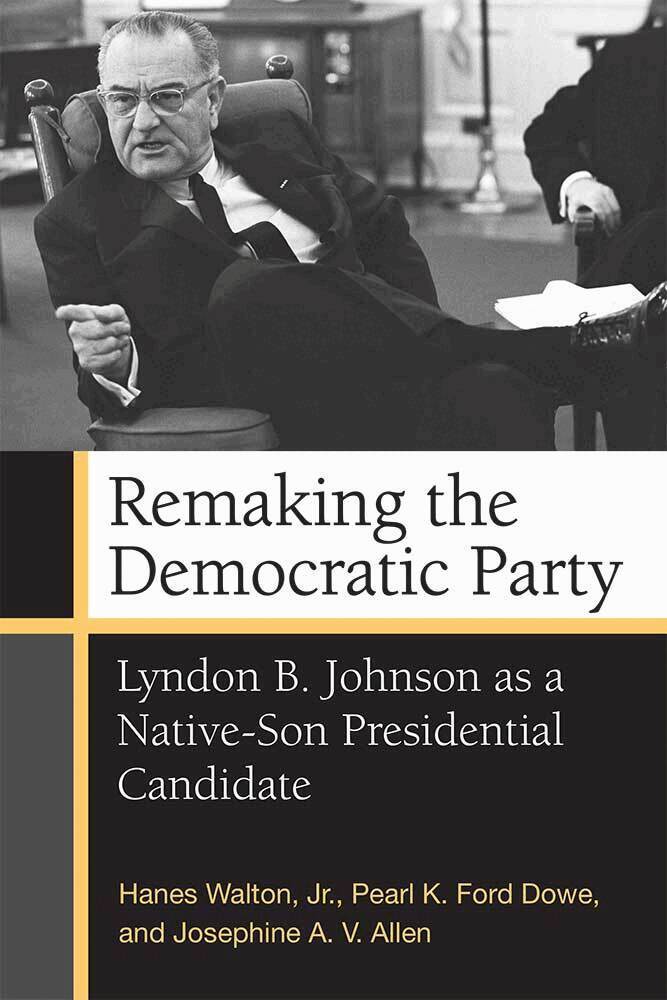
A continuation of Hanes Walton Jr.’s work on Southern Democratic presidents, Remaking the Democratic Party analyzes the congressional and presidential elections of Lyndon Baines Johnson. This study builds upon the general theory of the native-son phenomenon to demonstrate that a Southern native-son can win the presidency without the localism evident in the elections of Bill Clinton and Jimmy Carter.Although ridiculed by contemporaries for his apparent lack of control over formal party politics and the national committee, Johnson excelled at leading the Democratic Party’s policy agenda. While a senator and as president, Johnson advocated for—and secured—liberal social welfare and civil rights legislation, forcing the party to break with its Southern tradition of elitism, conservatism, and white supremacy. In a way, Johnson set the terms for the continuing partisan battle because, by countering the Democrats’ new ideology, the Republican Party also underwent a transformation.