Hanes Walton – författare
Visar alla böcker från författaren Hanes Walton. Handla med fri frakt och snabb leverans.
2 produkter
2 produkter
Häftad, Engelska, 2018
570 kr
Skickas inom 5-8 vardagar
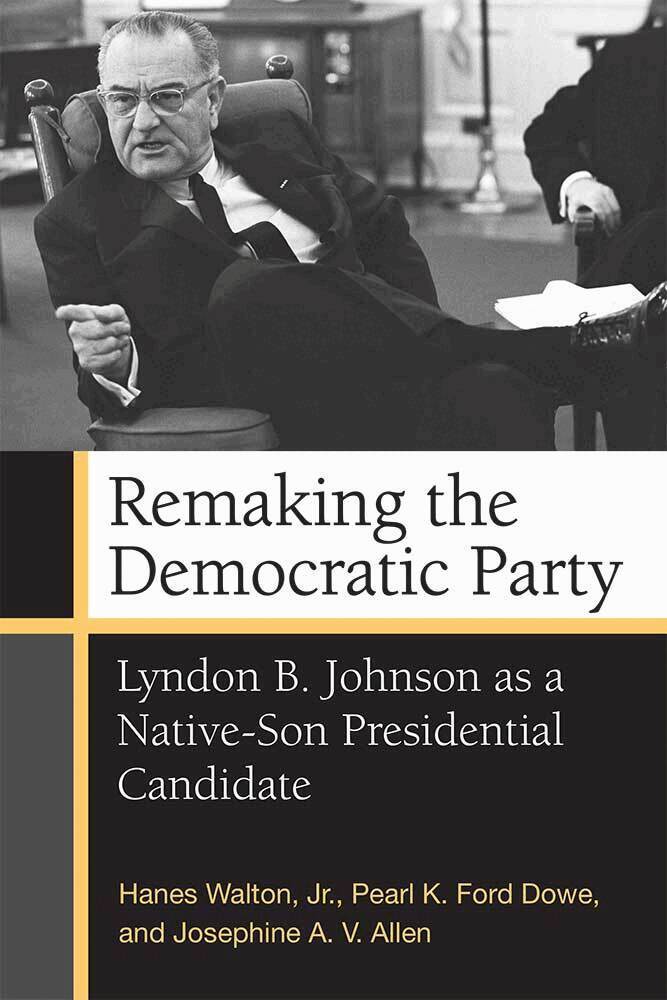
A continuation of Hanes Walton Jr.’s work on Southern Democratic presidents, Remaking the Democratic Party analyzes the congressional and presidential elections of Lyndon Baines Johnson. This study builds upon the general theory of the native-son phenomenon to demonstrate that a Southern native-son can win the presidency without the localism evident in the elections of Bill Clinton and Jimmy Carter.Although ridiculed by contemporaries for his apparent lack of control over formal party politics and the national committee, Johnson excelled at leading the Democratic Party’s policy agenda. While a senator and as president, Johnson advocated for—and secured—liberal social welfare and civil rights legislation, forcing the party to break with its Southern tradition of elitism, conservatism, and white supremacy. In a way, Johnson set the terms for the continuing partisan battle because, by countering the Democrats’ new ideology, the Republican Party also underwent a transformation.
6 179 kr
Skickas
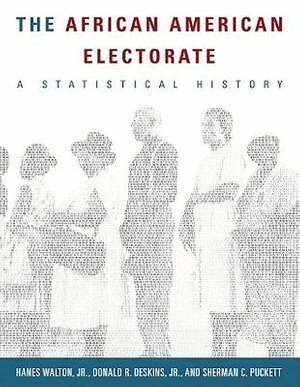
How have African Americans voted over time? What types of candidates and issues have been effective in drawing people to vote? These are just two of the questions that The African American Electorate: A Statistical History attempts to answer by bringing together all of the extant, fugitive and recently discovered registration data on African-American voters from Colonial America to the present. This pioneering work also traces the history of the laws dealing with enfranchisement and disenfranchisement of African Americans and provides the election return data for African-American candidates in national and sub-national elections over this same time span.Combining insightful narrative, tabular data, and original maps, The African American Electorate offers students and researchers the opportunity, for the first time, to explore the relationship between voters and political candidates, identify critical variables, and situate African Americans’ voting behavior and political phenomena in the context of America’s political history.