Peder Roberts - Böcker
Visar alla böcker från författaren Peder Roberts. Handla med fri frakt och snabb leverans.
5 produkter
5 produkter
1 682 kr
Skickas inom 7-10 vardagar
The Cambridge History of the Polar Regions is a landmark collection drawing together the history of the Arctic and Antarctica from the earliest times to the present. Structured as a series of thematic chapters, an international team of scholars offer a range of perspectives from environmental history, the history of science and exploration, cultural history, and the more traditional approaches of political, social, economic, and imperial history. The volume considers the centrality of Indigenous experience and the urgent need to build action in the present on a thorough understanding of the past. Using historical research based on methods ranging from archives and print culture to archaeology and oral histories, these essays provide fresh analyses of the discovery of Antarctica, the disappearance of Sir John Franklin, the fate of the Norse colony in Greenland, the origins of the Antarctic Treaty, and much more. This is an invaluable resource for anyone interested in the history of our planet.
556 kr
Skickas inom 10-15 vardagar
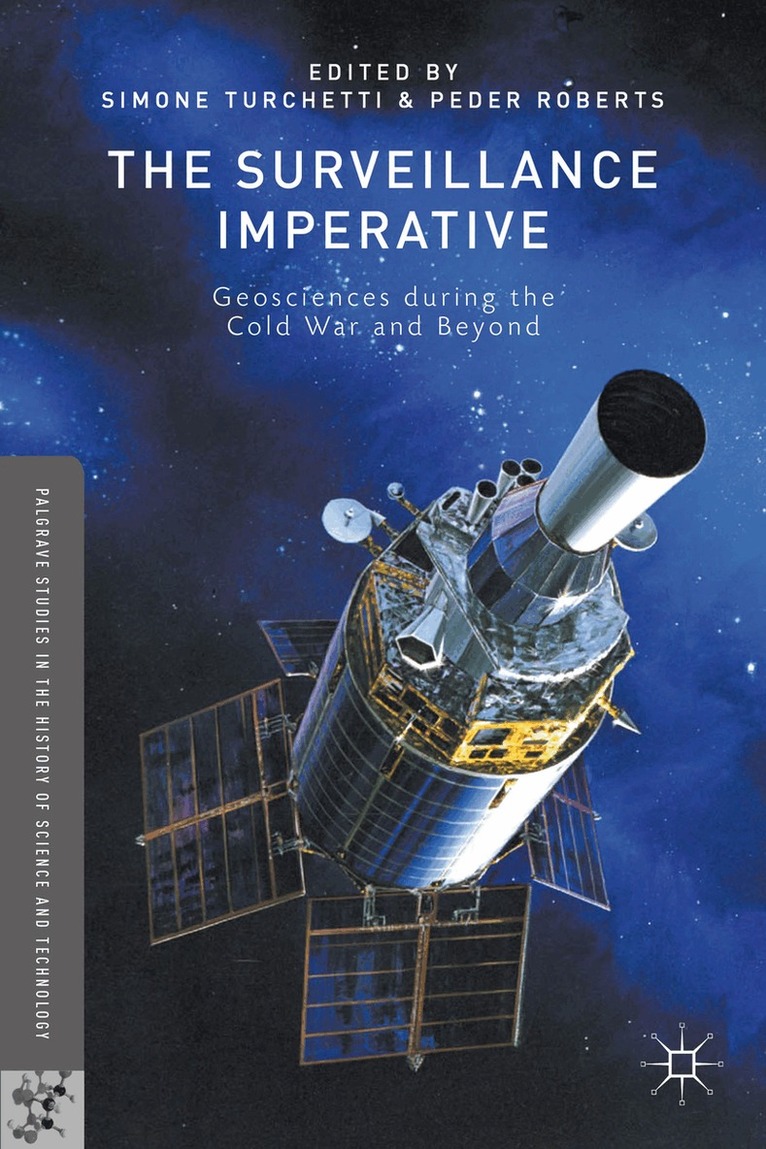
Surveillance is a key notion for understanding power and control in the modern world, but it has been curiously neglected by historians of science and technology. Using the overarching concept of the "surveillance imperative," this collection of essays offers a new window on the evolution of the environmental sciences during and after the Cold War.
2 085 kr
Skickas inom 3-6 vardagar
This book explores how the concept of colonialism can help to understand the past and present of Antarctica, and how Antarctica may illuminate the limits of colonialism as an analytic concept. Despite lacking an indigenous population, the continent has been shaped by many of the same political and economic forces that have defined the rest of the world – notwithstanding its unique governance arrangement, the Antarctic Treaty System. The book provides a fresh and timely set of contributions that critically explore different practices, attitudes and logics that suggest that colonialism may have been and may still be present in Antarctica, ranging from religion to material culture to the treatment of animals. The chapters also explore the connection between colonialism and cognate terms like capitalism, socialism, nationalism, and environmentalism.An electronic edition of this book is freely available under a Creative Commons (CC BY-NC-ND) licence.
726 kr
Skickas inom 3-6 vardagar
This book explores how the concept of colonialism can help to understand the past and present of Antarctica, and how Antarctica may illuminate the limits of colonialism as an analytic concept. Despite lacking an indigenous population, the continent has been shaped by many of the same political and economic forces that have defined the rest of the world – notwithstanding its unique governance arrangement, the Antarctic Treaty System. The book provides a fresh and timely set of contributions that critically explore different practices, attitudes and logics that suggest that colonialism may have been and may still be present in Antarctica, ranging from religion to material culture to the treatment of animals. The chapters also explore the connection between colonialism and cognate terms like capitalism, socialism, nationalism, and environmentalism.An electronic edition of this book is freely available under a Creative Commons (CC BY-NC-ND) licence.
3 949 kr
Skickas inom 7-10 vardagar
The Antarctic and Southern Ocean are hotspots for contemporary endeavours to oversee 'the last frontier' of the Earth. The Handbook on the Politics of Antarctica offers a wide-ranging and comprehensive overview of the governance, geopolitics, international law, cultural studies and history of the region. Written by leading experts, the Handbook brings together the very best interdisciplinary social science and humanities scholarship on the Antarctic and Southern Ocean, offering a definitive statement on why the world's only uninhabited continent attracts global attention in terms of science, politics and natural resources - and what can be done to manage it. Four sections take readers from the earliest human encounters to contemporary resource exploitation and climate change through thematic and critical analyses: the exploration, exploitation and mapping of Antarctica; its emergence as an object of global interest; human behaviour and environmental change in response to managerial interventions; and a contemplation of possible futures for Antarctica. All topics are covered in accessible yet authoritative contributions. Specialist readers in polar regions, public international law, geography, geopolitics and international relations will appreciate this uniquely comprehensive and up-to-date examination of politics in and around Antarctica, as will scholars with interest in areas beyond national jurisdiction, peace/co-operation studies and the interface between public policy and science.Contributors include: A.E. Abdenur, D.G. Ainley, A. Antonello, D. Avango, P.J. Beck, M. Benwell, L.E. Bloom, A.-M. Brady, C. Braun, N. Brazell, C. Brooks, I. Cardone, S.L. Chown, C. Collis, R. Davis, K. Dodds, A. Elzinga, F. Francioni, M. Haward, A.D. Hemmings, F. Hertel, A. Howkins, J. Jabour, S. Kaye, R.D. Launius, E. Leane, D. Liggett, H. Nielsen, E. Nyman, O. Olsson, H. Österblom, H.-U. Peter, P. Roberts, R. Roura, J.F. Salazar, D. Sampaio, S.V. Scott, T. Stephens, E. Stewart, L.-M. van der Watt, N. Vanstappen, P. Vigni, R. Wolfrum, J. Wouters, O. Young