Peter Duus - Böcker
Visar alla böcker från författaren Peter Duus. Handla med fri frakt och snabb leverans.
9 produkter
9 produkter
Del 4 - Twentieth Century Japan: The Emergence of a World Power
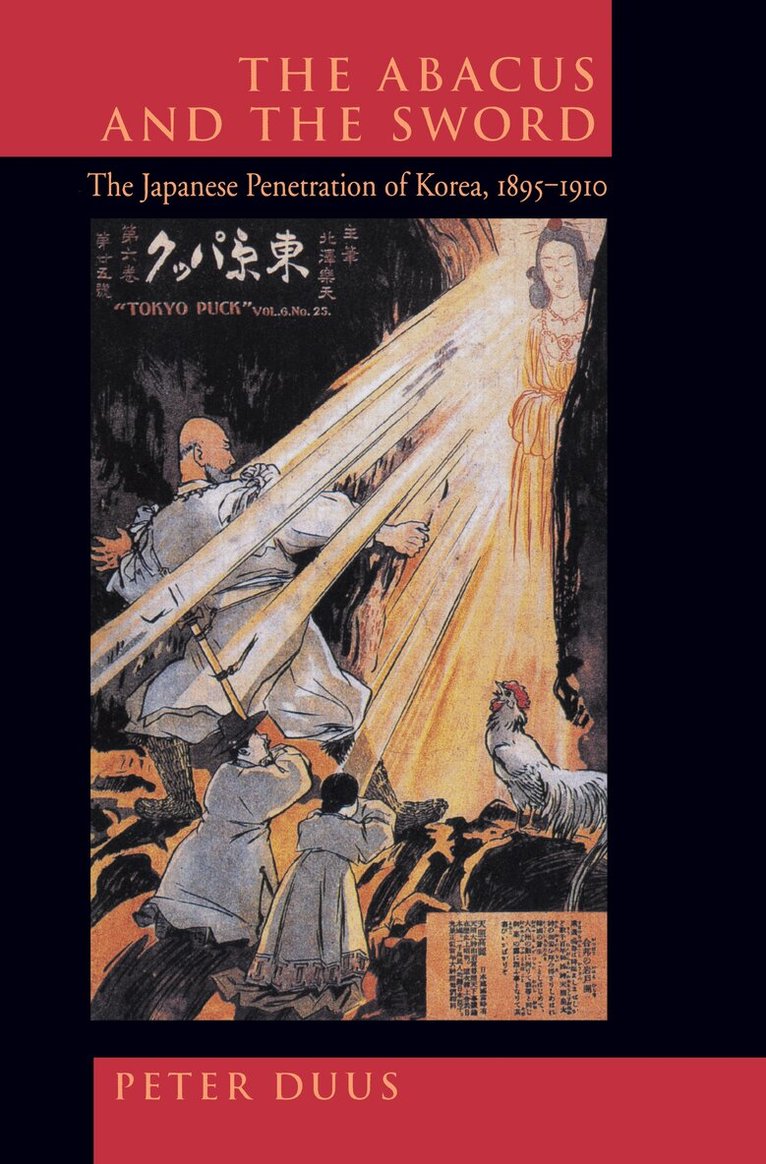
Abacus and the Sword
The Japanese Penetration of Korea, 1895-1910
Häftad, Engelska, 1998
639 kr
Skickas inom 3-6 vardagar
What forces were behind Japan's emergence as the first non-Western colonial power at the turn of the twentieth century? Peter Duus brings a new perspective to Meiji expansionism in this pathbreaking study of Japan's acquisition of Korea, the largest of its colonial possessions. He shows how Japan's drive for empire was part of a larger goal to become the economic, diplomatic, and strategic equal of the Western countries who had imposed a humiliating treaty settlement on the country in the 1850s. Duus maintains that two separate but interlinked processes, one political/military and the other economic, propelled Japan's imperialism. Every attempt at increasing Japanese political influence licensed new opportunities for trade, and each new push for Japanese economic interests buttressed, and sometimes justified, further political advances. The sword was the servant of the abacus, the abacus the agent of the sword. While suggesting that Meiji imperialism shared much with the Western colonial expansion that provided both model and context, Duus also argues that it was "backward imperialism" shaped by a sense of inferiority vis-a-vis the West.Along with his detailed diplomatic and economic history, Duus offers a unique social history that illuminates the motivations and lifestyles of the overseas Japanese of the time, as well as the views that contemporary Japanese had of themselves and their fellow Asians.
Del 19 - Twentieth Century Japan: The Emergence of a World Power
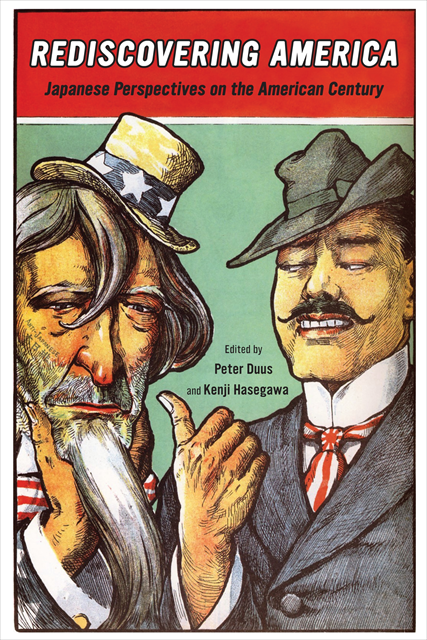
Rediscovering America
Japanese Perspectives on the American Century
Inbunden, Engelska, 2011
1 137 kr
Skickas inom 3-6 vardagar
In this extraordinary collection of writings, covering the period from 1878 to 1989, a wide range of Japanese visitors to the United States offer their vivid, and sometimes surprising perspectives on Americans and American society. Peter Duus and Kenji Hasegawa have selected essays and articles by Japanese from many walks of life: writers and academics, bureaucrats and priests, politicians and journalists, businessmen, philanthropists, artists. Their views often reflect power relations between America and Japan, particularly during the wartime and postwar periods, but all of them dealt with common themes - America's origins, its ethnic diversity, its social conformity, its peculiar gender relations, its vast wealth, and its cultural arrogance - making clear that while Japanese observers often regarded the U.S. as a mentor, they rarely saw it as a role model.
Del 19 - Twentieth Century Japan: The Emergence of a World Power
Rediscovering America
Japanese Perspectives on the American Century
Häftad, Engelska, 2011
290 kr
Skickas inom 7-10 vardagar
In this extraordinary collection of writings, covering the period from 1878 to 1989, a wide range of Japanese visitors to the United States offer their vivid, and sometimes surprising perspectives on Americans and American society. Peter Duus and Kenji Hasegawa have selected essays and articles by Japanese from many walks of life: writers and academics, bureaucrats and priests, politicians and journalists, businessmen, philanthropists, artists. Their views often reflect power relations between America and Japan, particularly during the wartime and postwar periods, but all of them dealt with common themes - America's origins, its ethnic diversity, its social conformity, its peculiar gender relations, its vast wealth, and its cultural arrogance - making clear that while Japanese observers often regarded the U.S. as a mentor, they rarely saw it as a role model.
1 096 kr
Skickas inom 7-10 vardagar
Japan has played a key role in spurring this transformation. Once an isolated island society, little known to its neighbours and practically unknown to the West, Japan has emerged today as a leading economic power. The country's rise to a position of international prominence has not been a smooth process, however - it has come only after a period of turmoil and conflict. Volume 6 provides a general introduction to Japan's history during the first three quarters of the twentieth century, with emphasis on political, economic, social and intellectual trends. Leading historians have contributed essays dealing with the development of domestic politics, particularly the politics of representative institutions, and Japan's relations with the outside world, including its prewar territorial expansion and aggrandizement on the Asian continent. Although written by specialists, this volume will be an important reference work for general readers as well as scholars and students of modern Japanese history.
388 kr
Skickas inom 7-10 vardagar
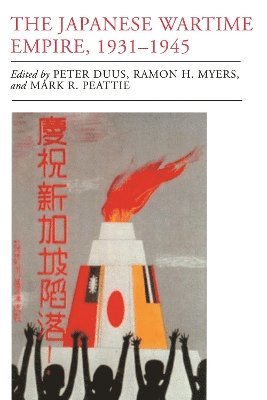
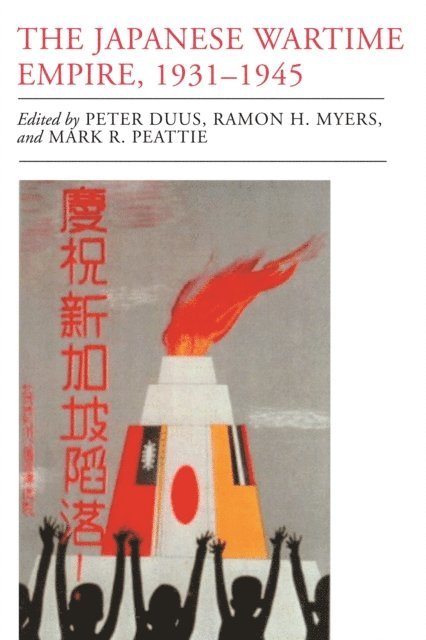
With this book the editors complete the three-volume series on modern Japanese colonialism and imperialism that began with The Japanese Colonial Empire, 1895-1945 (Princeton, 1983) and The Japanese Informal Empire in China, 1895-1937 (Princeton, 1989). The Japanese military takeover in Manchuria between 1931 and 1932 was a critical turning point in East Asian history. It marked the first surge of Japanese aggression beyond the boundaries of its older colonial empire and set Japan on a collision course with China and Western colonial powers from 1937 through 1945. These essays seek to illuminate some of the more significant processes and institutions during the period when the empire was at war: the creation of a Japanese-dominated East Asian economic bloc centered in northeast Asia, the mobilization of human and physical resources in the older established areas of Japanese colonial rule, and the penetration and occupation of Southeast Asia. Introduced by Peter Duus, the volume contains four sections: Japan's Wartime Empire and the Formal Colonies (Carter J. Eckert and Wan-yao Chou), Japan's Wartime Empire and Northeast Asia (Louise Young, Y. Tak Matsusaka, Ramon H.Myers, and Takafusa Nakamura), Japan's Wartime Empire and Southeast Asia (Mark R. Peattie, E. Bruce Reynolds, and Ken'ichi Goto), and Japan's Wartime Empire in Other Perspectives (George Hicks, Hideo Kobayashi, and L. H. Gann).
412 kr
Skickas inom 7-10 vardagar
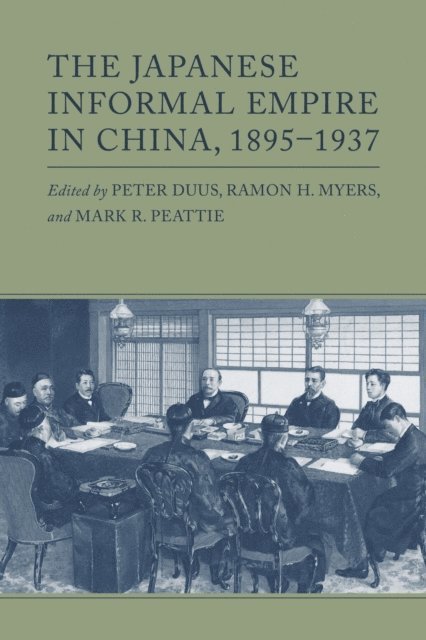
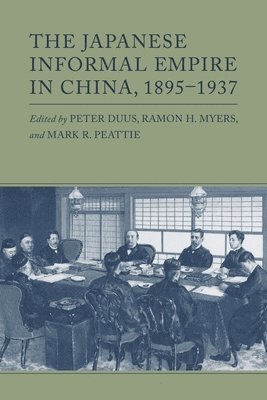
Volume two of the acclaimed three-volume series on modern Japanese colonialism and imperialismThis book brings together essays by leading experts on the history of Japan to examine the period from 1895 to 1937 when Japan’s economic, social, political, and military influence in China expanded so rapidly that it supplanted the influence of competing Western powers. They discuss how Japan’s informal empire emerged in China after Japan entered the Treaty Port system in 1895 and how it shaped Japan’s own internal development. How did Japan’s informal empire expand in size and importance so that Japanese economic and security interests became heavily dependent on China? What influence did Japanese business groups, China experts, and military have on their government’s China policy? How did the Japanese in China deal with the threatening rise of Chinese nationalism? Exploring these and other questions, these essays show how the pursuit of an informal empire in China played a profound role in the emergence of modern Japan. The contributors are Banno Junji, Barbara J. Brooks, Alvin D. Coox, Peter Duus, Albert Feuerwerker, Kitaoka Shin’ichi, Sophia Lee, Mizoguchi Toshiyuki, Ramon H. Myers, Nakagane Katsuji, Mark R. Peattie, Douglas R. Reynolds, and William D. Wray.This is the second volume of a series on modern Japanese colonialism and imperialism. Volume one is The Japanese Colonial Empire, 1895–1945. Volume three is The Japanese Wartime Empire, 1931–1945.
1 612 kr
Skickas inom 7-10 vardagar
Volume two of the acclaimed three-volume series on modern Japanese colonialism and imperialismThis book brings together essays by leading experts on the history of Japan to examine the period from 1895 to 1937 when Japan’s economic, social, political, and military influence in China expanded so rapidly that it supplanted the influence of competing Western powers. They discuss how Japan’s informal empire emerged in China after Japan entered the Treaty Port system in 1895 and how it shaped Japan’s own internal development. How did Japan’s informal empire expand in size and importance so that Japanese economic and security interests became heavily dependent on China? What influence did Japanese business groups, China experts, and military have on their government’s China policy? How did the Japanese in China deal with the threatening rise of Chinese nationalism? Exploring these and other questions, these essays show how the pursuit of an informal empire in China played a profound role in the emergence of modern Japan. The contributors are Banno Junji, Barbara J. Brooks, Alvin D. Coox, Peter Duus, Albert Feuerwerker, Kitaoka Shin’ichi, Sophia Lee, Mizoguchi Toshiyuki, Ramon H. Myers, Nakagane Katsuji, Mark R. Peattie, Douglas R. Reynolds, and William D. Wray.This is the second volume of a series on modern Japanese colonialism and imperialism. Volume one is The Japanese Colonial Empire, 1895–1945. Volume three is The Japanese Wartime Empire, 1931–1945.
627 kr
Tillfälligt slut
Building upon a previous study of Japan's colonial empire, this volume examines the period from 1895 to 1937 when Japan's economic, social, political, and military influence in China expanded so rapidly that it supplanted the influence of Western powers competing there. These fourteen essays discuss how Japan's "informal empire" emerged in China and how that "empire" influenced Japan's own internal development. "Describes in rich detail Japan's organization of a wide range of cultural, educational, economic, military, and bureaucratic institutions that formed the mainstays of Japanese influence in China along with the trading, manufacturing, intelligence-gathering, and political intriguing which they managed."--Wen-hsin Yeh, The Journal of Asian Studies Originally published in 1989. The Princeton Legacy Library uses the latest print-on-demand technology to again make available previously out-of-print books from the distinguished backlist of Princeton University Press. These editions preserve the original texts of these important books while presenting them in durable paperback and hardcover editions.The goal of the Princeton Legacy Library is to vastly increase access to the rich scholarly heritage found in the thousands of books published by Princeton University Press since its founding in 1905.
1 781 kr
Skickas inom 7-10 vardagar
Building upon a previous study of Japan's colonial empire, this volume examines the period from 1895 to 1937 when Japan's economic, social, political, and military influence in China expanded so rapidly that it supplanted the influence of Western powers competing there. These fourteen essays discuss how Japan's "informal empire" emerged in China and how that "empire" influenced Japan's own internal development. "Describes in rich detail Japan's organization of a wide range of cultural, educational, economic, military, and bureaucratic institutions that formed the mainstays of Japanese influence in China along with the trading, manufacturing, intelligence-gathering, and political intriguing which they managed."--Wen-hsin Yeh, The Journal of Asian Studies Originally published in 1989. The Princeton Legacy Library uses the latest print-on-demand technology to again make available previously out-of-print books from the distinguished backlist of Princeton University Press. These editions preserve the original texts of these important books while presenting them in durable paperback and hardcover editions.The goal of the Princeton Legacy Library is to vastly increase access to the rich scholarly heritage found in the thousands of books published by Princeton University Press since its founding in 1905.