Peter J. Richerson – författare
Visar alla böcker från författaren Peter J. Richerson. Handla med fri frakt och snabb leverans.
9 produkter
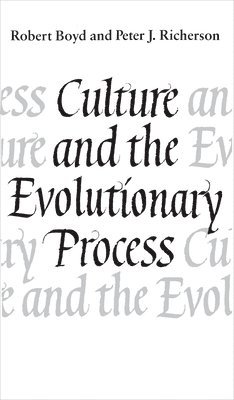
Culture and the Evolutionary Process
Av Robert Boyd, Peter J. Richerson
Häftad, 1988
437 kr
Lägg i varukorg
How do biological, psychological, sociological, and cultural factors combine to change societies over the long run? Boyd and Richerson explore how genetic and cultural factors interact, under the influence of evolutionary forces, to produce the diversity we see in human cultures. Using methods …
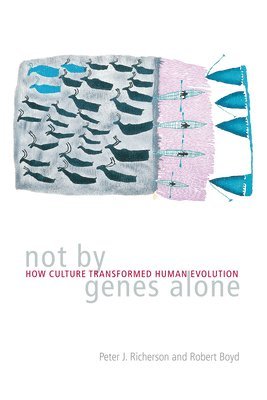
Not by Genes Alone
How Culture Transformed Human Evolution
Av Peter J. Richerson, Robert Boyd
Häftad, 2006
323 kr
Lägg i varukorg
Humans are a striking anomaly in the natural world. While we are similar to other mammals in many ways, our behavior sets us apart. Our unparalleled ability to adapt has allowed us to occupy virtually every habitat on earth, and our societies are larger, more complex, and more cooperative than any …
Origin and Evolution of Cultures
Av Peter J. Richerson, Robert Boyd
E-bok, 2005
789 kr
Lägg i varukorg
Oxford presents, in one convenient and coherently organized volume, 20 influential but until now relatively inaccessible articles that form the backbone of Boyd and Richerson''s path-breaking work on evolution and culture. Their interdisciplinary research is based on two notions. First, that …
Origin and Evolution of Cultures
Av Peter J. Richerson, Robert Boyd
E-bok, 2005
789 kr
Lägg i varukorg
Oxford presents, in one convenient and coherently organized volume, 20 influential but until now relatively inaccessible articles that form the backbone of Boyd and Richerson''s path-breaking work on evolution and culture. Their interdisciplinary research is based on two notions. First, that …
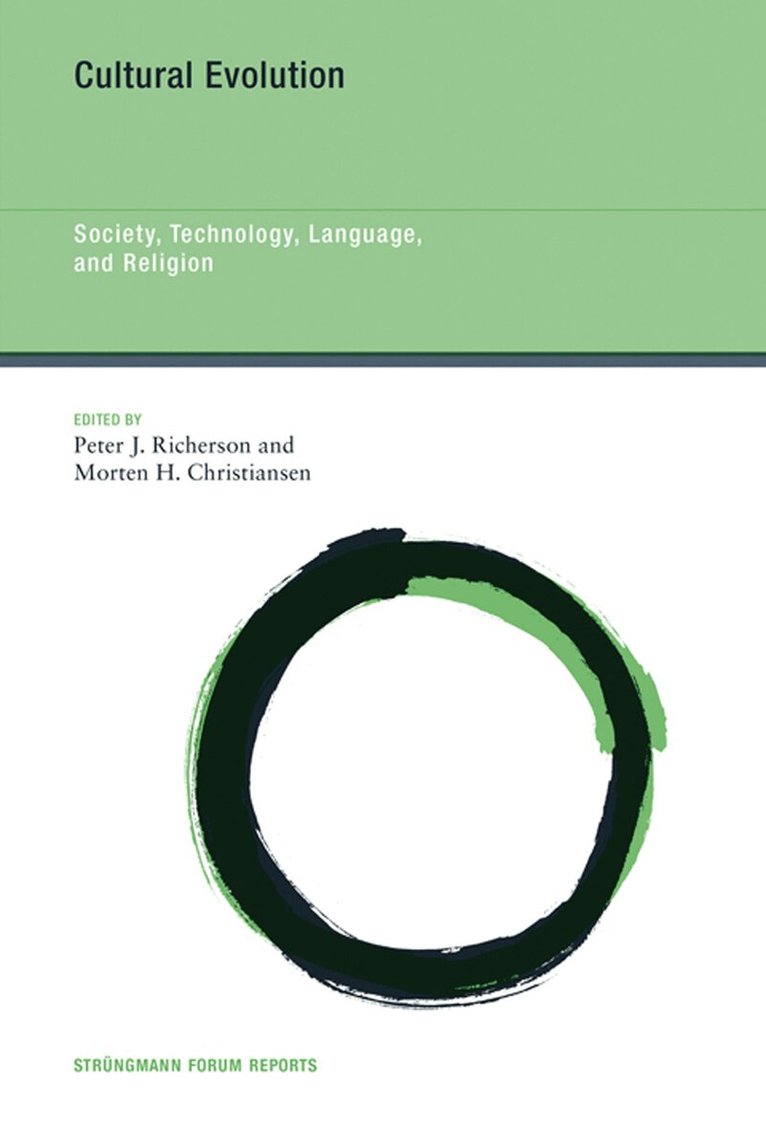
Cultural Evolution
Society, Technology, Language, and Religion
Av Peter J. Richerson, Morten H. Christiansen
Häftad, 2024
859 kr
Lägg i varukorg
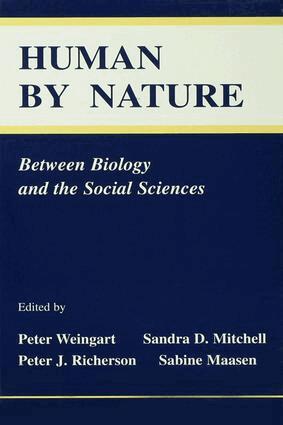
Human By Nature
Between Biology and the Social Sciences
Av Peter Weingart, Sandra D. Mitchell m. fl.
Inbunden, 1997
2519 kr
Lägg i varukorg
Representing a wide range of disciplines -- biology, sociology, anthropology, economics, human ethology, psychology, primatology, history, and philosophy of science -- the contributors to this book recently spent a complete academic year at the Center for Interdisciplinary Research (ZiF) discussing …
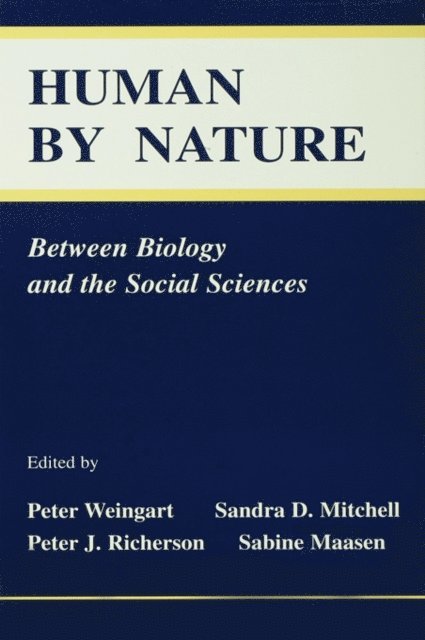
Human By Nature
Between Biology and the Social Sciences
Av Sabine Maasen, Peter J. Richerson m. fl.
E-bok, 2013
953 kr
Lägg i varukorg
Representing a wide range of disciplines -- biology, sociology, anthropology, economics, human ethology, psychology, primatology, history, and philosophy of science -- the contributors to this book recently spent a complete academic year at the Center for Interdisciplinary Research (ZiF) discussing …
Human By Nature
Between Biology and the Social Sciences
Av Sabine Maasen, Peter J. Richerson m. fl.
E-bok, 2013
953 kr
Lägg i varukorg
Representing a wide range of disciplines -- biology, sociology, anthropology, economics, human ethology, psychology, primatology, history, and philosophy of science -- the contributors to this book recently spent a complete academic year at the Center for Interdisciplinary Research (ZiF) discussing …
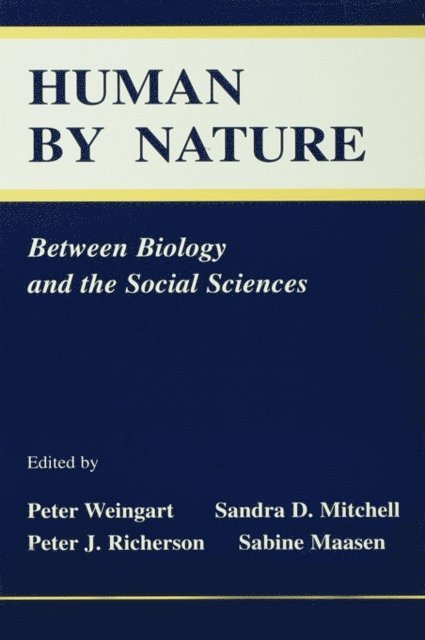
Human By Nature
Between Biology and the Social Sciences
Av Peter Weingart, Sandra D. Mitchell m. fl.
Häftad, 2016
807 kr
Lägg i varukorg
Representing a wide range of disciplines -- biology, sociology, anthropology, economics, human ethology, psychology, primatology, history, and philosophy of science -- the contributors to this book recently spent a complete academic year at the Center for Interdisciplinary Research (ZiF) discussing …