Sandra D. Mitchell - Böcker
Visar alla böcker från författaren Sandra D. Mitchell. Handla med fri frakt och snabb leverans.
7 produkter
7 produkter
1 064 kr
Skickas inom 5-8 vardagar
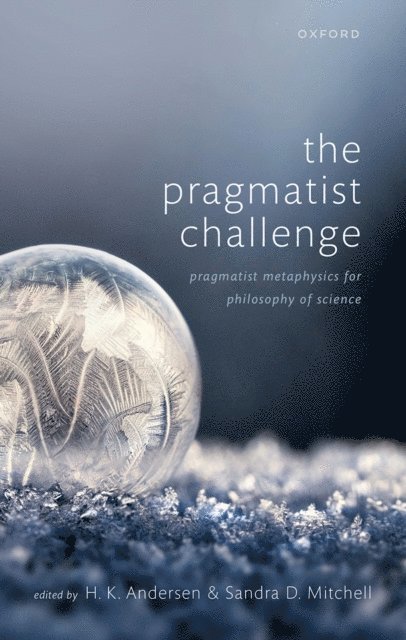
The Pragmatist Challenge lays out a programmatic view for taking a pragmatist approach to topics in philosophy of science and metaphysics. Pragmatism involves a collection of specific views as well as comprising a general approach that can be applied to multiple topics. For topics at the intersection of philosophy of science and metaphysics, pragmatism as explored in this volume is an effective way to take entrenched debates and re-frame them in ways that move past old dichotomies and offer more fruitful paths forward. Each chapter explores a dual vision of pragmatism: specific pragmatist views are developed, demonstrating how to take a distinctively pragmatist approach to some particular issue or subfield; and the general shape of what it means to take a pragmatist approach is elucidated as well. The chapters thus tend to be synoptic in scope. Collectively, they offer a new approach that can be taken up in constructively reframing other discussions, ready to be applied to new specific topics. Pragmatism is an especially potent tool that sits at the interface between methodological and applied questions coming directly from sciences, and the underlying ontological or metaphysical commitments that are implied by or support the methodological discussions. The goal of the volume is to articulate a variety of ways to be a pragmatist without having to commit to a single specific set of -isms in order to make use of it, while highlighting the common themes that manifest across different discussions. The chapters offer a heterogenous yet programmatic approach to pragmatism.
189 kr
Skickas inom 7-10 vardagar
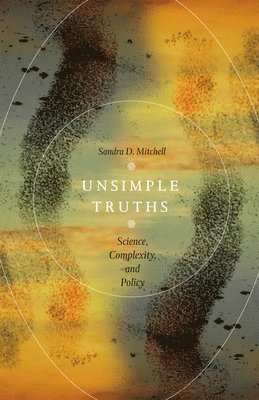
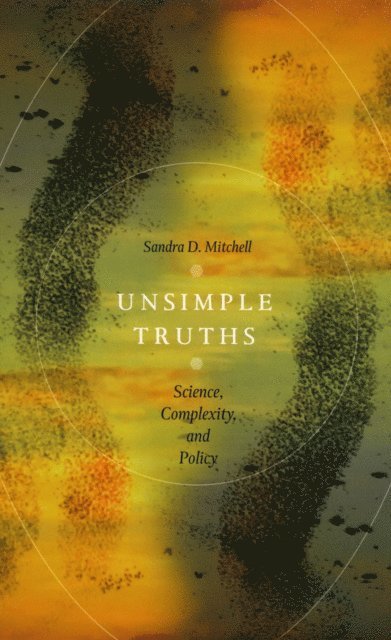
In "Unsimple Truths", Sandra D. Mitchell argues that the long-standing scientific and philosophical deference to reductive explanations founded on simple universal laws, linear causal models, and predict-and-act strategies fails to accommodate the kinds of knowledge that many contemporary sciences are providing about the world. She advocates, instead, for a new understanding that represents the rich, variegated, interdependent fabric of many levels and kinds of explanation that are integrated with one another to ground effective prediction and action. Mitchell draws from diverse fields including psychiatry, social insect biology, and studies of climate change to defend "integrative pluralism" - a theory of scientific practices that makes sense of how many natural and social sciences represent the multilevel, multicomponent, dynamic structures they study. Ultimately "Unsimple Truths" argues that the very idea of what should count as legitimate science itself should change.
789 kr
Skickas inom 7-10 vardagar
The world is complex, but acknowledging its complexity requires an appreciation for the many roles context plays in shaping natural phenomena. In "Unsimple Truths", Sandra Mitchell argues that the long-standing scientific and philosophical deference to reductive explanations founded on simple universal laws, linear causal models, and predict-and-act strategies fails to accommodate the kinds of knowledge that many contemporary sciences are providing about the world. She advocates instead for a new understanding that represents the rich, variegated, interdependent fabric of many levels and kinds of explanation that are integrated with one another to ground effective prediction and action. Mitchell draws from diverse fields, including psychiatry, social insect biology, and studies of climate change, to defend 'integrative pluralism' - a theory of scientific practices that makes sense of how many natural and social sciences represent the multilevel, multicomponent, dynamic structures they study.She explains how we must, in light of the now-acknowledged complexity and contingency of biological and social systems, revise how we conceptualize the world, how we investigate the world, and how we act in the world. Ultimately, "Unsimple Truths" argues that the very idea of what should count as legitimate science itself should change.
485 kr
Skickas inom 7-10 vardagar
This fine collection of essays by a leading philosopher of science presents a defence of integrative pluralism as the best description for the complexity of scientific inquiry today. The tendency of some scientists to unify science by reducing all theories to a few fundamental laws of the most basic particles that populate our universe is ill-suited to the biological sciences, which study multi-component, multi-level, evolved complex systems. This integrative pluralism is the most efficient way to understand the different and complex processes - historical and interactive - that generate biological phenomena. This book will be of interest to students and professionals in the philosophy of science.
916 kr
Skickas inom 7-10 vardagar
This fine collection of essays by a leading philosopher of science presents a defence of integrative pluralism as the best description for the complexity of scientific inquiry today. The tendency of some scientists to unify science by reducing all theories to a few fundamental laws of the most basic particles that populate our universe is ill-suited to the biological sciences, which study multi-component, multi-level, evolved complex systems. This integrative pluralism is the most efficient way to understand the different and complex processes - historical and interactive - that generate biological phenomena. This book will be of interest to students and professionals in the philosophy of science.
2 098 kr
Skickas inom 10-15 vardagar
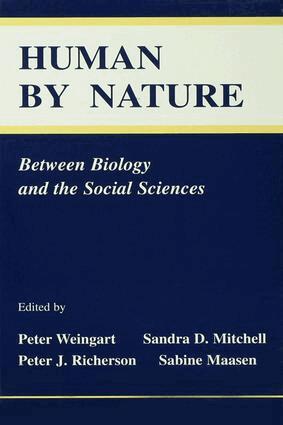
Representing a wide range of disciplines -- biology, sociology, anthropology, economics, human ethology, psychology, primatology, history, and philosophy of science -- the contributors to this book recently spent a complete academic year at the Center for Interdisciplinary Research (ZiF) discussing a plethora of new insights in reference to human cultural evolution. These scholars acted as a living experiment of "interdisciplinarity in vivo." The assumption of this experiment was that the scholars -- while working and residing at the ZiF -- would be united intellectually as well as socially, a connection that might eventually enhance future interdisciplinary communication even after the research group had dispersed.An important consensus emerged: The issue of human culture poses a challenge to the division of the world into the realms of the "natural" and the "cultural" and hence, to the disciplinary division of scientific labor. The appropriate place for the study of human culture, in this group's view, is located between biology and the social sciences.Explicitly avoiding biological and sociological reductionisms, the group adopted a pluralistic perspective -- "integrative pluralism" -- that took into account both today's highly specialized and effective (sub-)disciplinary research and the possibility of integrating the respective findings on a case-by-case basis. Each sub-group discovered its own way of interdisciplinary collaboration and submitted a contribution to the present volume reflecting one of several types of fruitful cooperation, such as a fully integrated chapter, a multidisciplinary overview, or a discussion between different approaches. A promising first step on the long road to an interdisciplinarily informed understanding of human culture, this book will be of interest to social scientists and biologists alike.
695 kr
Skickas inom 10-15 vardagar
Representing a wide range of disciplines -- biology, sociology, anthropology, economics, human ethology, psychology, primatology, history, and philosophy of science -- the contributors to this book recently spent a complete academic year at the Center for Interdisciplinary Research (ZiF) discussing a plethora of new insights in reference to human cultural evolution. These scholars acted as a living experiment of "interdisciplinarity in vivo." The assumption of this experiment was that the scholars -- while working and residing at the ZiF -- would be united intellectually as well as socially, a connection that might eventually enhance future interdisciplinary communication even after the research group had dispersed.An important consensus emerged: The issue of human culture poses a challenge to the division of the world into the realms of the "natural" and the "cultural" and hence, to the disciplinary division of scientific labor. The appropriate place for the study of human culture, in this group's view, is located between biology and the social sciences.Explicitly avoiding biological and sociological reductionisms, the group adopted a pluralistic perspective -- "integrative pluralism" -- that took into account both today's highly specialized and effective (sub-)disciplinary research and the possibility of integrating the respective findings on a case-by-case basis. Each sub-group discovered its own way of interdisciplinary collaboration and submitted a contribution to the present volume reflecting one of several types of fruitful cooperation, such as a fully integrated chapter, a multidisciplinary overview, or a discussion between different approaches. A promising first step on the long road to an interdisciplinarily informed understanding of human culture, this book will be of interest to social scientists and biologists alike.