Peter J. Riggs – författare
Visar alla böcker från författaren Peter J. Riggs. Handla med fri frakt och snabb leverans.
5 produkter
5 produkter
1 062 kr
Skickas inom 10-15 vardagar
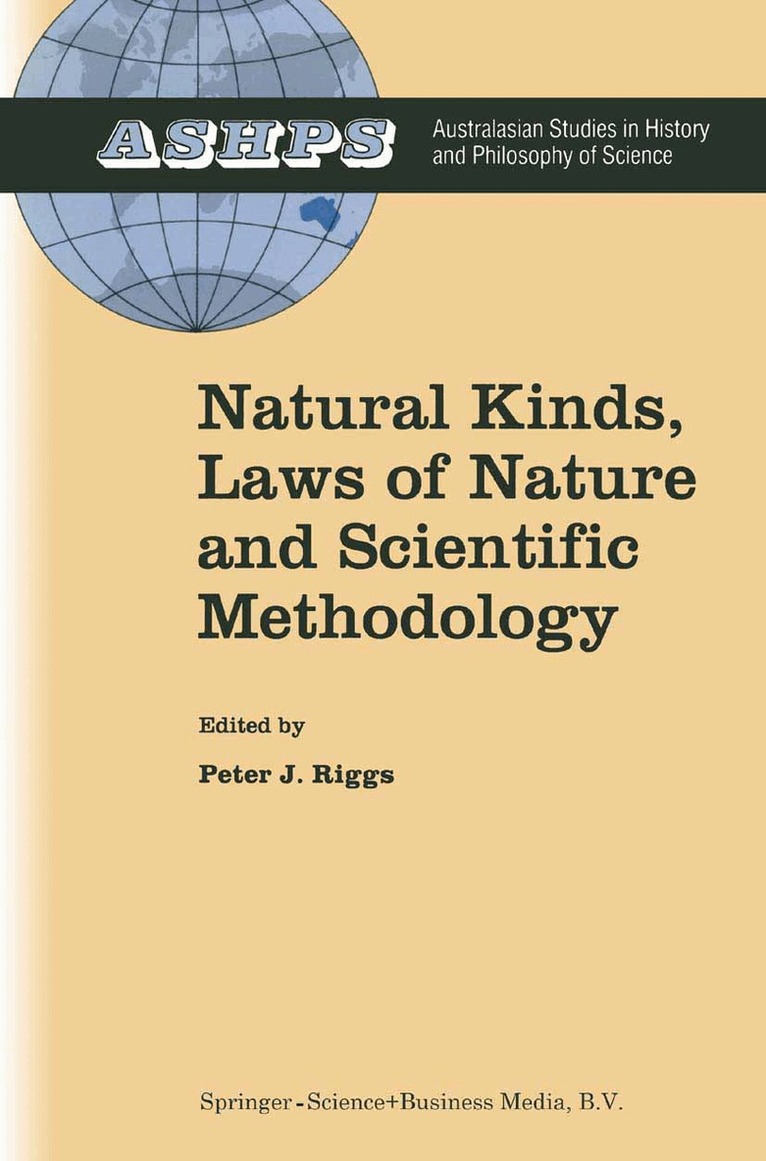
The essays in this volume of the "Australasian Studies in History and Philosophy of Science" series are devoted to the subjects of natural kinds, scientific methodology and laws of nature. There is a multiplicity of interconnections to be found between the various issues that arise under these broad subjects. Examples of these issues include: the nature of physical laws; the basic entities that we can expect the world to consist of; the problem of induction; the aim(s) of science; the discovery of natural laws through scientific methods; natural necessity and its status. Each contribution to this volume highlights one or more aspects of the interconnecting themes. Although natural kinds and their associated topics have been discussed elsewhere, the essays in this volume extend the scope of related issues and also offer new insight into some of the traditional problems in the philosophy of science.
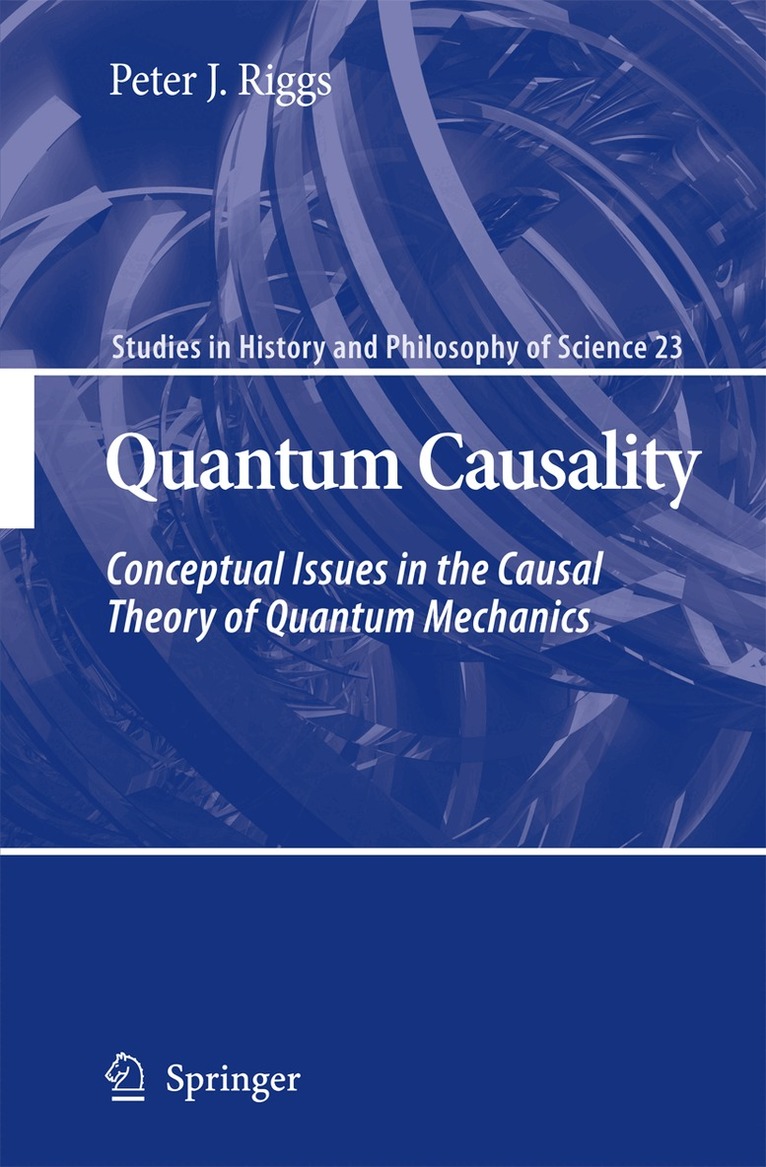
Quantum Causality
Conceptual Issues in the Causal Theory of Quantum Mechanics
Inbunden, Engelska, 2009
1 062 kr
Skickas inom 10-15 vardagar
There is no sharp dividing line between the foundations of physics and philosophy of physics. This is especially true for quantum mechanics. The debate on the interpretation of quantum mechanics has raged in both the scientific and philosophical communities since the 1920s and continues to this day. (We shall understand the unqualified term ‘quantum mechanics’ to mean the mathematical formalism, i. e. laws and rules by which empirical predictions and theoretical advances are made. ) There is a popular rendering of quantum mechanics which has been publicly endorsed by some well known physicists which says that quantum mechanics is not only 1 more weird than we imagine but is weirder than we can imagine. Although it is readily granted that quantum mechanics has produced some strange and counter-intuitive results, the case will be presented in this book that quantum mechanics is not as weird as we might have been led to believe! The prevailing theory of quantum mechanics is called Orthodox Quantum Theory (also known as the Copenhagen Interpretation). Orthodox Quantum Theory endows a special status on measurement processes by requiring an intervention of an observer or an observer’s proxy (e. g. a measuring apparatus). The placement of the observer (or proxy) is somewhat arbitrary which introduces a degree of subjectivity. Orthodox Quantum Theory only predicts probabilities for measured values of physical quantities. It is essentially an instrumental theory, i. e.
1 062 kr
Skickas inom 10-15 vardagar
The essays in this volume of the Australasian Studies in History and Philosophy of Science series are devoted to the subjects of natural kinds, scientific methodology and laws of nature. There is a multiplicity of interconnections to be found between the various issues that arise under these broad subjects. Examples of these issues include: the nature of physical laws; the basic entities that we can expect the world to consist of; the problem of induction; the aim(s) of science; the discovery of natural laws through scientific methods; natural necessity and its status; etc. Each contribution to this volume highlights one or more aspects of the interconnecting themes. Although natural kinds and their associated topics have been discussed elsewhere, the essays in this volume extend the scope of related issues and also offer new insight into some of the traditional problems in the philosophy of science.
1 062 kr
Skickas inom 10-15 vardagar
There is no sharp dividing line between the foundations of physics and philosophy of physics. This is especially true for quantum mechanics. The debate on the interpretation of quantum mechanics has raged in both the scientific and philosophical communities since the 1920s and continues to this day. (We shall understand the unqualified term ‘quantum mechanics’ to mean the mathematical formalism, i. e. laws and rules by which empirical predictions and theoretical advances are made. ) There is a popular rendering of quantum mechanics which has been publicly endorsed by some well known physicists which says that quantum mechanics is not only 1 more weird than we imagine but is weirder than we can imagine. Although it is readily granted that quantum mechanics has produced some strange and counter-intuitive results, the case will be presented in this book that quantum mechanics is not as weird as we might have been led to believe! The prevailing theory of quantum mechanics is called Orthodox Quantum Theory (also known as the Copenhagen Interpretation). Orthodox Quantum Theory endows a special status on measurement processes by requiring an intervention of an observer or an observer’s proxy (e. g. a measuring apparatus). The placement of the observer (or proxy) is somewhat arbitrary which introduces a degree of subjectivity. Orthodox Quantum Theory only predicts probabilities for measured values of physical quantities. It is essentially an instrumental theory, i. e.
634 kr
Skickas inom 5-8 vardagar