Peter Lurie - Böcker
Visar alla böcker från författaren Peter Lurie. Handla med fri frakt och snabb leverans.
5 produkter
5 produkter
528 kr
Skickas inom 5-8 vardagar
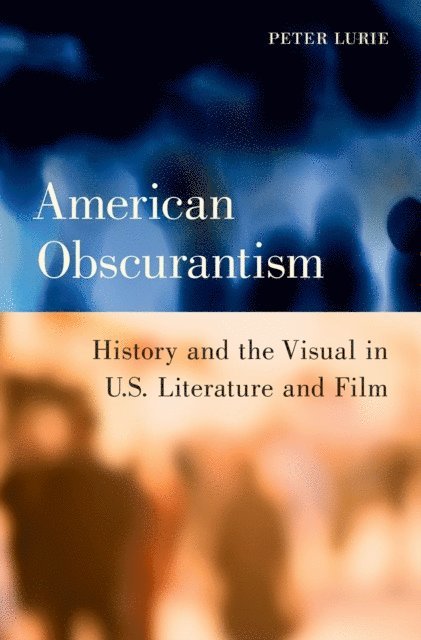
American Obscurantism argues for a salutary indirection in U.S. culture. From its earliest canonical literary works through late twentieth and early twenty-first century film, the most compelling manifestations of America's troubled history have articulated this content through a unique formal and tonal obscurity. Envisioning the formidable darkness attending racial history at nearly every stage of the republic's founding and ongoing development, writers such as William Faulkner and Hart Crane or directors like the Coen brothers and Stanley Kubrick present a powerful critique of American conquest, southern plantation culture, and western frontier ideology. The book traces this arc from one of visual history's notoriously troubled texts: D.W. Griffith's The Birth of a Nation (1915). American Obscurantism engages the basis of these explorations in Poe and Melville, each of whom present notable occlusions in characters' racial understanding, an obtuseness or naïveté that is expressed by a corresponding formal opacity. Such oblique historicity as the book describes allows a method at odds with - and implicitly critical of - the historicizing trend that marked literary studies in the wake of the theoretical turn. Citing critiques such as those of Tim Dean and others of efforts to politicize literary and cultural studies, this book restores an emphasis on aesthetic and medium-specific features to argue for a formalist historicity. Working through challenges to an implicitly white-,bourgeois, heteronormative polity, American Obscurantism posits an insistent, vital racial otherness at the heart of American literature and cinema. It examines this pattern across a canon that shows more self-doubt than assuredness, arguing for the value of openness and questioning in place of epistemological or critical certainty. Following the insistence on a lamenting historical look back in the cases of Faulkner, Kubrick, and the Coens, the book ends by linking Crane's famous optimism in The Bridge, one rooted in an ecstatic celebrating of the body and an optimism attending "America" as both concept and nation-state, to the contemporary digital turn and the hope for a more inclusive visual culture as well as racial vision.
635 kr
Skickas inom 7-10 vardagar
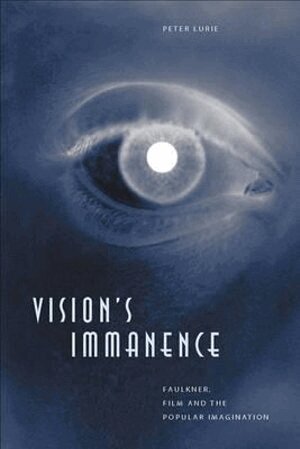
William Faulkner occupied a unique position as a modern writer. Although famous for his modernist novels and their notorious difficulty, he also wrote extensively for the "culture industry," and the works he produced for it-including short stories, adaptations, and screenplays-bore many of the hallmarks of consumer art. His experiences as a Hollywood screenwriter influenced him in a number of ways, many of them negative, while the films turned out by the "dream factories" in which he labored sporadically inspired both his interest and his contempt. Faulkner also disparaged the popular magazines-though he frequently sold short stories to them. To what extent was Faulkner's deeply ambivalent relationship to-and involvement with-American popular culture reflected in his modernist or "art" fiction? Peter Lurie finds convincing evidence that Faulkner was keenly aware of commercial culture and adapted its formulae, strategies, and in particular, its visual techniques into the language of his novels of the 1930s. Lurie contends that Faulkner's modernism can be best understood in light of his reaction to the popular culture of his day.Using Theodor Adorno's theory about modern cultural production as a framework, Lurie's close readings of Sanctuary, Light in August, Absalom! Absalom!, and If I Forget Thee, Jerusalem uncover the cultural history that surrounded and influenced the development of Faulkner's art. Lurie is particularly interested in the influence of cinema on Faulkner's fiction and especially the visual strategies he both deployed and critiqued. These include the suggestion of cinematic viewing on the part of readers and of characters in each of the novels; the collective and individual acts of voyeurism in Sanctuary and Light in August; the exposing in Absalom! Absalom! and Light in Augustof stereotypical and cinematic patterns of thought about history and race; and the evocation of popular forms like melodrama and the movie screen in If I Forget Thee, Jerusalem. Offering innovative readings of these canonical works, this study sheds new light on Faulkner's uniquely American modernism.
421 kr
Skickas inom 10-15 vardagar
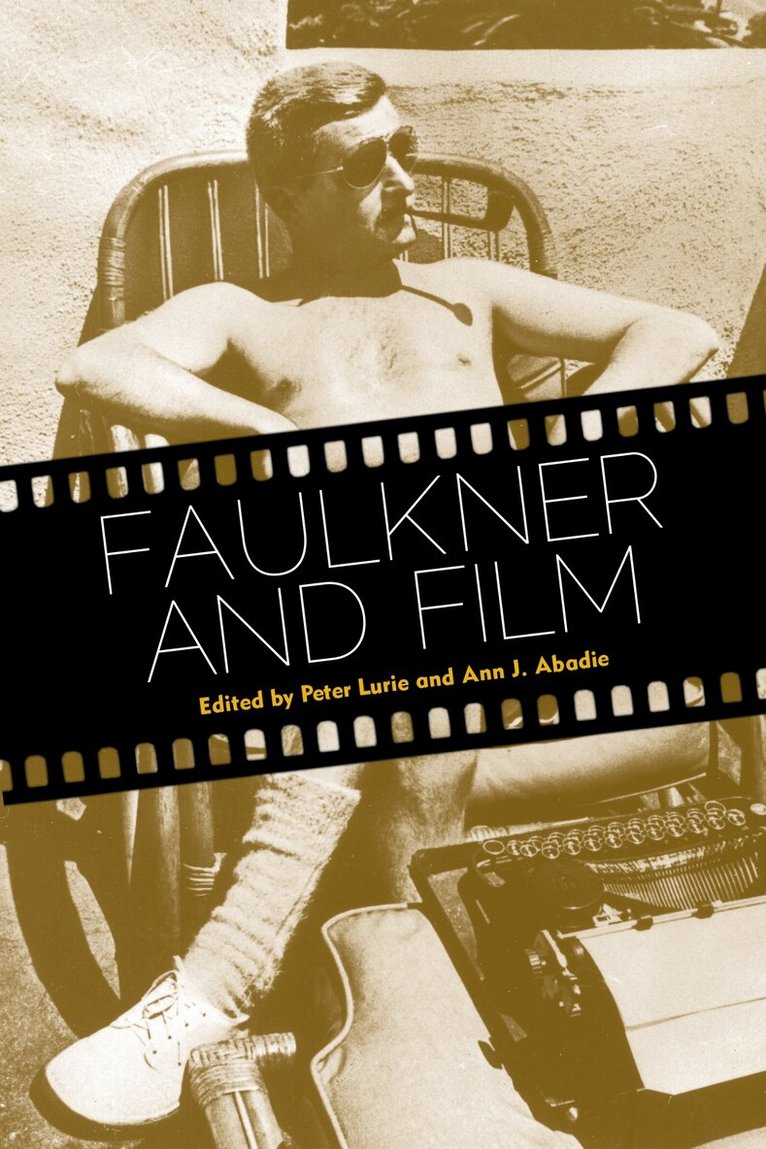
Considering that he worked a stint as a screen writer, it will come as little surprise that Faulkner has often been called the most cinematic of novelists. Faulkner's novels were produced in the same high period as the films of classical Hollywood, a reason itself for considering his work alongside this dominant form. Beyond their era, though, Faulkner's novels - or the ways in which they ask readers to see as well as feel his world - have much in common with film. That Faulkner was aware of film and that his novels' own ""thinking"" betrays his profound sense of the medium and its effects broadens the contexts in which he can be considered.In a range of approaches, the contributors consider Faulkner's career as a scenarist and collaborator in Hollywood, the ways his screenplay work and the adaptations of his fiction informed his literary writing, and how Faulkner's craft anticipates, intersects with, or reflects upon changes in cultural history across the lifespan of cinema.Drawing on film history, critical theory, archival studies of Faulkner's screenplays and scholarship about his work in Hollywood, the nine essays show a keen awareness of literary modernism and its relation to film.
Black Evanescence
Seeing Racial Difference from the Slave Narrative to Digital Media
Inbunden, Engelska, 2023
1 488 kr
Kommande
From the photographs of Frederick Douglas published with his memoir to the circulation of Twitter hashtags after the murders of Michael Brown and George Floyd, this book argues that African American cultural presence and racial meaning making can be traced along the still-developing arc of visuality. The earliest films of race were notable for their conviction about what the cinematic image and, eventually, the sound film could proffer: an “authentic” account of race and, specifically, Blackness on screen. Against those suasions Black Evanescence posits a vision of, and for, digital technology that sees its intersections with racial imagery very differently.This book argues that digital imagery possesses a salutary evanescence. Produced by a technology that does not purport to the indexical, digital media offers images that convey a greater openness or sense of possibility. A signal implication of this is that the racial imagery or meanings of digital media may be defined as part of a still-unfolding process, one that is part of a history that is transforming. Digital cinema includes a concrete link to its referent—in this context, the Black body. Digital modes allow a less “fixed” rendering of Blackness in the wider (white) understanding of race than we have historically seen or that a range of Hollywood works evince.
1 355 kr
Skickas inom 10-15 vardagar
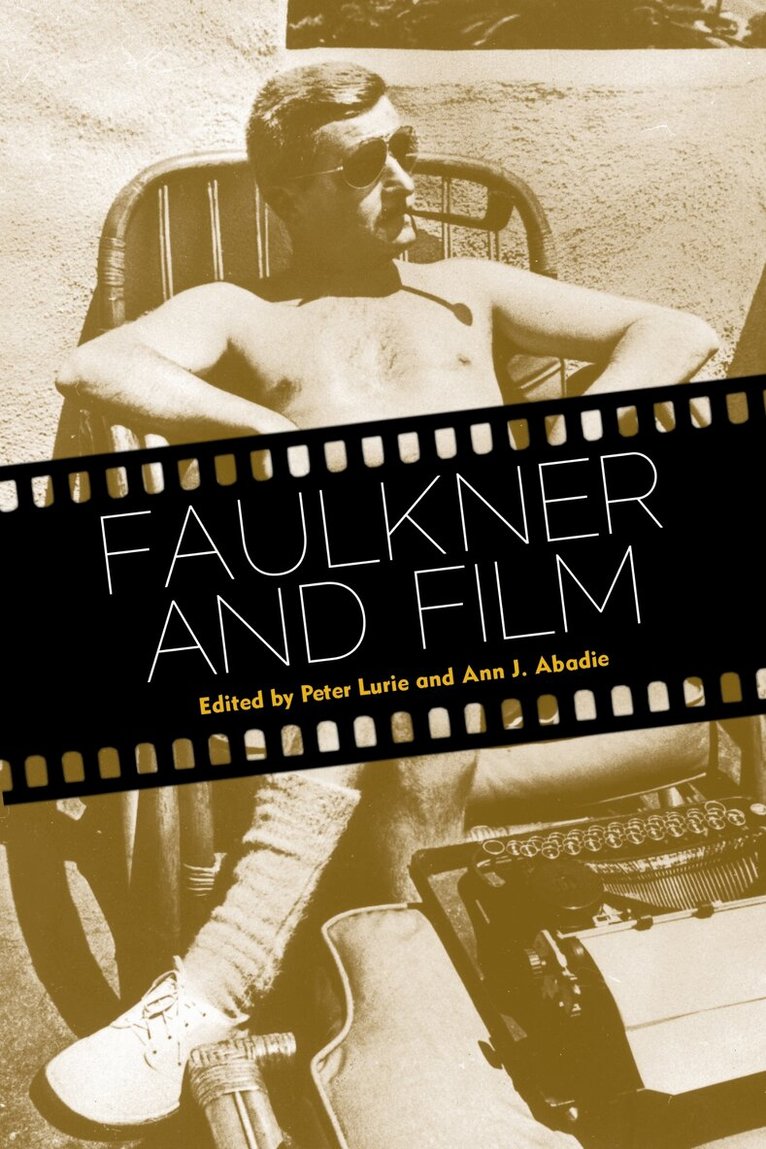
Considering that he worked a stint as a screen writer, it will come as little surprise that Faulkner has often been called the most cinematic of novelists. Faulkner's novels were produced in the same high period as the films of classical Hollywood, a reason itself for considering his work alongside this dominant form. Beyond their era, though, Faulkner's novels--or the ways in which they ask readers to see as well as feel his world--have much in common with film. That Faulkner was aware of film and that his novels' own ""thinking"" betrays his profound sense of the medium and its effects broadens the contexts in which he can be considered.In a range of approaches, the contributors consider Faulkner's career as a scenarist and collaborator in Hollywood, the ways his screenplay work and the adaptations of his fiction informed his literary writing, and how Faulkner's craft anticipates, intersects with, or reflects upon changes in cultural history across the lifespan of cinema.Drawing on film history, critical theory, archival studies of Faulkner's screenplays and scholarship about his work in Hollywood, the nine essays show a keen awareness of literary modernism and its relation to film.