• Fri frakt över 249 kr
  • •
  • Snabba leveranser
  • •
  • Billiga böcker
Kundservice

Du är på sajten för privatpersoner.

Företag, bibliotek eller offentlig verksamhet?

Du handlar på classic.bokus.com, där alla dina funktioner finns intakta.
Till classic.bokus.com
Bokus logotyp. Gå till startsidan.
  • Erbjudanden
  • Nyheter
  • Student
  • Topplistor
  • Barn & ungdom
  • Bokus Play
  • E-böcker
  • Pocketböcker
  • Spel & pussel

10% rabatt på allt med kod NYSTART10 →

Sidfot

Mina sidor

    Hjälp

    • Kundservice
    • Vanliga frågor och svar
    • Frakt och leverans
    • Retur vid ångerrätt
    • Reklamera vara
    • Betalning
    • Köpvillkor
    • Allmänna villkor
    • Information om webbplatsens tillgänglighet

    Om Bokus

    • Om oss
    • Pressrum
    • För studenter
    • För företag
    • För bibliotek och offentlig verksamhet
    • För leverantörer
    • Hållbarhet

    Populärt

    • Aktuella erbjudanden
    • Presentkort
    • Studentlitteratur
    • Nya böcker
    • Topplistor
    • Signerade böcker
    • Engelska böcker

    Inspiration

    • Boktips
    • BookTok
    • Populära bokserier
    • Barnbokskaraktärer
    • Populära författare
    Logotyp för Bokus
    Följ oss på Facebook (extern länk)Följ oss på Instagram (extern länk)Följ oss på YouTube (extern länk)Följ oss på TikTok (extern länk)
    bokus @ CookiesAnpassa cookiesIntegritetspolicyKöpvillkor
    Till Citymail hemsida (extern länk)Till Budbee hemsida (extern länk)Till Postnord hemsida (extern länk)Till Schenker hemsida (extern länk)Till Early Bird hemsida (extern länk)Till Walleys hemsida (extern länk)
    1. Skönlitteratur
    2. Litteraturvetenskap
    3. Litteraturvetenskap

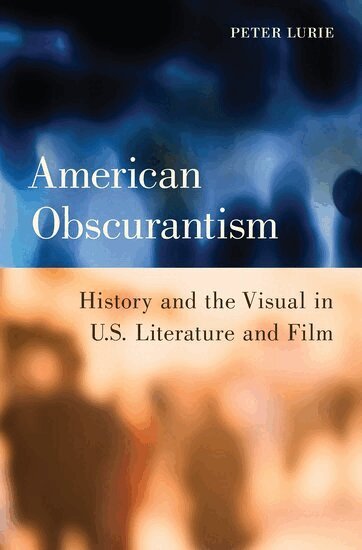
    American Obscurantism

    History and the Visual in U.S. Literature and Film

    AvPeter Lurie

    Inbunden, Engelska, 2018

    Del i serien OXFORD UNIV PR

    833 kr

    Beställningsvara. Skickas inom 5-8 vardagar. Fri frakt över 249 kr.

    Fler format och utgåvor

    E-bok

    490 kr

    E-bok

    492 kr

    Beskrivning

    American Obscurantism argues for a salutary indirection in U.S. culture. From its earliest canonical literary works through late twentieth and early twenty-first century film, the most compelling manifestations of America's troubled history have articulated this content through a unique formal and tonal obscurity. Envisioning the formidable darkness attending racial history at nearly every stage of the republic's founding and ongoing development, writers such as William Faulkner and Hart Crane or directors like the Coen brothers and Stanley Kubrick present a powerful critique of American conquest, southern plantation culture, and western frontier ideology. The book traces this arc from one of visual history's notoriously troubled texts: D.W. Griffith's The Birth of a Nation (1915). American Obscurantism engages the basis of these explorations in Poe and Melville, each of whom present notable occlusions in characters' racial understanding, an obtuseness or naïveté that is expressed by a corresponding formal opacity. Such oblique historicity as the book describes allows a method at odds with - and implicitly critical of - the historicizing trend that marked literary studies in the wake of the theoretical turn. Citing critiques such as those of Tim Dean and others of efforts to politicize literary and cultural studies, this book restores an emphasis on aesthetic and medium-specific features to argue for a formalist historicity. Working through challenges to an implicitly white-,bourgeois, heteronormative polity, American Obscurantism posits an insistent, vital racial otherness at the heart of American literature and cinema. It examines this pattern across a canon that shows more self-doubt than assuredness, arguing for the value of openness and questioning in place of epistemological or critical certainty. Following the insistence on a lamenting historical look back in the cases of Faulkner, Kubrick, and the Coens, the book ends by linking Crane's famous optimism in The Bridge, one rooted in an ecstatic celebrating of the body and an optimism attending "America" as both concept and nation-state, to the contemporary digital turn and the hope for a more inclusive visual culture as well as racial vision.

    Produktinformation

    • Utgivningsdatum:2018-07-26
    • Mått:236 x 160 x 12 mm
    • Vikt:544 g
    • Format:Inbunden
    • Språk:Engelska
    • Serie:OXFORD UNIV PR
    • Antal sidor:232
    • Förlag:OUP USA
    • ISBN:9780199797318

    Utforska kategorier

    • Litteraturvetenskap inom Skönlitteratur
    • Film inom Kultur

    Mer om författaren

    Peter Lurie is Associate Professor of English and Film Studies at the University of Richmond. He is the author of Vision's Immanence: Faulkner, Film, and the Popular Imagination (2004) and of articles on Faulkner, Hart Crane, critical race theory, and the cinema of Richard Linklater. He is the editor, with Ann J. Abadie, of Faulkner and Film: Faulkner and Yoknapatawpha 2010 (2014). In 2015 he was a Fulbright Distinguished Chair in American Studies at the University of Warsaw. Also in 2015 he was Visiting Professor of English at the University of Paris, Diderot. Prior to his position at Richmond he taught Anglo-American Cinema and modern literature as a Fellow at Keble College, Oxford and at Harvard in the History and Literature program.

    Recensioner i media

    In four chapters, bookended by a critical introduction and conclusion, Lurie usefully complicates other critical approaches such as New Historicism and trauma studies. In the conclusion he shifts to considering how direct seeing of the events of 9/11 did not, predictably, lead observers to understand those events. Instead, he posits in the conclusion that recent works by "visual artists and citizen-documentarians" offer "a more encompassing and efficacious mode" than previously found. This book will be required reading for scholars working at the intersections of American literature/film, historical trauma, and visual representation.

    Innehållsförteckning

    • ContentsDedicationAcknowledgements Introduction: Envisioning Obscurity: History, Racial Knowing, and the "Perfect Whiteness of the Snow"Chapter 1: Seeing in the Dark Houses: History and Obscurity in Light in August and Absalom, Absalom!Chapter 2 : "Orders from the House": American Historicism in The Shining Chapter 3: Fargo's Whitened Spaces: Race, History, and the Postmodern SublimeChapter 4: Queer Historicity in The BridgeConclusion: "Rememory," the Visual, and America's Future History: Race and the Digital Turn NotesWorks Cited Index