Peter Mandler - Böcker
Visar alla böcker från författaren Peter Mandler. Handla med fri frakt och snabb leverans.
13 produkter
13 produkter
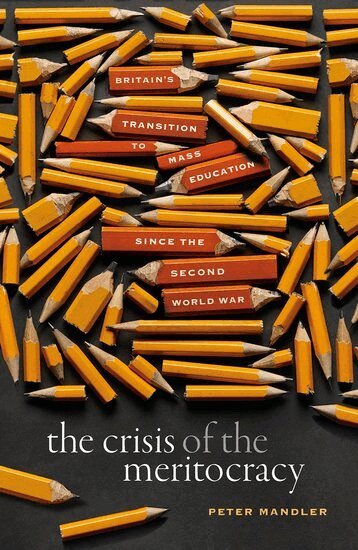
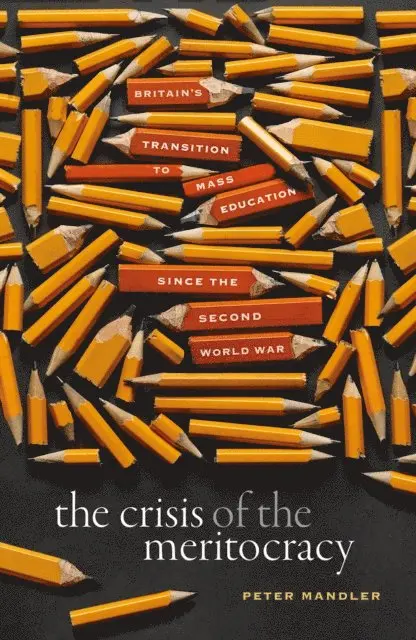
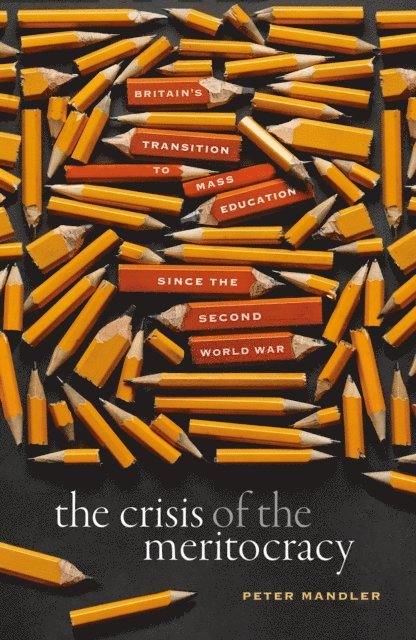
The Crisis of the Meritocracy
Britain's Transition to Mass Education since the Second World War
Inbunden, Engelska, 2020
344 kr
Skickas
Before the Second World War, only about 20% of the population went to secondary school and barely 2% to university; today everyone goes to secondary school and half of all young people go to university. How did we get here from there? The Crisis of the Meritocracy answers this question not by looking to politicians and educational reforms, but to the revolution in attitudes and expectations amongst the post-war British public - the rights guaranteed by the welfare state, the hope of a better life for one's children, widespread upward mobility from manual to non-manual occupations, confidence in the importance of education in a 'learning society' and a 'knowledge economy'. As a result of these transformations, 'meritocracy' - the idea that a few should be selected to succeed - has been challenged by democracy and its wider understandings of equal opportunity across the life course. At a time when doubts have arisen about whether we need so many students, and amidst calls for a return to grammar-school selection at 11, the tension between meritocracy and democracy remains vital to understanding why our grandparents, our parents, ourselves and our children have sought and got more and more education - and to what end.
Del 187 - Proceedings of the British Academy
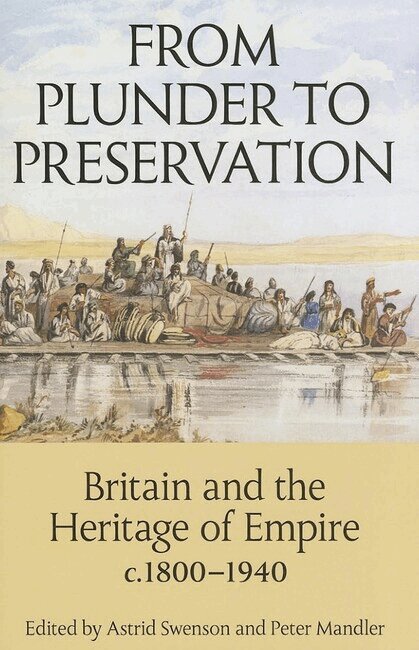
From Plunder to Preservation
Britain and the Heritage of Empire, c.1800-1940
Inbunden, Engelska, 2013
1 182 kr
Skickas inom 7-10 vardagar
What was the effect of the British Empire on the cultures and civilisations of the peoples over whom it ruled? This book takes a novel approach to this important and controversial subject by considering the impact of empire on the idea of 'heritage'. It reveals a dazzling variety of attitudes on the part of the imperialists - from frank 'plunder' of American, Asian, African and Pacific peoples' cultural artefacts and monuments to a growing appreciation of the need for 'preservation' of the world's heritage in the places it originated. But it goes beyond the empire-centred view to consider how far colonised peoples themselves were able to embed indigenous understandings of their heritage in the empire, and how indeed the empire was very often dependent on indigenous knowledge for its own functioning. This book will therefore appeal to those interested in the history of the British Empire in all parts of the world, and also to the burgeoning audience for writing on 'world heritage' - the movement pioneered by UNESCO to move beyond a Eurocentric idea of heritage and to identify cultural value in all of the historical productions of the world's peoples. Its case studies and unusual illustrations range from an extraordinary Anglo-African cathedral in the Sudan to palm leaf manuscripts in Sri Lanka, from Mayan and Indian temples to Shakespeare's Birthplace and Hadrian's Wall. Together they provide a vivid story of how our current understanding of the diverse heritages of world history was forged in the crucible of the British Empire. What was the effect of the British Empire on the cultures and civilizations of the peoples over whom it ruled? This book takes a novel approach to this important and controversial subject by considering the impact of empire on the idea of 'heritage'. It reveals a dazzling variety of attitudes on the part of the imperialists - from frank 'plunder' of American, Asian, African and Pacific peoples' cultural artefacts and monuments to a growing appreciation of the need for 'preservation' of the world's heritage in the places it originated. But it goes beyond the empire-centred view to consider how far colonized peoples themselves were able to embed indigenous understandings of their heritage in the empire, and how indeed the empire was very often dependent on indigenous knowledge for its own functioning. This book will therefore appeal to those interested in the history of the British Empire in all parts of the world, and also to the burgeoning audience for writing on 'world heritage' - the movement pioneered by UNESCO to move beyond a Eurocentric idea of heritage and to identify cultural value in all of the historical productions of the world's peoples. Its case studies and unusual illustrations range from an extraordinary Anglo-African cathedral in the Sudan to palm leaf manuscripts in Sri Lanka, from Mayan and Indian temples to Shakespeare's Birthplace and Hadrian's Wall. Together they provide a vivid story of how our current understanding of the diverse heritages of world history was forged in the crucible of the British Empire.
2 528 kr
Skickas inom 5-8 vardagar
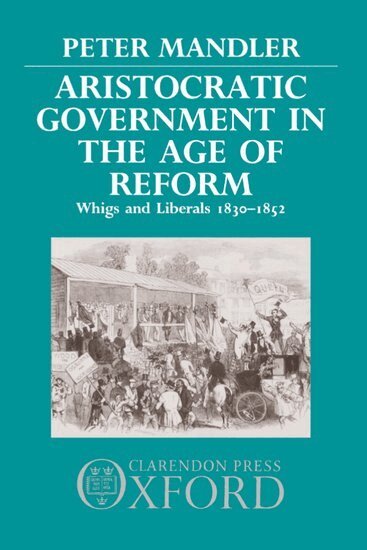
This book challenges the view that there was a smooth and inevitable progression towards liberalism in early nineteenth-century England. It examines the argument used by the high Whigs that the landed aristocracy still had a positive contribution to make to the welfare of the people. This argument came under scrutiny as the laissez-faire state met with serious criticism in the 1830s and 1840s, when the majority of people proved unwilling to accept the `compromise' forged between the middle classes and other sections of the landed elite, and mass movements for political and social reform proliferated. The Whigs' readiness to embrace these pressures kept them in power for sixteen of the twenty-two years between 1830 and 1852, and allowed them to serve as the midwives of the `Victorian origins of the welfare state'.Drawing on a rich variety of original sources, including many country house archives, Peter Mandler paints a vivid composite picture of the high aristocracy at the peak of its wealth and power, and provides a provocative and original analysis of how their rejection of middle-class manners helped them to govern Britain in two troubled decades of social unrest.
2 393 kr
Skickas inom 5-8 vardagar
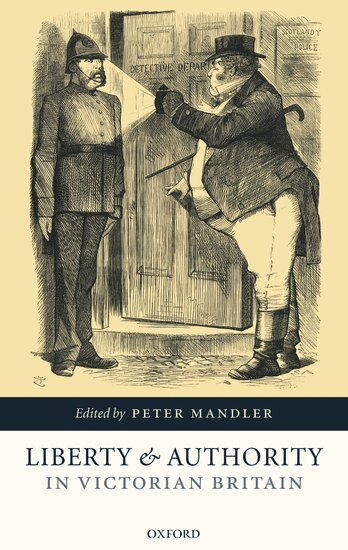
Victorian Britain is often considered as the high point of 'laissez-faire', the place and the time when people were most 'free' to make their own lives without the aid or interference of the State. This book explores the truth of that assumption and what it might mean. It considers what the Victorian State did or did not do, what were the prevailing definitions and practices of 'liberty', what other sources of discipline and authority existed beyond the State to structure people's lives - in sum, what were the broad conditions under which such a profound belief in 'liberty' could flourish, and a complex society be run on those principles. Contributors include leading scholars in British political, social and cultural history, so that 'liberty' is seen in the round, not just as a set of ideas or of political slogans, but also as a public and private philosophy that structured everyday life. Consideration is also given to the full range of British subjects in the nineteenth century - men, women, people of all classes, from all parts of the British Isles - and to placing the British experience in a global and comparative perspective.
521 kr
Skickas inom 7-10 vardagar
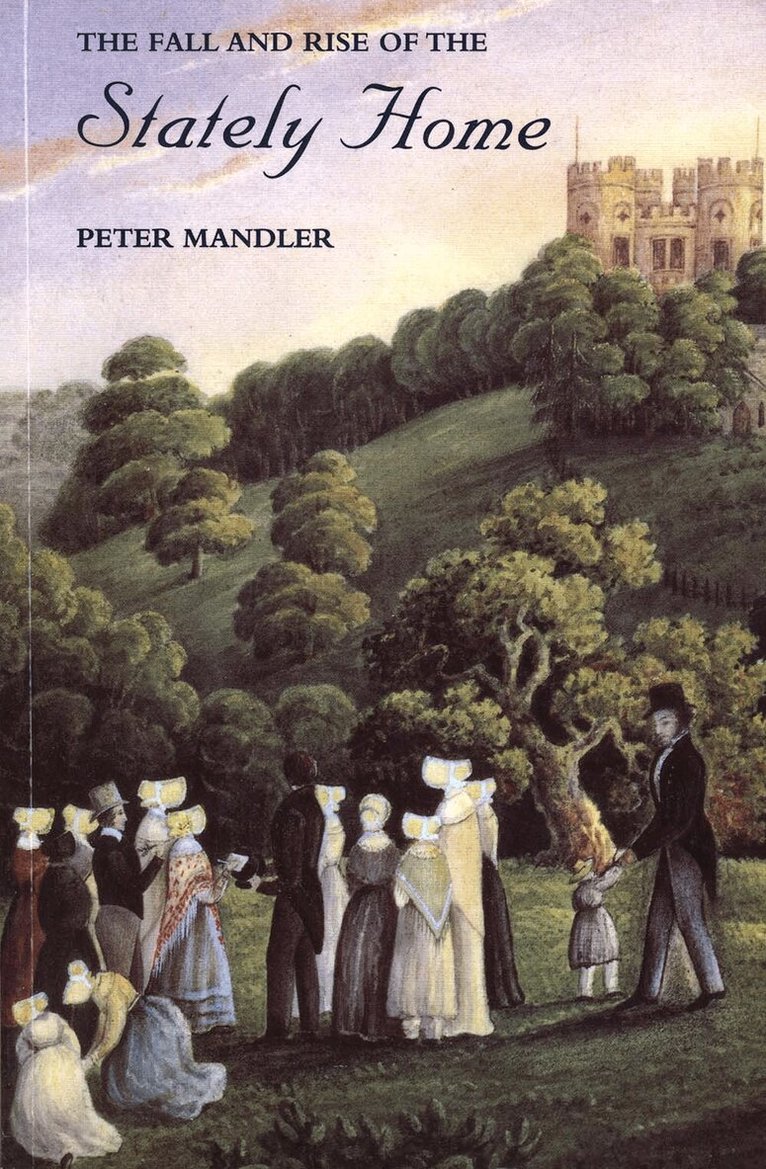
How much do the English really care about their stately homes? In this pathbreaking and wide-ranging account of the changing fortunes and status of the stately homes of England over the past two centuries, Peter Mandler melds social, cultural, artistic, and political perspectives and reveals much about the relationship of the nation to its past and its traditional ruling elite. Challenging the prevailing view of a modern English culture besotted with its history and its aristocracy, Mandler portrays instead a continuously changing and modernizing society in which both popular and intellectual attitudes toward the aristocracy—and its stately homes—have veered from selective appreciation to outright hostility and only recently to thoroughgoing admiration.With great panache, Mandler adds the missing pieces to the story of the country house. Going beyond its architects and its owners, he brings to center stage a much wider cast of characters—aristocratic entrepreneurs, anti-aristocratic politicians, campaigning conservationists, ordinary sightseers and voters—and a scenario full of incident and local and national color. He traces attitudes toward the stately homes, beginning in the first half of the nineteenth century when public feeling about the aristocracy was mixed and divided. Criticism of the "foreign" and "exclusive" image of the typical aristocratic country house was widespread. At the same time, interest grew in those older houses that symbolized an olden time of imagined national harmony. The Victorian period also saw the first mass tourist industry, and a strong popular demand emerged for the right to visit all the stately homes. By the 1880s, however, hostility toward the aristocracy made appreciation of any country house politically treacherous, and interest in aristocratic heritage declined steadily for sixty years. Only after 1945, when the aristocracy was no longer seen as a threat, was a gentle revival of the stately homes possible, Mandler contends, and only since the 1970s has that revival become a triumphant appreciation. He enters today's debate with a discussion of how far people today—and tomorrow—are willing to see the aristocracy's heritage as their own.
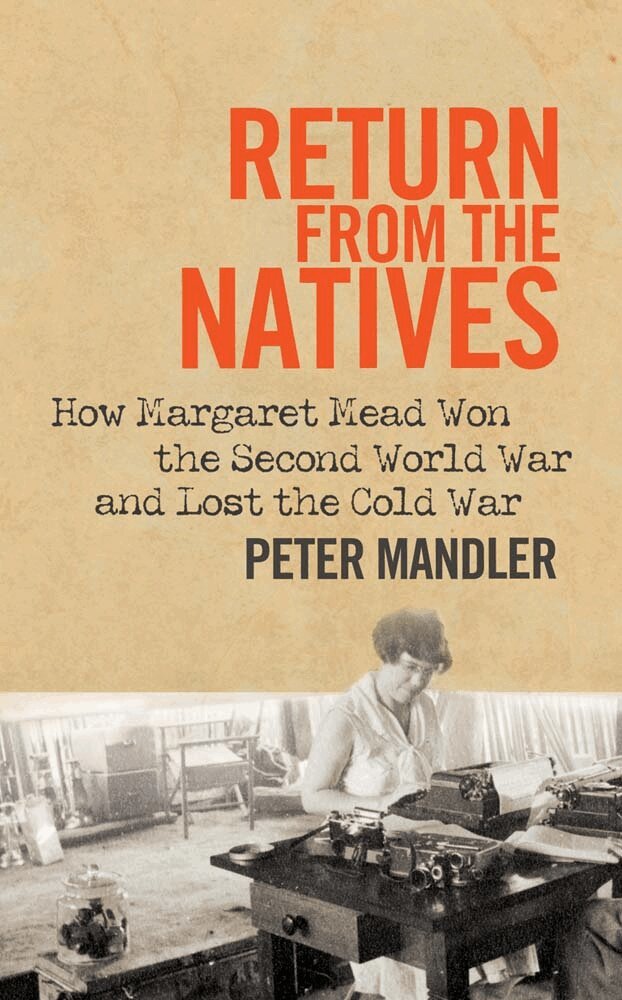
Return from the Natives
How Margaret Mead Won the Second World War and Lost the Cold War
Inbunden, Engelska, 2013
415 kr
Skickas inom 7-10 vardagar
Celebrated anthropologist Margaret Mead, who studied sex in Samoa and child-rearing in New Guinea in the 1920s and '30s, was determined to show that anthropology could tackle the psychology of the most complex, modern societies in ways useful for waging the Second World War. This fascinating book follows Mead and her closest collaborators—her lover and mentor Ruth Benedict, her third husband Gregory Bateson, and her prospective fourth husband Geoffrey Gorer—through their triumphant climax, when Mead became the cultural ambassador from America to Britain in 1943, to their downfall in the Cold War.Part intellectual biography, part cultural history, and part history of the human sciences, Peter Mandler's book is a reminder that the Second World War and the Cold War were a clash of cultures, not just ideologies, and asks how far intellectuals should involve themselves in politics, at a time when Mead's example is cited for and against experts' involvement in Iraq and Afghanistan.
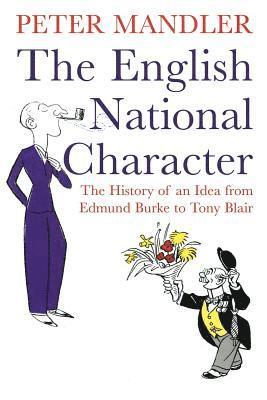
English National Character
The History of an Idea from Edmund Burke to Tony Blair
Häftad, Engelska, 2006
572 kr
Skickas inom 5-8 vardagar
What kind of people are 'the English' - what are the characteristic traits and behaviour that distinguish them from other people? This highly original and wide-ranging book traces the surprisingly varied history of ideas amongst the English about their own 'national character' over the past two centuries. Two hundred years ago, the very idea of a 'national character' was novel and not very respectable. In our own time, when we like to think of ourselves as unique individuals, it's hard again to think of a 'national character' that binds us into a national unit. But in between, as Britain became a democracy, 'national character' became part of the national common sense, in depictions of 'John Bull' and his twentieth-century successor, the 'Little Man', and in a set of stereotypes about English traits, follies and foibles. Far from being shy of talking about themselves, the English have produced over the past two hundred years a vast outpouring of material on what it means to be English - material on which this book draws: lectures, sermons, political speeches, journalism, popular and scholarly books, poems and novels and films, satires and cartoons and caricatures, as well as the most up-to-the minute social science and public opinion research. In this comprehensive, lucidly argued account of the history of thinking about the English national character, one of the leading historians of modern Britain challenges long-held assumptions and familiar stereotypes and offers an entirely new perspective on what it means to think of oneself as being English.
2 232 kr
Skickas inom 10-15 vardagar
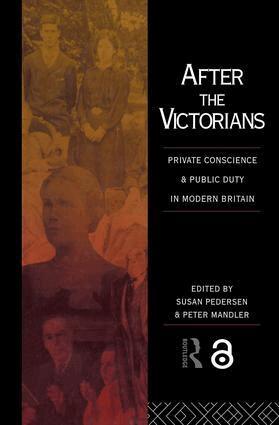
Written by a team of eminent historians, these essays explore how ten twentieth-century intellectuals and social reformers sought to adapt such familiar Victorian values as `civilisation', `domesticity', `conscience' and `improvement' to modern conditions of democracy, feminism and mass culture. Covering such figures as J.M. Keynes, E.M. Forster and Lord Reith of the BBC, these interdisciplinary studies scrutinize the children of the Victorians at a time when their private assumptions and public positions were under increasing strain in a rapidly changing world. After the Victorians is written in honour of the late Professor John Clive of Harvard, and uses, as he did, the method of biography to connnect the public and private lives of the generations who came after the Victorians.
1 053 kr
Skickas inom 10-15 vardagar
Who were the poor of the world's first metropolises, and how did they survive? This collection of eight original essays proposes a revisionist perspective on poverty and its relief in the nineteenth-century city, emphasizing the position of women and children and the importance of charity and welfare in their lives.Historians have tended to focus on the motives and achievements of the benefactors and institutions, in part because donors left behind such rich documentation. These essays, taking their cue from recent trends in the social sciences, address charity "from below," as experienced from the point of view of the recipients, and challenge assumptions about the "marginality" and "dependency" of the poor.The authors find that the demand for charity was constant, that the forms in which it was offered rarely matched the forms in which it was needed, that the poor used considerable ingenuity in adapting both the gifts and themselves to meet their needs, and that their attitudes toward charity often were not what either donors or historians have believed.The Uses of Charity is a valuable resource for students and scholars of history, anthropology, sociology, and women's studies.
287 kr
Tillfälligt slut
717 kr
Skickas inom 10-15 vardagar
Written by a team of eminent historians, these essays explore how ten twentieth-century intellectuals and social reformers sought to adapt such familiar Victorian values as `civilisation', `domesticity', `conscience' and `improvement' to modern conditions of democracy, feminism and mass culture. Covering such figures as J.M. Keynes, E.M. Forster and Lord Reith of the BBC, these interdisciplinary studies scrutinize the children of the Victorians at a time when their private assumptions and public positions were under increasing strain in a rapidly changing world. After the Victorians is written in honour of the late Professor John Clive of Harvard, and uses, as he did, the method of biography to connnect the public and private lives of the generations who came after the Victorians.
793 kr
Skickas inom 5-8 vardagar
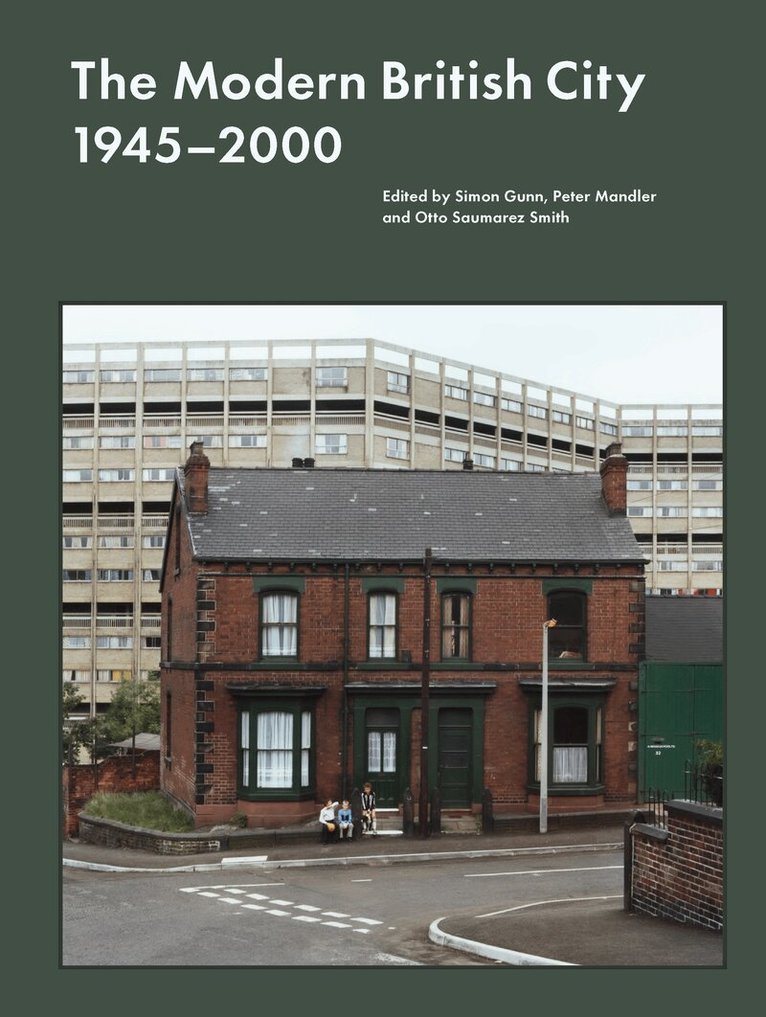
Bringing together architectural, urban and social historians, this book charts the extraordinary changes that took place in British cities between the end of the Second World War and the early 21st century. This ambitious volume captures something of the diversity of the modern British city through a multi-disciplinary approach, exploring gentrification and multiculturalism, shopping and night life, as well as demography and statistics.For much of the first two-thirds of the 20th century, ‘modern’ in the British urban context meant the purging of the Victorian past. Even so, much of the terraced housing and the monumental architecture of city centres still dated from the 19th century. Disdained by architectural critics in the first half of the 20th century, structures like Covent Garden’s Market Building, Manchester’s Royal Exchange and Liverpool’s Albert Dock would become pivots of the conservation and restoration movement which accompanied Britain’s ‘urban renaissance’ from the 1970s onwards.As this book shows, after 1950 a series of long-term historical processes combined to transform the British city. Mass automobility brought with it motorways, underpasses and flyovers. Deindustrialisation left a profound mark on large areas of urban Britain, with enduring consequences for the communities affected. Immigration not only brought more diverse people and voices to British cities than ever before, but with them, a fresh variety of stores, restaurants, places of worship and venues for entertainment. Likewise, urban planning and the fruits of consumerism left their mark in the ubiquitous presence of civic centres, shopping malls and cultural quarters. The book shows how these processes did not operate separately, but in complex inter-relationship with one another, often producing unintended outcomes.The result was cities where the past and the present were juxtaposed, adding to rather than diminishing their sense of place. This book will enrich our understanding of why British cities are as they are today, in all their messiness and mutability.
802 kr
Tillfälligt slut