Peter Mora – författare
Visar alla böcker från författaren Peter Mora. Handla med fri frakt och snabb leverans.
14 produkter
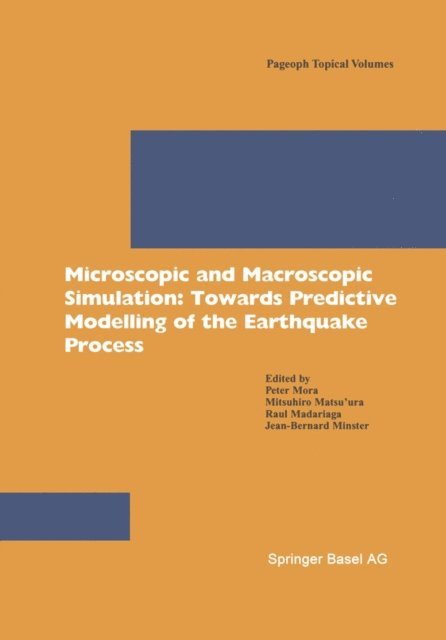
Microscopic and Macroscopic Simulation: Towards Predictive Modelling of the Earthquake Process
Av Jean-Bernard Minster, Raul Madariaga m. fl.
E-bok, 2013
718 kr
Lägg i varukorg
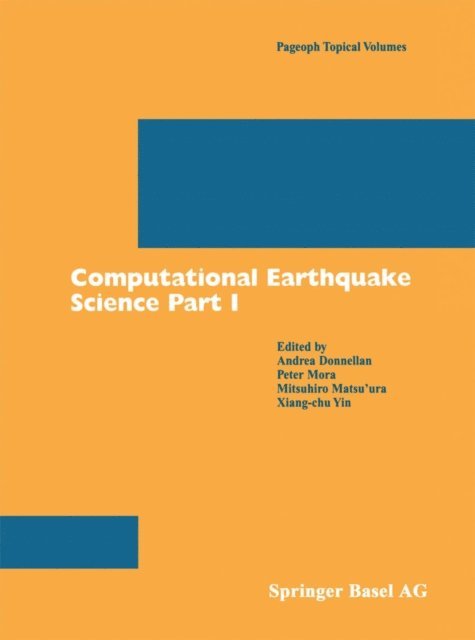
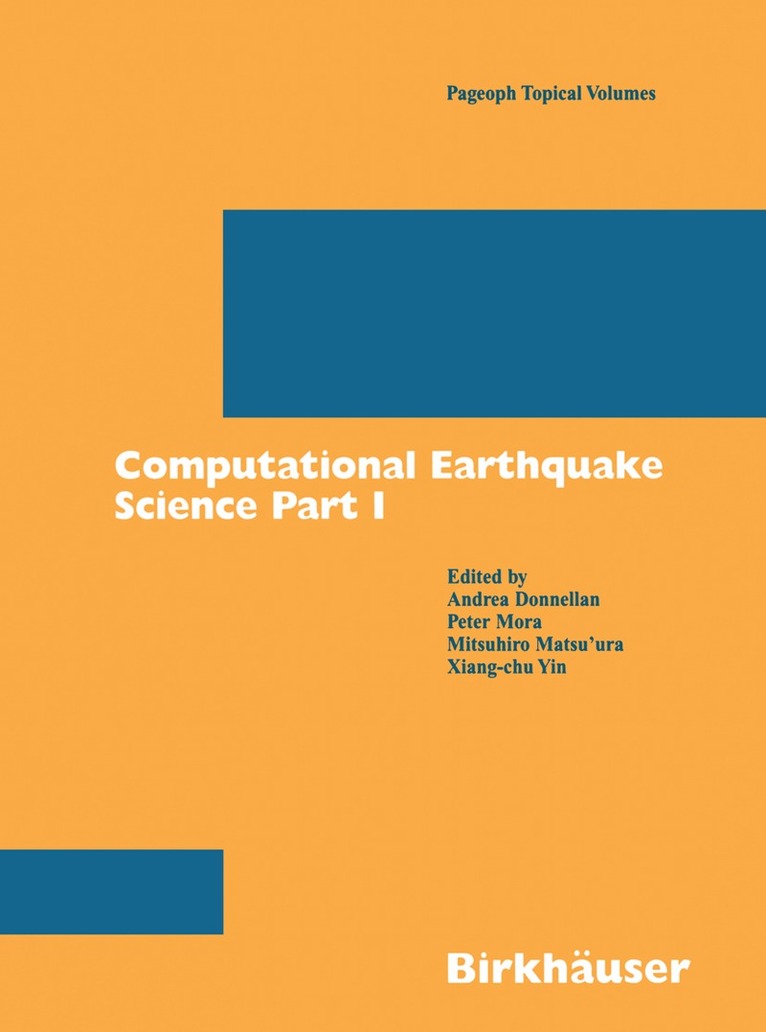
Computational Earthquake Science Part I
Av Xiang-chu Yin, Mitsuhiro Matsu'ura m. fl.
E-bok, 2012
734 kr
Lägg i varukorg
Exciting developments in earthquake science have benefited from new observations, improved computational technologies, and improved modeling capabilities. Designing models of the earthquake of the earthquake generation process is a grand scientific challenge due to the complexity of phenomena and …
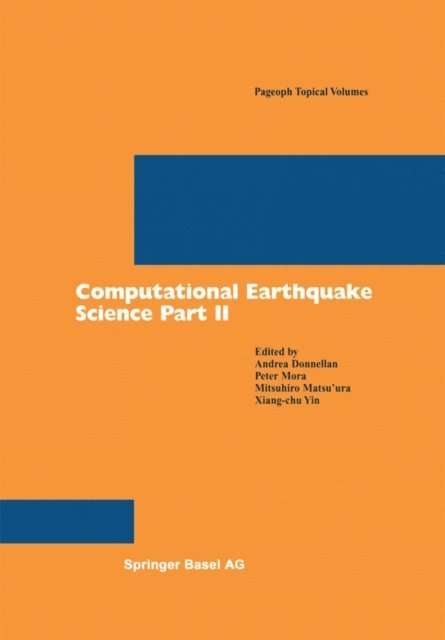
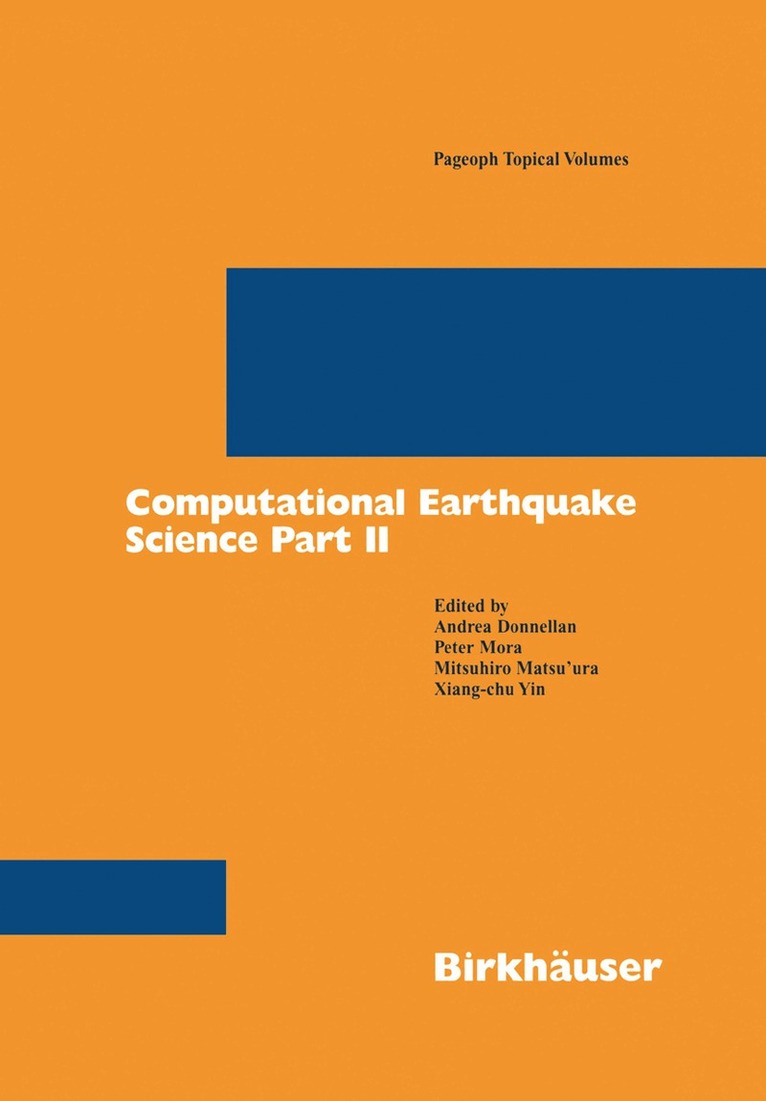
Computational Earthquake Science Part II
Av Xiang-chu Yin, Mitsuhiro Matsu'ura m. fl.
E-bok, 2012
734 kr
Lägg i varukorg
Exciting developments in earthquake science have benefited from new observations, improved computational technologies, and improved modeling capabilities. Designing models of the earthquake generation process is a grand scientific challenge due to the complexity of phenomena and range of scales …
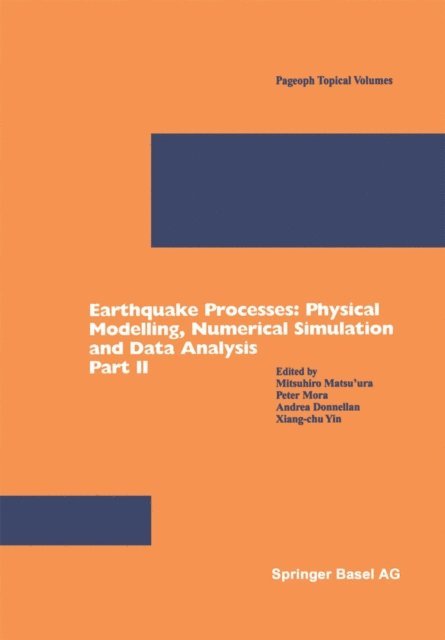
Earthquake Processes: Physical Modelling, Numerical Simulation and Data Analysis Part II
Av Xiang-chu Yin, Andrea Donnellan m. fl.
E-bok, 2012
734 kr
Lägg i varukorg
In the last decade of the 20th century, there has been great progress in the physics of earthquake generation; that is, the introduction of laboratory-based fault constitutive laws as a basic equation governing earthquake rupture, quantitative description of tectonic loading driven by plate motion, …
Earthquake Processes: Physical Modelling, Numerical Simulation and Data Analysis Part I
Av Xiang-chu Yin, Andrea Donnellan m. fl.
E-bok, 2012
734 kr
Lägg i varukorg
In the last decade of the 20th century, there has been great progress in the physics of earthquake generation; that is, the introduction of laboratory-based fault constitutive laws as a basic equation governing earthquake rupture, quantitative description of tectonic loading driven by plate motion, …
Microscopic and Macroscopic Simulation: Towards Predictive Modelling of the Earthquake Process
Av Peter Mora, Mitsuhiro Matsu'ura m. fl.
Häftad, 2001
505 kr
Lägg i varukorg
Vol. 157, 2000 spanning across disciplines and national boundaries gives cause for optimism. New participation in ACES to extend its existing synergies is welcomed. We wish to thank the scientific participants of The APEC Cooperation for Earthquake Simulation (ACES) and the contributors to this …
Earthquake Processes: Physical Modelling, Numerical Simulation and Data Analysis Part I
Av M. Matsuura, X. Yin m. fl.
Häftad, 2002
550 kr
Lägg i varukorg
In the last decade of the 20th century, there has been great progress in the physics of earthquake generation; that is, the introduction of laboratory-based fault constitutive laws as a basic equation governing earthquake rupture, quantitative description of tectonic loading driven by plate motion, …
Earthquake Processes: Physical Modelling, Numerical Simulation and Data Analysis Part II
Av M. Matsuura, X. Yin m. fl.
Häftad, 2002
550 kr
Lägg i varukorg
In the last decade of the 20th century, there has been great progress in the physics of earthquake generation; that is, the introduction of laboratory-based fault constitutive laws as a basic equation governing earthquake rupture, quantitative description of tectonic loading driven by plate motion, …
Computational Earthquake Science Part I
Av Andrea Donnellan, Peter Mora m. fl.
Häftad, 2004
566 kr
Lägg i varukorg
Exciting developments in earthquake science have benefited from new observations, improved computational technologies, and improved modeling capabilities. Designing models of the earthquake of the earthquake generation process is a grand scientific challenge due to the complexity of phenomena and …
Computational Earthquake Science Part II
Av Julius Von Staudinger, Andrea Donnellan m. fl.
Häftad, 2004
550 kr
Lägg i varukorg
Exciting developments in earthquake science have benefited from new observations, improved computational technologies, and improved modeling capabilities. Designing models of the earthquake generation process is a grand scientific challenge due to the complexity of phenomena and range of scales …
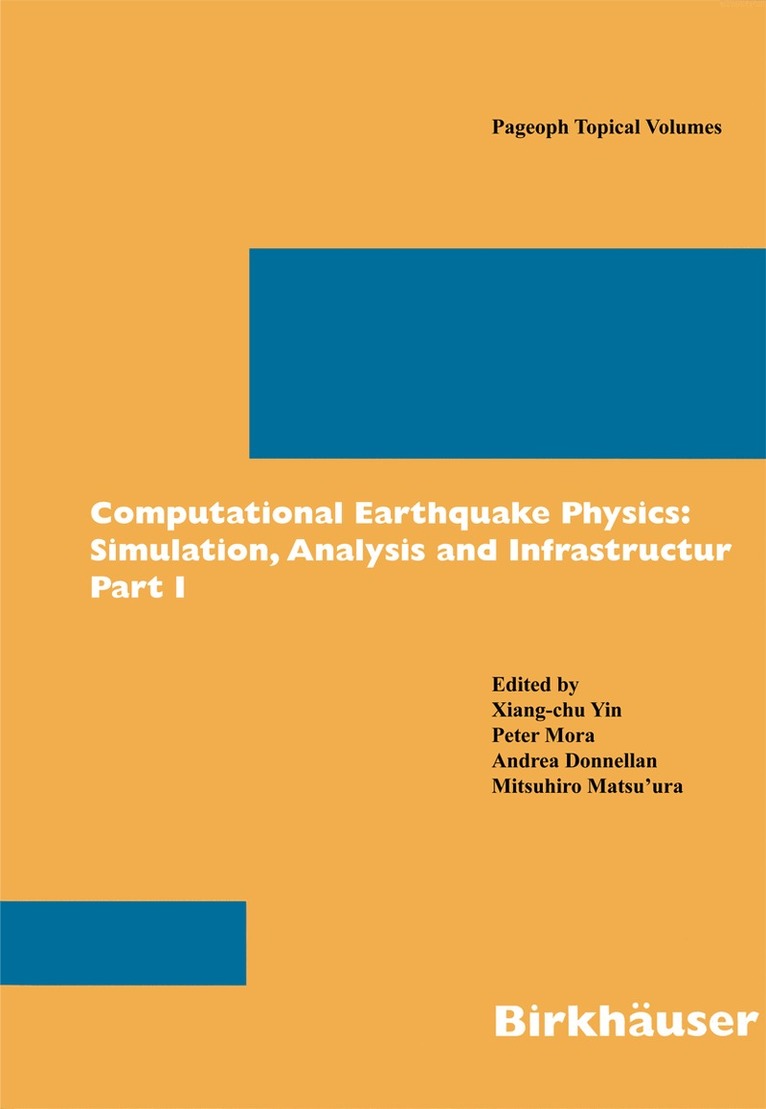
Computational Earthquake Physics: Simulations, Analysis and Infrastructure, Part I
Av Xiang-chu Yin, Peter Mora m. fl.
Häftad, 2006
1093 kr
Lägg i varukorg
Exciting developments in earthquake science have benefited from new observations, improved computational technologies, and improved modeling capabilities. Designing realistic supercomputer simulation models for the complete earthquake generation process is a grand scientific challenge due to the …
Computational Earthquake Physics: Simulations, Analysis and Infrastructure, Part I
Av Mitsuhiro Matsu'ura, Andrea Donnellan m. fl.
E-bok, 2007
1427 kr
Lägg i varukorg
Exciting developments in earthquake science have benefited from new observations, improved computational technologies, and improved modeling capabilities. Designing realistic supercomputer simulation models for the complete earthquake generation process is a grand scientific challenge due to the …
Computational Earthquake Physics: Simulations, Analysis and Infrastructure, Part II
Av Xiang-chu Yin, Peter Mora m. fl.
Häftad, 2007
1093 kr
Lägg i varukorg
Exciting developments in earthquake science have benefited from new observations, improved computational technologies, and improved modeling capabilities. Designing realistic supercomputer simulation models for the complete earthquake generation process is a grand scientific challenge due to the …
Computational Earthquake Physics: Simulations, Analysis and Infrastructure, Part II
Av Mitsuhiro Matsu'ura, Andrea Donnellan m. fl.
E-bok, 2007
1459 kr
Lägg i varukorg
Exciting developments in earthquake science have benefited from new observations, improved computational technologies, and improved modeling capabilities. Designing realistic supercomputer simulation models for the complete earthquake generation process is a grand scientific challenge due to the …