Peter Sawyer - Böcker
Visar alla böcker från författaren Peter Sawyer. Handla med fri frakt och snabb leverans.
3 produkter
3 produkter
261 kr
Skickas
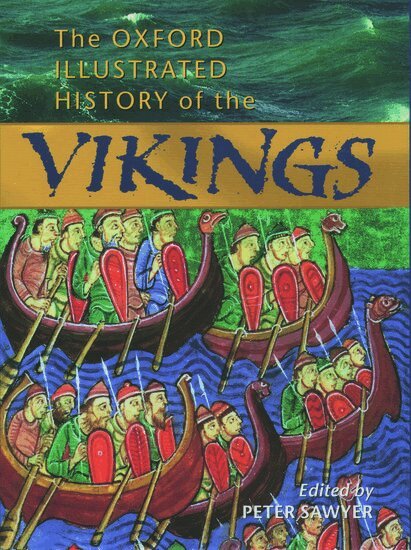
Were the Vikings, as contemporary description had it, a 'valiant, wrathful, foreign, purely pagan people' who swept in from the sea to plunder and slaughter? Or in the words of a Manx folksong 'ware-wolves keen in hungry quest', who lived and died by the sea and the sword. Or were they unusually successful merchants, extortionists, and pioneer explorers? This book, by leading international scholars, considers the latest research and presents a compelling picture of the Vikings and their age. Excavations as far apart as Dublin and Newfoundland, York and Kiev, provide fascinating archaeological evidence, expertly interpreted in this extensively illustrated book.
670 kr
Skickas inom 5-8 vardagar
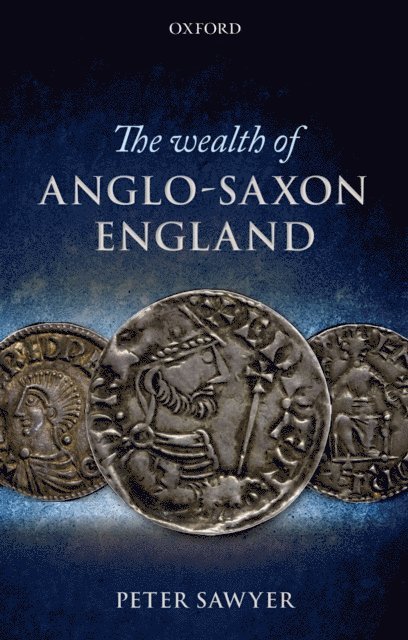
How did the Anglo-Saxons obtain the treasure that tempted Vikings to raid England frequently in the ninth century and again between 980 and 1018? As Britain then had no gold mine and its lead mines yielded very little silver, this treasure must have been imported. Some may have been given, but most was obtained by trade. Until the ninth century the main source was Francia where there was a lively demand for English produce. Cross Channel trade flourished, much of it passing through the major ports, or wics, that developed in the seventh century. The rapid decline of this trade in the ninth century was caused, not by the Vikings, but by a general shortage of new silver in western Europe after c. 850, reflected in the debasement of the Frankish and Anglo-Saxon coinages. Silver was, however, imported to England by the Danes who settled there in the late ninth century. A very important source of new silver was discovered in the 960s in Germany. This led to a rapid expansion of the German economy that created a demand for raw materials and food from England. Very soon England's towns expanded and its trade, internal and external, grew. Its new wealth attracted Vikings, but trade continued and, although they extracted a great deal of silver, new supplies from Germany enabled the English to maintain their currency. Recent studies have shown that it grew to a peak under Edward the Confessor. This confirms the evidence of Domesday Book that on the eve of the Norman Conquest England was a very rich, highly urbanized, kingdom with a large, well-controlled coinage of high quality. This coinage, and Domesday Book itself, are indeed good evidence that English government was then remarkably effective. Peter Sawyer offers an account of the ways wealth was accumulated and the forms it took in Anglo-Saxon England, with emphasis on recent developments in the study of Anglo-Saxon coins and Domesday Book, and some of their surprising results.
292 kr
Skickas inom 7-10 vardagar
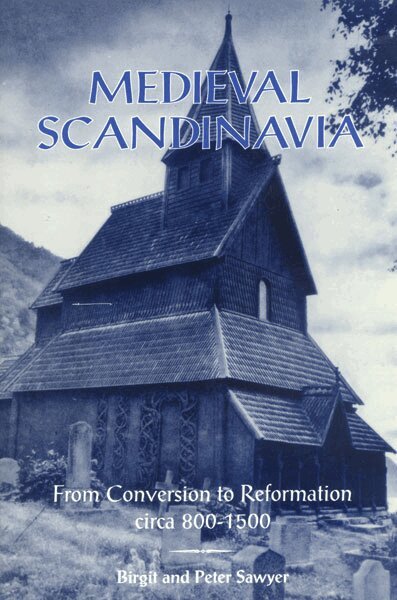
The study of Scandinavia has been, and still is, deeply influenced by the interpretation of its earliest history that was developed in the 19th century by political, legal, and literary historians, archaeologists, and anthropologists. Scandinavia figured prominently in discussions of early medieval Europe, not only as the homeland of the Vikings, but also as the region in which Germanic society remained uncontaminated by Christianity and other influences longer than anywhere else. In "Medieval Scandinavia", Birgit and Peter Sawyer question assumptions about early Scandinavian history, including the supposed leading role of free and equal peasants and their position in founding churches. They meticulously trace the development of Scandinavia from the early ninth century through the second and third decades of the 16th century, when rulers of Scandinavia rejected the authority of the Papacy and the attempt to establish a united Scandinavian monarchy finally collapsed. The authors include a discussion of medieval history writing and comment on the use of history in the 16th century and modern attitudes to medieval history which differ in various parts of Scandinavia.They ultimately conclude that historic Scandinavia held greater similarities to other European regions than has been commonly supposed. Birgit Sawyer is one of the founders of the biennial interdisciplinary conferences on women in medieval Scandinavia. Peter Sawyer's previous books include "Kings and Vikings" and "The Age of the Vikings".