Petre Petrov – författare
Visar alla böcker från författaren Petre Petrov. Handla med fri frakt och snabb leverans.
5 produkter
Vernaculars of Communism
Language, Ideology and Power in the Soviet Union and Eastern Europe
Av Petre Petrov, Lara Ryazanova-Clarke
Häftad, 2017
844 kr
Lägg i varukorg
The political revolutions which established state socialism in the Soviet Union and Eastern Europe were accompanied by revolutions in the word, as the communist project implied not only remaking the world but also renaming it. As new institutions, social roles, rituals and behaviours emerged, so …
Vernaculars of Communism
Language, Ideology and Power in the Soviet Union and Eastern Europe
Av Petre Petrov, Lara Ryazanova-Clarke
Inbunden, 2014
3147 kr
Lägg i varukorg
The political revolutions which established state socialism in the Soviet Union and Eastern Europe were accompanied by revolutions in the word, as the communist project implied not only remaking the world but also renaming it. As new institutions, social roles, rituals and behaviours emerged, so …
Vernaculars of Communism
Language, Ideology and Power in the Soviet Union and Eastern Europe
Av Lara Ryazanova-Clarke, Petre Petrov
E-bok, 2014
999 kr
Lägg i varukorg
The political revolutions which established state socialism in the Soviet Union and Eastern Europe were accompanied by revolutions in the word, as the communist project implied not only remaking the world but also renaming it. As new institutions, social roles, rituals and behaviours emerged, so …
Vernaculars of Communism
Language, Ideology and Power in the Soviet Union and Eastern Europe
Av Lara Ryazanova-Clarke, Petre Petrov
E-bok, 2014
999 kr
Lägg i varukorg
The political revolutions which established state socialism in the Soviet Union and Eastern Europe were accompanied by revolutions in the word, as the communist project implied not only remaking the world but also renaming it. As new institutions, social roles, rituals and behaviours emerged, so …
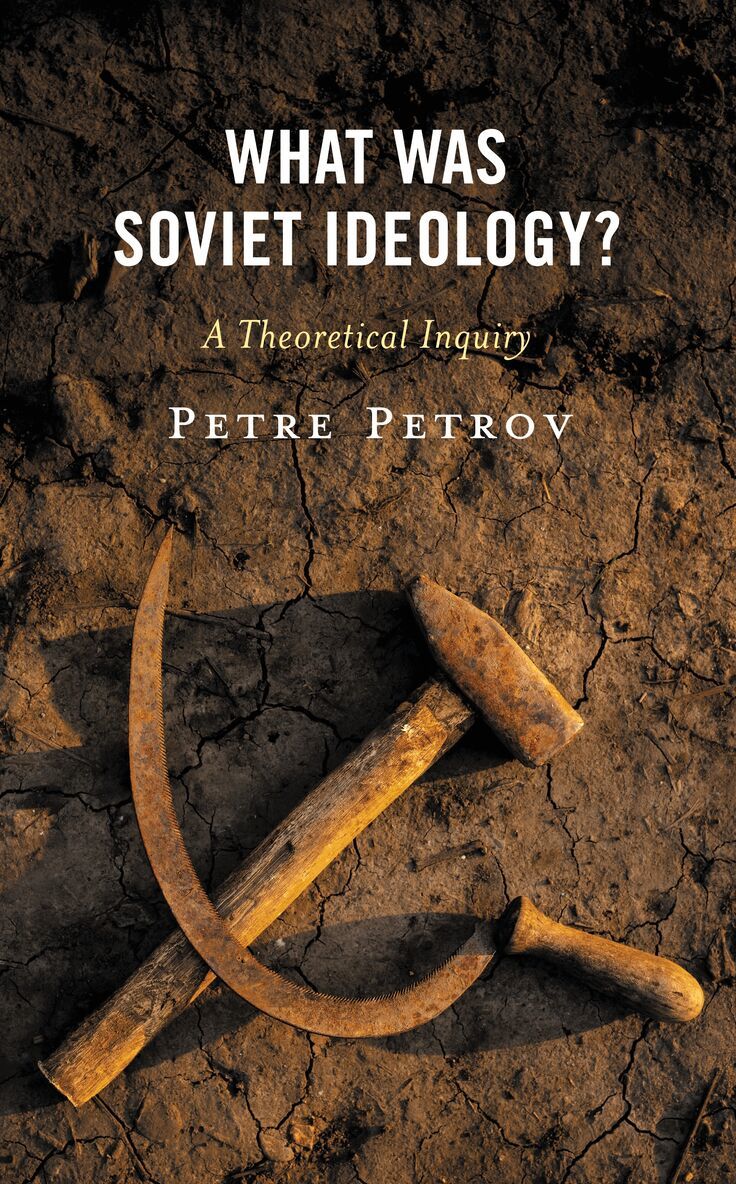
What Was Soviet Ideology?
A Theoretical Inquiry
Av Petre Petrov
Inbunden, 2023
1240 kr
Lägg i varukorg
Because the Soviet Union loudly proclaimed to be an ideological state, its scholars have rarely scrutinized ideology as a concept. Instead, they have treated it as a self-evident fact and proceeded to deliberate the importance of the Marxist-Leninist creed in social life or political …