Philip John Davies - Böcker
Visar alla böcker från författaren Philip John Davies. Handla med fri frakt och snabb leverans.
7 produkter
7 produkter
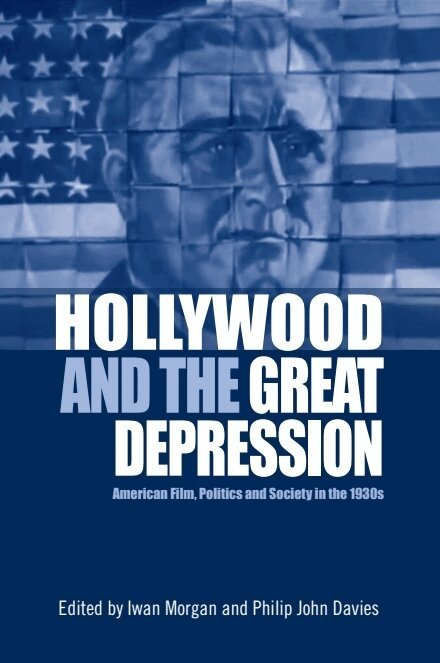
Hollywood and the Great Depression
American Film, Politics and Society in the 1930s
Inbunden, Engelska, 2016
1 343 kr
Skickas inom 7-10 vardagar
In the popular imagination, 1930s Hollywood was a dream factory producing escapist movies to distract the American people from the greatest economic crisis in their nation’s history. But while many films of the period conform to this stereotype, there were a significant number that promoted a message, either explicitly or implicitly, in support of the political, social and economic change broadly associated with President Franklin D. Roosevelt’s New Deal programme. At the same time, Hollywood was in the forefront of challenging traditional gender roles, both in terms of movie representations of women and the role of women within the studio system. With case studies of actors like Shirley Temple, Cary Grant and Fred Astaire, as well as a selection of films that reflect politics and society in the Depression decade, this fascinating book examines how the challenges of the Great Depression impacted on Hollywood and how it responded to them.
382 kr
Tillfälligt slut
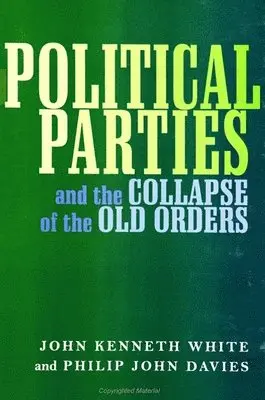
Addresses the altered states of political parties and politics in the post-Cold War era.With the passage of the Cold War, political parties in nearly every corner of the globe have undergone a vast upheaval. Old ideas have become obsolete, electoral maps have been redrawn, party structures have been rebuilt, and new leaders have emerged. Political Parties and the Collapse of the Old Orders describes these changes using several countries as laboratories: the United States, United Kingdom, France, Germany, Italy, Canada, Australia, Mexico, Israel, South Africa, and Russia. While the nature and extent of the political upheavals vary from place to place, the transformations in each nation's party system have been extraordinary. In this "new world order," the old political arrangements and old ways of doing things have disappeared. The altered states of political parties in the post-Cold War world pose a central question: what does change look like? The answers given here illuminate our understanding of why the world has changed and how political parties are attempting to cope with it.
447 kr
Skickas inom 5-8 vardagar
336 kr
Skickas inom 5-8 vardagar
559 kr
Skickas inom 5-8 vardagar
433 kr
Skickas inom 5-8 vardagar
Hollywood and the Great Depression
American Film, Politics and Society in the 1930s
Häftad, Engelska, 2018
378 kr
Skickas
Examines how Hollywood responded to and reflected the political and social changes that America experienced during the 1930sIn the popular imagination, 1930s Hollywood was a dream factory producing escapist movies to distract the American people from the greatest economic crisis in their nation's history. But while many films of the period conform to this stereotype, there were a significant number that promoted a message, either explicitly or implicitly, in support of the political, social and economic change broadly associated with President Franklin D. Roosevelt's New Deal programme. At the same time, Hollywood was in the forefront of challenging traditional gender roles, both in terms of movie representations of women and the role of women within the studio system. With case studies of actors like Shirley Temple, Cary Grant and Fred Astaire, as well as a selection of films that reflect politics and society in the Depression decade, this fascinating book examines how the challenges of the Great Depression impacted on Hollywood and how it responded to them.Topics covered include:How Hollywood offered positive representations of working womenCongressional investigations of big-studio monopolization over movie distributionHow three different types of musical genres related in different ways to the Great Depression the Warner Bros Great Depression Musicals of 1933, the Astaire/Rogers movies, and the MGM 'kids' musicals of the late 1930sThe problems of independent production exemplified in King Vidor's 'Our Daily Bread'Cary Grant's success in developing a debonair screen persona amid Depression conditionsContributors Harvey G. Cohen, King s College LondonPhilip John Davies, British LibraryDavid Eldridge, University of HullPeter William Evans, Queen Mary, University of LondonMark Glancy, Queen Mary University of LondonIna Rae Hark, University of South CarolinaIwan Morgan, University College LondonBrian Neve, University of BathIan Scott, University of ManchesterAnna Siomopoulos, Bentley UniversityJ. E. Smyth, University of WarwickMelvyn Stokes, University College LondonMark Wheeler, London Metropolitan University