
Philip Kuberski – författare
Visar alla böcker från författaren Philip Kuberski. Handla med fri frakt och snabb leverans.
6 produkter
6 produkter
747 kr
Skickas inom 3-6 vardagar
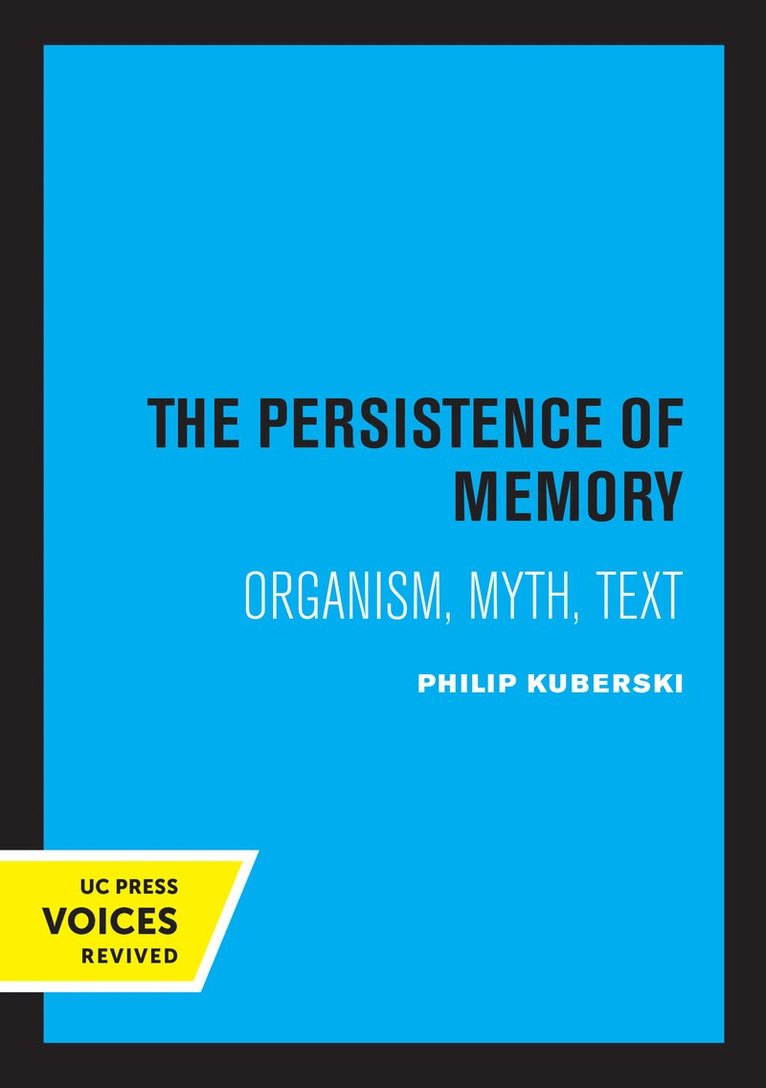
While memory is one of the most fascinating faculties of consciousness, it is also one of the most mysterious. Is it memory—our own marvelous personal computer or data base—that brings us the intense feelings prompted by a certain object or situation?Drawing on an expansive array of sources, from microbiology to cosmology, Ovid to Proust, Egyptology to the cinema, Philip Kuberski leads us on a brave and beguiling exploration of memory. He enables us to see it as a worldly process in which individuals both remember and are remembered, all in a network of associations that join our bodies, personal and cultural myths, and aesthetic and literary experiences. His essays will provide a tantalizing and thoughtful read for those interested in literature, psychology, biology, anthropology, and philosophy.This title is part of UC Press's Voices Revived program, which commemorates University of California Press’s mission to seek out and cultivate the brightest minds and give them voice, reach, and impact. Drawing on a backlist dating to 1893, Voices Revived makes high-quality, peer-reviewed scholarship accessible once again using print-on-demand technology. This title was originally published in 1992.

1 649 kr
Skickas inom 3-6 vardagar
While memory is one of the most fascinating faculties of consciousness, it is also one of the most mysterious. Is it memory—our own marvelous personal computer or data base—that brings us the intense feelings prompted by a certain object or situation?Drawing on an expansive array of sources, from microbiology to cosmology, Ovid to Proust, Egyptology to the cinema, Philip Kuberski leads us on a brave and beguiling exploration of memory. He enables us to see it as a worldly process in which individuals both remember and are remembered, all in a network of associations that join our bodies, personal and cultural myths, and aesthetic and literary experiences. His essays will provide a tantalizing and thoughtful read for those interested in literature, psychology, biology, anthropology, and philosophy.This title is part of UC Press's Voices Revived program, which commemorates University of California Press’s mission to seek out and cultivate the brightest minds and give them voice, reach, and impact. Drawing on a backlist dating to 1893, Voices Revived makes high-quality, peer-reviewed scholarship accessible once again using print-on-demand technology. This title was originally published in 1992.
1 209 kr
Tillfälligt slut
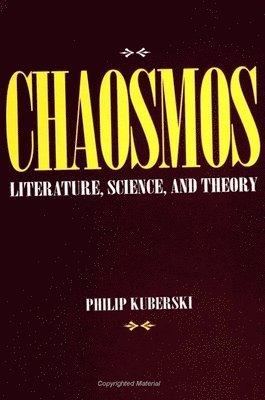
This book shows how writers like James Joyce, James Merrill, and Doris Lessing; scientists like Gregory Bateson, Ilya Prigogine, and David Bohm; and theorists like Jacques Derrida, Jacques Lacan, and Michel Serres forecasted and initiated a shift away from modernist conceptions of the world as a machine; the self as an isolated, enclosed principle, and representation as a reductive survey of the world and the self.The focus of this book is the "chaosmos" (a Joycean coinage) apparent within the atom and also within analogous "nuclear" sites such as the self, the word, the organism, and the world. By "chaosmos," Kuberski intends a unitary and yet untotalized-a chiasmic-concept of the world as a field of inevitable and intermittent interference and convergence, a multi-leveled complexity from which emerge organisms, languages, and selves. In exploring and mapping chaosmos, Kuberski emphasizes significant convergences of literary and philosophic, deconstructive and organistic, Eastern and Western, and scientific and humanistic points of view.
437 kr
Tillfälligt slut
This book shows how writers like James Joyce, James Merrill, and Doris Lessing; scientists like Gregory Bateson, Ilya Prigogine, and David Bohm; and theorists like Jacques Derrida, Jacques Lacan, and Michel Serres forecasted and initiated a shift away from modernist conceptions of the world as a machine; the self as an isolated, enclosed principle, and representation as a reductive survey of the world and the self.The focus of this book is the "chaosmos" (a Joycean coinage) apparent within the atom and also within analogous "nuclear" sites such as the self, the word, the organism, and the world. By "chaosmos," Kuberski intends a unitary and yet untotalized-a chiasmic-concept of the world as a field of inevitable and intermittent interference and convergence, a multi-leveled complexity from which emerge organisms, languages, and selves. In exploring and mapping chaosmos, Kuberski emphasizes significant convergences of literary and philosophic, deconstructive and organistic, Eastern and Western, and scientific and humanistic points of view.
2 015 kr
Skickas inom 10-15 vardagar
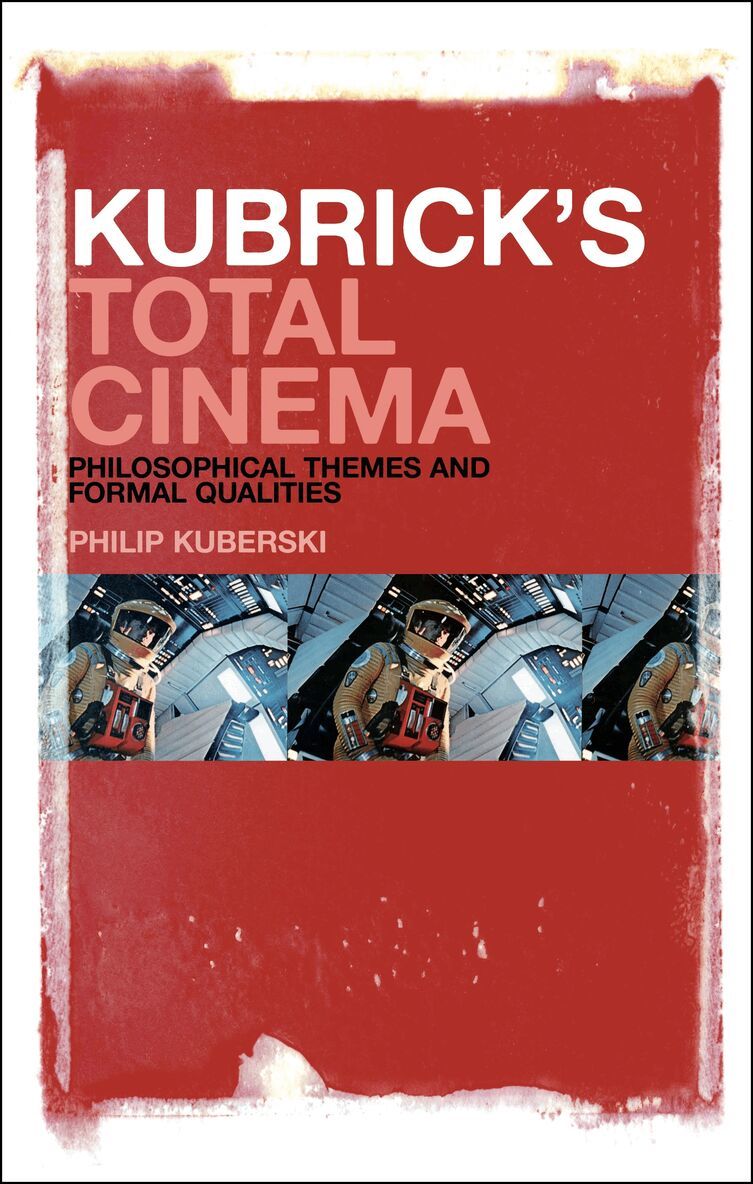
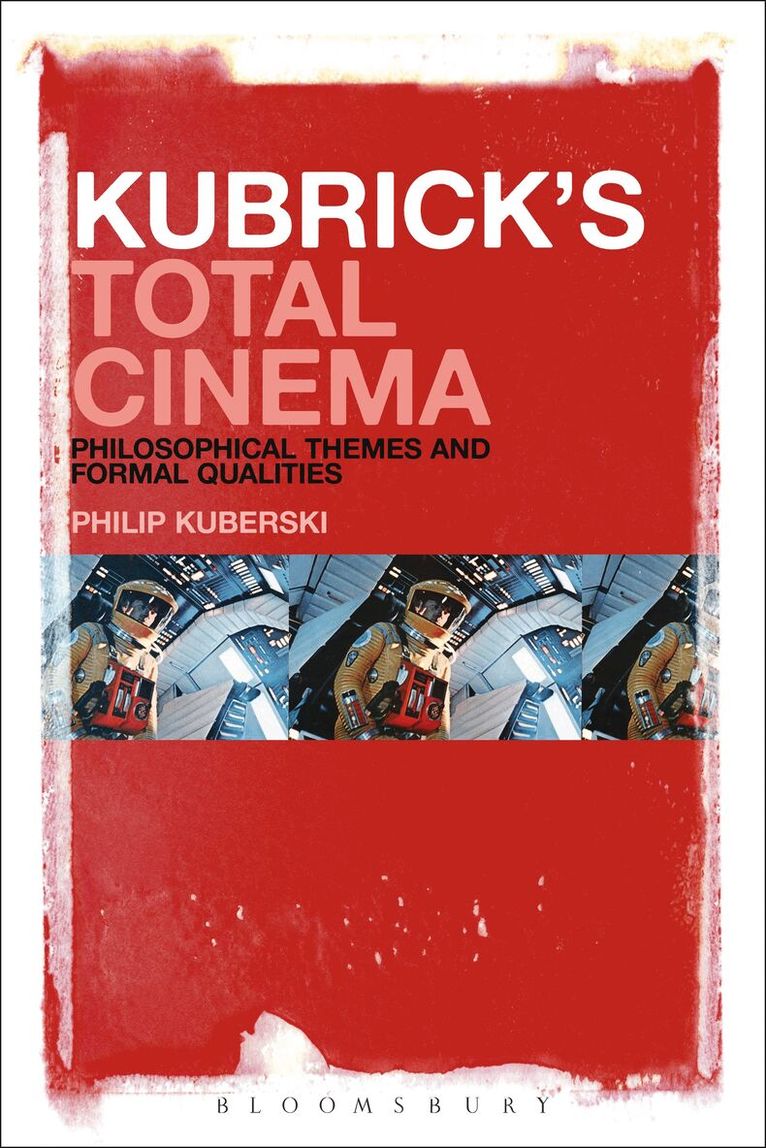
Whatever people think about Kubrick's work, most would agree that there is something distinctive, even unique, about the films he made: a coolness, an intellectual clarity, a critical edginess, and finally an intractable ambiguity. In an attempt to isolate the Kubrick difference, this book treats Kubrick's films to a conceptual and formal analysis rather than a biographical and chronological survey.As Kubrick's cinema moves between the possibilities of human transcendence dramatized in 2001: A Space Odyssey and the dismal limitations of human nature exhibited in A Clockwork Orange, the filmmaker's style "de-realizes" cinematic realism while, paradoxically, achieving an unprecedented frankness of vision and documentary and technical richness. The result is a kind of vertigo: the audience is made aware of both the de-realized and the realized nature of cinema. As opposed to the usual studies providing a summary and commentary of individual films, this will be the first to provide an analysis of the "elements" of Kubrick's total cinema.
437 kr
Skickas inom 10-15 vardagar
Whatever people think about Kubrick's work, most would agree that there is something distinctive, even unique, about the films he made: a coolness, an intellectual clarity, a critical edginess, and finally an intractable ambiguity. In an attempt to isolate the Kubrick difference, this book treats Kubrick's films to a conceptual and formal analysis rather than a biographical and chronological survey.As Kubrick's cinema moves between the possibilities of human transcendence dramatized in 2001: A Space Odyssey and the dismal limitations of human nature exhibited in A Clockwork Orange, the filmmaker's style "de-realizes" cinematic realism while, paradoxically, achieving an unprecedented frankness of vision and documentary and technical richness. The result is a kind of vertigo: the audience is made aware of both the de-realized and the realized nature of cinema. As opposed to the usual studies providing a summary and commentary of individual films, this will be the first to provide an analysis of the "elements" of Kubrick's total cinema.